About this template
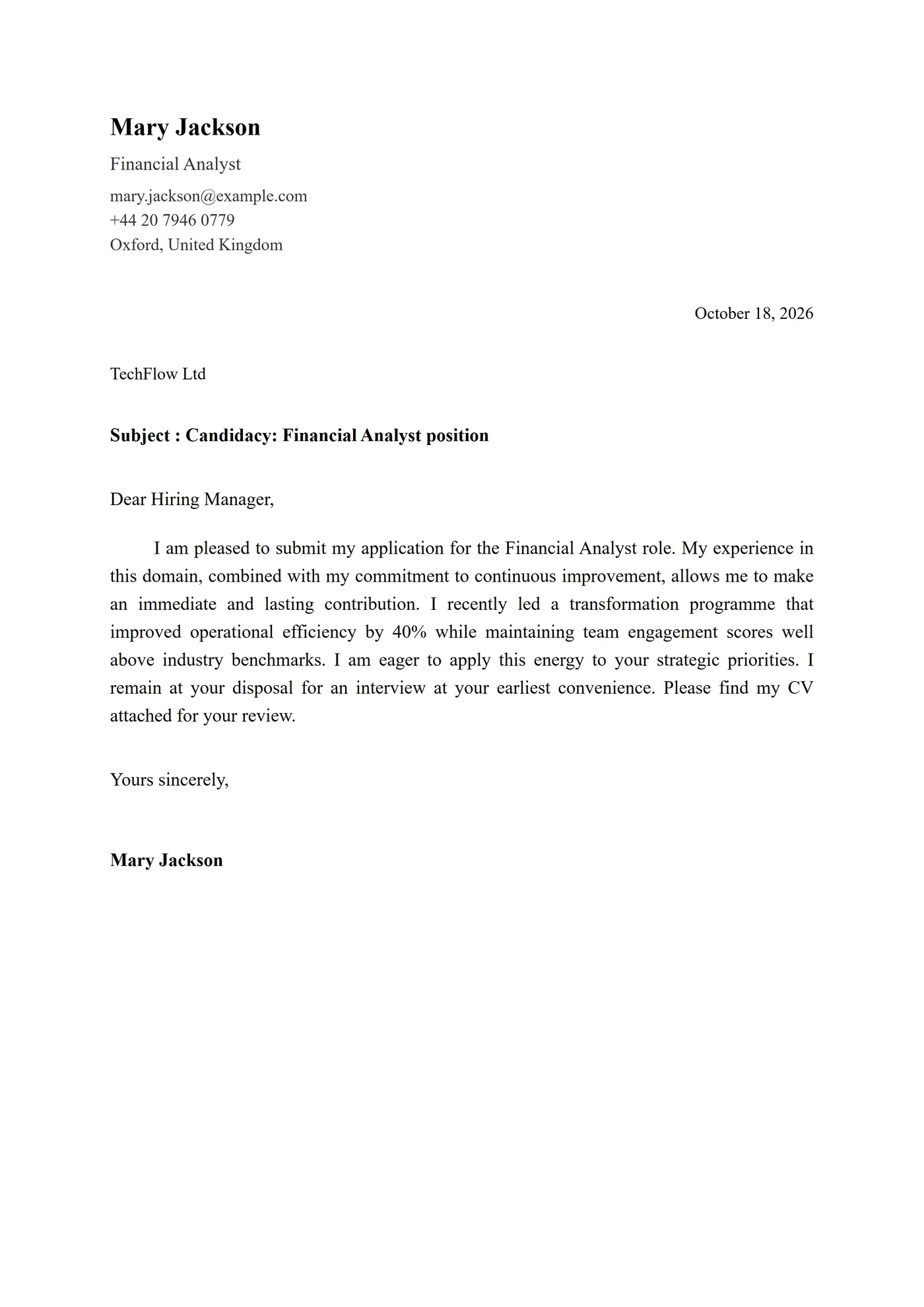
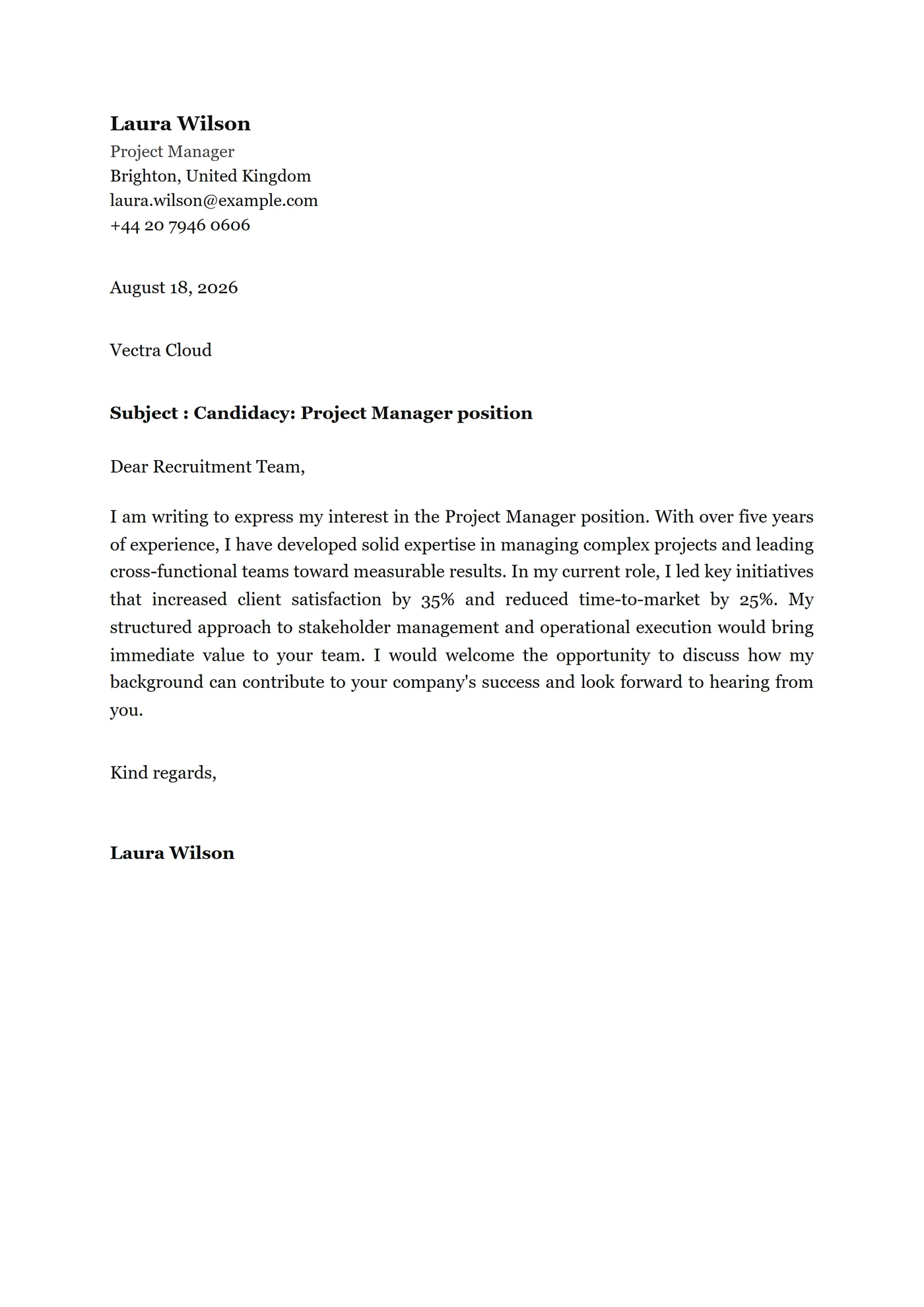
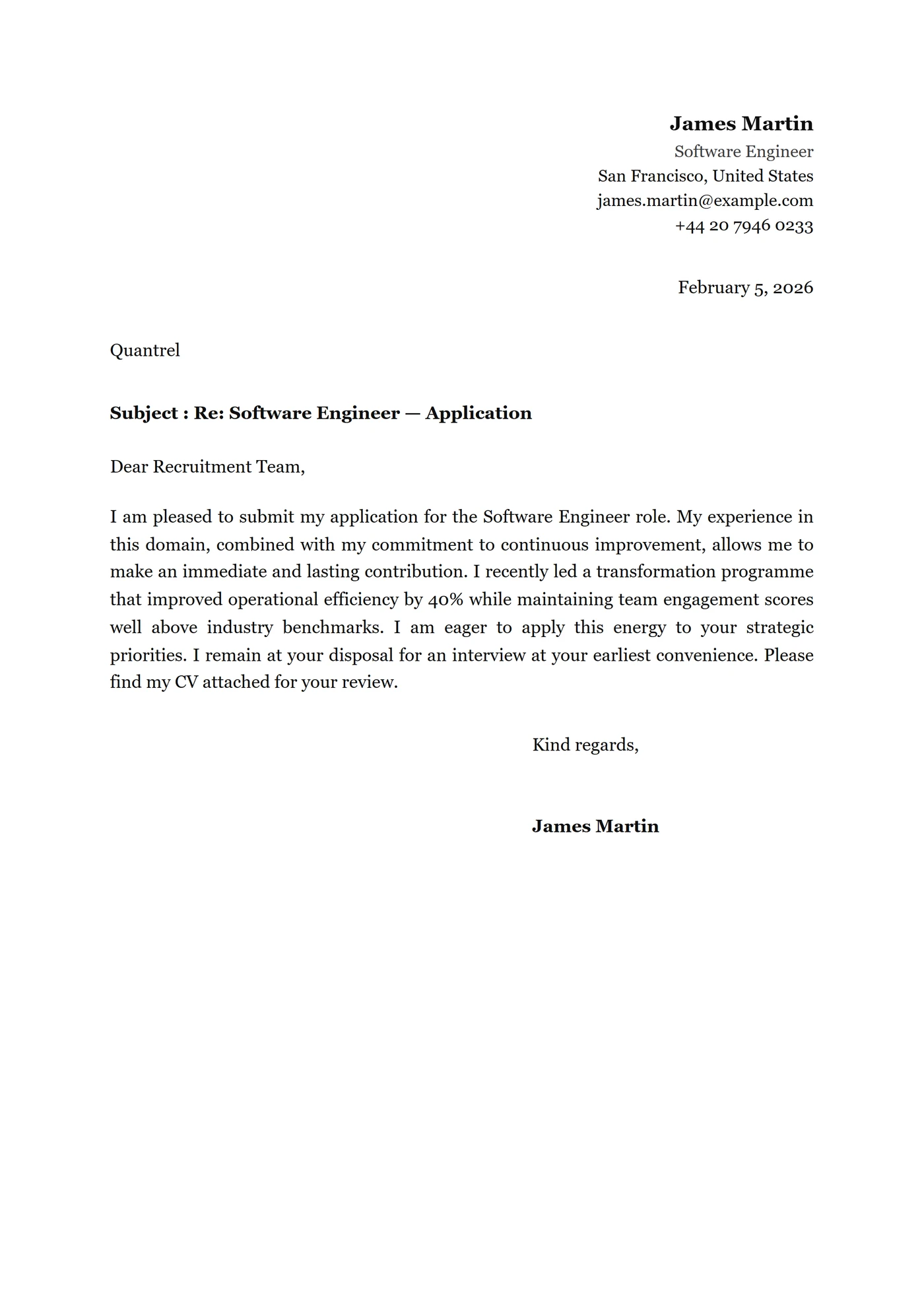
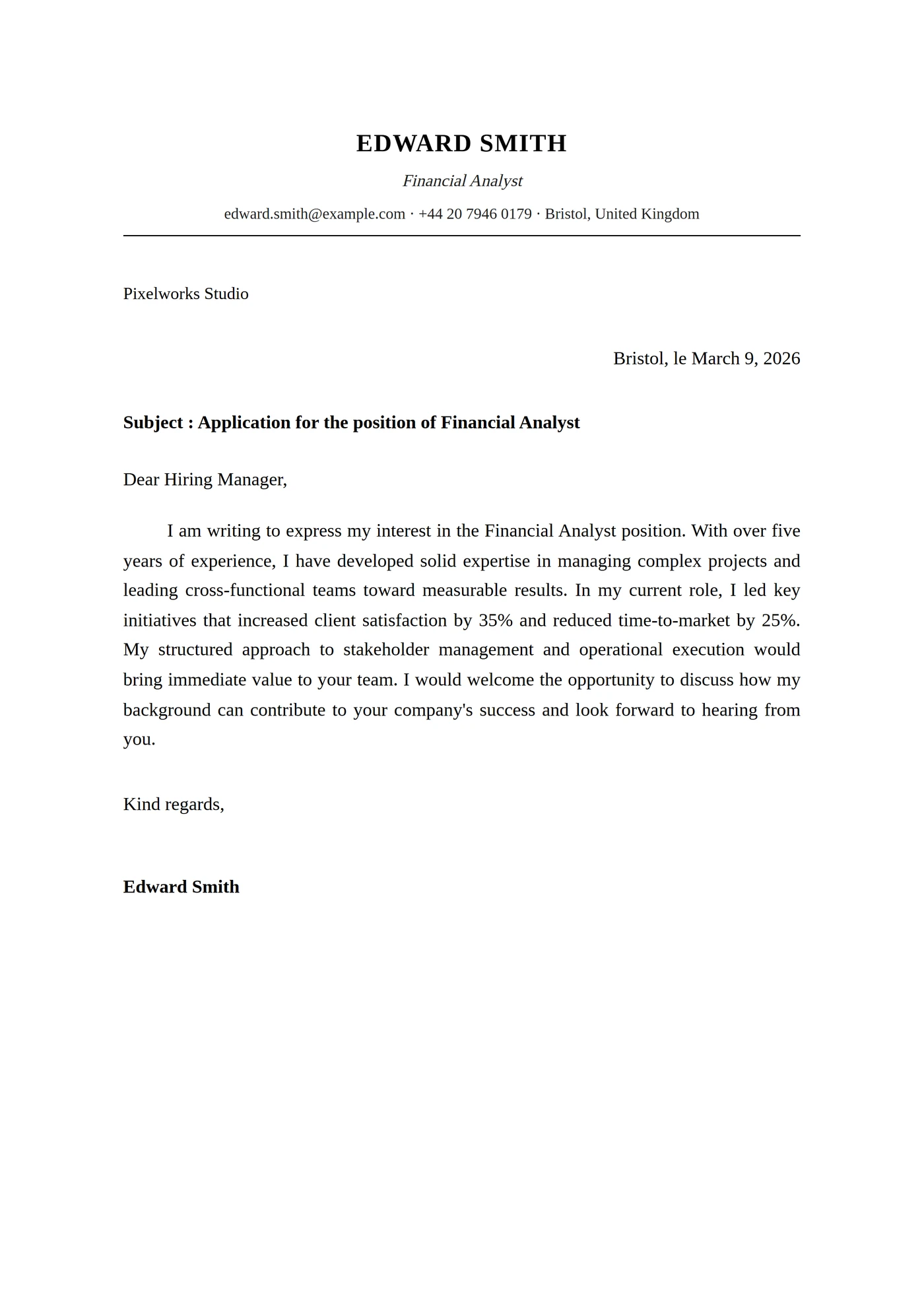
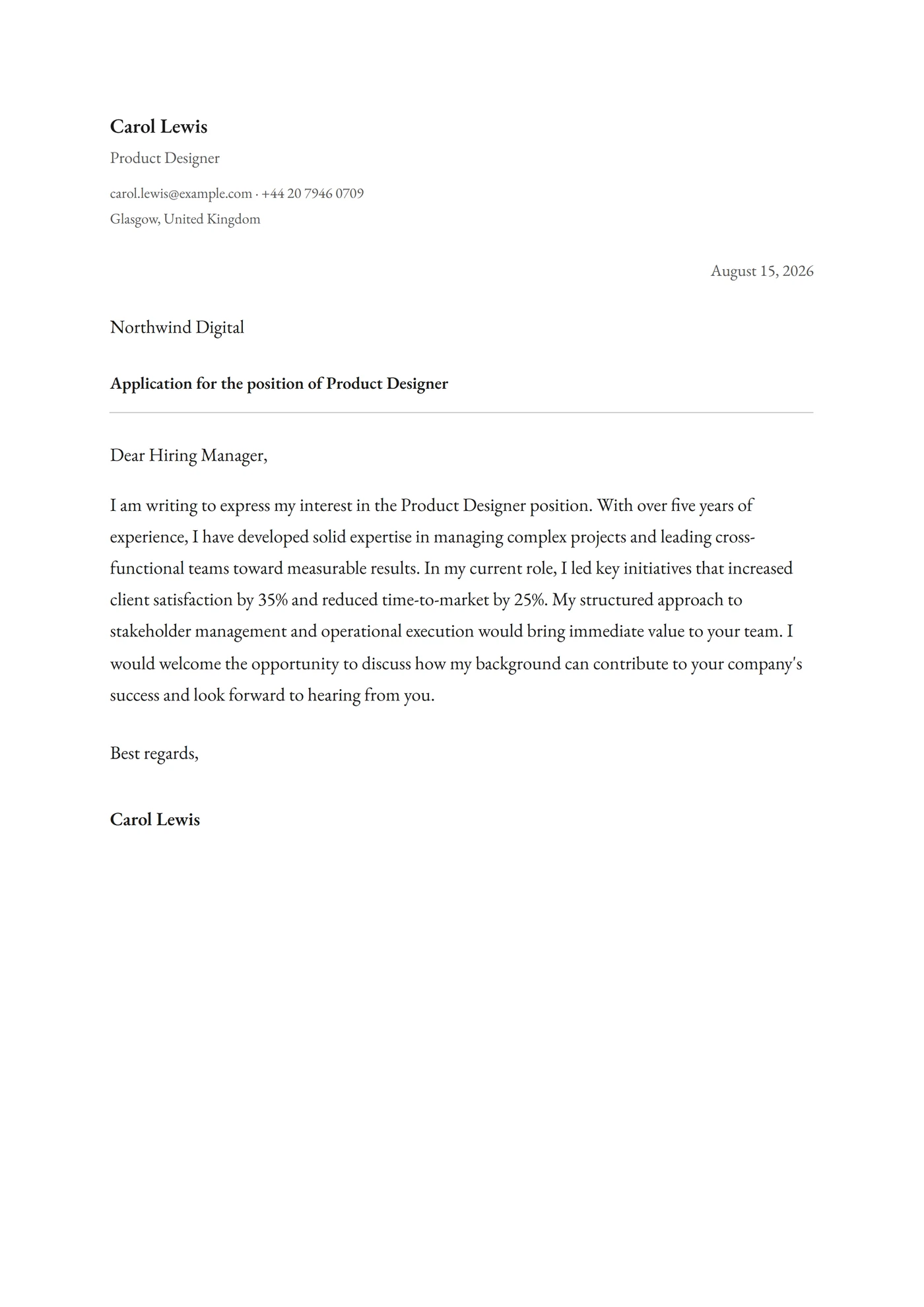
The Classic Baskerville template is a letter set in Baskerville, with elegant ligatures, generous first-line indents on each paragraph and a centred date line following the eighteenth-century convention. A typographic period piece without becoming costume. Compatible with ATS systems at traditional law firms, cultural institutions and conservatory programmes (Workday, Oracle Taleo, NeoGov for the public cultural sector).
Who is it for?
It suits lawyers, notaries, conservatory applicants (Juilliard, Curtis, Royal Academy of Music, Royal College of Music), museum curators (the Met, Tate, V&A, the Getty), art historians (Courtauld, Warburg, Bard Graduate Center) and antiquarian booksellers writing to institutions where typographic continuity with the past carries its own value. Out of place in tech, scale-ups or any context that prizes contemporaneity.
How to use it
Keep first-line indents at 0.75 cm, never more — the effect rests on measure. The body stays justified, margins at 2.5 cm minimum. The date in long format is centred, two lines below the recipient block. For a museum curatorial application, place the chronological speciality and corpus in the first line ("Curator specialising in seventeenth-century Italian painting, trained at the Courtauld Institute, corpus of 380 catalogued works"). Avoid emojis and any sans-serif element that breaks the register.
Frequently asked questions
Does Baskerville render well on screen?
Yes for modern OpenType versions (Libre Baskerville, Baskerville URW, Mrs Eaves XL Serif). The original Monotype Baskerville renders better in print than on screen. The PDF embeds the font to guarantee rendering on recruiter machines even when Baskerville is not locally installed.
Is it suitable for a conservatory application?
Particularly well for Juilliard, Curtis, the Royal Academy and the Royal College of Music. Cite your principal teachers and competition awards (Van Cliburn, Tchaikovsky, Leeds, Queen Elisabeth, ARD Munich) in paragraph two. For a regional conservatoire application, the same format works but with a more sober header.
How should I format work titles in the body?
Italics for full works (Le Sacre du Printemps, The Marriage of Figaro, Annunciation by Fra Angelico). Quotation marks for article or movement titles ("Allegro", "On the Nature of Things"). Opus numbers stay in Roman numerals for music (Op. XV No. 2) and Arabic for catalogue numbers (BWV 1004).