About this template
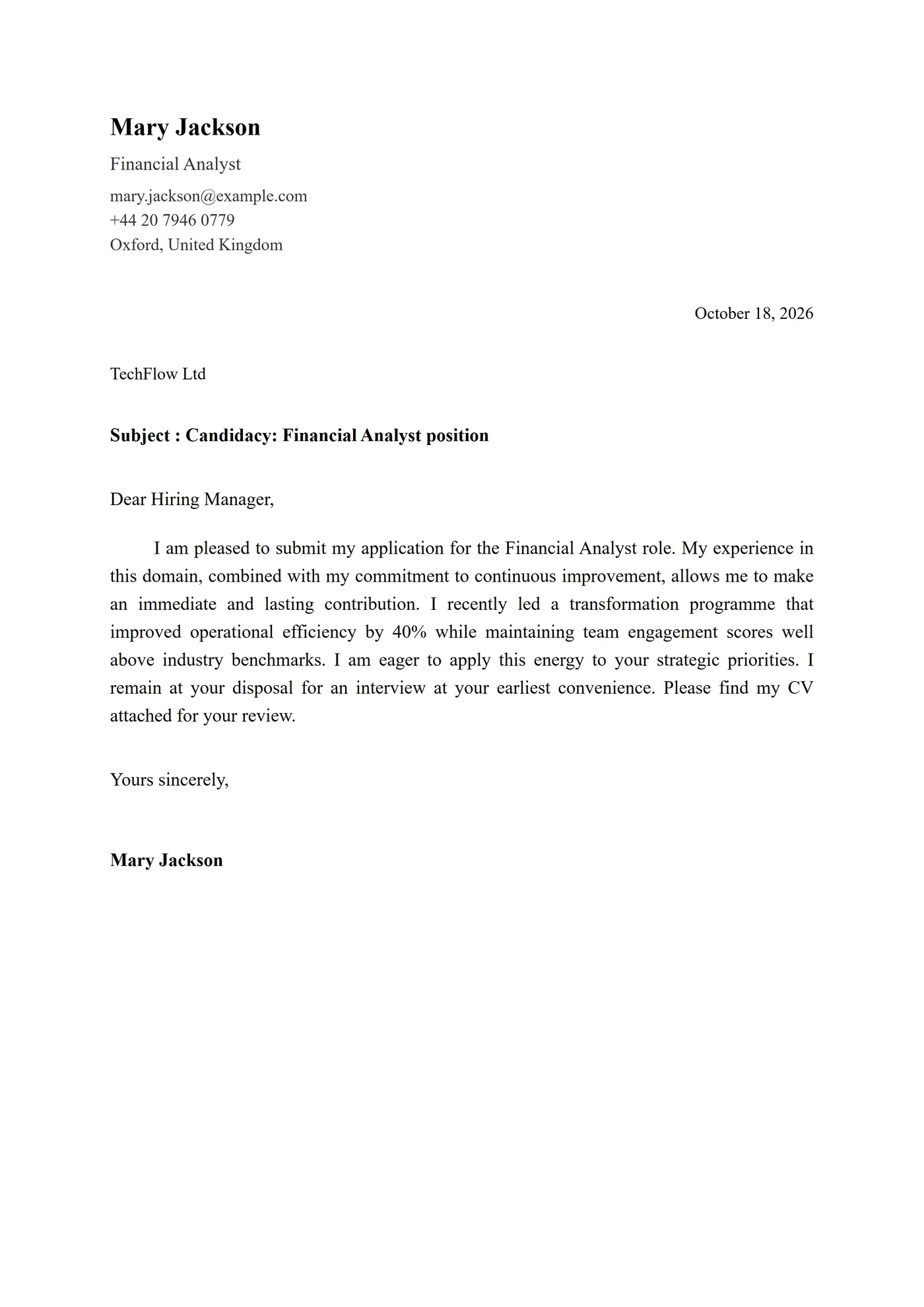
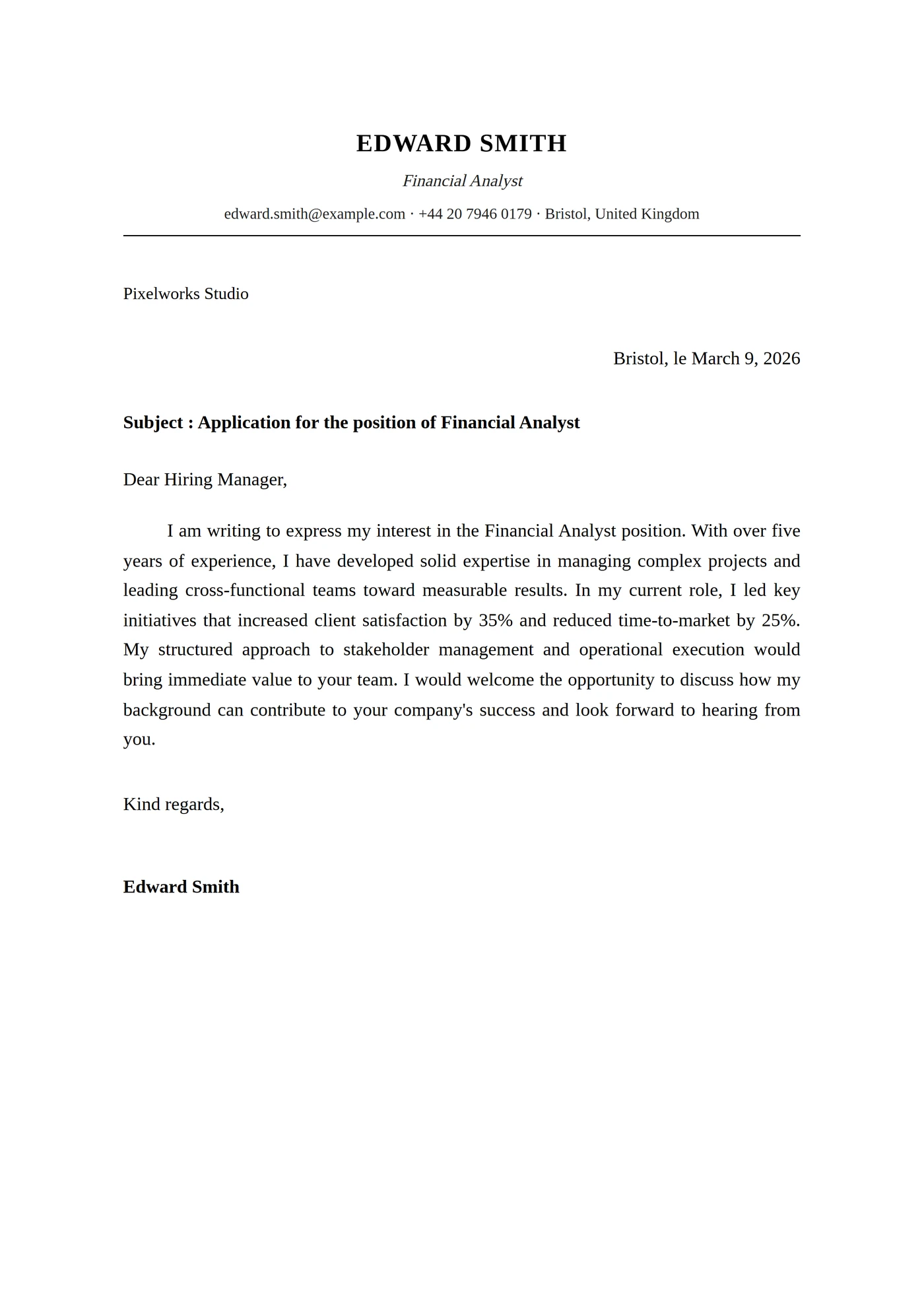
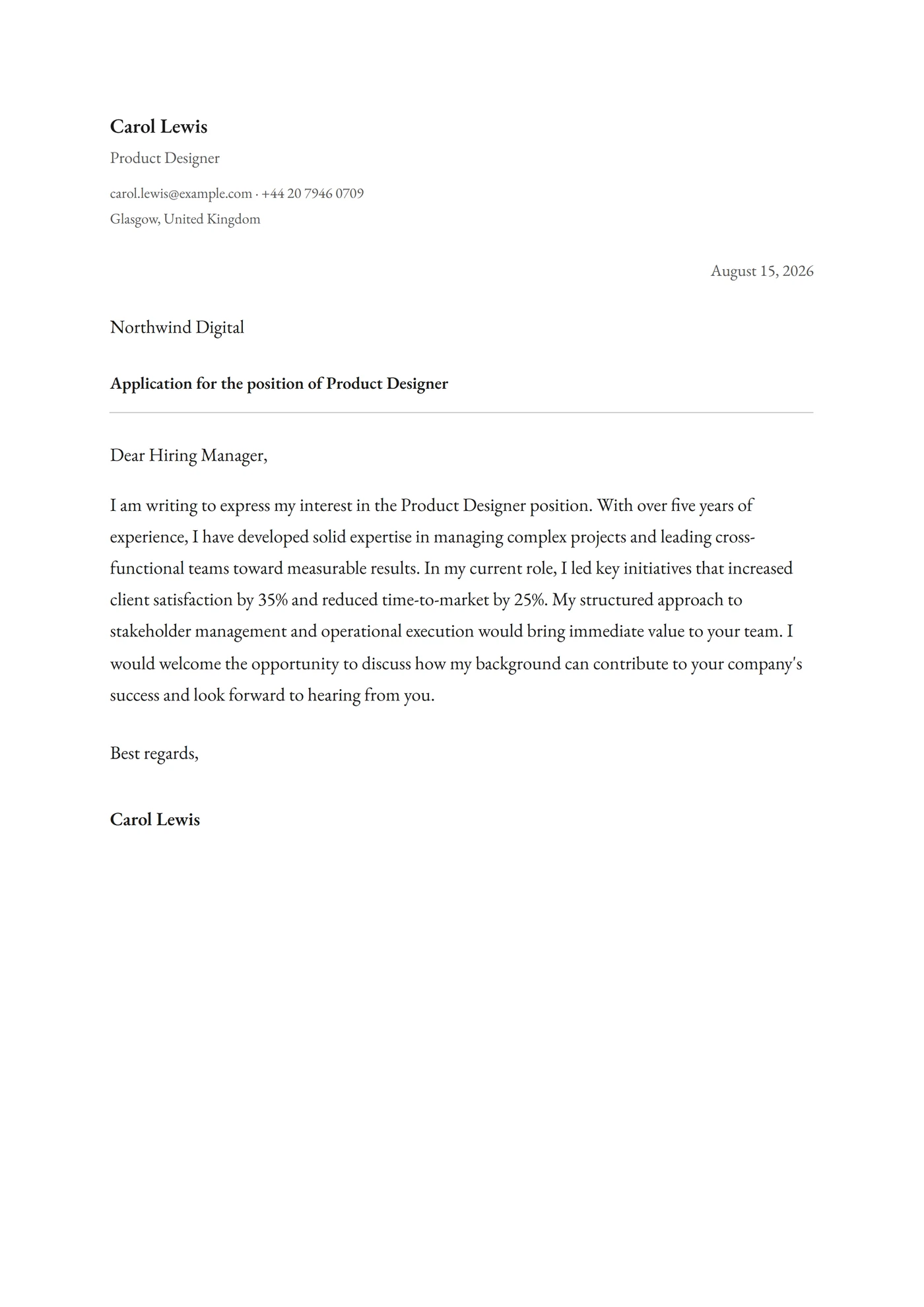
The Classic Letterhead template is a letter laid out as if printed on personal letterhead — large name in Cormorant Garamond at the top, contact details in smaller caps below, a thin black rule beneath and a Caslon body. The visual code of stationery that used to be ordered by the box. Compatible with the ATS systems of boutique professional-services firms and notarial offices (Workday, SuccessFactors, Cornerstone).
Who is it for?
It suits independent consultants, senior advisers, partners in boutique professional-services firms (boutique law, strategy, wealth advisory), certified appraisers, notaries and family-business directors who present themselves under their own name. The personal-letterhead register signals self-reliant authority — out of place when applying to large structures with formal HR pipelines.
How to use it
The name occupies the top 4 cm in Cormorant 28-32 pt. The contact line (direct phone + professional email + firm address) in small caps 9 pt. A 1 pt black rule separates header from body. For an independent consultant application to a partner firm, mention the nature of the envisaged collaboration (partnership, framework contract, one-off mission) from paragraph 2. Avoid personal logos — the entire effect rests on typography alone. The signature includes professional registration number (ABA membership, state notary commission, ICAEW membership).
Frequently asked questions
Is it suitable for a regular salaried application?
More for an executive-level application (CEO, COO, General Counsel of group). For a senior-manager role through HR, prefer letter-classic-formal which better matches conventional recruitment. The letterhead is more relevant for professional associations or consulting engagements.
Should I include my Tax ID or VAT number?
For independent consultants applying for an engagement, yes — at the foot of the letter. For a salaried application, no, it is superfluous. Professional registration number (Bar admission, notarial commission, ICAEW, CPA license) remains relevant in all cases as a credibility marker.
What size should the name be in the header?
28 pt for short names (10-15 characters), 24 pt for longer names (15-25 characters), 20 pt beyond. The name must stay on one line — avoid line breaks that break the letterhead effect. For compound surnames, only the working name in large type; spell the full legal name in the signature block.