About this template
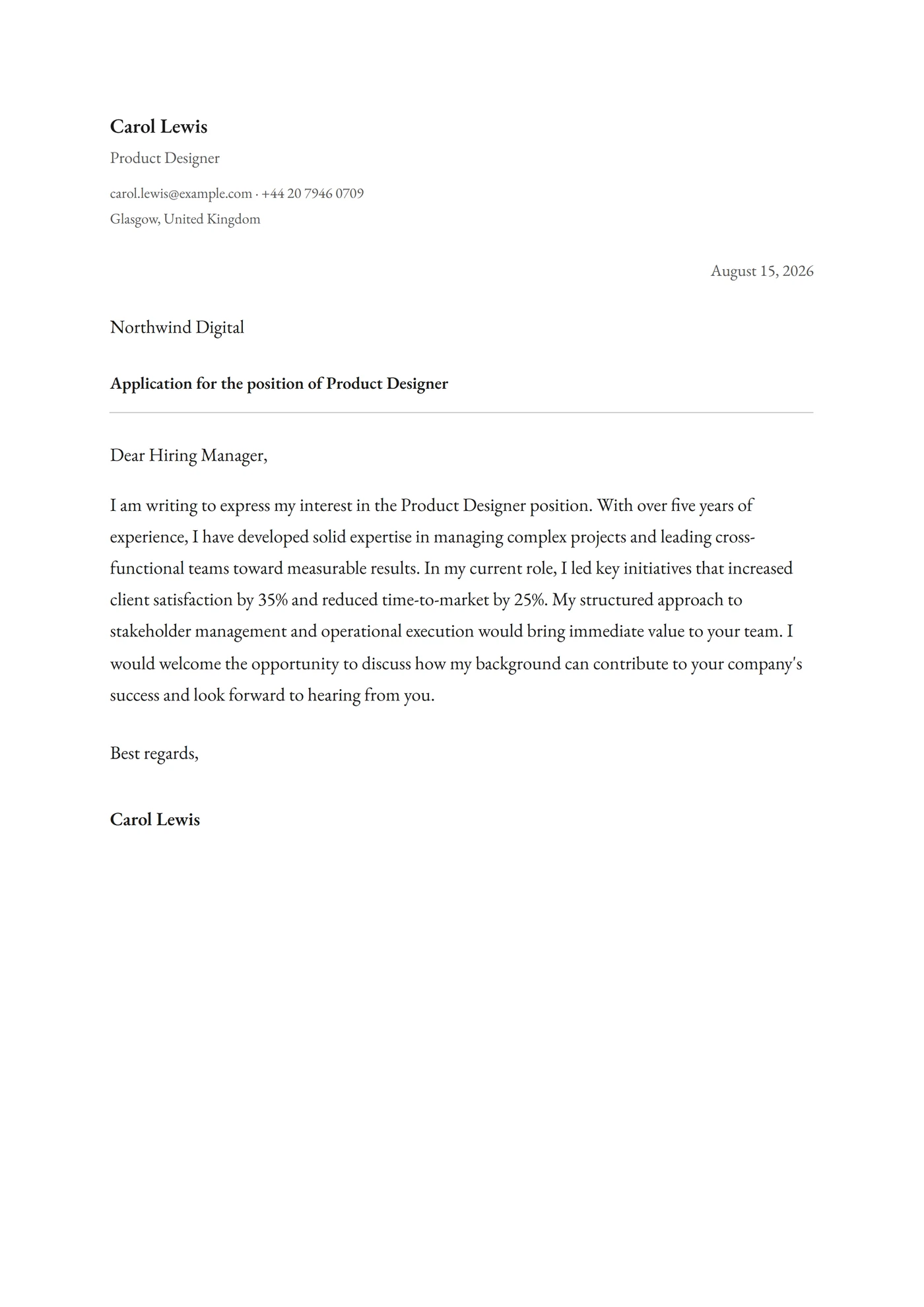
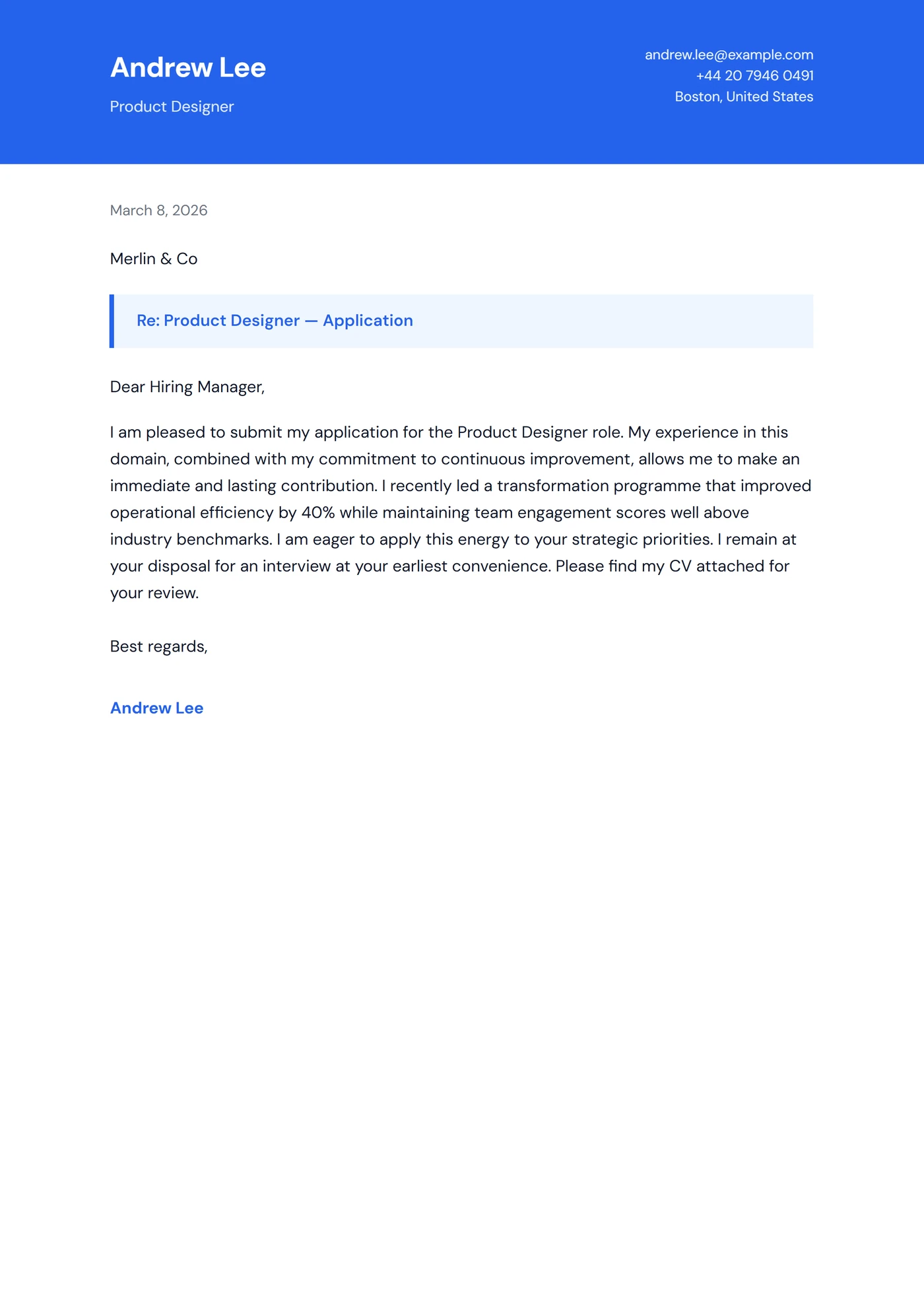
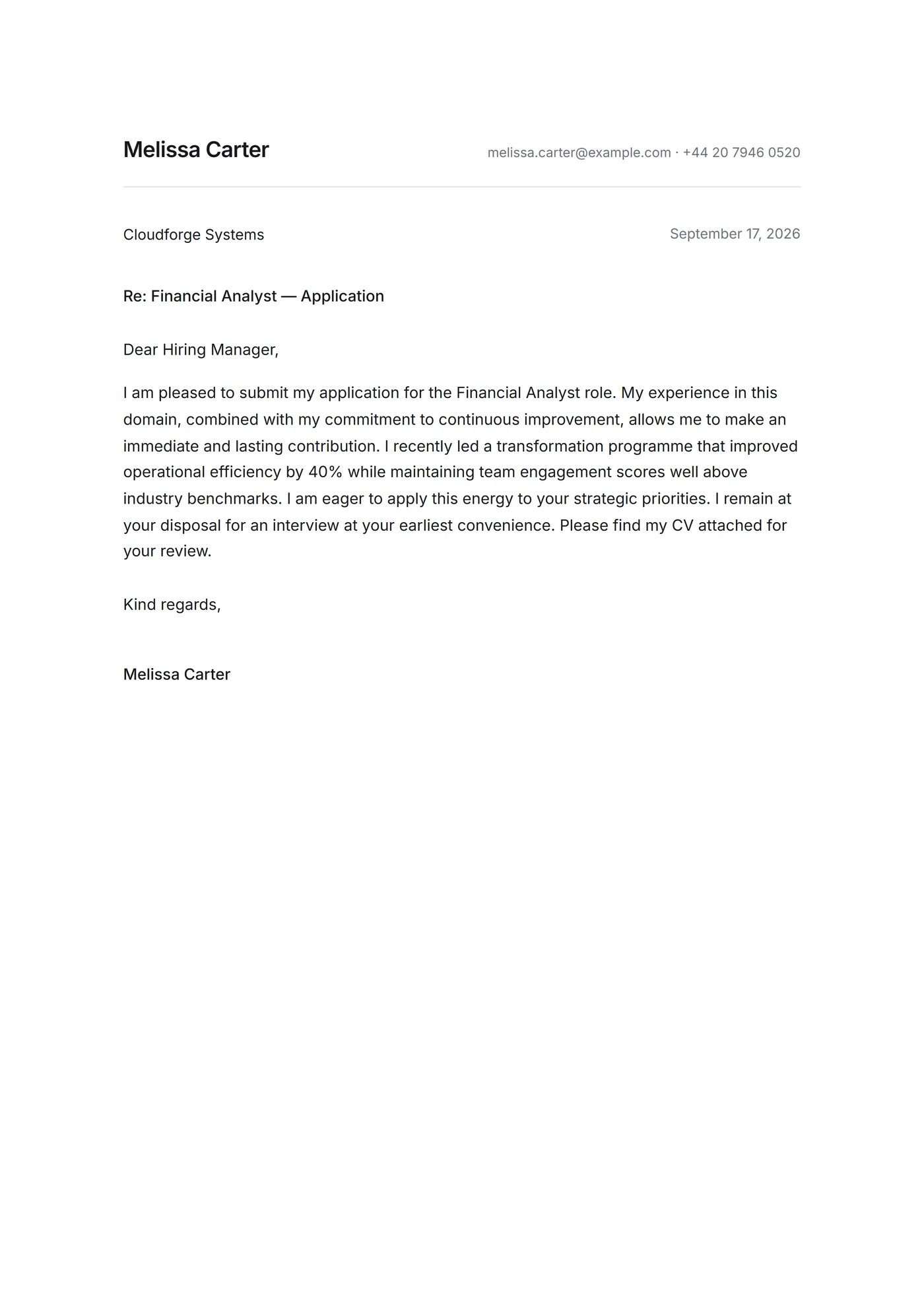
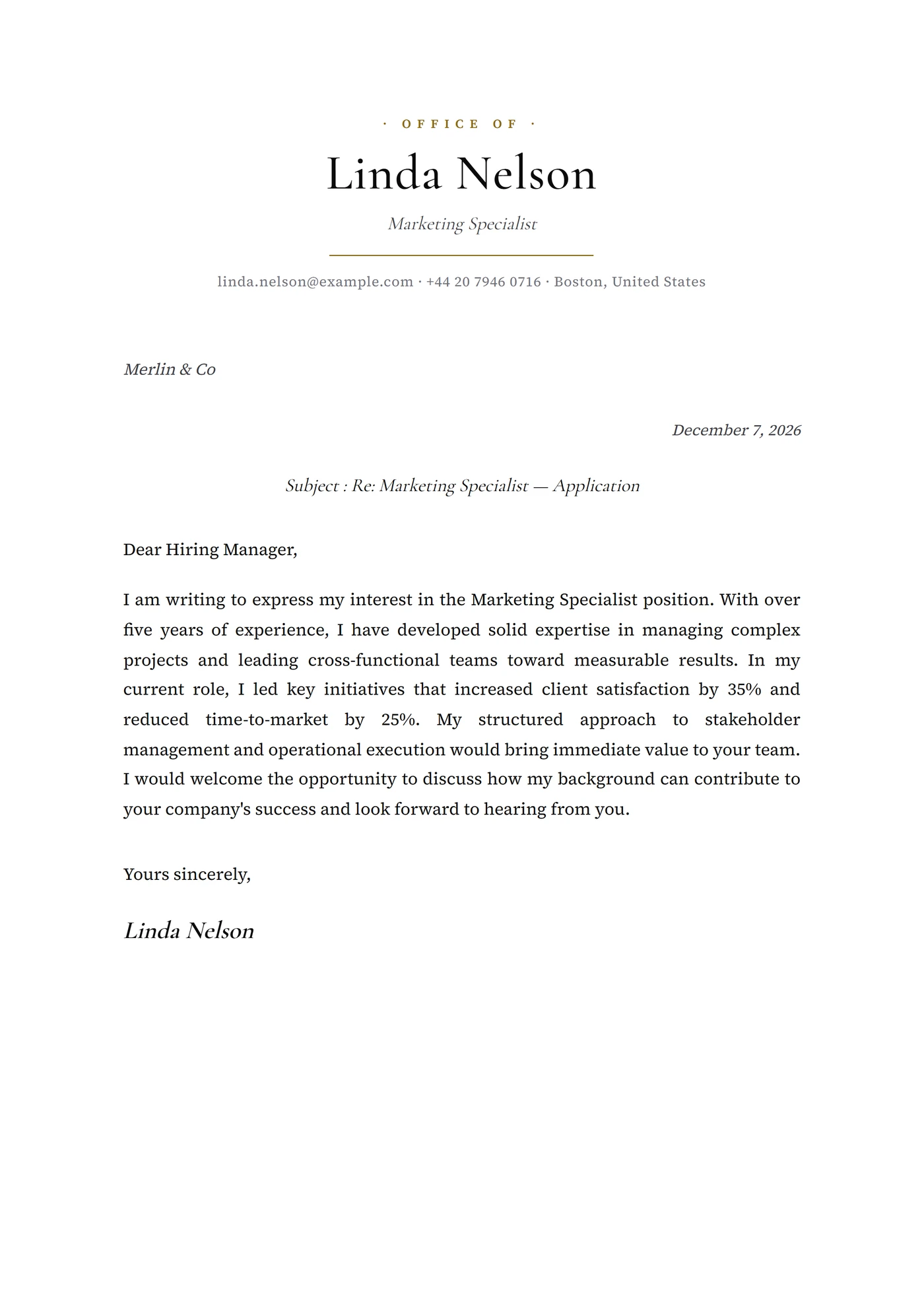
The Victorian Ornate template is a heavily ornamented letter built like a Victorian theatre playbill: engraved-style flourish framing the name, mixed display serifs, body in Caslon, sepia palette on aged-paper texture. Maximalist with a clear historical reference — the visual code of West End and Broadway playbills from the 1880s, Sherlock Holmes serialisations and Penny Dreadful covers.
Who is it for?
It suits applicants in heritage theatre (the Royal Shakespeare Company, the National Theatre, the Old Vic, the Goodman Theatre Chicago, the American Repertory Theater), period-drama production (Bridgerton production houses, the Crown adjacent), antique trade (Sotheby's, Christie's furniture and decorative arts), historical museums (the V&A, the Met, the Museum of London), classical-music venues (Carnegie Hall, the Royal Albert Hall, the Wigmore Hall) and Victorian-era themed hospitality (the Langham London, the Strand Palace, the Hotel Monteleone). Curators, period-set designers, antique dealers, museum educators and theatre programmers — not for fast-moving tech, contemporary corporate or ATS-screened roles.
How to use it
Keep the engraved flourish contained around the name — extending ornament into the body destroys readability. The Caslon body must stay at 11-12pt with comfortable leading. The sepia palette is canonical; saturated colours break the Victorian reference. For heritage-theatre applications, mention the productions seen at depth and the directors followed. For antique-trade applications, demonstrate provenance fluency by citing specific marks, hallmarks or signatures you recognise. The 'Victorian theatre cover letter RSC National Theatre' niche search is small but very on-target.
Frequently asked questions
Will the Victorian ornament read as kitsch?
In heritage-theatre, antique-trade and Victorian-themed hospitality, no — it is read as fluency with the era's visual codes. In contemporary theatre, modern museums or commercial publishing, yes, it reads as kitsch. Quick rule: if the destination institution celebrates its own Victorian heritage in its identity, the template pays off. Otherwise, choose Newspaper Column or ATS Garamond.
Should I attach a programme history or auction catalogue work?
For heritage-theatre applications, attach a CV or appendix listing productions worked on with role, director and venue. For antique-trade applications at auction houses, attach a list of lots catalogued or sold with date and hammer price. For museum-curator applications, attach an exhibition CV with venue, dates and attendance.
Is Caslon the right body font?
Yes — Caslon (William Caslon, 1722, refined through the Victorian era) is the canonical text serif for 19th-century English-language printing. Adobe Caslon Pro is the contemporary licensed version; Big Caslon is the display cut. For free, Libre Caslon Text (Google Fonts) is a reasonable substitute. Avoid Garamond or Baskerville for this template — they belong to different eras and weaken the Victorian signature.