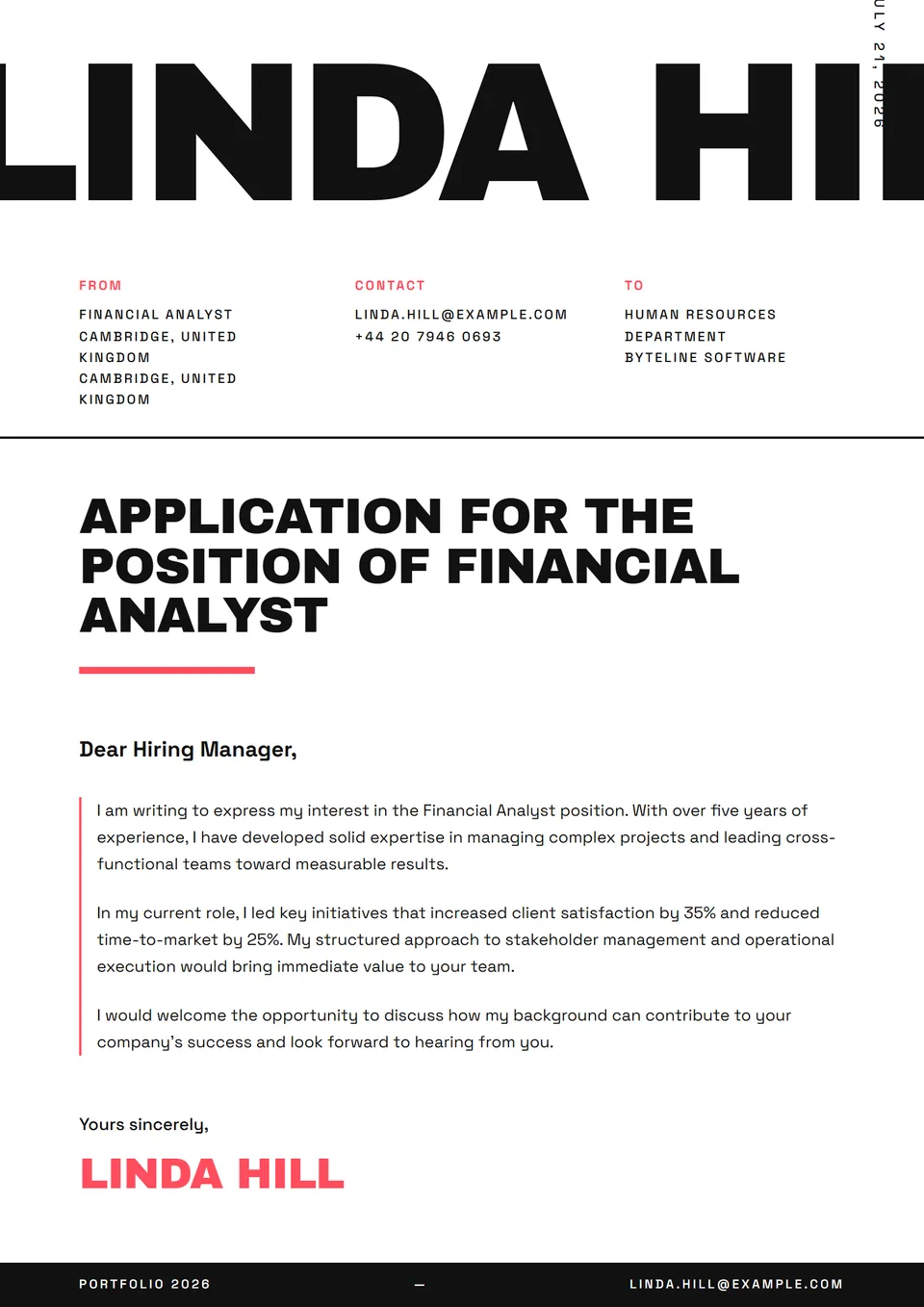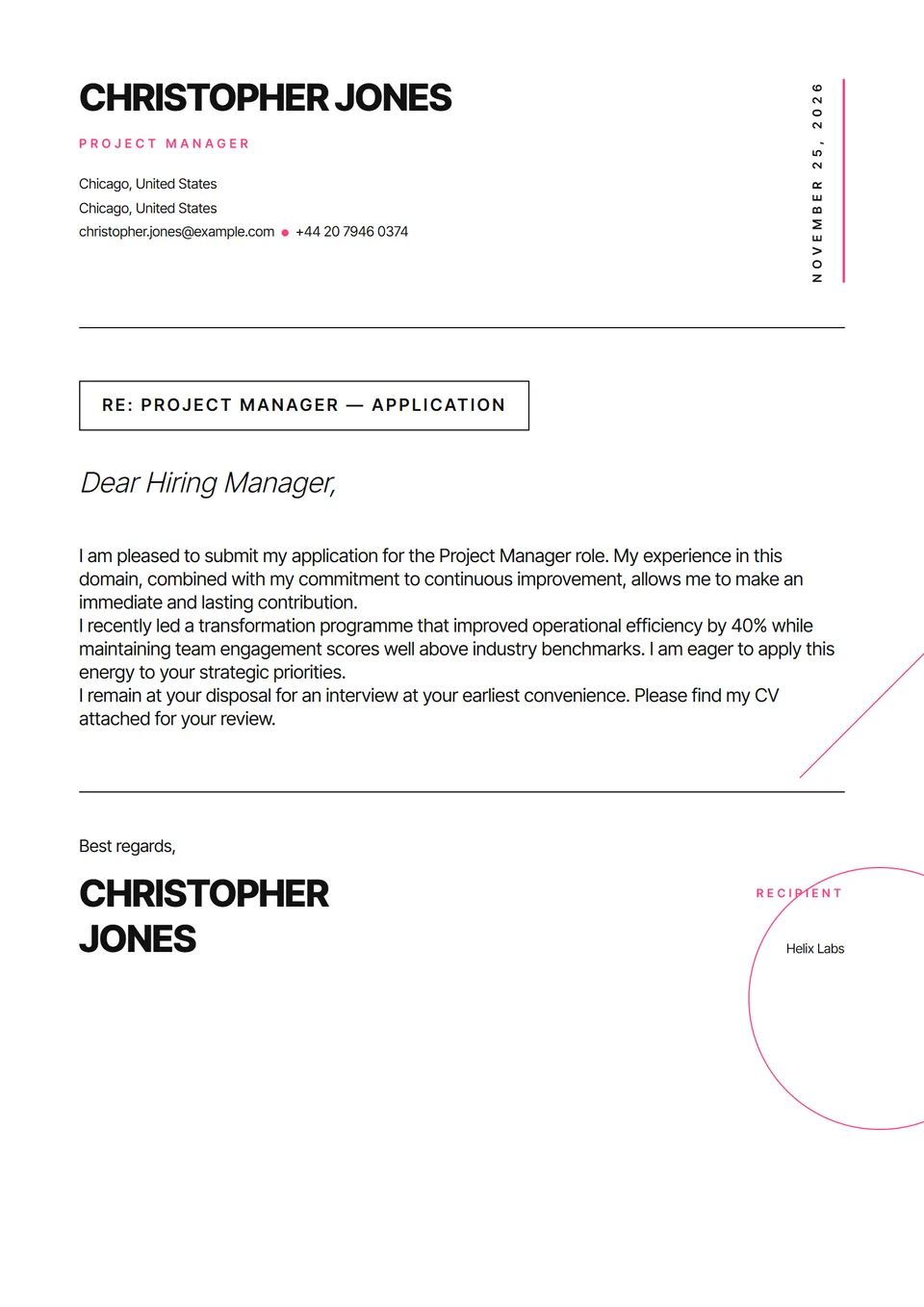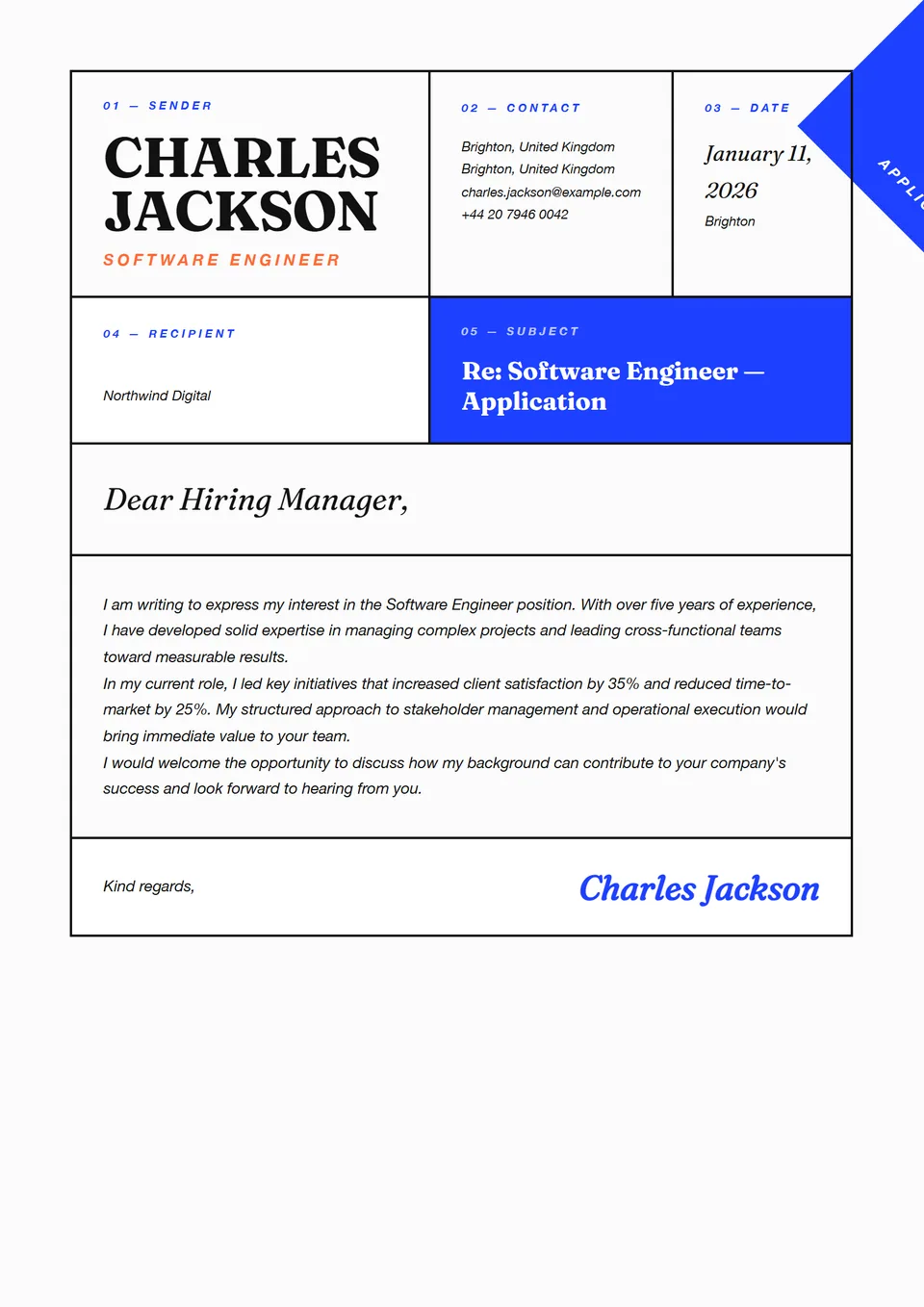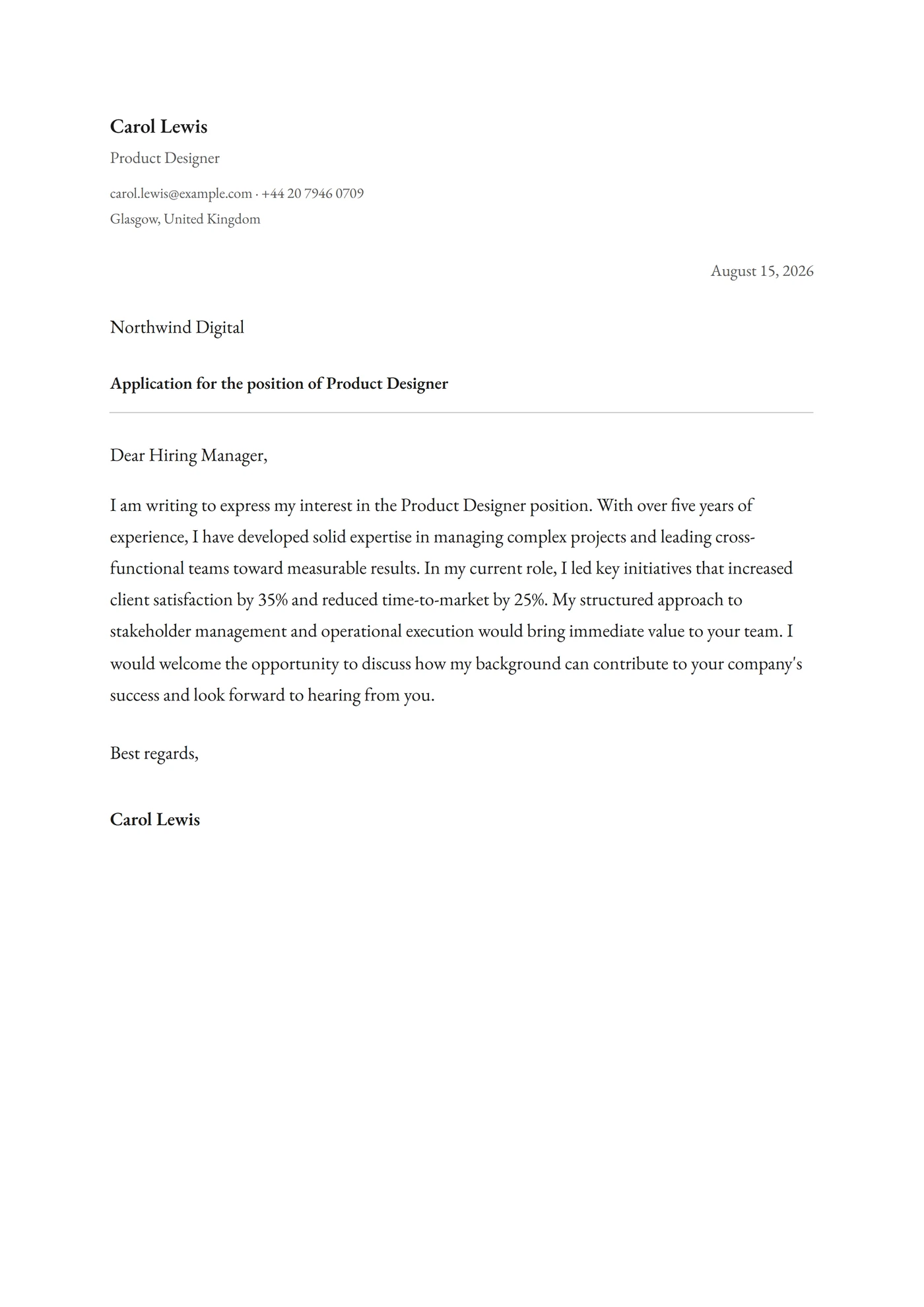
About this template
The Zine Cutout template is a xeroxed-zine letter with text fragments treated as ransom-note cutouts: mixed Times, Courier and Impact across the header, photocopied dot-noise behind the body. Punk-DIY aesthetic from the first glance — the visual code of Riot Grrrl manifestos, anarchist pamphlets and 1990s underground music zines.
Who is it for?
It suits applicants in punk-rock labels (Dischord Records, Numero Group punk reissues, Three One G), alt-streetwear, Riot Grrrl publishing (Bikini Kill archives, Bitch Media), anarchist bookstores (Bluestockings NYC, AK Press, Freedom Press London) and counterculture event collectives. Editorial designers, content writers, brand founders and event producers in sectors that explicitly reward DIY edge — not for tech, finance, government or any institutional sector.
How to use it
The cutout aesthetic must stay confined to the header — mixing three fonts in the body becomes unreadable. The photocopied dot-noise behind the body should fade enough to preserve legibility (around 8-12% opacity). For punk-label applications, cite two or three bands from the label roster you genuinely care about ('the Minor Threat reissue series matters as much as the new releases'). For anarchist bookstore applications, mention the political authors you have read in depth (Emma Goldman, Kropotkin, Murray Bookchin) without name-dropping. The 'punk zine cover letter Dischord Riot Grrrl' niche search is tiny but very on-target.
Frequently asked questions
Will the cutout aesthetic look amateur?
Outside DIY-culture sectors, yes — corporate recruiters read it as careless. Inside the punk-publishing, alt-zine and anarchist-bookstore worlds, it is read as a sign of belonging. Quick rule: this template is only for organisations that themselves practise cut-and-paste aesthetics in their own publications. A clean-but-decorated alternative is the Zine Print template.
Should I write in DIY slang or in clean English?
Clean English with occasional sector vocabulary. A ransom-note letter written in deliberately broken English reads as parody, not authenticity. The visual carries the DIY signal; the text carries the substance. For punk-label applications, you can drop one or two terms of art (split EP, 7-inch, two-tone vinyl) but the overall prose stays precise.
Is it suitable for an academic application on counterculture?
Partially — for an MA application at a programme studying punk subcultures (NYU Media Studies, Goldsmiths Cultural Studies), it can work as a visual statement of immersion. For a PhD application or a tenure-track teaching role, prefer the ATS Garamond template — the academic gatekeepers expect classical typographic codes even when studying countercultural objects.