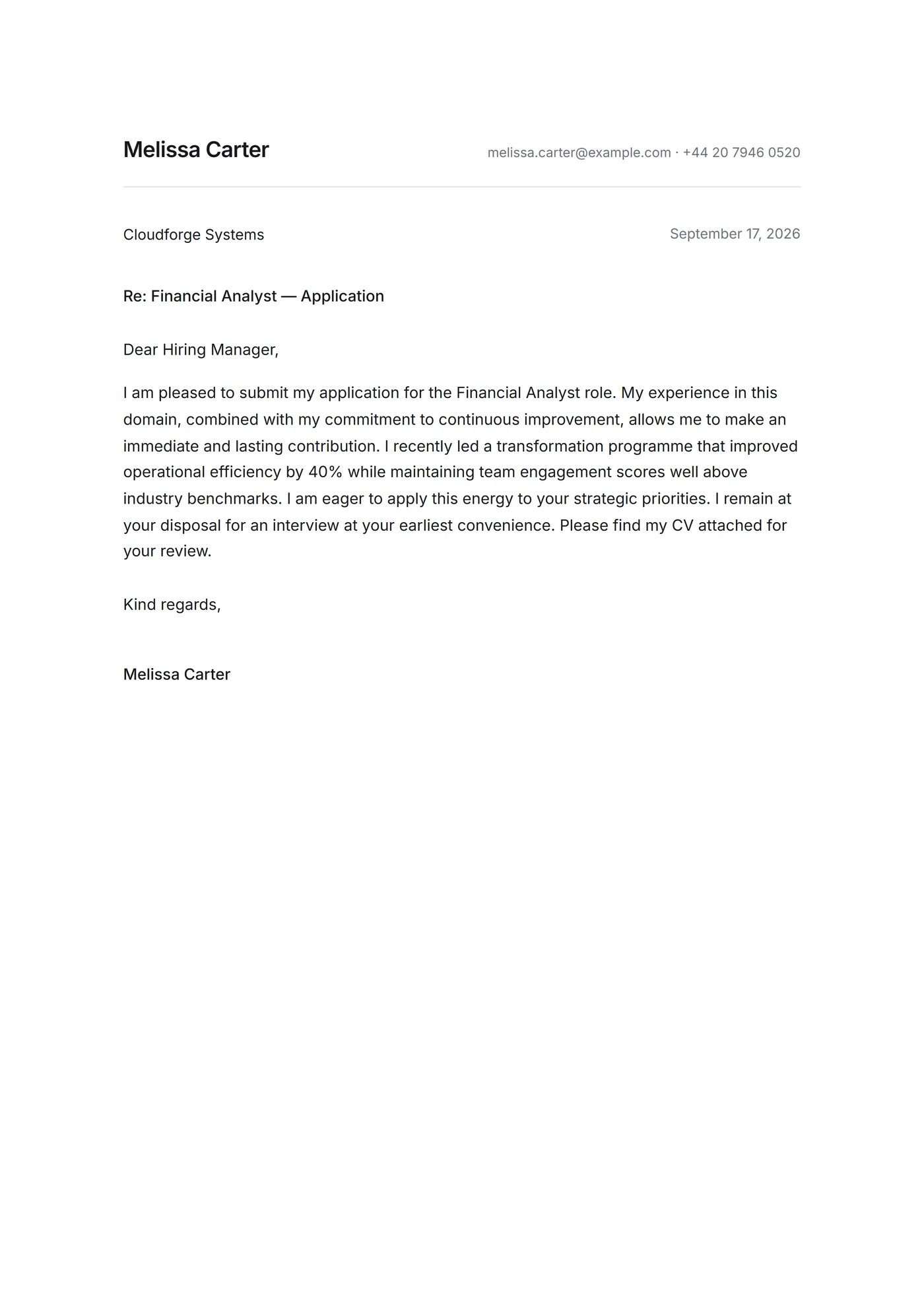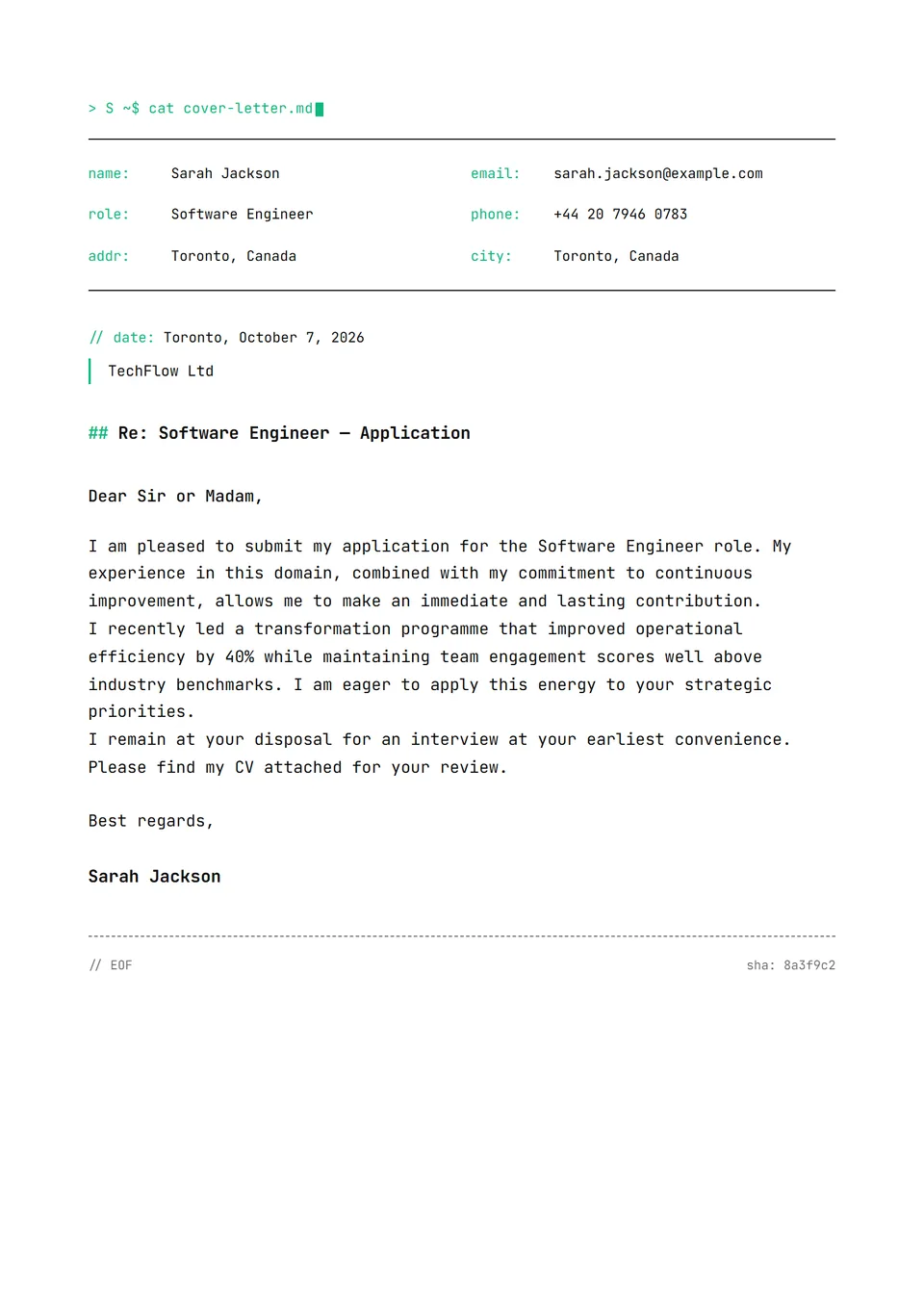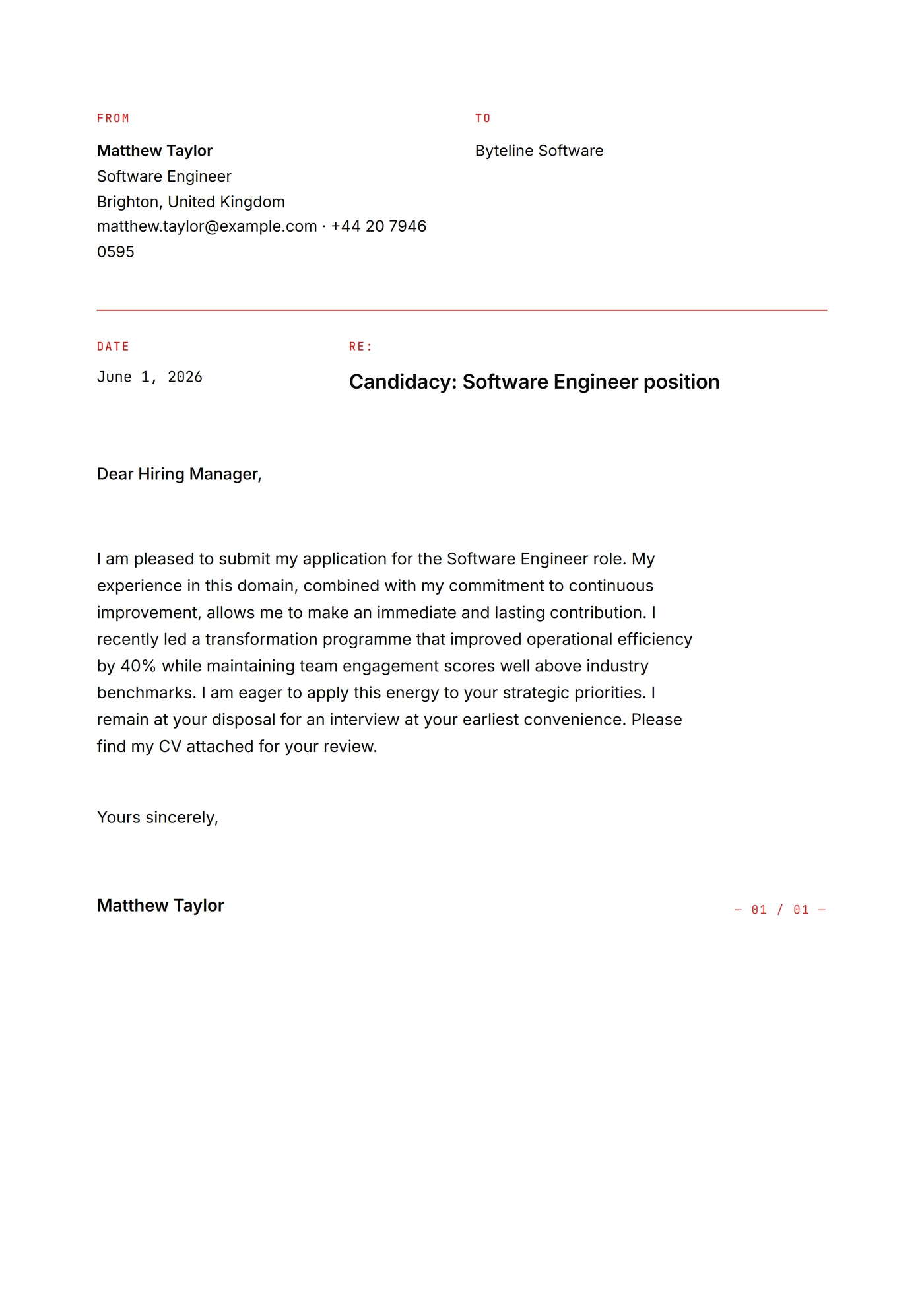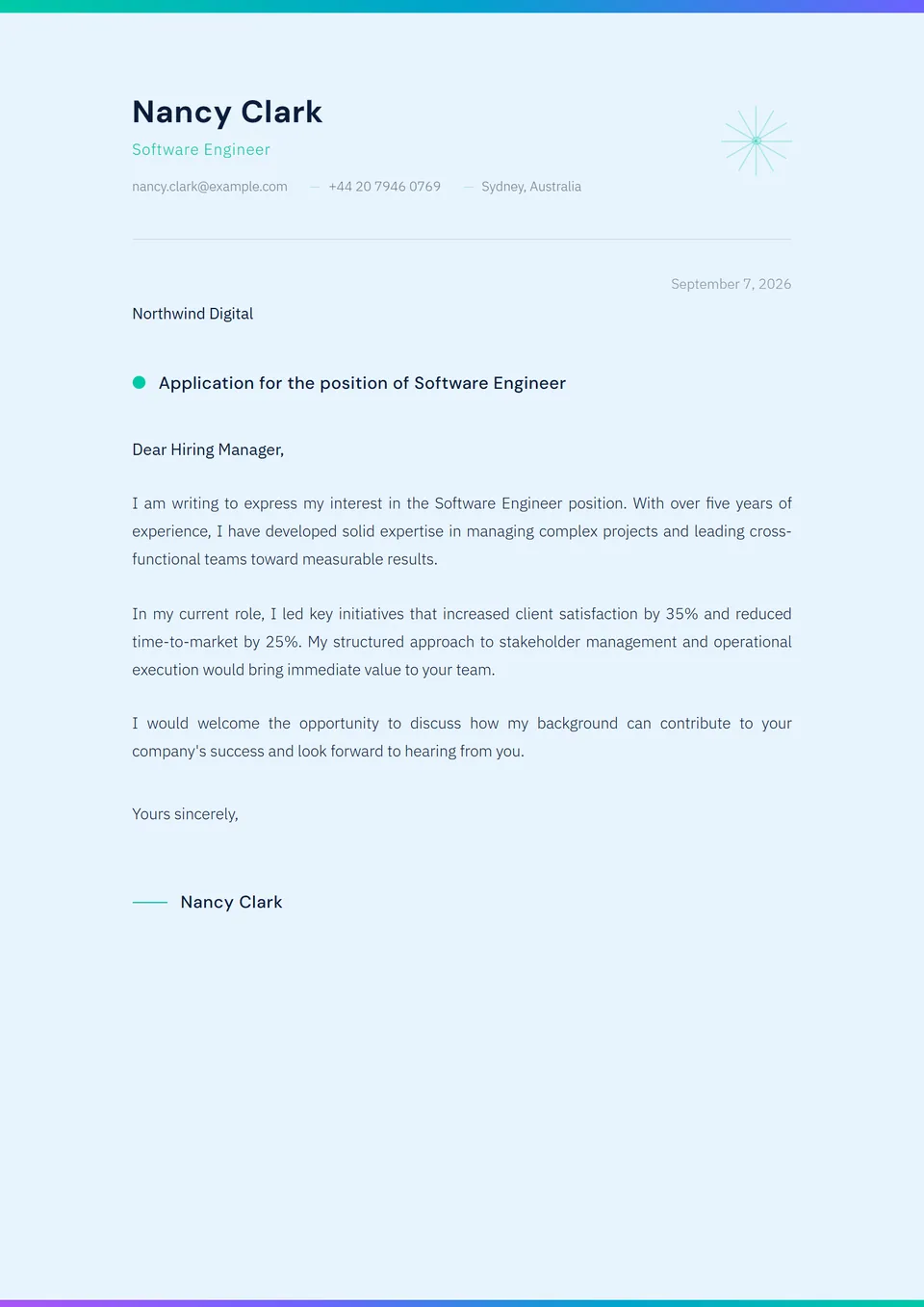
About this template
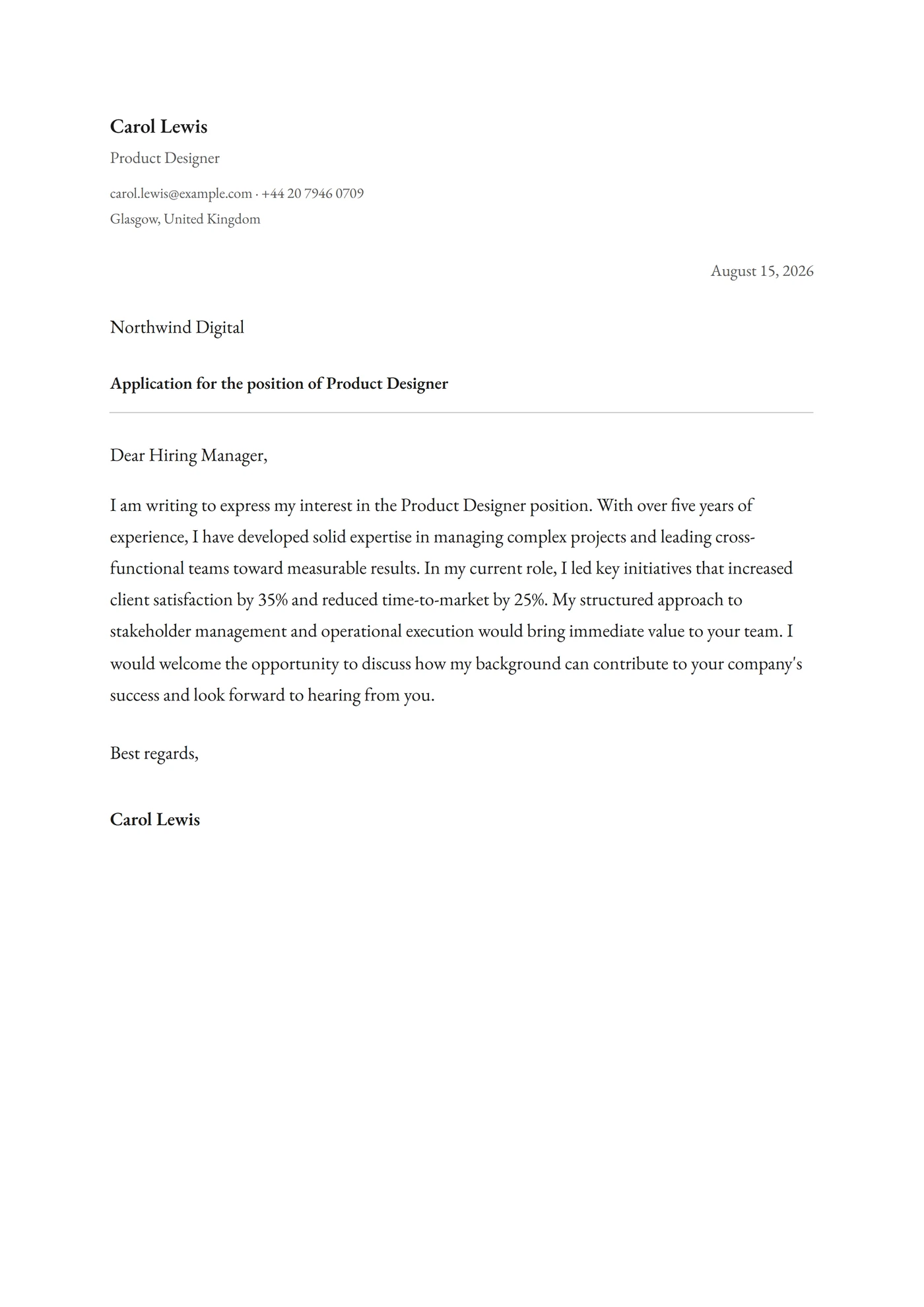
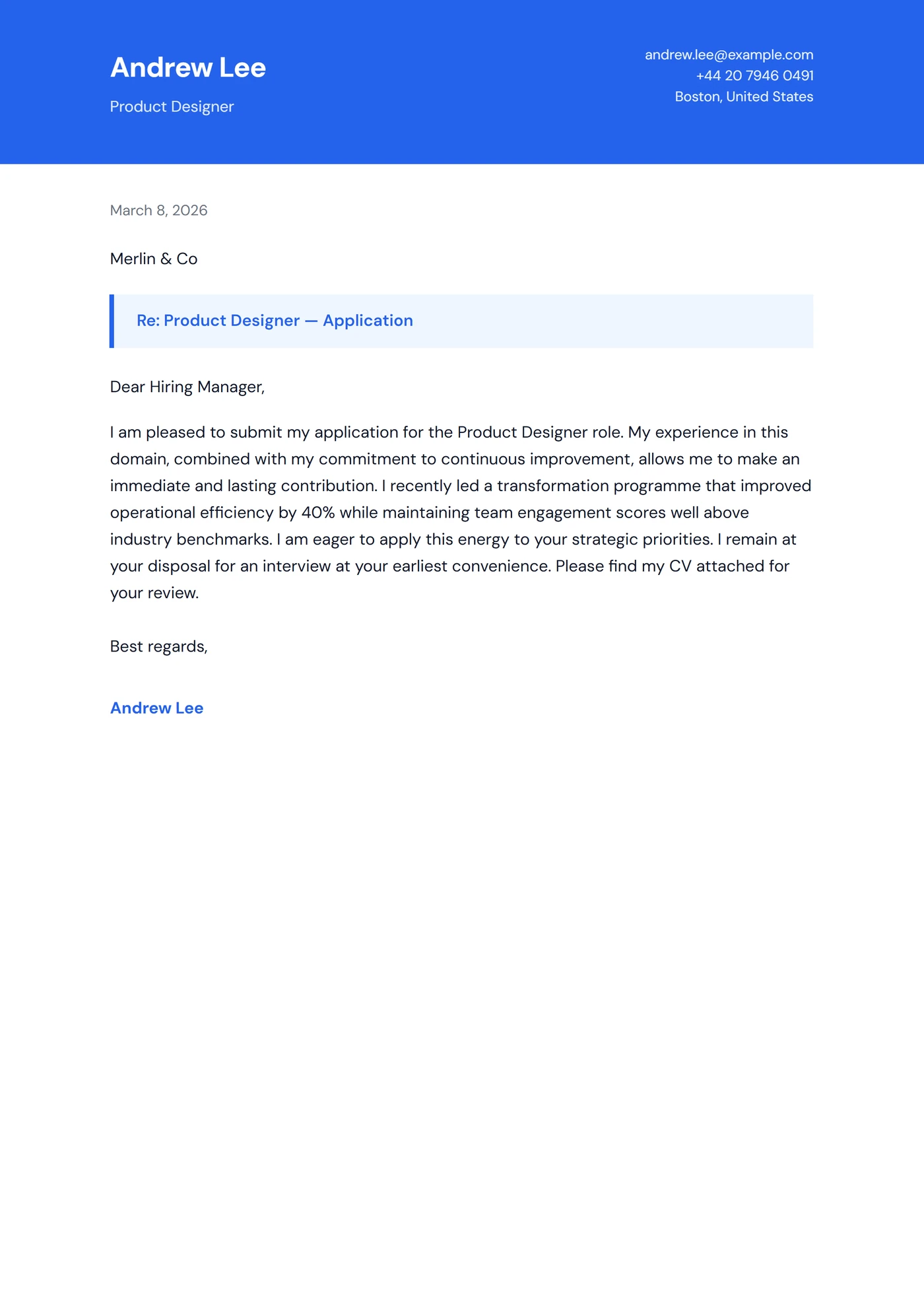
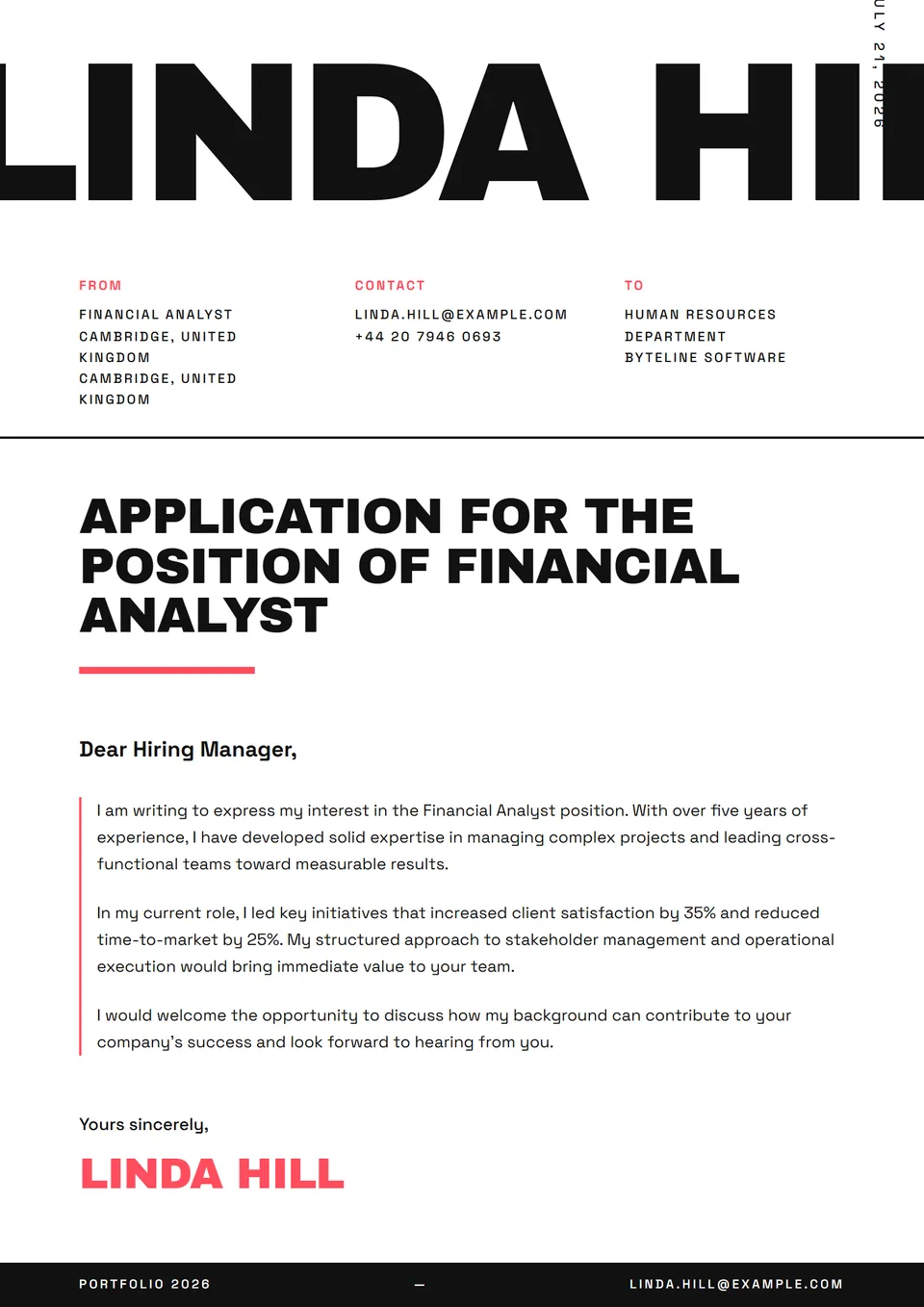
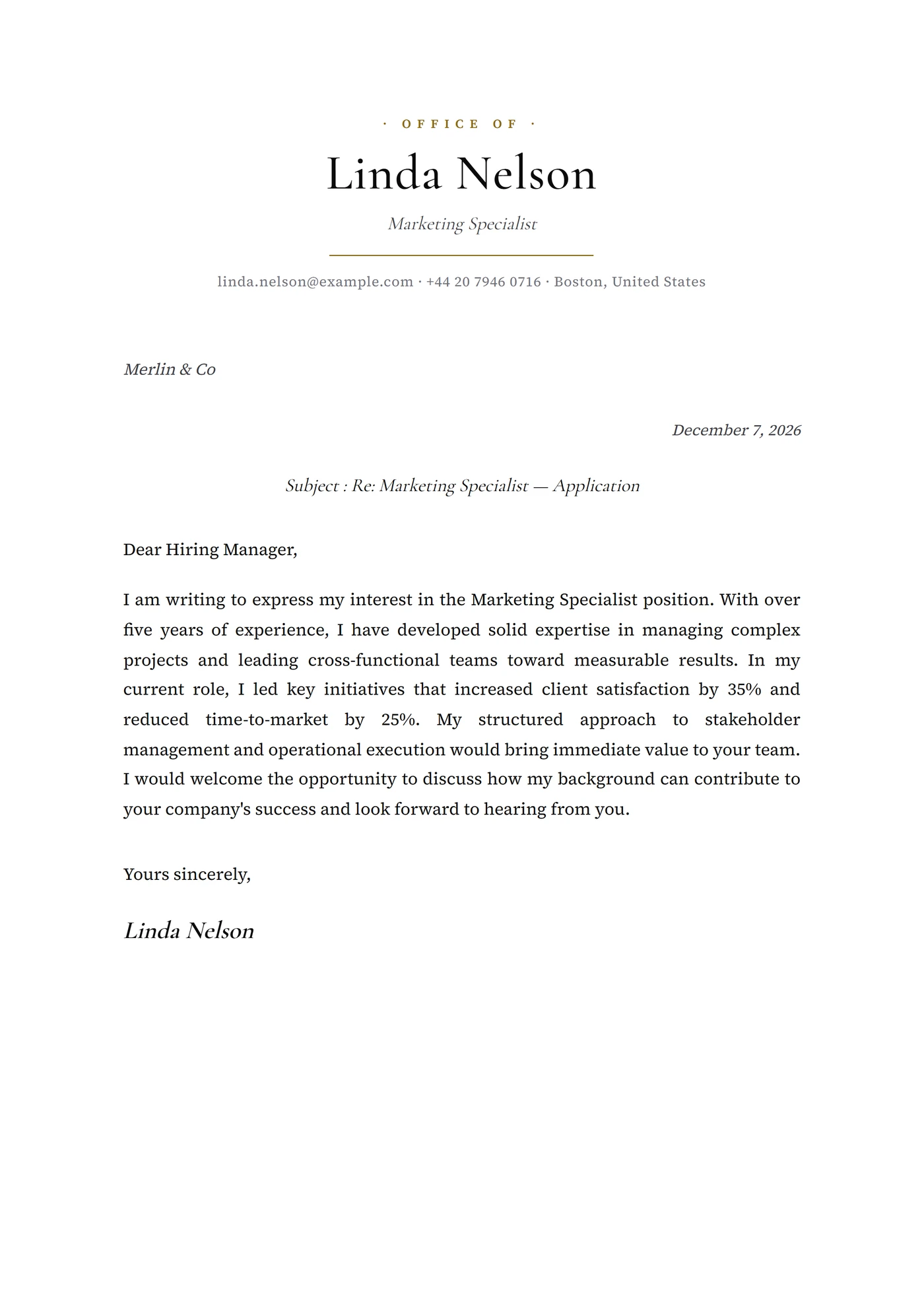
The Minimal Thin Rule template is a cover letter where a single hairline rule runs across the entire page width above the contact line, then again under the signature. Two precise horizontal beats and nothing else — the structure is purely architectural, with no decorative element. This makes it a signal of visual rigour for civil-engineering, structural and architecture profiles, and parses cleanly through every construction-sector ATS.
Who is it for?
It suits civil engineers, structural engineers, project architects and construction-project managers applying to majors (Bechtel, Skanska, Fluor, Aecom, WSP, Arup, Mott MacDonald, Ramboll, Parsons Brinckerhoff) and engineering consultancies. Equally relevant for urban-planning, infrastructure and public-works profiles in local-authority technical directorates, and for exhibition-design or contemporary-furniture studios where geometry is part of the brief.
How to use it
The rule is a hairline (0.5pt) — it must remain almost invisible to the eye while still structuring the page. Keep the body to two paragraphs and a signature at the bottom: architectural minimalism does not tolerate verbosity. The neutral sans-serif body accommodates project figures and reference numbers (project scale, team size, contract value) within the copy without disrupting the visual flow.
Frequently asked questions
Compatible with construction-sector ATS pipelines?
Yes. The ATS systems used by major construction firms (Workday at Bechtel, Skanska and Aecom, Taleo at Fluor, iCIMS at WSP, SAP SuccessFactors at Arup) parse the single-column layout without issue. The rule is a CSS element that interferes with neither keyword extraction nor section recognition — engineering reviewers see exactly what was authored.
Can I mention technical project references?
Yes, and it is expected usage. The template leaves room to cite one to three flagship projects with order-of-magnitude metrics (project value, duration, team size, contract scope). Avoid trade names that fall under NDA — describe by technical scope and structure type instead, which engineering recruiters value as a positive signal.
Is it suitable for international applications?
Yes, particularly across the UK (Arup, Mott MacDonald, Atkins, Mace), the US (Bechtel, Fluor, Aecom), Australia (Lendlease, Aurecon) and Canada (SNC-Lavalin). Architectural minimalism is a universal signal in civil engineering — no adjustment is needed beyond the language. The single-column structure travels intact across every English-speaking jurisdiction.