About this template
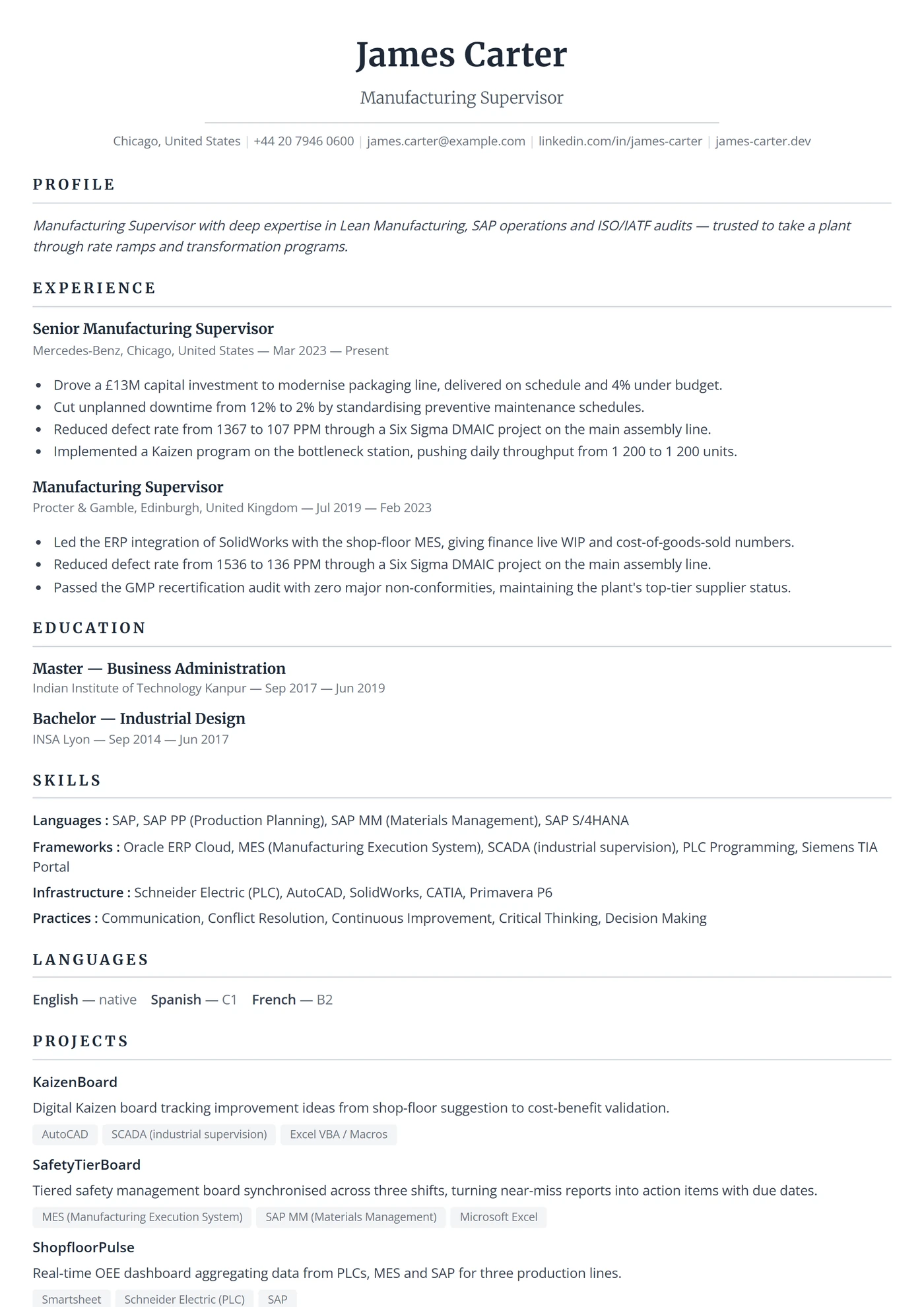
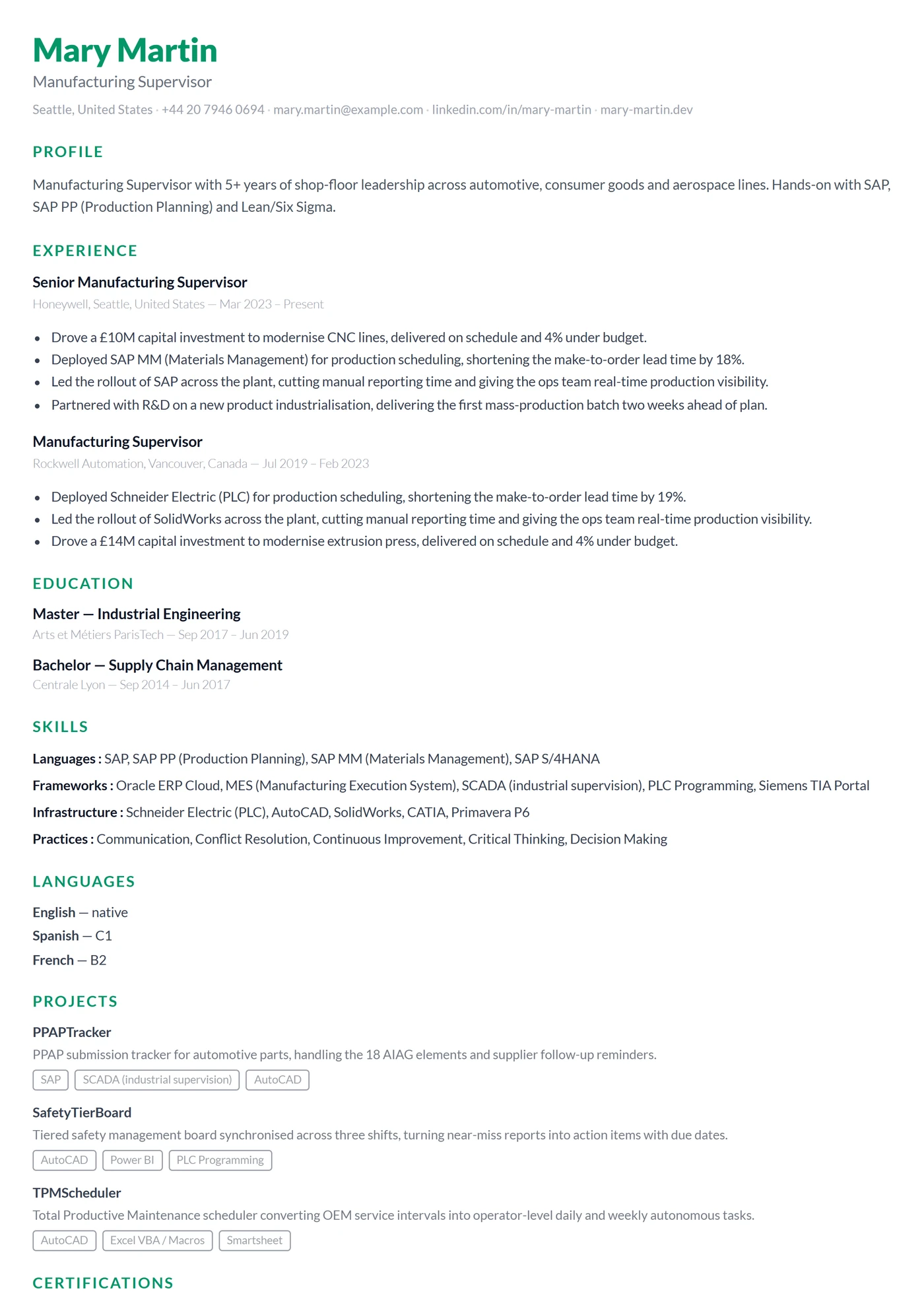
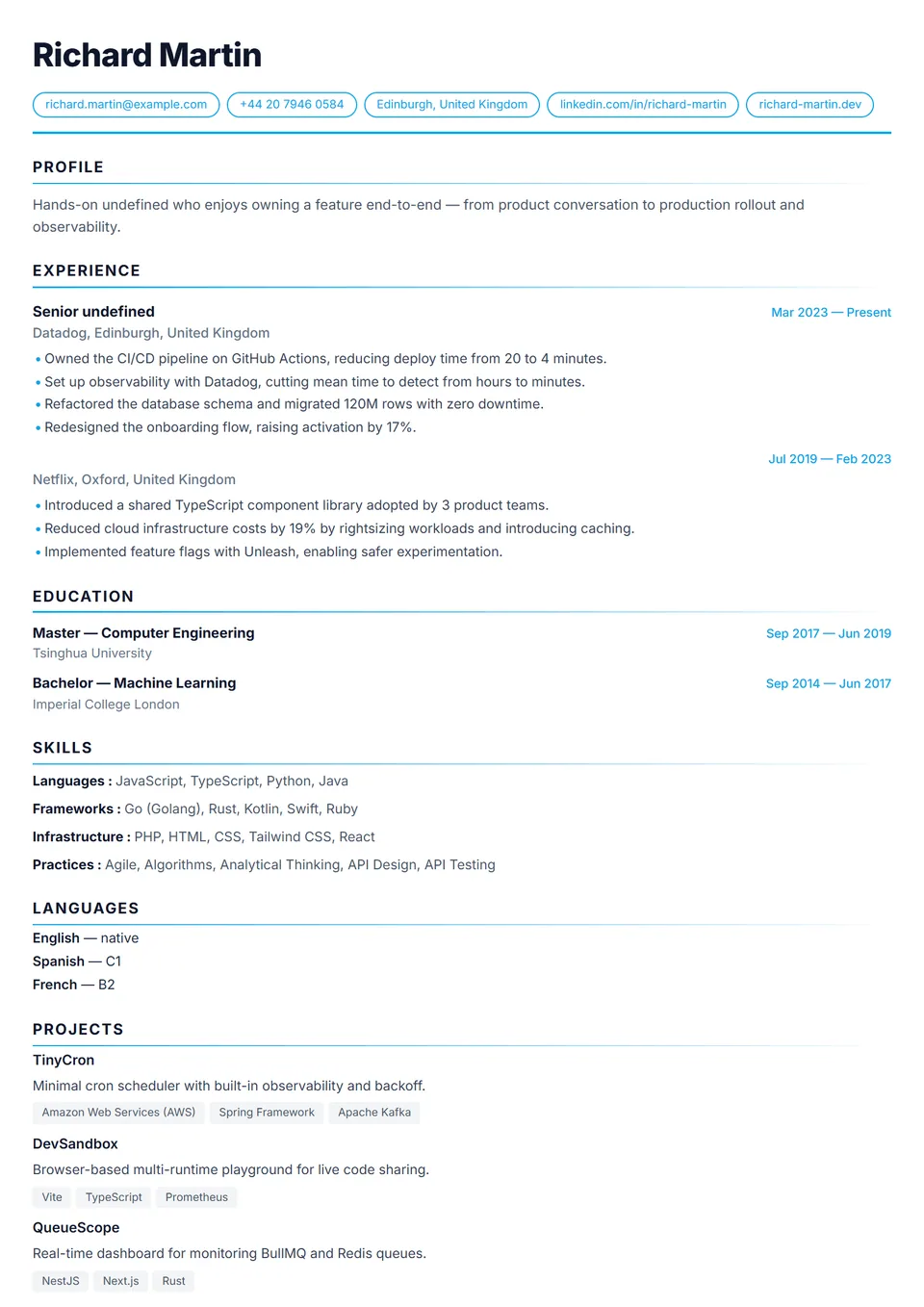
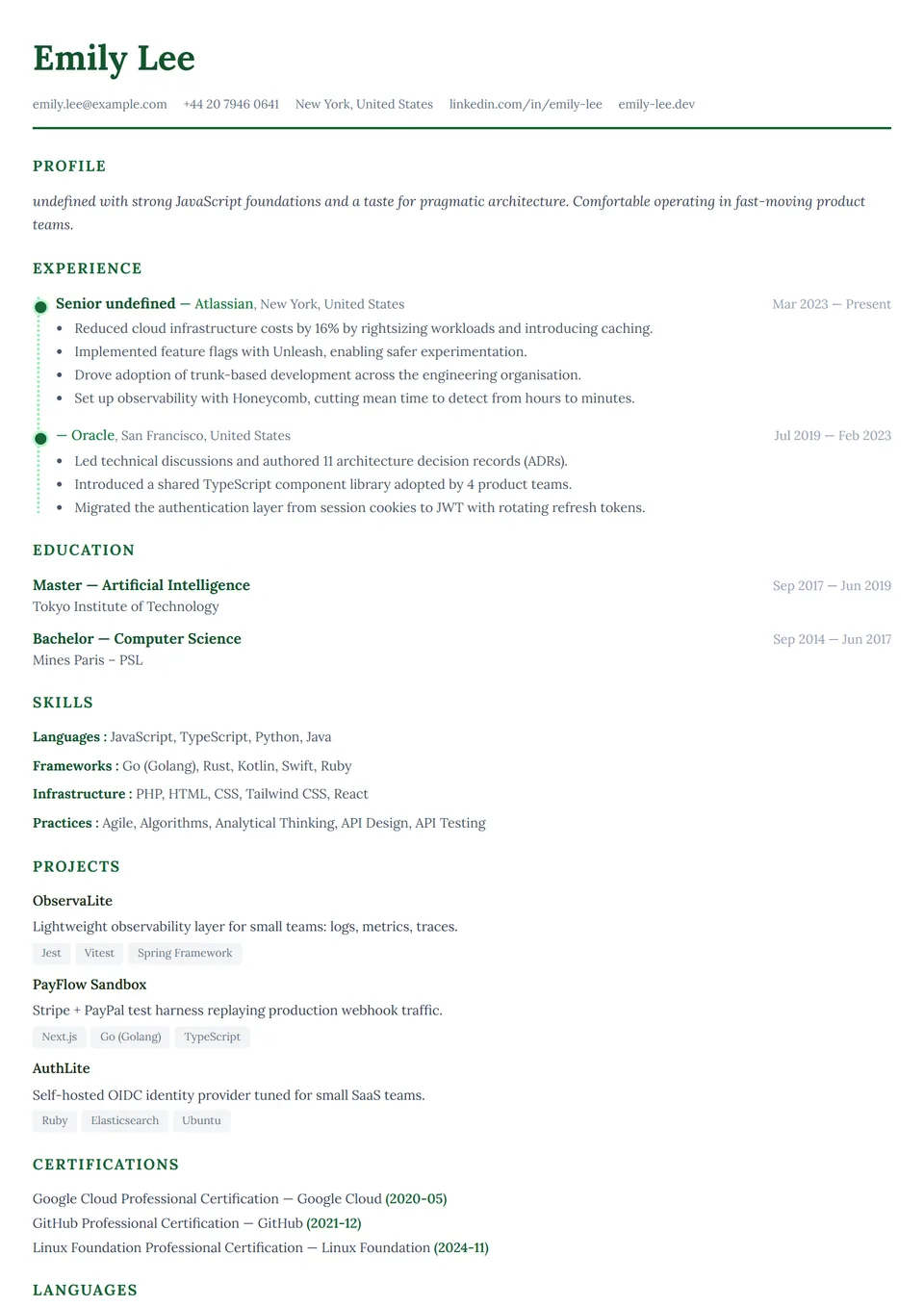
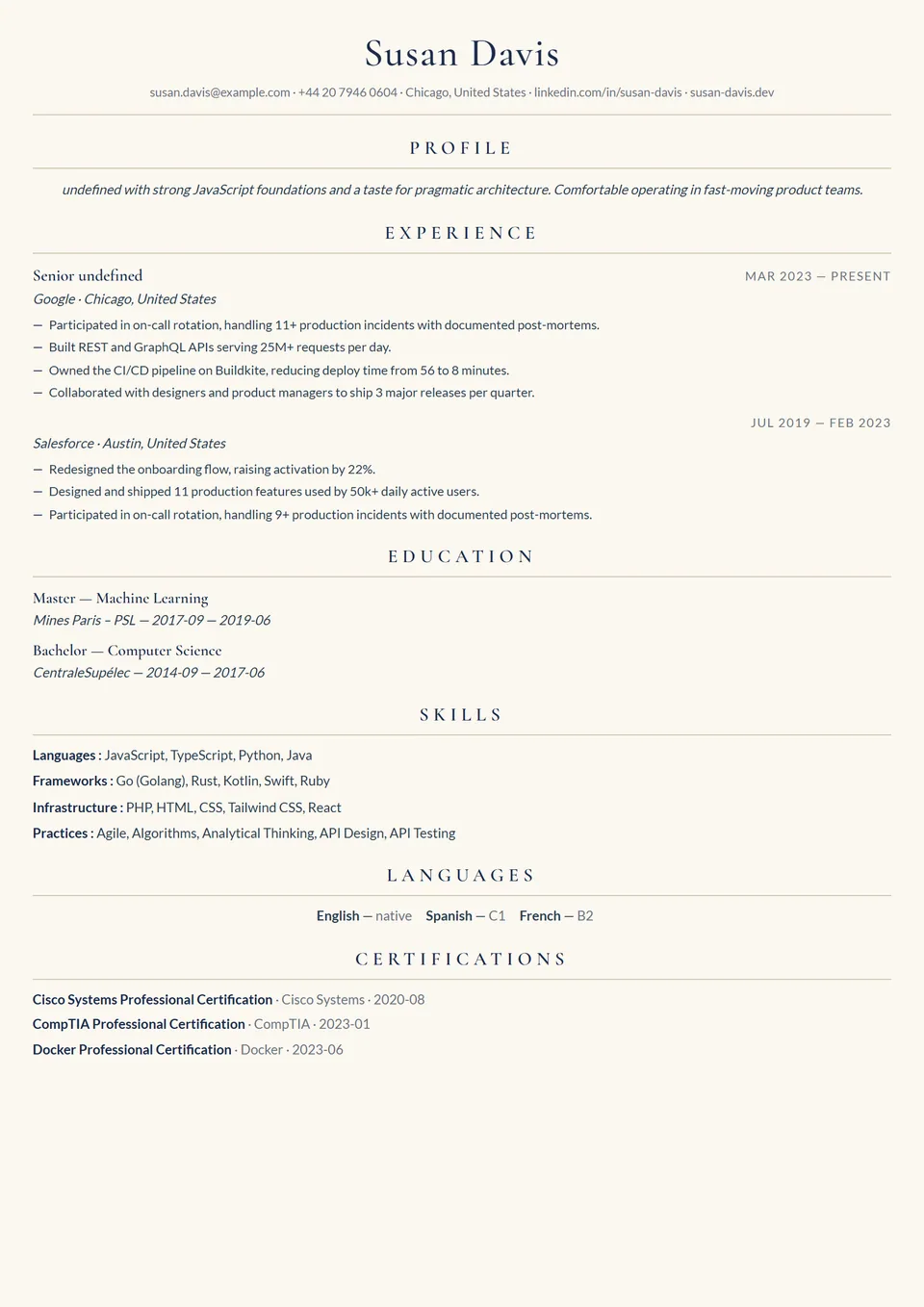
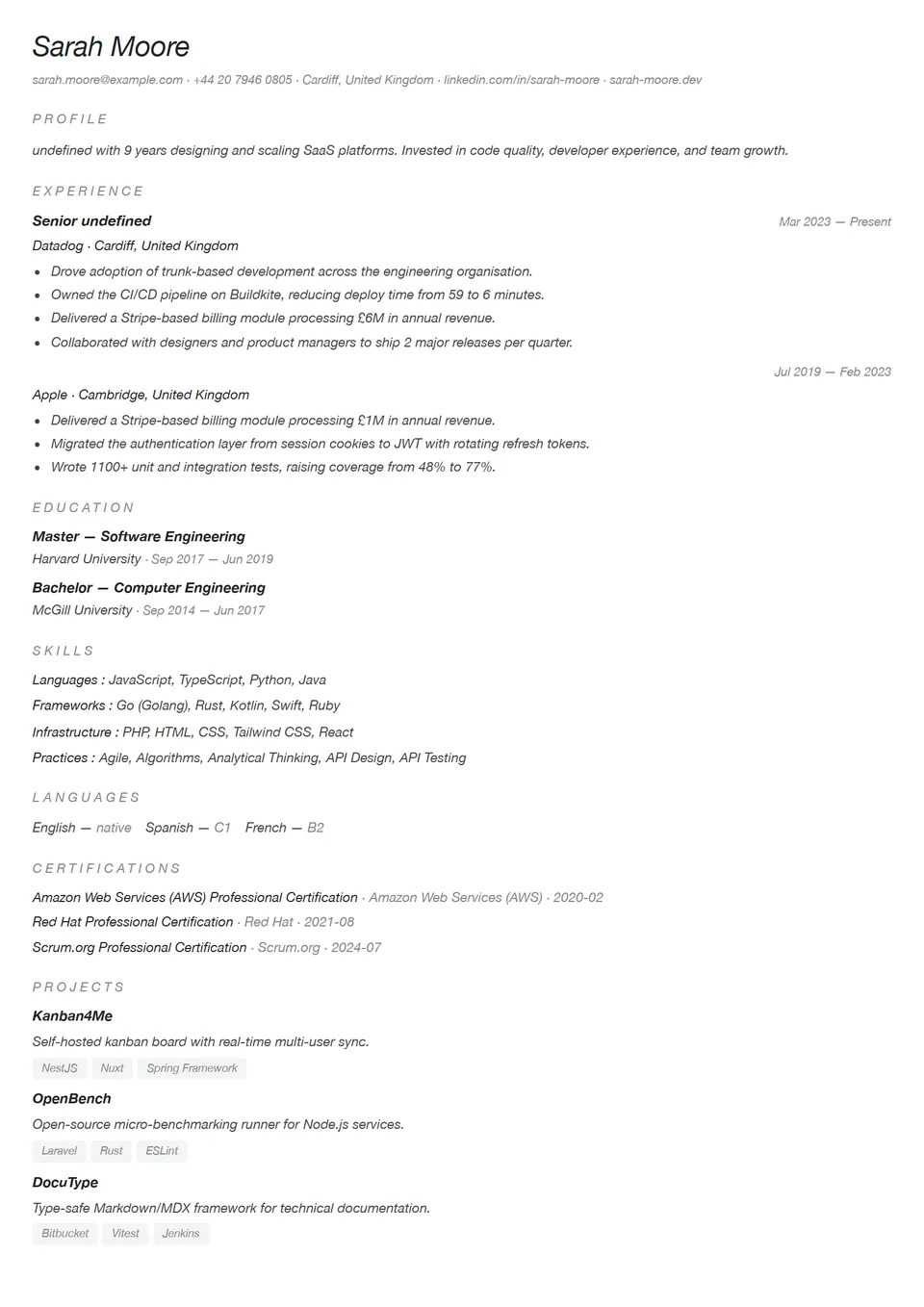
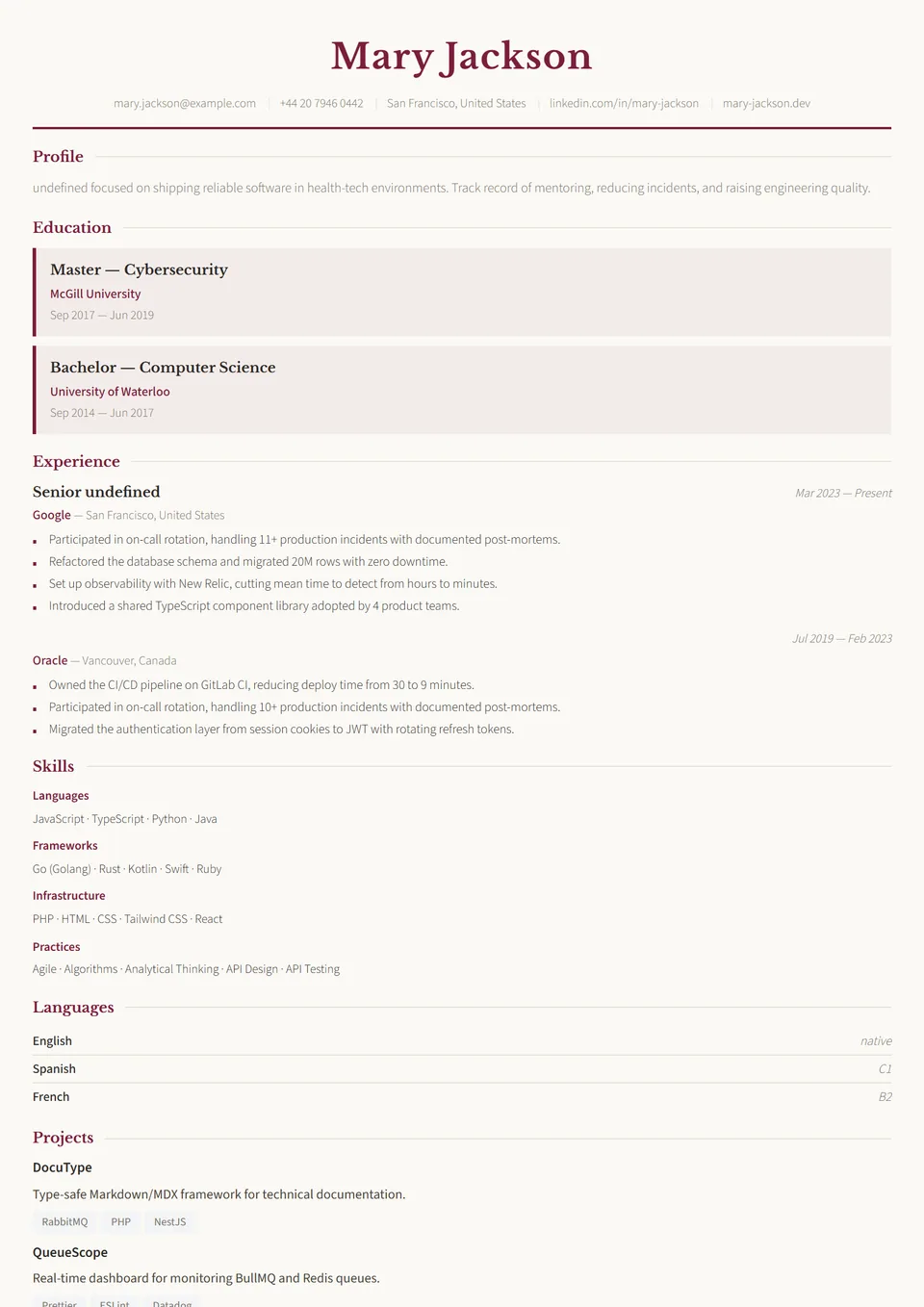
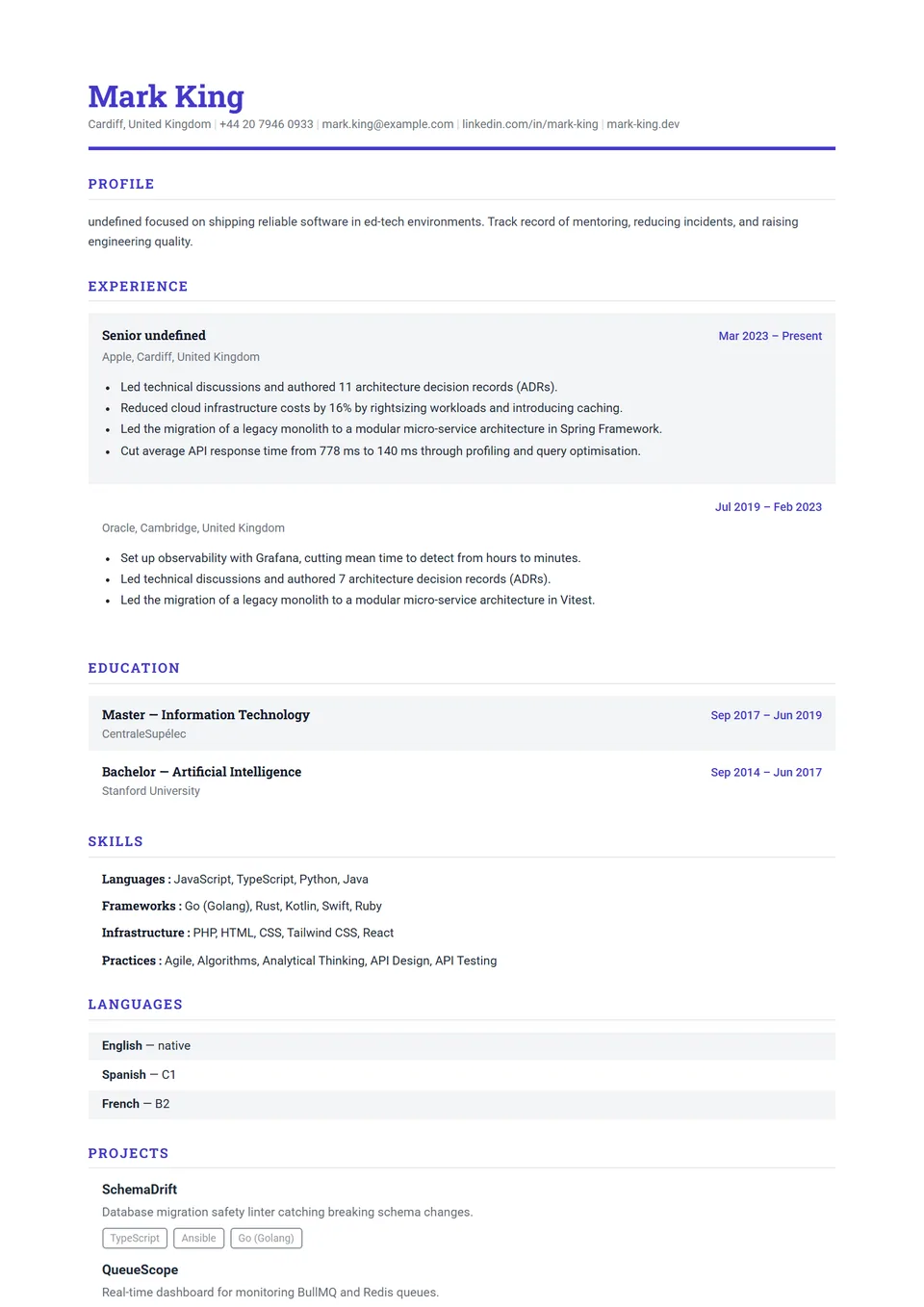
The ATS Compact template offers a single-column layout in Nunito Sans with tight line-height and an indigo accent. Optimised to fit a long career on a single page without sacrificing readability or keyword density, it remains compatible with the ATS pipelines used by Fortune 500 companies (Workday at Procter & Gamble, SAP SuccessFactors at General Electric, Cornerstone at Bank of America).
Who is it for?
It is built for senior professionals with 15+ years of experience who must compress decades of context onto one page: partners and managing directors in consulting, SAP/Oracle ERP programme leads, programme directors, country managers, enterprise sales leaders. Equally useful for executives in international mobility who want a one-page document readable by selection committees without weighing down the screening process.
How to use it
Keep 4-5 roles in full detail at most, synthesise earlier roles in a single line under an 'Earlier career' section. Favour 10-15 word bullets with an impact figure. Build a dense 'Key skills' section (8-12 items) in plain text to maximise keyword density. The education section sits at the bottom with two lines maximum per degree — focus on recent professional impact.
Frequently asked questions
How do I keep a CV dense without making it unreadable?
Work the bullets: one action verb at the start, one impact figure, and a short context. Avoid conjunctions and adverbs. Example: 'Led digital transformation of procurement IT — $5.2M recurring savings — 18 FTE team'. The em-dash separates segments more cleanly than commas and keeps bullets parseable by ATS engines that strip punctuation.
Should I keep a photo on a compact CV?
For the US, UK, Canada, Ireland and Australia: never. The photo is banned by professional convention and triggers anti-bias filters in some modern ATS engines. For Continental Europe and parts of Asia, the photo remains acceptable in most sectors except tech and the public sector — but a compact one-page CV often reads cleaner without it.
Does the template handle technical characters (kg, m², €, %)?
Yes, standard Unicode characters (², ³, €, %, °, ±) render natively and pass ATS engines without breaking parsing. For complex units (kWh, m³/h, t-CO₂), use Unicode characters rather than images or superscript formatting which some legacy parsers may lose. The template is tested against Workday, Taleo, Greenhouse and Lever.