About this template
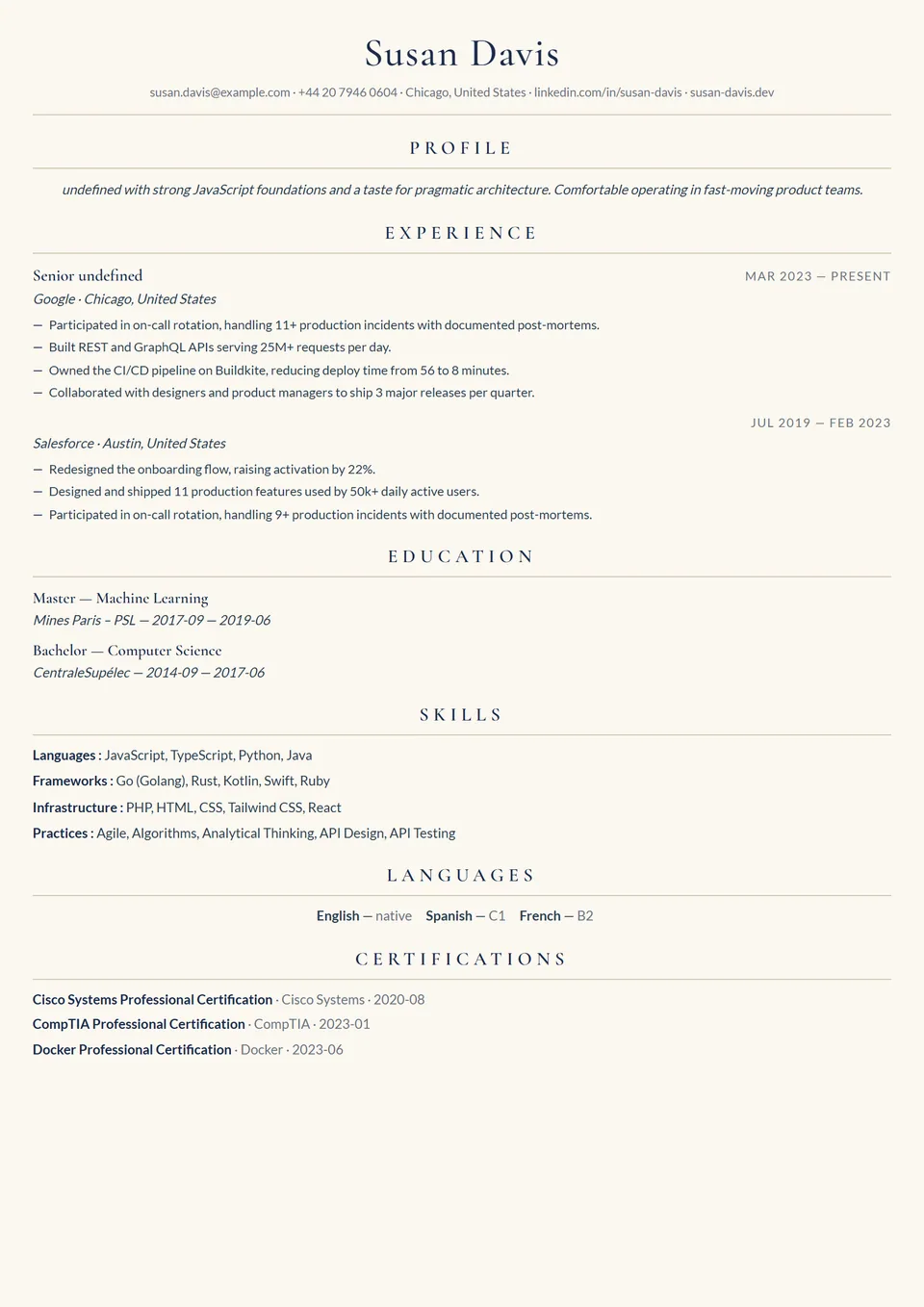
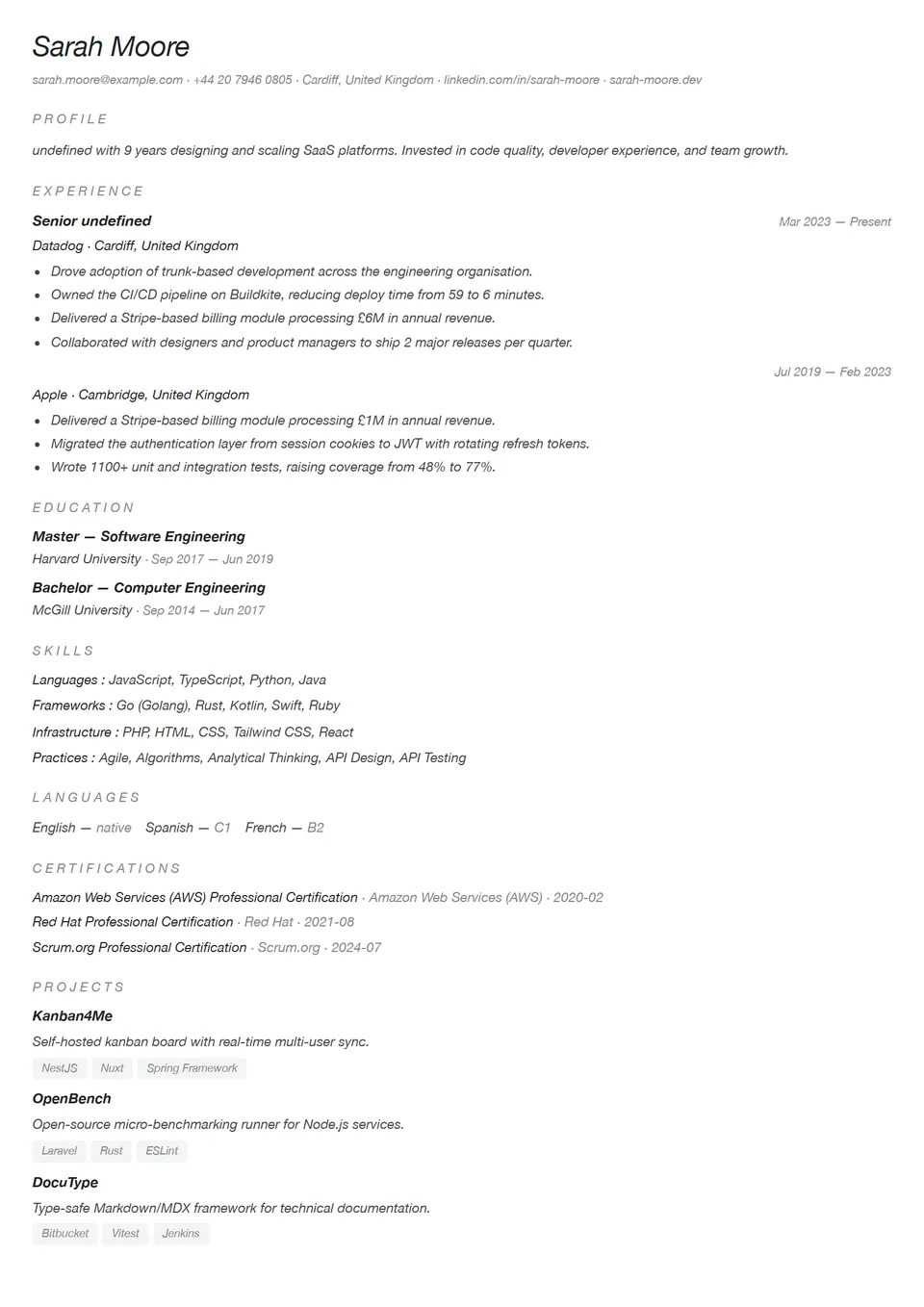
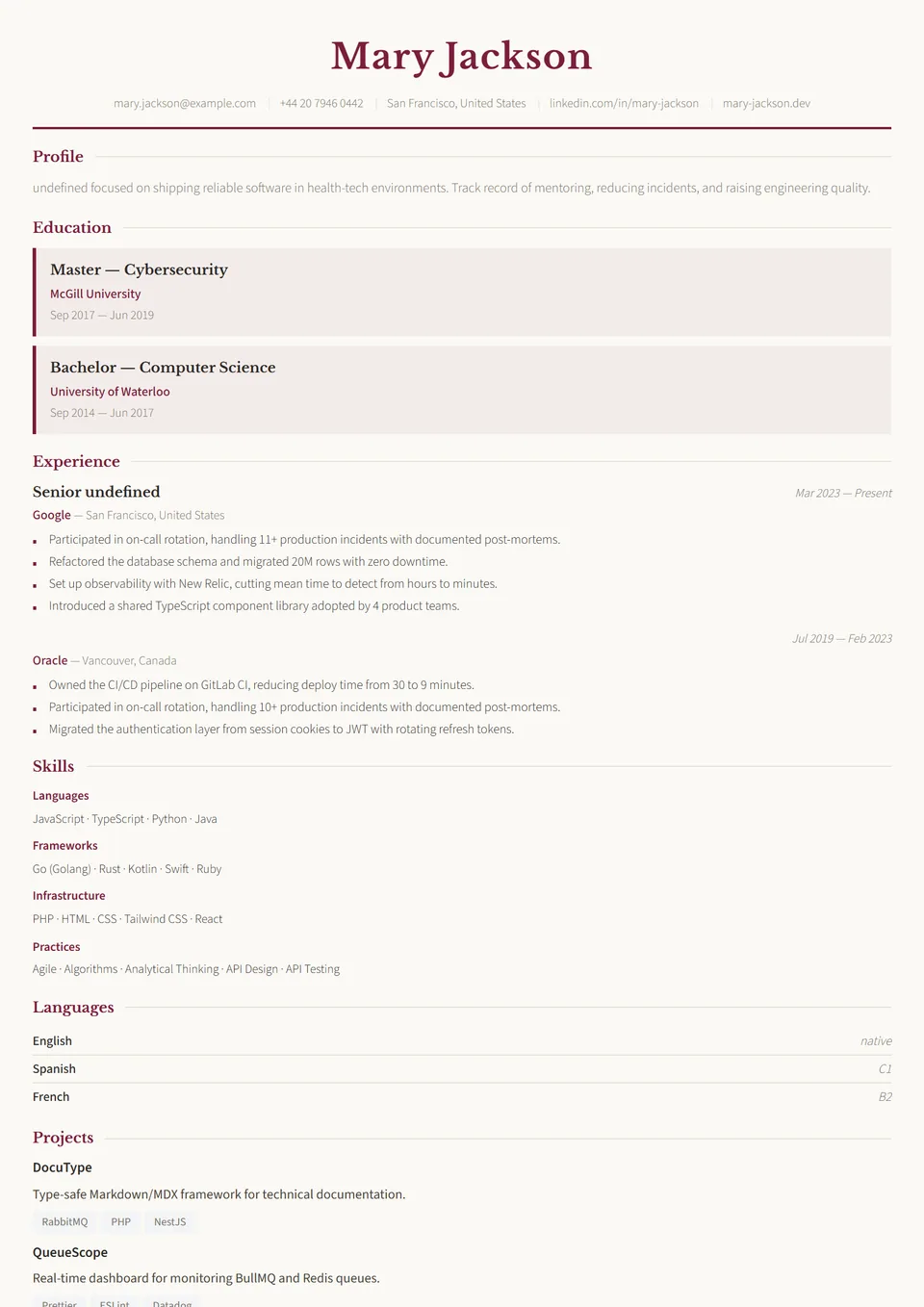
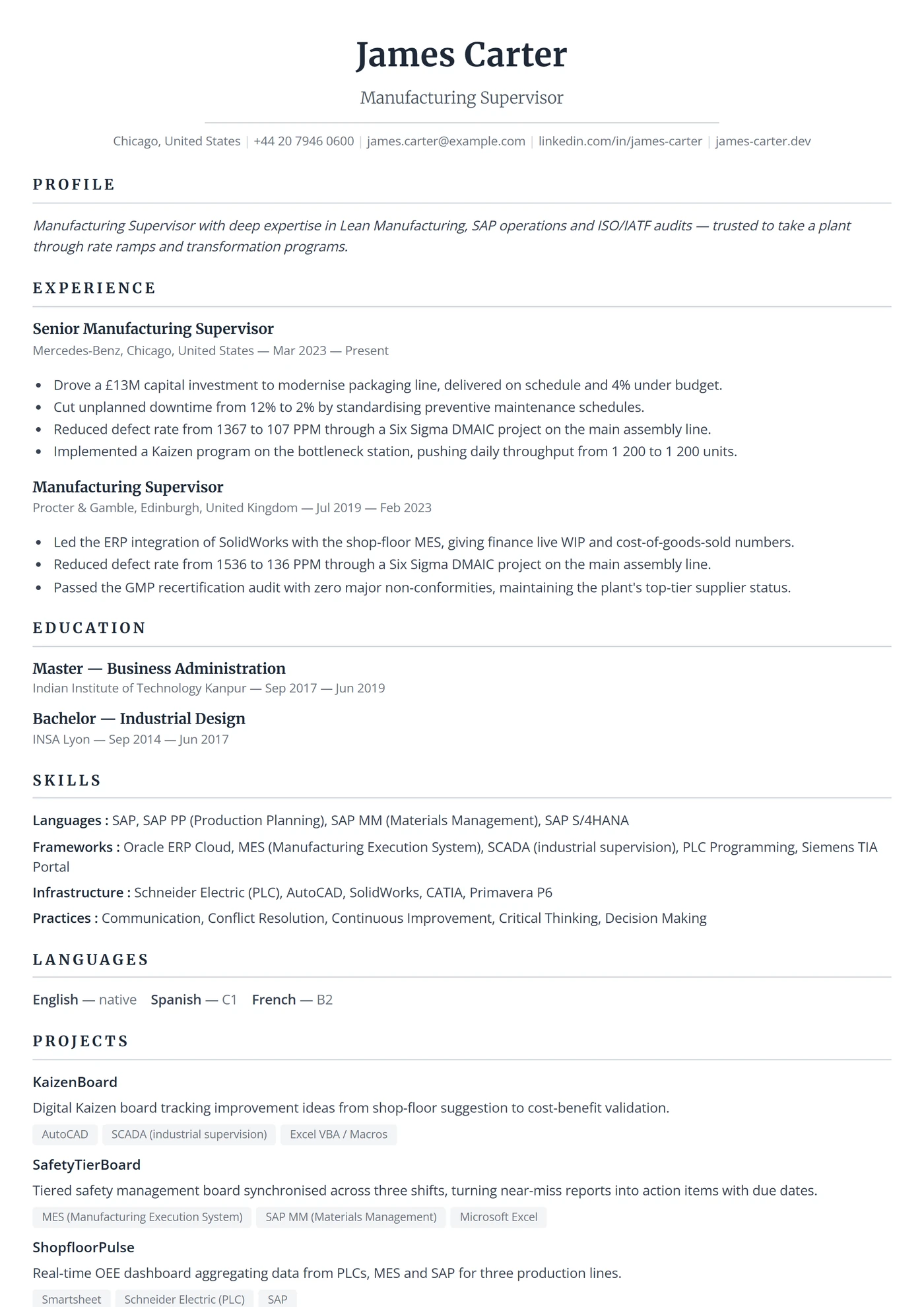
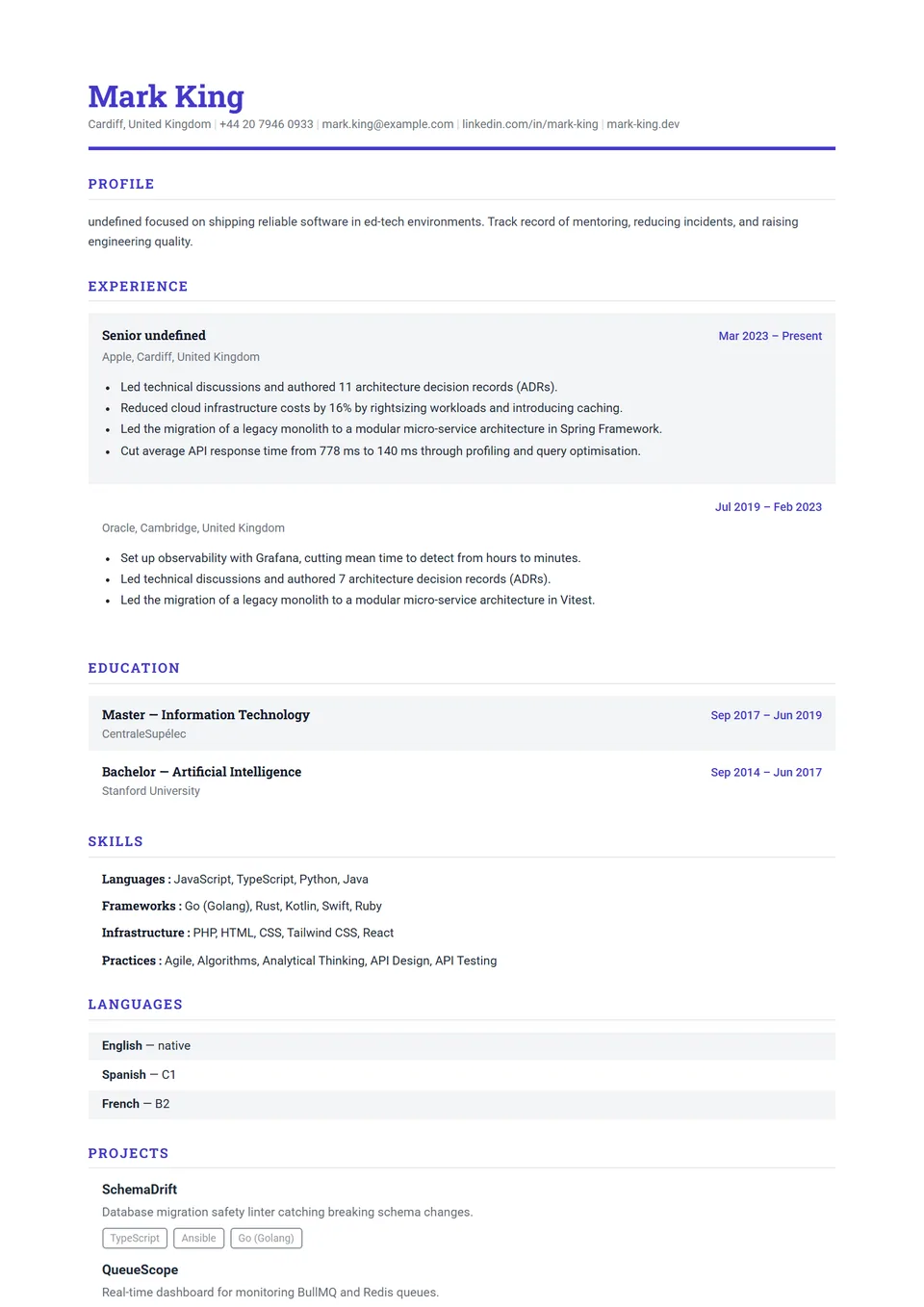
The Classic Parchment template is a single-column CV entirely set in EB Garamond, laid out on warm parchment-cream background, with centred italic section titles framed by burgundy tilde marks. The rendering evokes a historical document without ornament overload — measured heritage feel, scholarly register owned. It's a highly specific choice, to deploy only when the sector explicitly authorises and rewards this register.
Who is it for?
It suits traditional academic profiles in theology, classical studies, medieval art history, palaeography, codicology, ecclesiastical roles, heritage craft trades (historic-building restoration, fine furniture conservation, art conservation, vitrail glasswork) and established cultural foundations. Relevant for applications to specialised heritage press (Burlington Magazine, Apollo, The Art Newspaper), Notre Dame and Catholic University faculty positions, Yale Divinity, Princeton Theological Seminary, and Oxford-Cambridge theology faculties.
How to use it
Open with a brief and precise positioning that owns the register (e.g., 'Heritage conservator, 18 years across museum collections direction and decorative arts expertise of the 18th century'). For academics, mention degrees in Latin where customary (doctor honoris causa, magister artium). For ecclesiastical profiles, mention ordination, diocese of attachment and parishes or chaplaincies served. For heritage crafts, list major heritage projects worked on (cathedrals, designated historic landmarks, UNESCO World Heritage Sites).
Frequently asked questions
Isn't the parchment styling too dated for a modern recruiter?
On most sectors, yes — prefer Classic or Classic Letterhead instead. The Parchment template is relevant only in environments where the historical register itself is a competency (theology, palaeography, heritage conservation, codicology). In these niches, it's actually a valued cultural-belonging signal that demonstrates familiarity with the field's traditions.
Does it suit applications to graduate theology programmes?
Yes for PhD applications in theology, divinity, biblical studies and church history (Yale Divinity, Duke Divinity, Notre Dame, Princeton Theological Seminary, Harvard Divinity). Mention ancient languages mastered (Latin, Koine Greek, Biblical Hebrew, Syriac, Aramaic), specialised fieldwork (manuscript study, archival research at the Vatican Library, Bodleian), and any clerical formation or ordination if relevant to the programme.
Should I use it for a heritage-press application?
Yes for specialised heritage publications (Burlington Magazine, Apollo, Studies in Conservation), less for contemporary art press (Artforum, Frieze, ArtReview) which favours a more modern register. List published articles with title, journal, volume, year and page count — in formal academic bibliography style — which signals discipline expected by such editorial boards.