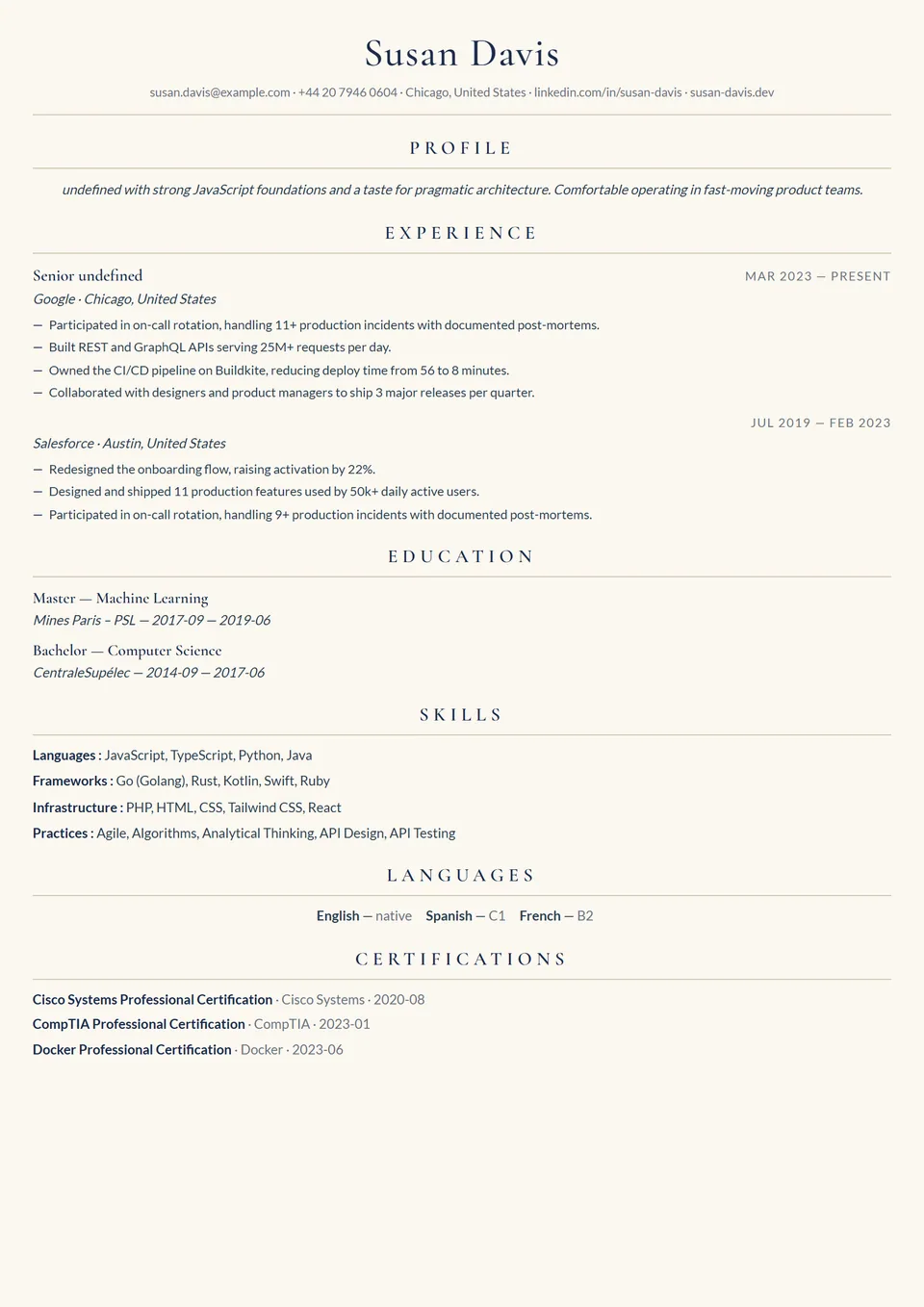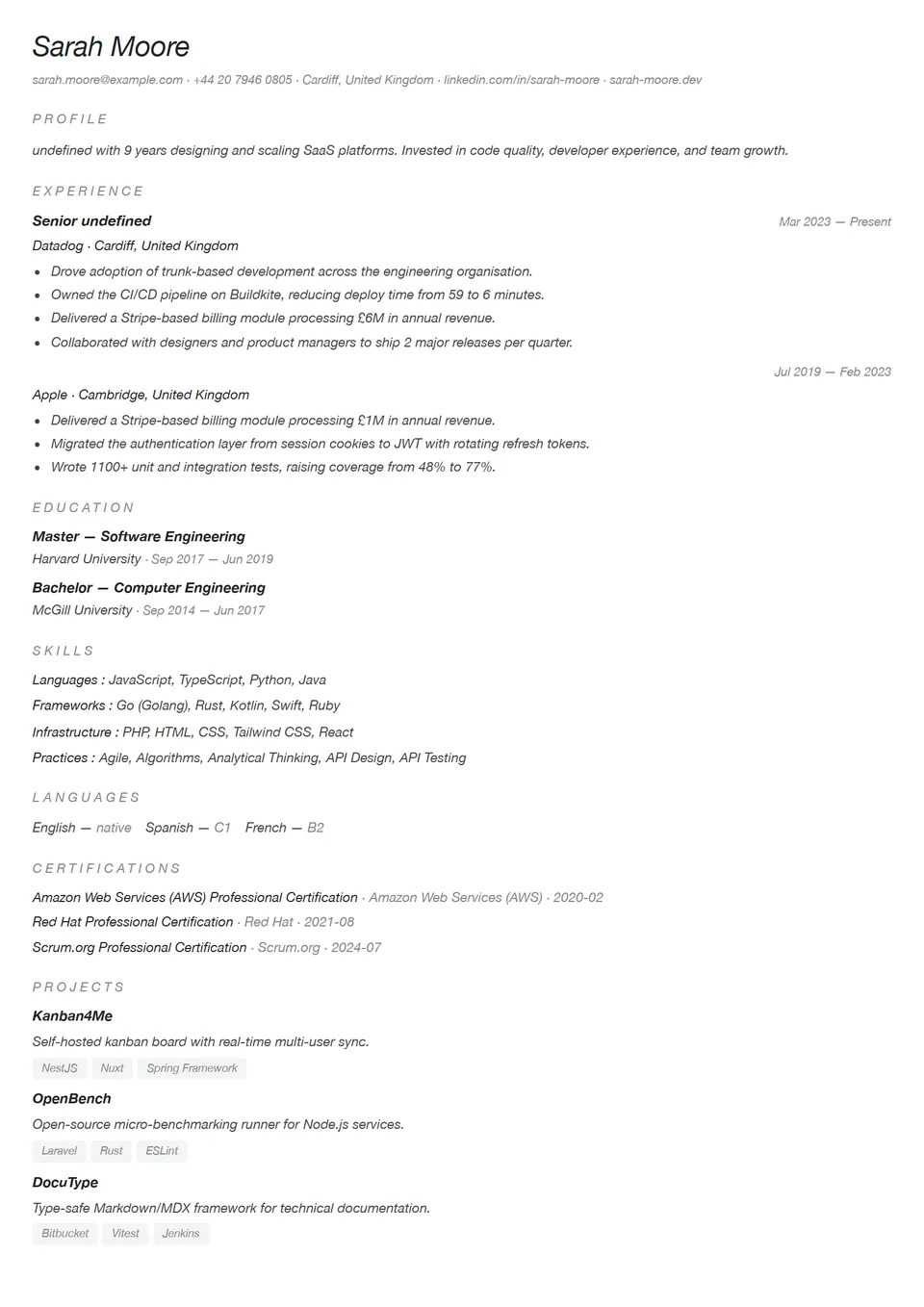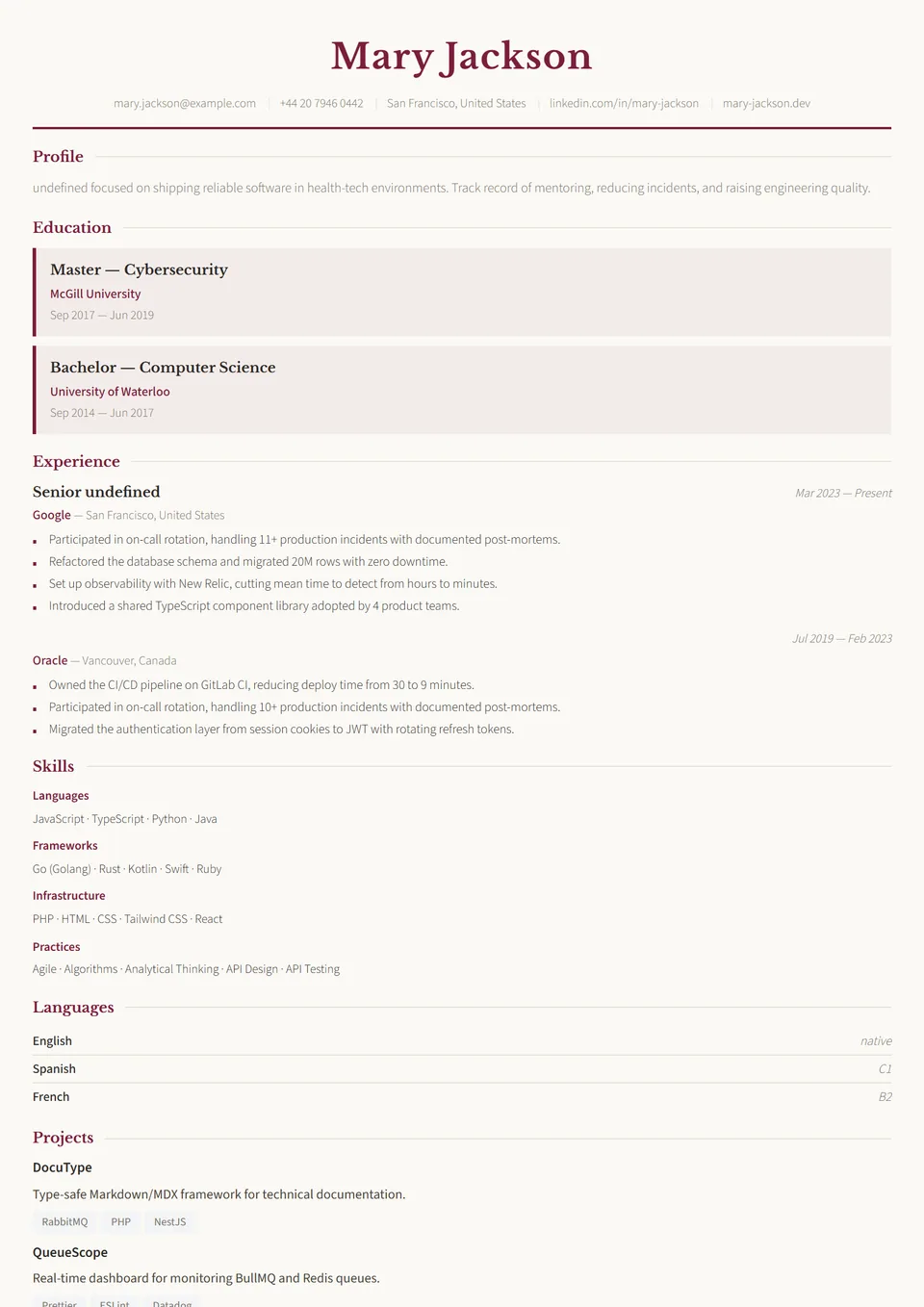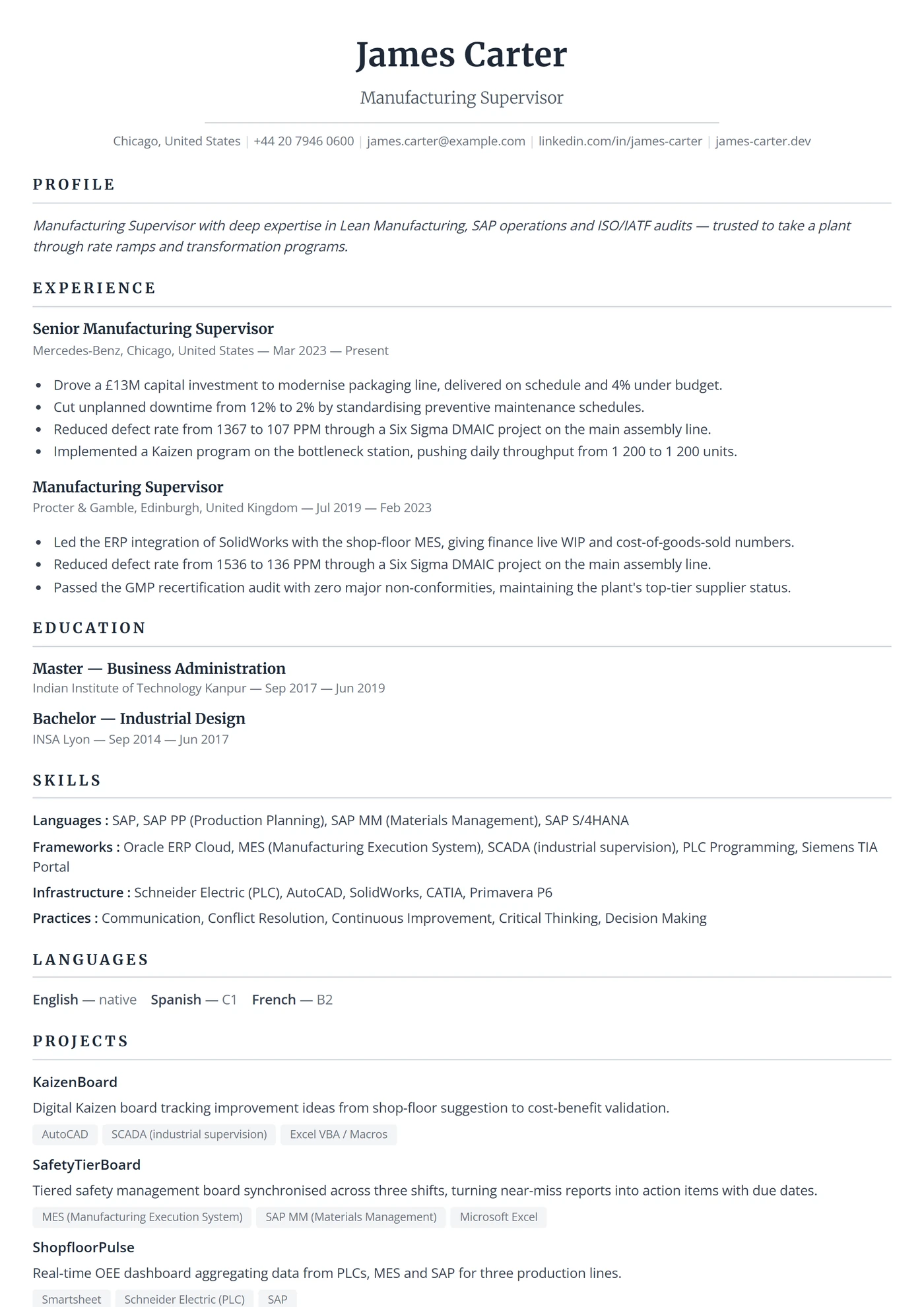
About this template
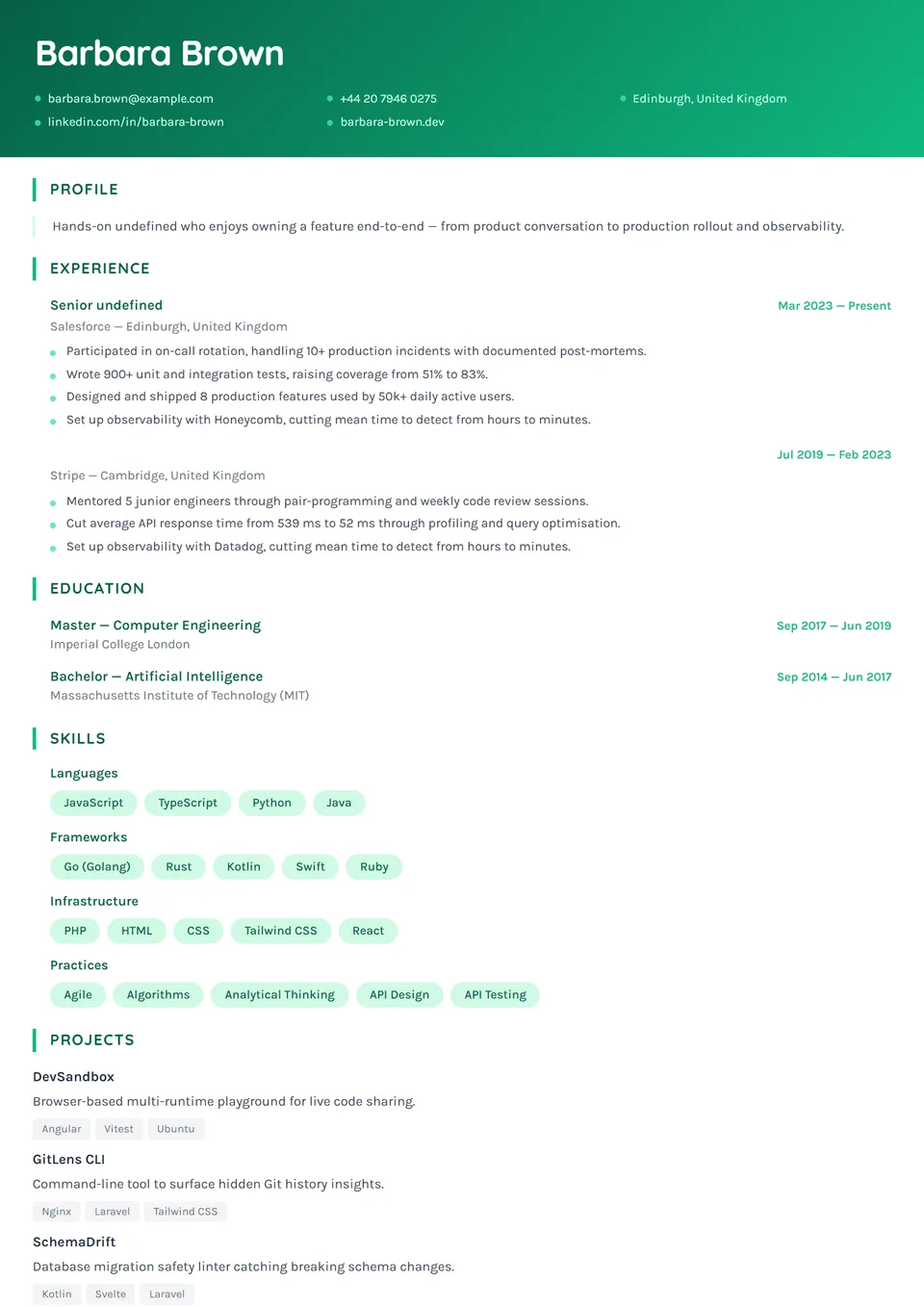
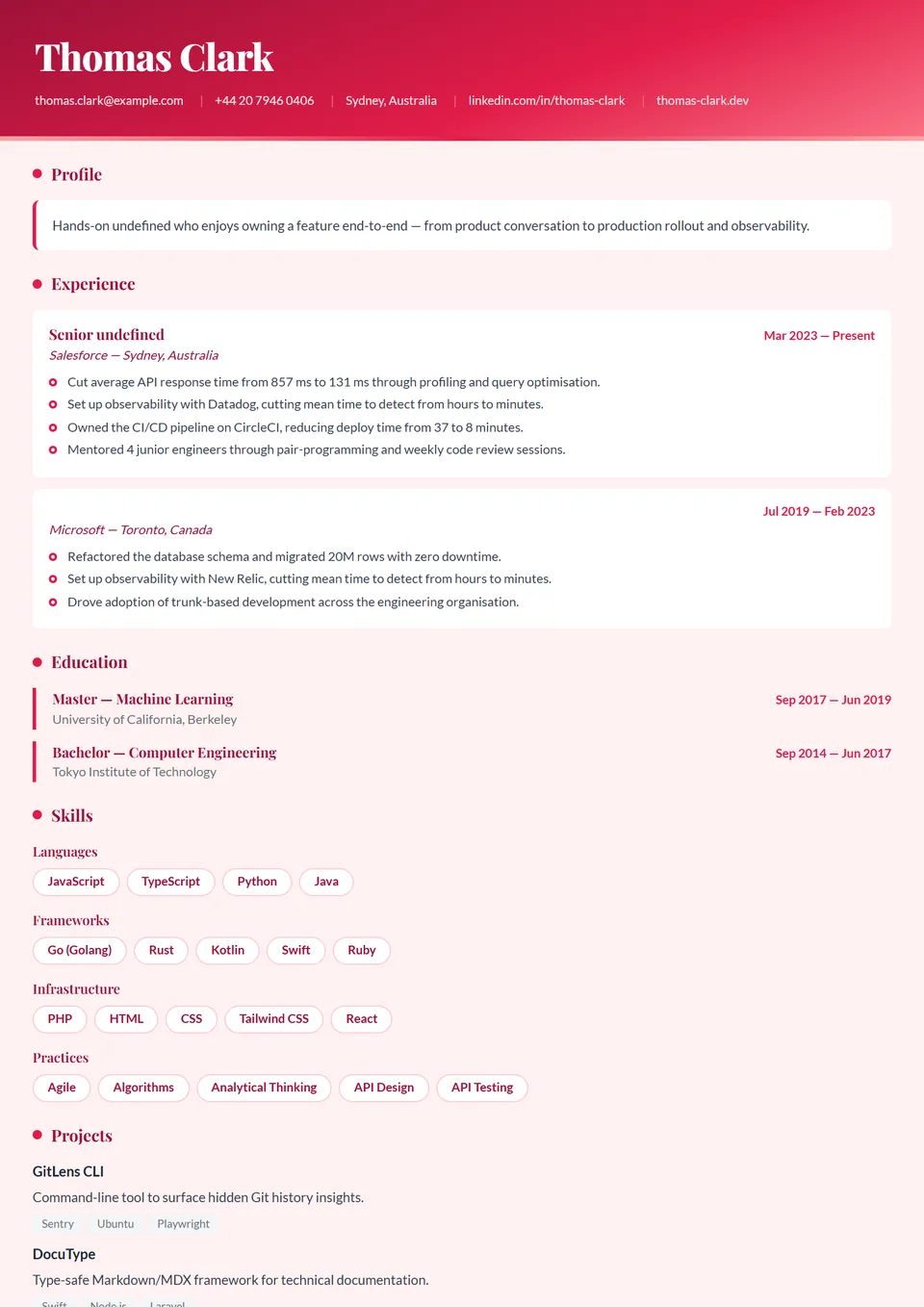
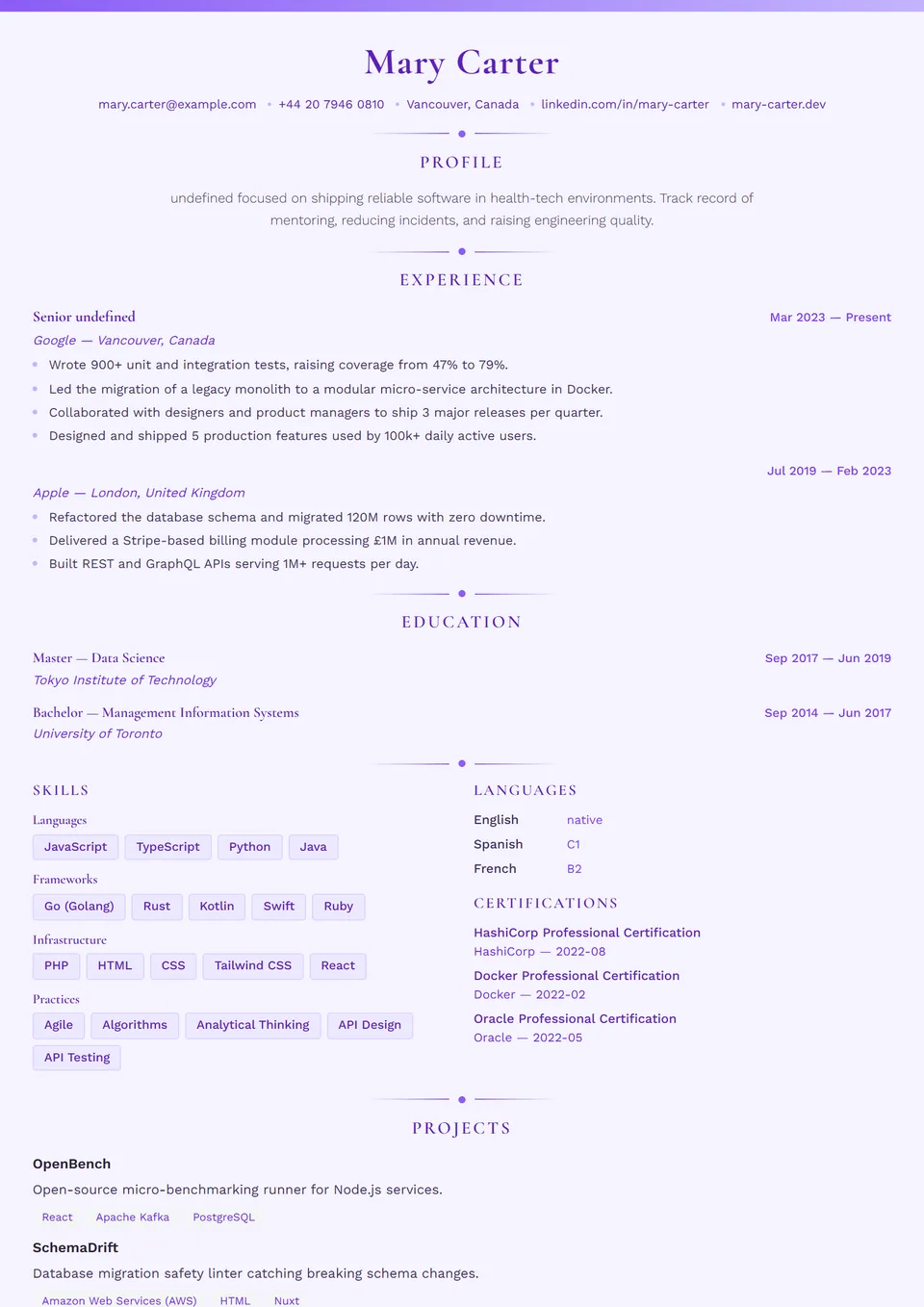
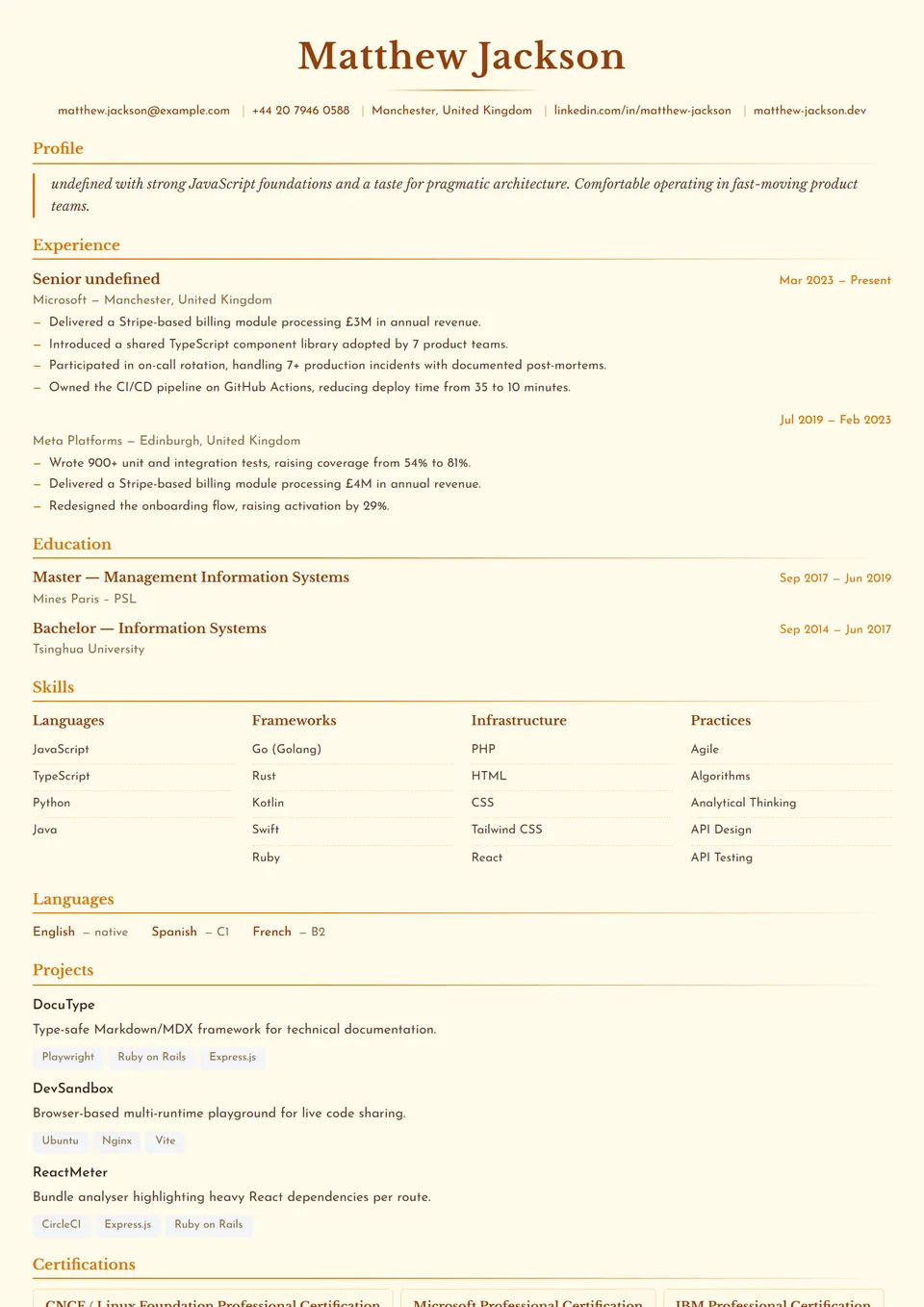
The ATS Creative Writer template is an editorial CV crafted for profiles whose craft is writing. Its Playfair Display typography with emerald accent and generous reading rhythm evokes a magazine spread, yet the document parses as plain text. The format clears Workday, Greenhouse, Lever and iCIMS ATS pipelines used by newsrooms (The Guardian, The New York Times, The Atlantic, The Economist), publishing houses (Penguin Random House, HarperCollins, Hachette) and major creative agencies (Wieden+Kennedy, Droga5, Ogilvy, BBDO).
Who is it for?
It suits staff and freelance journalists, agency copywriters, brand content directors, novelists with day jobs, magazine editors-in-chief and senior content strategists at B2B SaaS companies. It also fits press card applicants, writing residency candidates (MacDowell, Yaddo, Hawthornden Castle) and editorial roles at trade publishers and university presses. Suitable for senior IC writers transitioning into content leadership at scale-ups (Notion, Stripe, Figma) where editorial voice is a recognised craft.
How to use it
Three blocks structure the document — Editorial experience (with masthead or brand name, scope, content types produced), Bylines and publications (with dates, mastheads and permanent URLs), Education. Place a portfolio URL in the header with a short domain (yourname.com or contently.com/profile) rather than a scattered list of links. For freelancers, quantify yearly output (number of bylines, regular mastheads, format types: long-form investigation, short-form, op-ed, brand case study). SEO long-tail: 'freelance journalist CV', 'agency copywriter resume template', 'content director CV', 'magazine editor-in-chief resume', 'B2B SaaS content strategist CV'.
Frequently asked questions
Should I include a portfolio or links to articles?
Yes — it is expected for any editorial profile. Place a short portfolio URL in the header (yourname.com or contently.com/profile). Curate 5 to 8 representative pieces rather than dumping everything: one long-form investigation, one signature short format, an opinion piece, a brand case study. For staff journalists, list the press card number and the union (NUJ, Society of Professional Journalists, IFJ). For freelancers awaiting accreditation, mention 'press card application in review'.
How do I quantify editorial output?
List bylines per year, the print run or monthly uniques of main mastheads, and the format mix produced (investigation, reportage, op-ed, briefs, newsletter, case study). For brand roles, add the KPIs owned (newsletter growth rate, completion rate, social engagement, organic traffic). Avoid empty metrics ('substantial editorial production') — they read as filler to an experienced editor-in-chief. Always tie volume to outcome where possible.
Does the template work for a publishing house application?
Yes, particularly for commissioning editor, reader's committee, literary publicist and series editor roles. Penguin Random House, HarperCollins, Knopf, Faber & Faber and Granta value the restrained editorial register. Reinforce the Publications section with manuscripts acquired, authors developed and prizes won by the books shepherded (Booker, Pulitzer, National Book Award, Costa). For reader positions, mention languages read fluently and the genres of expertise.