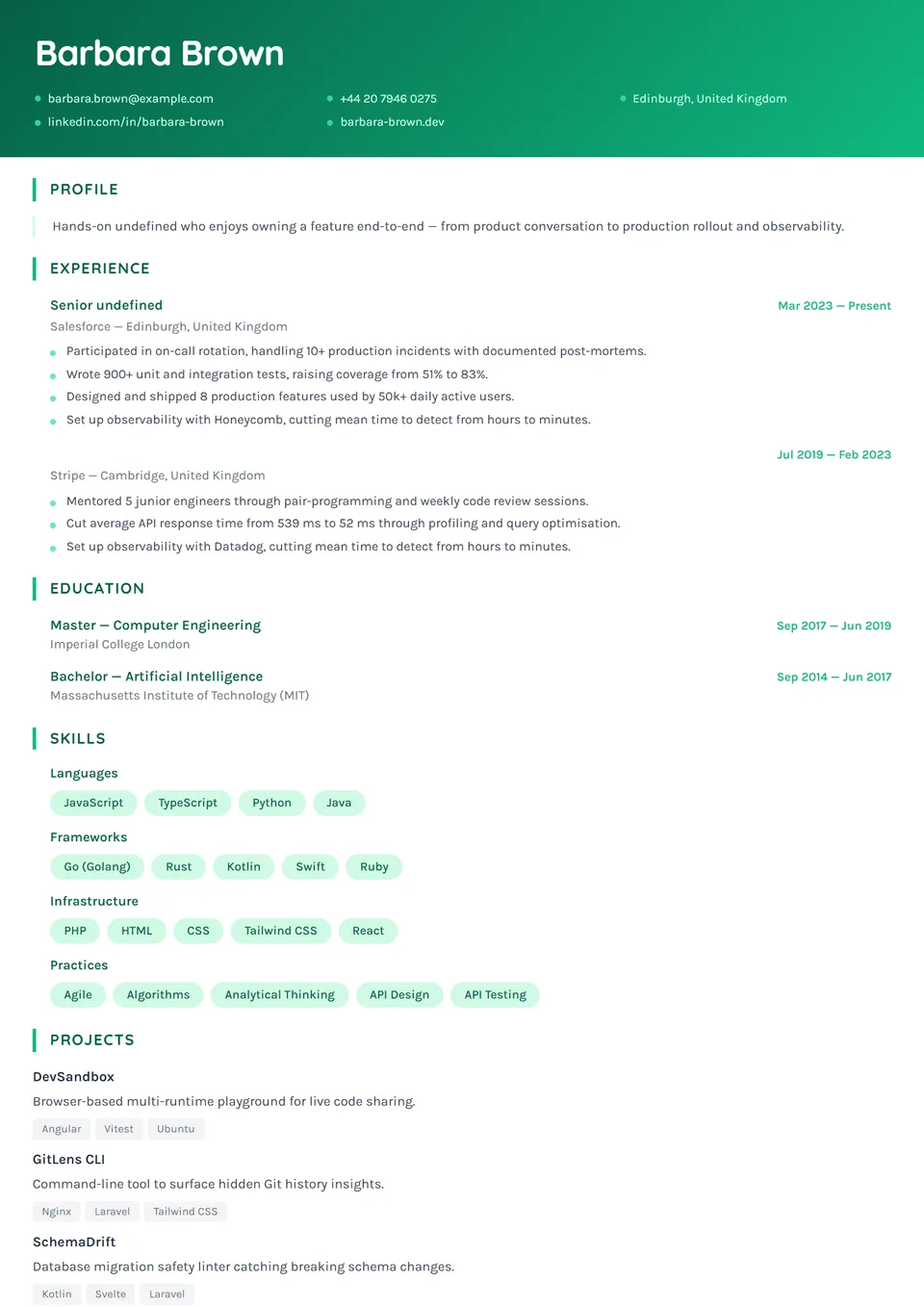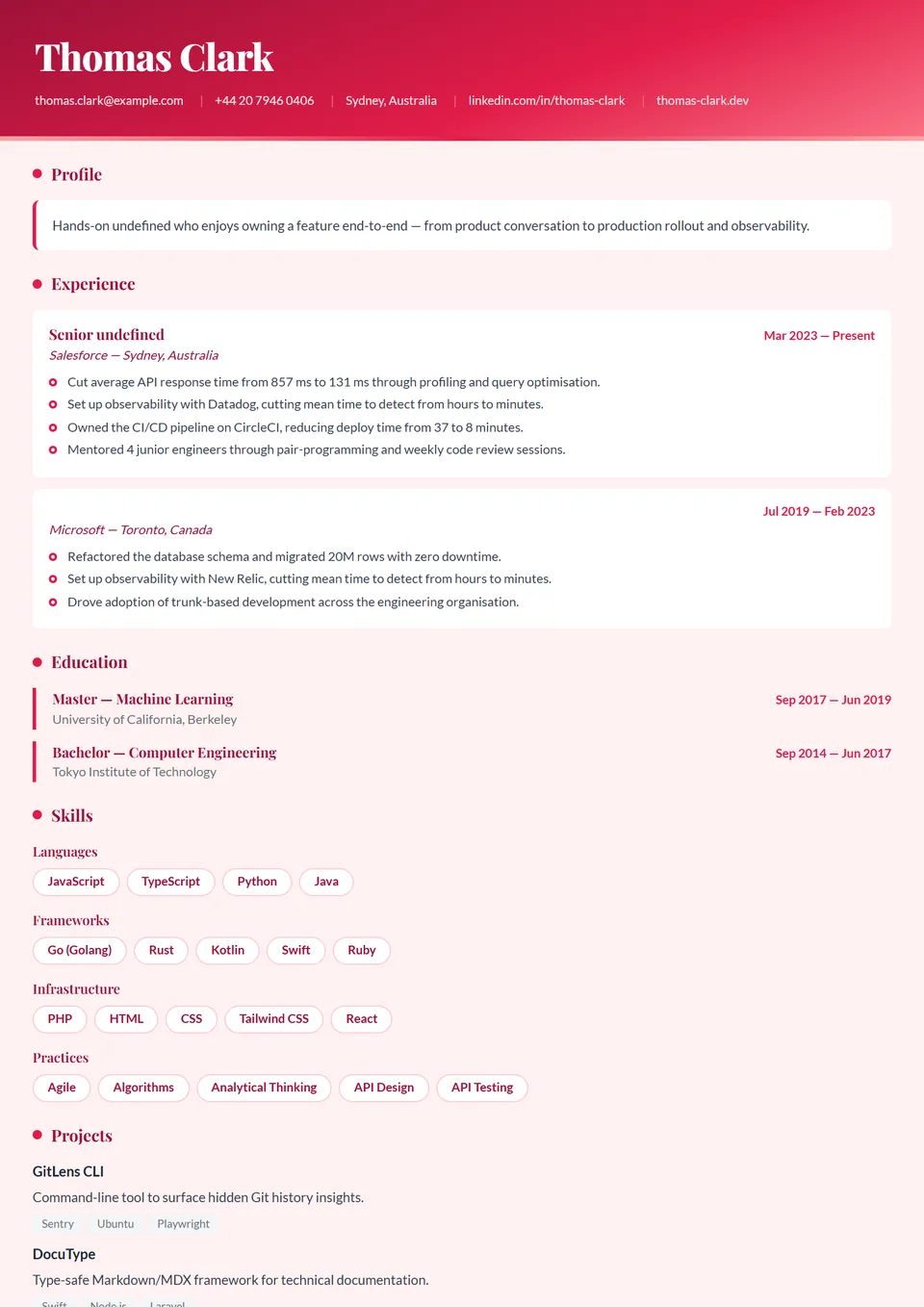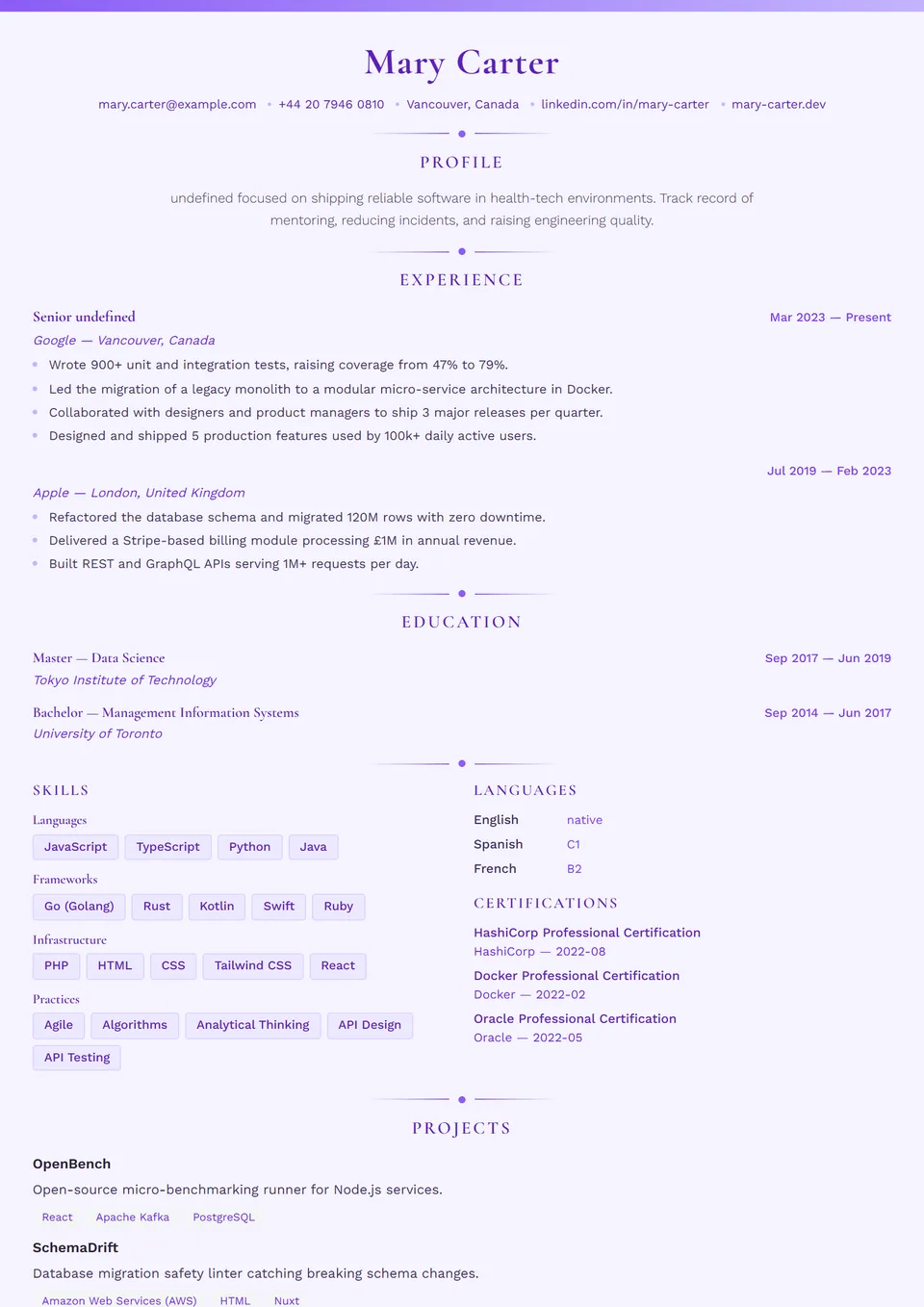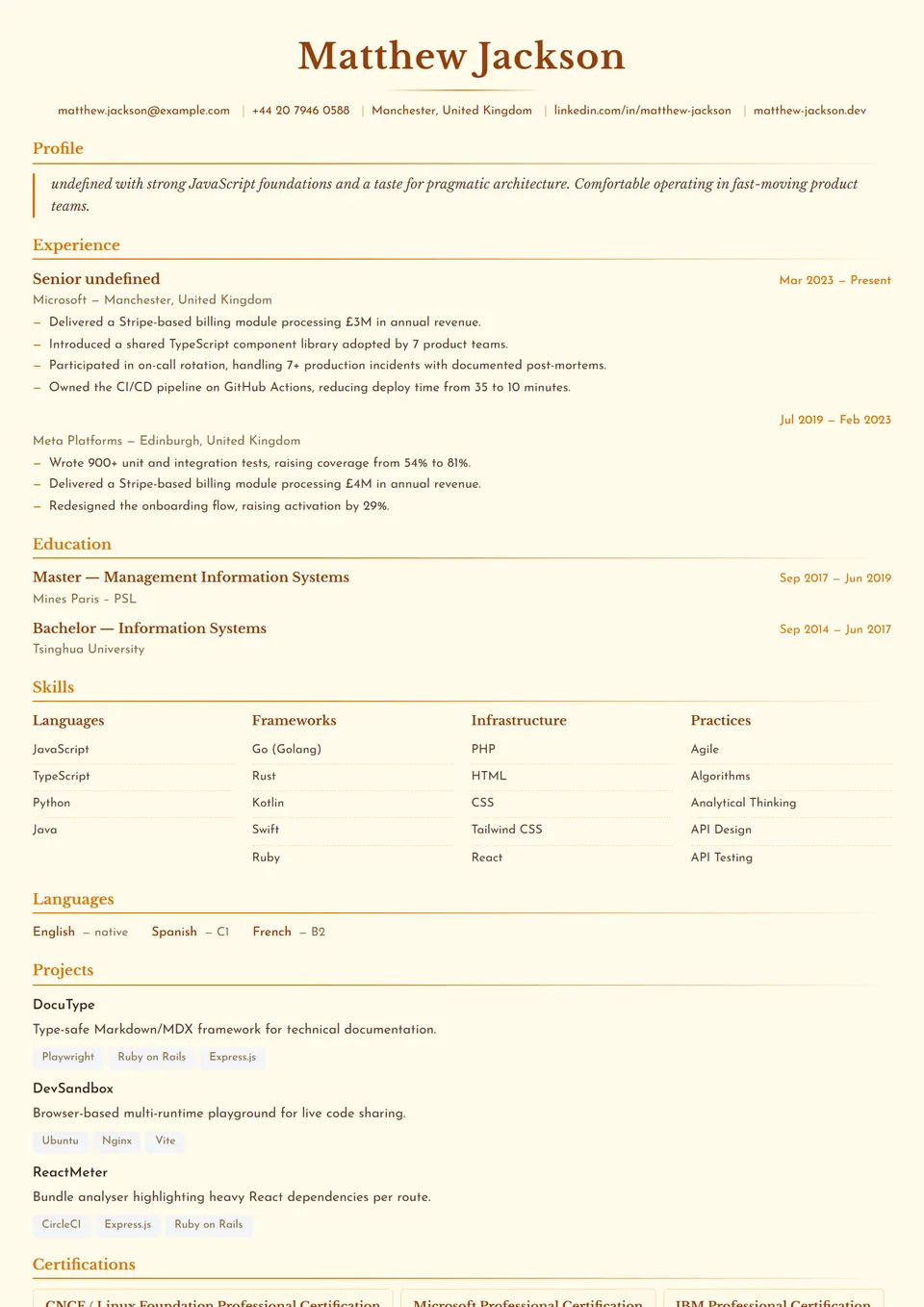
About this template
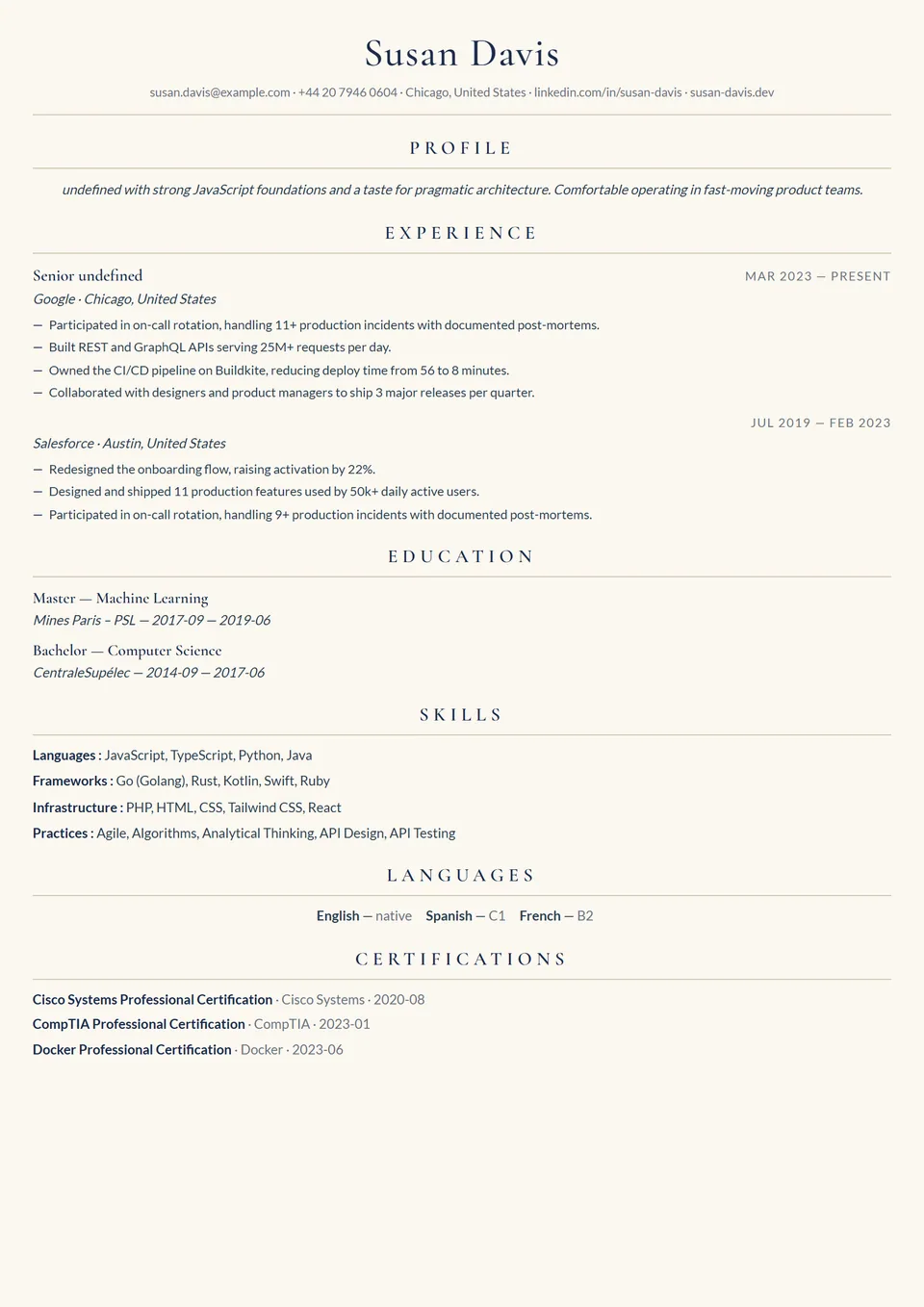
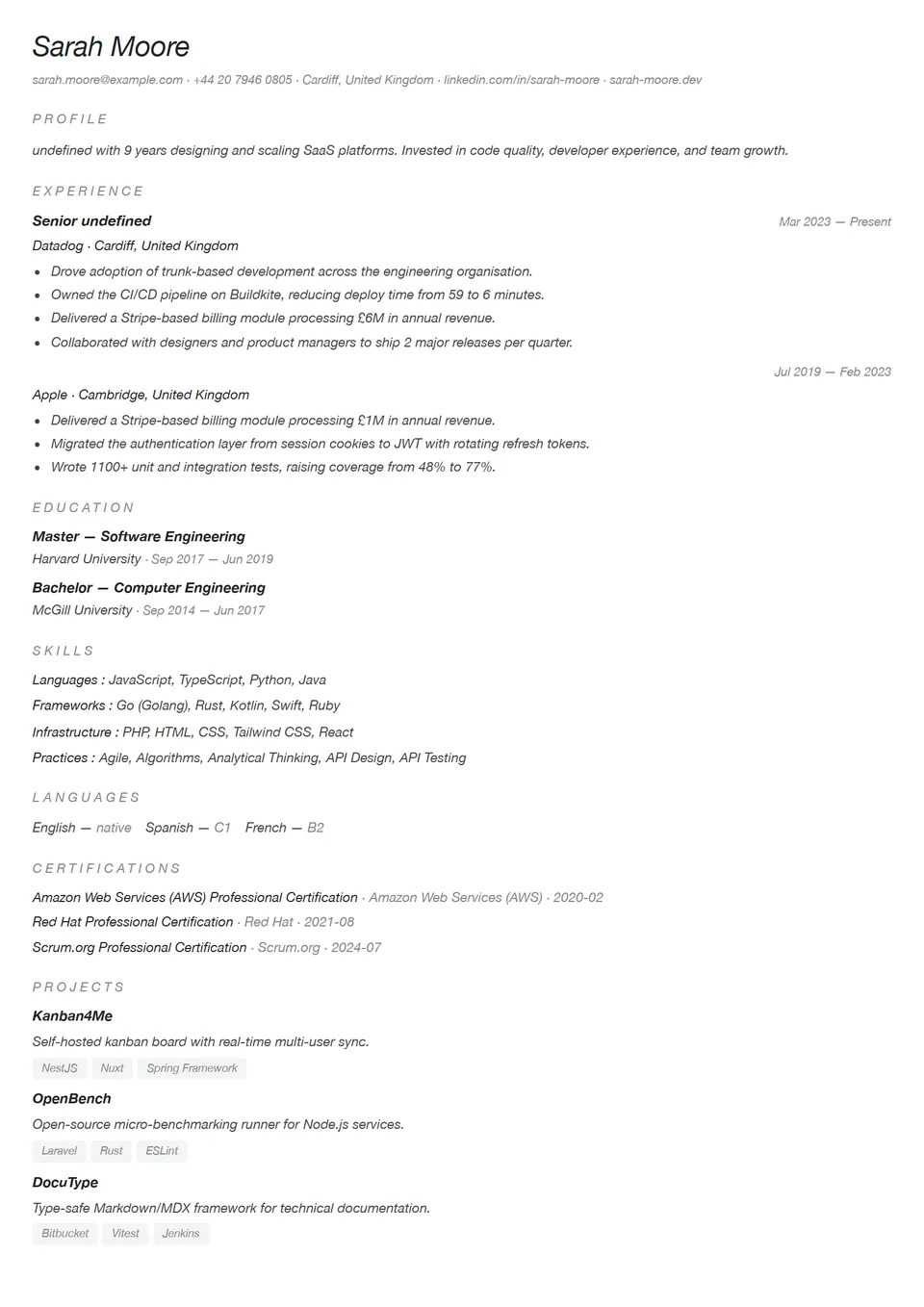
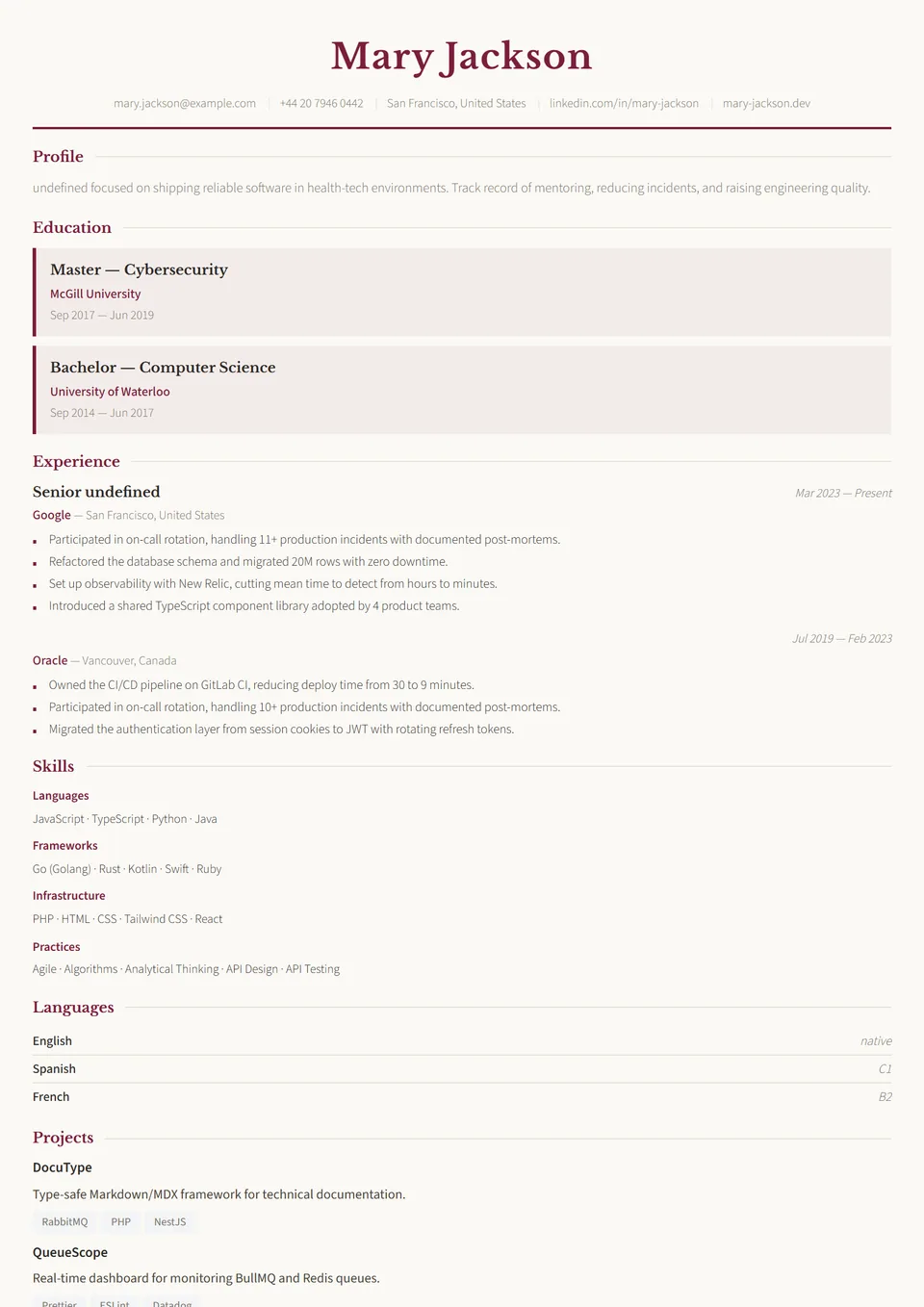
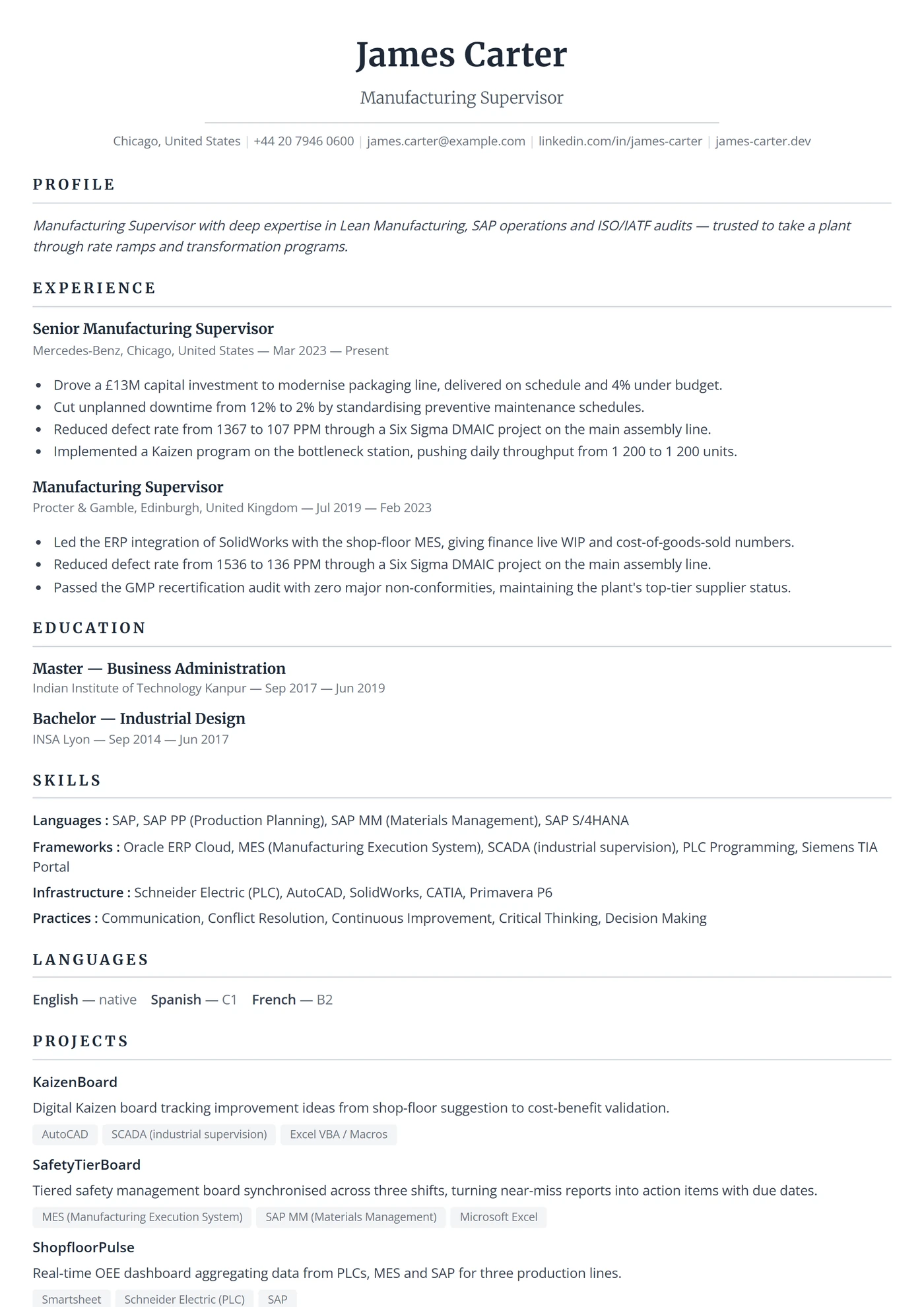
The Skater Zine template stands by street culture: halftone dots, slanted neon bands, Bungee skewed headers, Permanent Marker accents. The CV reads as a 1990s skate-magazine spread (Thrasher, Big Brother, Slap heritage) revisited by contemporary zines. It is not an ATS-safe CV — it is a sample of art direction built for a brand designer, a creative lead or a streetwear label director who immediately recognises the codes. The slanted type and halftones are precisely the signals a commissioner is looking for in this segment; a corporate parser will read them as noise, which is the right information for both camps.
Who is it for?
For brand designers, art directors and creative leads at streetwear and skate labels (Supreme, Palace, Carhartt WIP, Patta, Stüssy, Pleasures, Brain Dead, Aimé Leon Dore, as well as the European labels Magenta Skateboards Paris, Cliché, Polar Skate Co. Malmö and Pop Trading Company Amsterdam), music-merch agencies and youth-culture / counter-culture publications (Live Skateboard Media, Free Skateboard Magazine London, Solo Skateboard Magazine Berlin, Sang Bleu, Pin-Up Magazine). Suited to designers transitioning to music merch (independent labels, indie festivals) and art directors on streetwear campaigns. Fits alumni of Central Saint Martins, RCA, ECAL, ESAD Saint-Étienne, Penninghen and ENSAD graphic design who stand by a street and sub-culture orientation.
How to use it
Place the portfolio URL in the header with a pro Instagram account or personal domain — a corporate Behance would jar. Prefer an Instagram that shows pieces in context (on the deck, in-store, at festival backstage) rather than aseptic studio flatlays. In the Projects section, list 5-7 marquee collaborations with the brand, the deliverable type (capsule, lookbook, season identity, deck-graphic packaging), the season (SS24, FW23) and your role (lead designer, art director, design support). For collaborations under embargo (forthcoming capsules), keep to the sector without naming (« art direction for a forthcoming European streetwear capsule »). Portfolio coherence is expected: an Are.na or Instagram that stands by the same neon-grunge aesthetic as the CV. Long-tail: « streetwear brand designer CV », « skate art director CV », « Carhartt WIP creative lead CV », « music merch label designer CV », « Magenta skate designer CV ».
Frequently asked questions
Should I name the athletes or musicians sponsored by the brands I have worked with?
Only if the collaboration is public (a named campaign announced by the brand) and with the implicit consent given through the brand's own communications. For confidential collaborations or skater/artist capsules (typical at Polar, Magenta, Cliché), keep it generic (« art direction for a signature capsule with a European pro skater »). Creative directors on the scene immediately read the difference between a candidate who respects the confidentiality of a relationship and one who name-drops.
Does the template suit an application at a luxury house (Louis Vuitton, Dior, Balenciaga)?
With discernment. The luxury houses have streetwear and sneakers departments where this language is not only accepted but expected (Louis Vuitton under Virgil Abloh heritage, Balenciaga under Demna, Dior Men under Kim Jones). For those teams, the template works. For traditional luxury divisions (haute couture women's, heritage leather goods), prefer a much soberer CV — Elegant Serif type — where the portfolio link will carry your street direction. Tailor the CV to the team you are targeting, not to the parent brand.
How do I present a self-initiated project such as a fanzine or personal capsule?
Create a distinct « Personal projects » section with the same blocks as client projects: intent, medium, print run or distribution, context. A self-initiated fanzine distributed via a network of independent skate shops or through Antenne Books may weigh more than a mid-tier collaboration — it reveals your authorial point of view. Name the distribution shops (Palace Slough Road London, Supreme, Stüssy chapters, Magenta Paris shop, Slam City Skates London, Civilist Berlin) that have stocked the project. Recruiters on this scene know that self-distribution is often the learning ground.