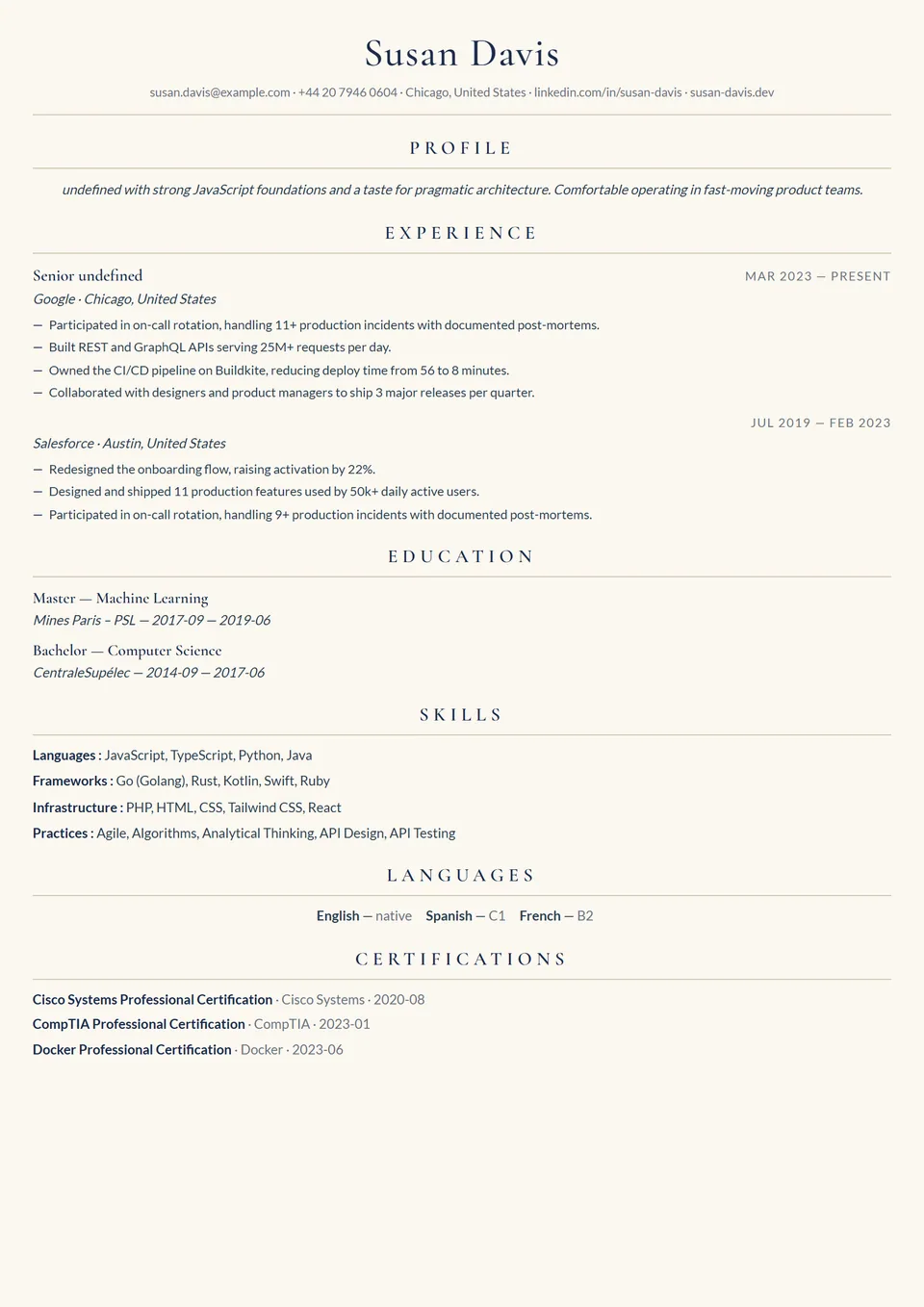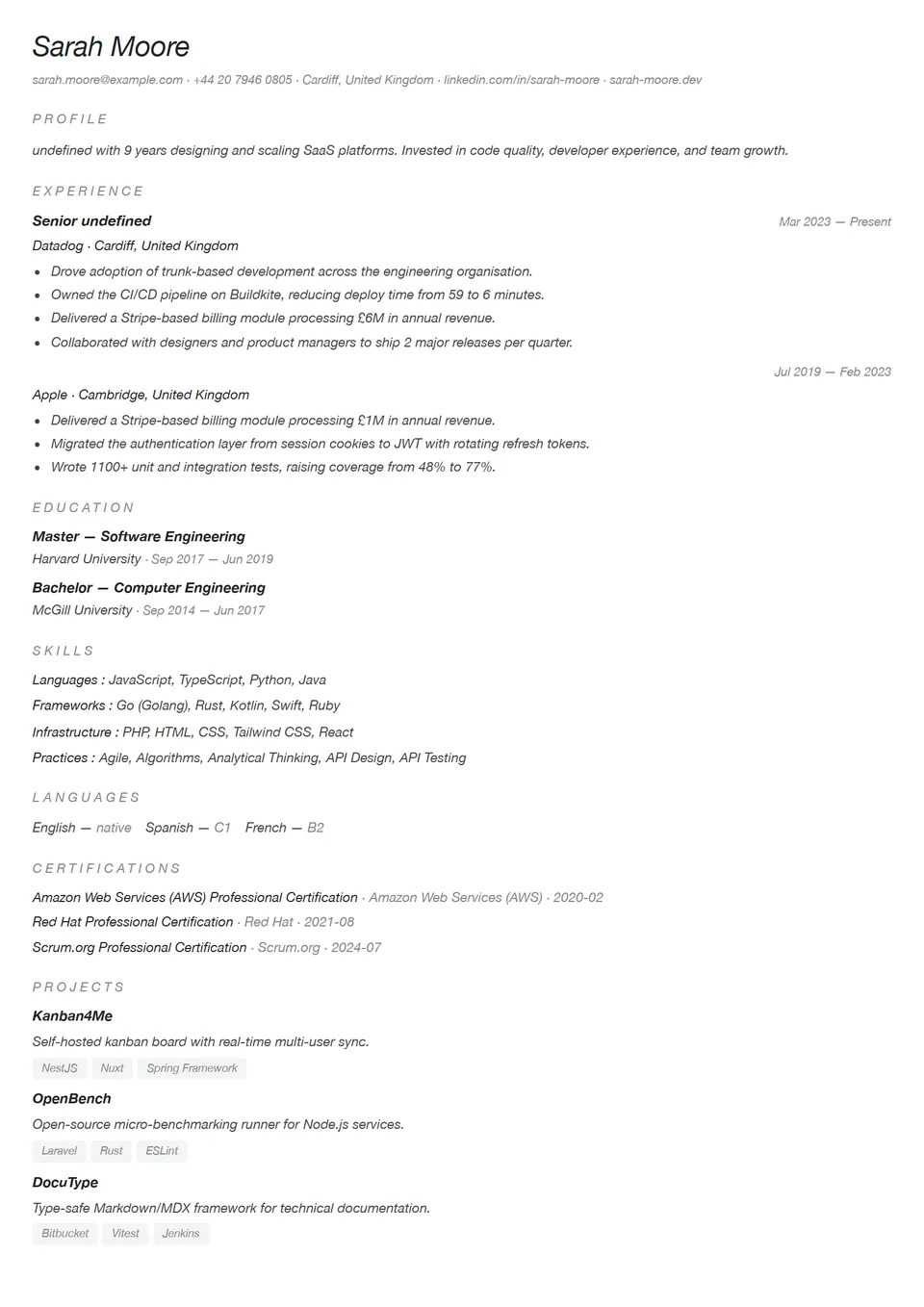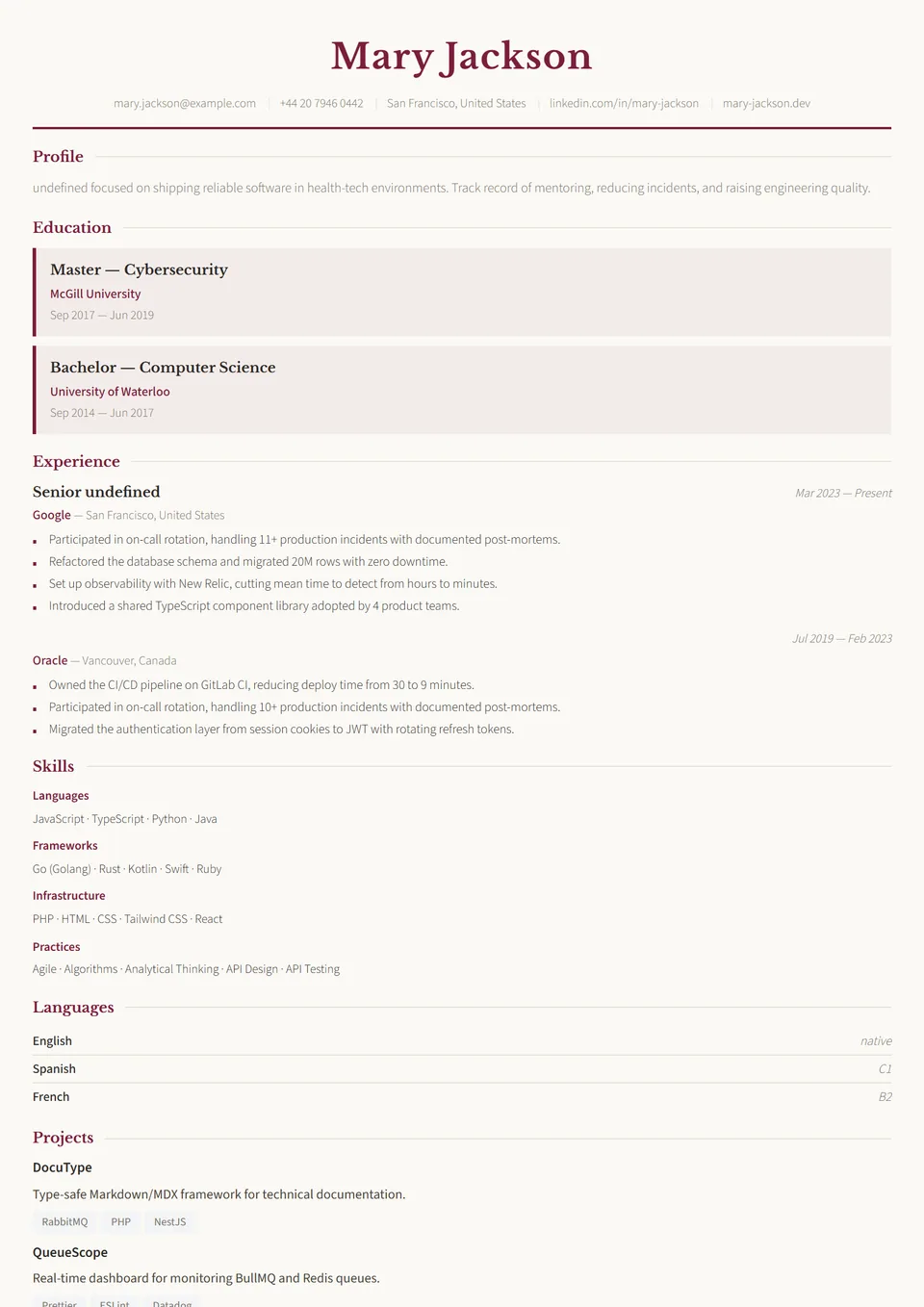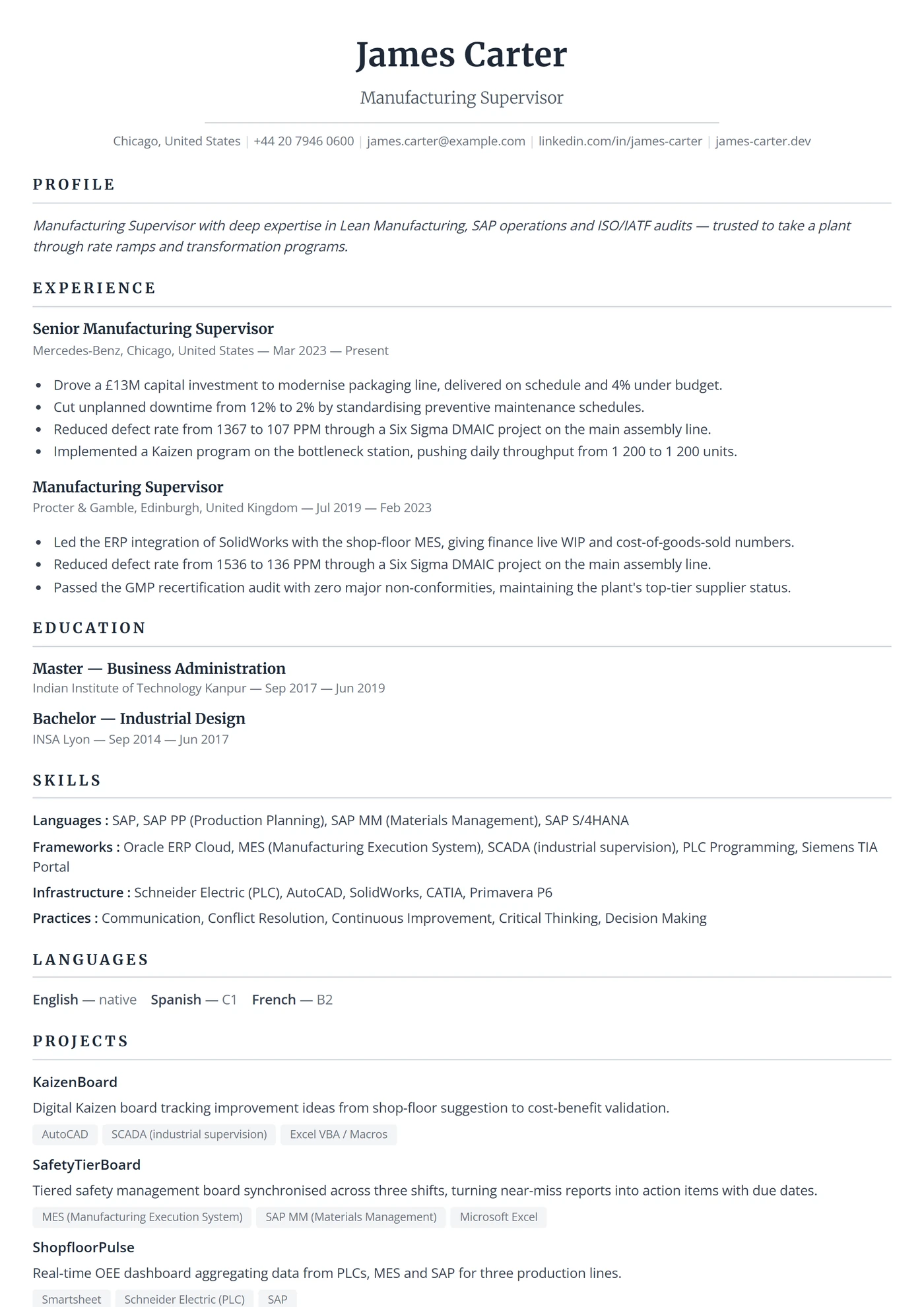
About this template
The Zine Cutout template stands by a DIY fanzine aesthetic: cutout typography blocks, hard shadows, handwritten Permanent Marker accents. The « photocopied at 3 a.m. » look is deliberate — it signals a direct lineage with the riot grrrl heritage (Bikini Kill zines), the 1980s punk fanzines (Sniffin' Glue, Ripped & Torn) and their contemporary descendants (the independent distros Tenement Press London, Pli Paris, Antenne Books, Pages of Hackney, Motto Books Berlin, Climax Books). It is not an ATS-safe CV and does not pretend to be: it is built for an indie agency creative director, a fanzine editor or an underground-scene programmer who reads the unfinished surface of the document as a proof of authorship rather than a defect.
Who is it for?
For creative directors, art directors at independent agencies, fanzine editors, indie-publishing professionals and underground-music designers applying to boutique agencies (Sister London, Saturday's Heroes, Mathery Studio, Mother), to fanzine publishers (Tenement Press, Pli, Edition Patrick Frey heritage, Hardworking Goodlooking Manila, J&L Books NY), indie labels (Mute Song, Domino Publishing, Sub Pop heritage), and underground-scene programmers (Café OTO London, Corsica Studios, ICA Late, DOC Paris, Petit Bain for sound design candidates). Fits profiles from RCA Visual Communication, Werkplaats Typografie, Sandberg Institute Amsterdam, Yale Graphic Design MFA, RISD Graphic Design and ENSAD édition Paris, as well as self-taught profiles via the fanzine scene and an avowed amateur practice.
How to use it
Place the portfolio URL in the header with a short personal domain that stands by the same grammar — not a Behance, but a curated Are.na block page or a minimalist one-page site showing printed objects in context. Avoid overly polished portfolios: they will jar. In the Projects section, list 5-7 marquee publications or objects with the publisher or commissioner, the title, the print run (« 200 ex. hand-stapled, distribution via Tenement Press »), the format (folded A5, raw A4, quarter-letter mini-zine) and your role. Mention the distros and fairs (Offprint Paris/London, Anti-Book Fair Berlin, Friends with Books, MISS READ, Self Publish Be Happy London, Printed Matter NY Art Book Fair) where the object has been shown. For corporate commissions that have accepted the fanzine aesthetic (rare but real: Carhartt Heritage campaigns for example), name them with context. Long-tail: « independent agency creative director CV », « fanzine editor CV », « underground-music designer CV », « Sandberg Institute designer CV », « Pli Paris distro designer CV ».
Frequently asked questions
How do I present a mixed amateur / professional career without devaluing self-initiated projects?
Do not rank amateur over professional — rank by curatorial significance. A self-initiated fanzine distributed via Tenement Press or Pli, shown at Offprint Paris and reviewed by It's Nice That or AIGA Eye on Design carries more weight than a generic corporate commission. List the projects by order of cultural visibility and coherence with the targeted application, not by commercial status. Recruiters on this scene know that self-publishing is often the laboratory leading to the most singular commissions.
Does the template handle a quick read in LinkedIn sourcing or via a Greenhouse ATS?
No — and that is precisely the point. If the application goes through a platform ATS (Greenhouse, Lever, Workable) that parses the PDF for pre-filtering, the rendering will be degraded and some cutout elements will lose their structure. This template is built for direct applications (an email to a creative director, a speculative application to an indie publisher, a portfolio drop at a book-fair stand). For LinkedIn or Greenhouse sourcing, prefer a neutral CV such as ATS Card Sections or ATS Centered Name and keep this template for direct targeted applications.
How should teaching activity (workshops, school visits) be integrated into the template?
Create a « Teaching and workshops » section with the schools or institutions where you have intervened (Werkplaats Typografie as guest critic, ECAL intensive week workshop, RCA Visual Communication MA crit, Sandberg Institute jury, Yale MFA crit), the format (one-week workshop, one-day seminar, semester course) and the year. Teaching on this scene reads as a marker of seniority — publishers and creative directors often seek collaborators with an active transmission practice. Avoid one-off interventions without context (« 2-hour masterclass at a private school ») that dilute the signal.