About this template
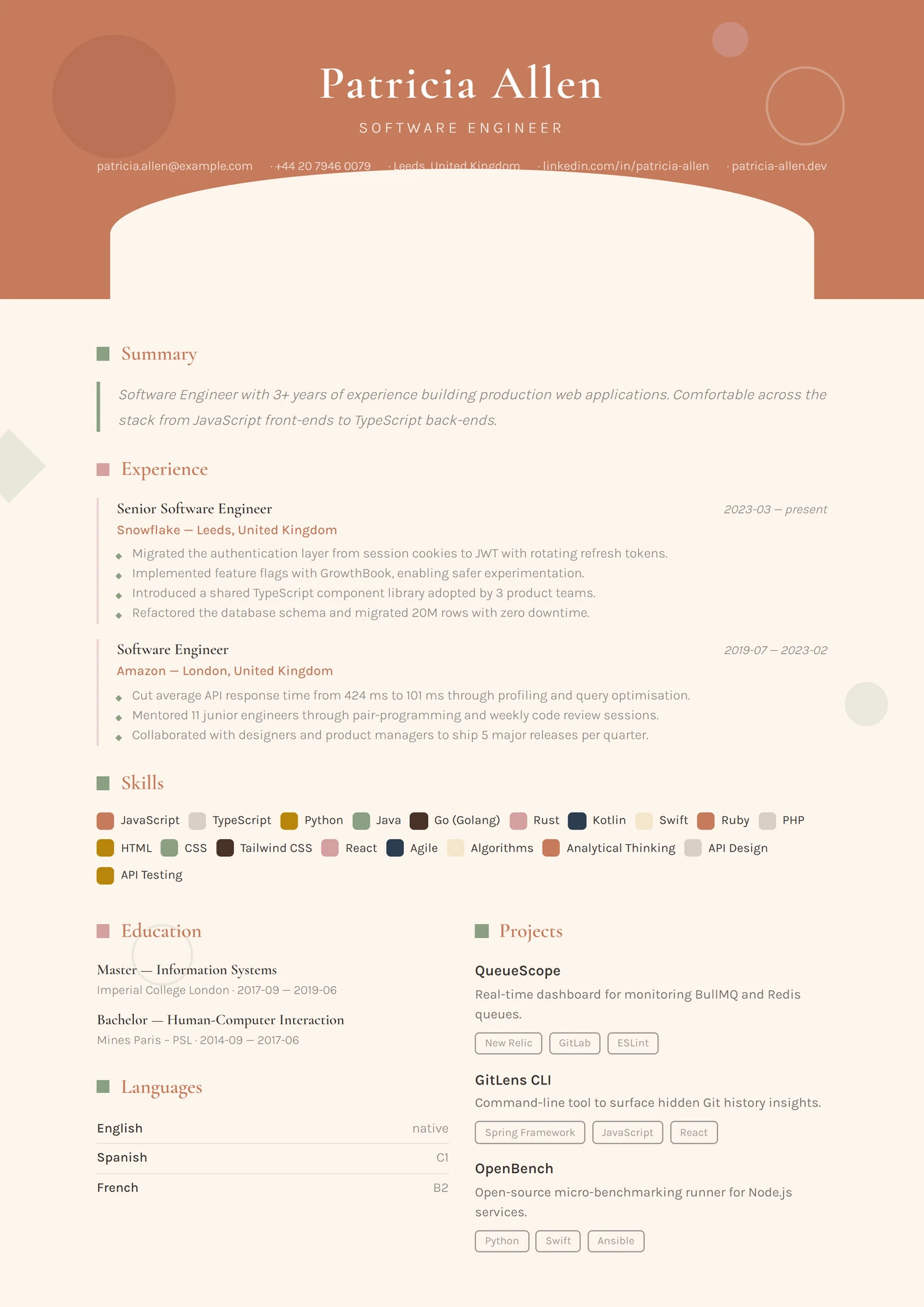
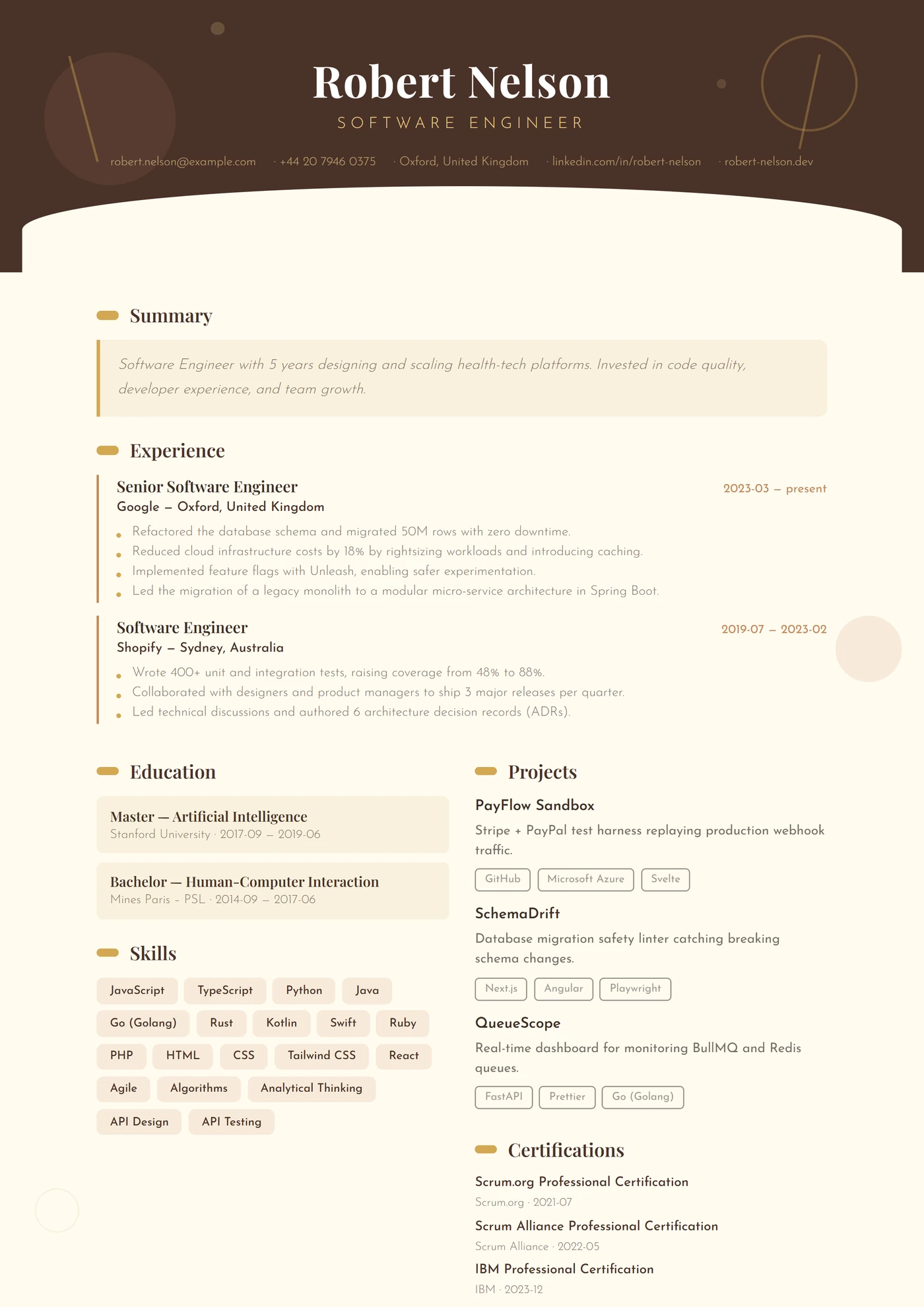
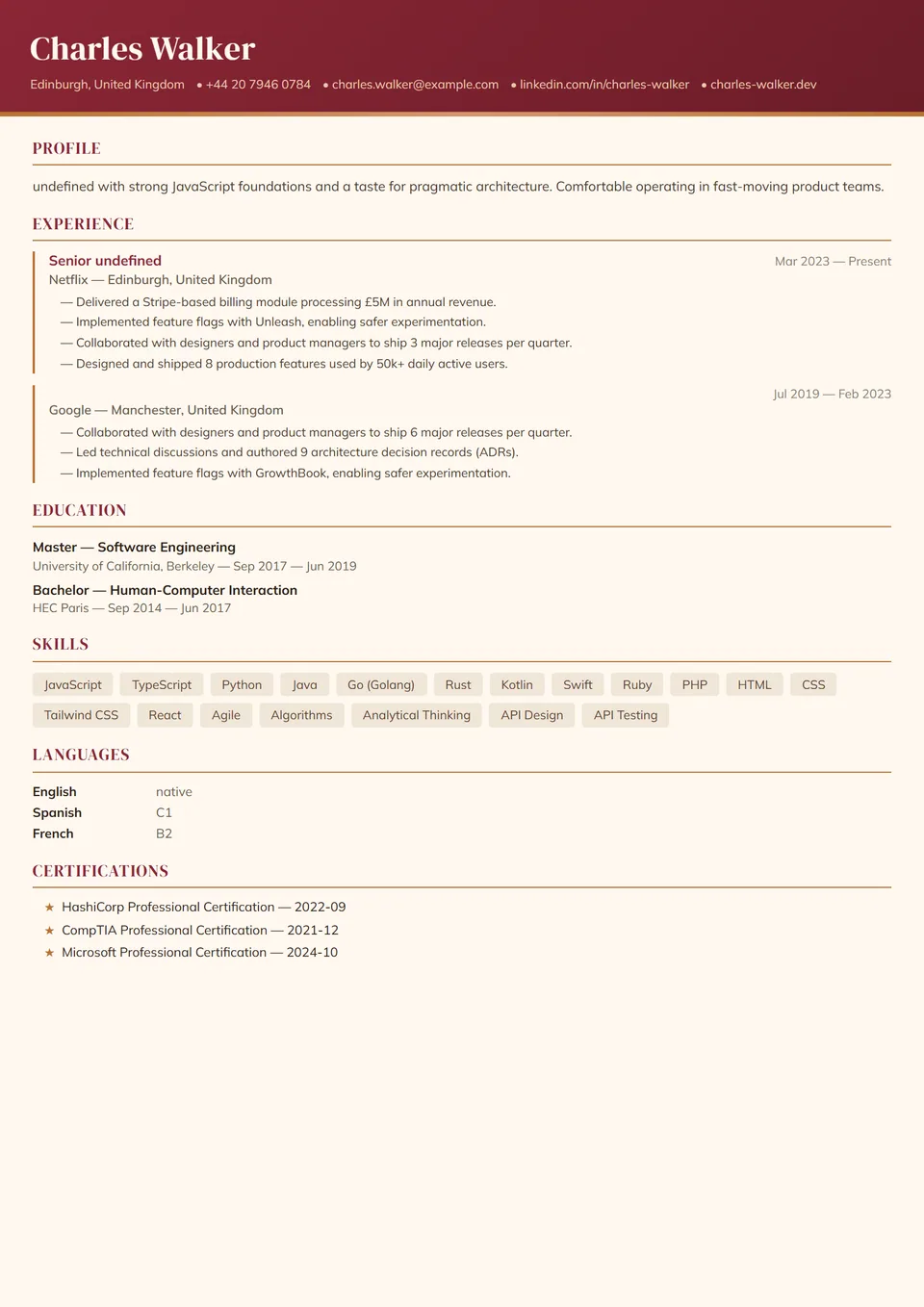
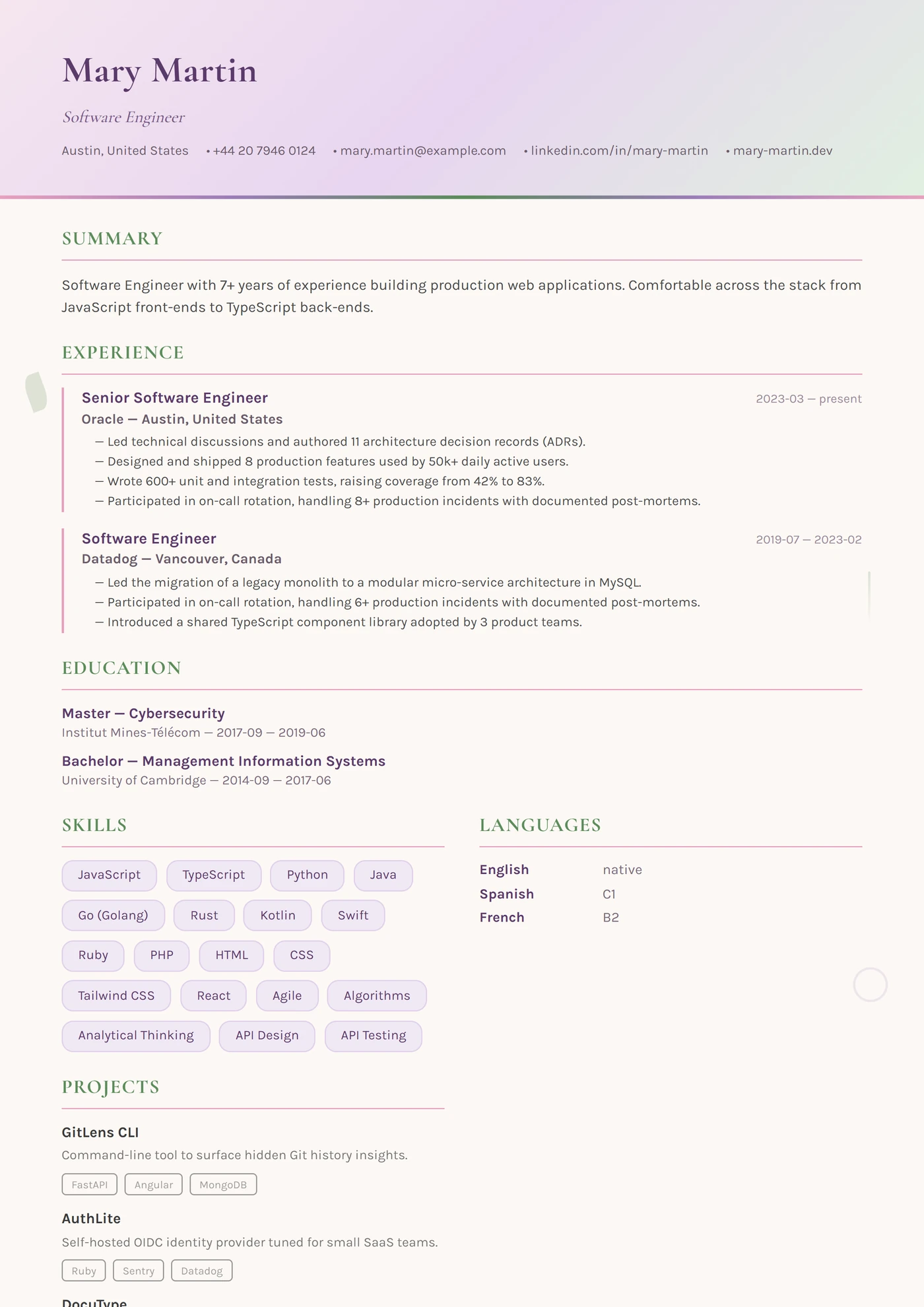
The Industry — Music Producer template is a dark studio CV with Anton titles and Inter body on jet-black panels lit by JetBrains Mono labels. The structure mimics a mixing console: tracks for releases, collaborations, festivals and platforms, on deep theatrical contrast — a format that speaks directly to A&Rs, label heads and bookers.
Who is it for?
It suits music producers, mix and mastering engineers, sound designers, A&Rs, label managers and composers for picture applying to majors (Universal Music, Sony Music, Warner Music Group), independent labels (XL Recordings, 4AD, Sub Pop, Domino, Stones Throw, Ed Banger, Because Music), streaming platforms (Spotify for Artists, Apple Music for Artists, Tidal) and live promoters (Live Nation, AEG Presents, Goldenvoice). Equally fit for artist-producers and screen composers.
How to use it
List productions by artist, year and label with stream count or certifications (Gold, Platinum, Diamond RIAA / BPI / SNEP / BVMI). Name the primary DAW (Pro Tools, Logic Pro, Ableton Live, FL Studio, Cubase) and the attached studio (Electric Lady, Capitol Studios, Hansa Tonstudio, Real World). For screen composers, list works using the IMDb convention. Society affiliations (BMI, ASCAP, SACEM, PRS, GEMA) go in the footer with member number.
Frequently asked questions
How do I credit a mix done for an artist under label exclusivity?
List title, artist and label with your exact function (mix engineer, mastering engineer, additional production). Credits become public on commercial release — Spotify, AllMusic, Discogs and MusicBrainz index them. Before release, list under embargo with 'title confidential — release Q3 2026' format. The industry respects contractual windows.
Should I list certifications?
Always. Gold (500K USA, 100K UK), Platinum (1M USA, 300K UK), Diamond (10M USA, 1M France) are the sector references read first by majors and bookers. For international careers, list RIAA, BPI, BVMI, SNEP and FIMI certifications side by side — each territory has its own thresholds and the multi-territory pattern signals scale.
Does it suit classical or jazz applications?
For classical recording (Deutsche Grammophon, ECM, Erato, Naxos) and jazz (Blue Note, Verve, Impulse!), the template fits but needs adaptation: replace stream count with awards (Grammy, Gramophone, Diapason d'Or, JazzMania), name conductors and ensembles, list festivals (Newport Jazz, Monterey, Montreux, North Sea Jazz). The mixing-console metaphor still reads as professional studio work.