Chef de Partie Resignation Letter Templates

Professional resignation letter templates for Chef de Partie professionals — formal, short, email versions with expert tips.

We currently have 282 Chef de Partie job postings in our database. Write your letter — it's free

When to Use

New Job Opportunity
When resigning for a new opportunity, a Chef de Partie should express gratitude for the experiences gained and keep the tone positive. Focus on the growth and new challenges ahead without criticizing the current position. Avoid discussing salary or negative aspects of the current role.
Career Change
For a career change, communicate the decision as a thoughtful step towards personal or professional growth. Emphasize appreciation for the skills and experiences acquired, ensuring to maintain a positive relationship. Avoid sharing too many specific details about the new career path.
Personal Reasons
When resigning for personal reasons, it’s important to be honest yet concise. Mention the need to address personal matters without delving into specifics. Frame it as a necessary step and express gratitude for the support and opportunities received.
Relocation
If resigning due to relocation, clearly state the move and discuss any potential for remote work if applicable. Highlight the positive experiences had and express willingness to assist in the transition. Avoid overpromising on remote work feasibility if it’s uncertain.

Recommended templates for Chef de Partie

Three templates selected for this role, from junior to senior level. Tap a template to discover its full design and use it in your document.
Junior
Desert Sand — Junior

Desert Sand

minimal

The 'Desert Sand' template is ideal for a junior Chef de Partie as its minimal style encourages a concise and respectful tone, suitable for someone leaving their first role.

Learn more about this template
Mid-level
Autumn Harvest — Mid-level

Autumn Harvest

professional

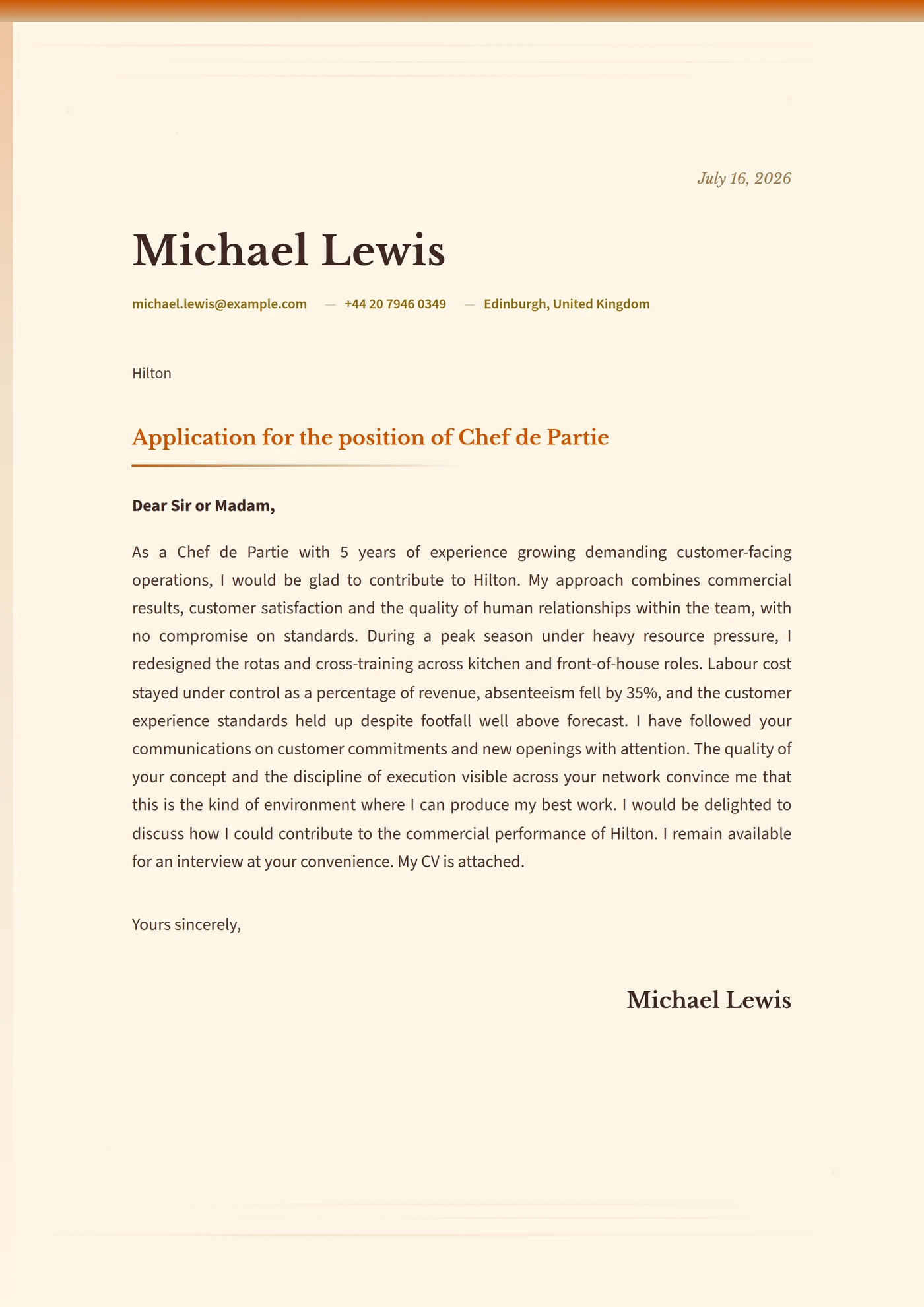
The 'Autumn Harvest' template balances formality and warmth, making it well-suited for a mid-level Chef de Partie who has developed strong professional relationships.

Learn more about this template
Senior
Burgundy Velvet — Senior

Burgundy Velvet

professional

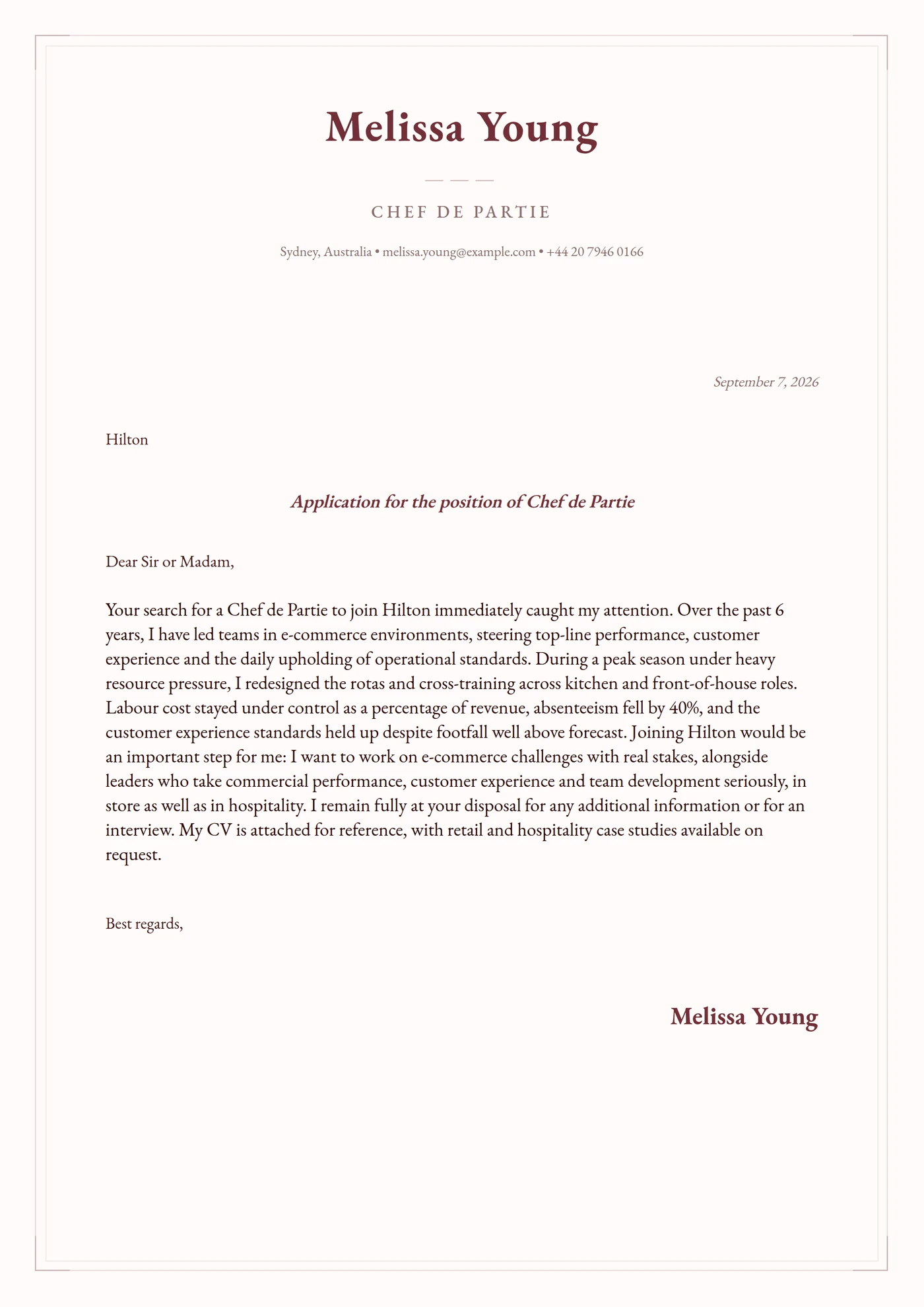
The 'Burgundy Velvet' template offers a professional tone with a touch of gravitas, fitting for a senior Chef de Partie who needs to ensure a smooth transition.

Learn more about this template

Tips for Resigning

Notice Period
A Chef de Partie should typically give at least two weeks' notice, adhering to industry norms and contractual obligations. In more senior roles, a four-week notice may be more appropriate to allow for a smooth transition.
Tone
The resignation tone should be respectful and positive, highlighting gratitude for the opportunity. Avoid negative comments about the team or work environment, as maintaining a professional reputation is crucial.
Timing
Resignations are best timed at the start of the week, avoiding peak service hours. Consider timing relative to the end of a project or after a bonus is received to maintain goodwill.
Preserving Relationships
To preserve professional relationships, offer to assist with the transition and express a desire to stay in touch. Maintaining connections in the culinary industry can be beneficial for future opportunities.

Notice Period Rules

United States
In the US, a Chef de Partie is usually expected to give two weeks' notice due to at-will employment norms. However, some positions might require more notice based on contract terms.
United Kingdom
In the UK, the statutory minimum notice is one week if employed for more than a month, but contracts often specify a longer period, such as one month for a Chef de Partie.
Canada
Canadian notice periods vary by province, but a Chef de Partie should generally provide at least two weeks' notice, considering any specific contractual obligations.
Europe
In Europe, notice periods vary, with countries like France and Germany typically requiring one to three months depending on tenure and collective agreements.

Frequently Asked Questions

Yes, providing a resignation letter is considered professional and formalizes your departure. It helps clarify your last working day and expresses gratitude for the opportunity.

Typically, at least two weeks' notice is expected, but depending on your role and contract, a longer notice period may be required.

No, resignations cannot generally be refused. However, your employer might wish to negotiate the notice period based on staffing needs.

While in-person or formal letter resignations are preferred, email can be acceptable if circumstances prevent a face-to-face meeting. Ensure the tone is professional and clear.

Need a personalized resignation letter?

Use our AI to generate a professional, polished letter tailored to your role and situation in minutes.

Write your letter — it's free

Start for free. No credit card required.