
An Accountant prepares, analyzes, and maintains financial records to ensure accuracy and compliance with regulations. Employers seek candidates with strong technical proficiency in accounting software, attention to detail, and knowledge of GAAP or IFRS standards. A standout resume highlights quantifiable achievements—such as cost savings, audit successes, or process improvements—alongside relevant certifications like CPA or CMA. Entry-level roles typically require 1–3 years of experience, while senior positions demand 8+ years and strategic financial leadership. Salaries range from $45,000 for junior accountants to $90,000+ for senior professionals.
What Makes a Great Accountant Resume
A great Accountant resume prioritizes clarity, precision, and quantifiable results. Use a reverse-chronological format to showcase your career progression, leading with a concise professional summary that highlights your specialization—whether in tax, audit, cost accounting, or financial reporting. Each role should feature bullet points with metrics: percentage improvements in accuracy, dollar amounts of budgets managed, or audit findings resolved. Emphasize technical competencies (ERP systems, Excel modeling, reconciliation) and certifications prominently, as these are critical ATS triggers. Formatting should be clean and ATS-friendly: avoid tables, text boxes, or graphics that confuse parsing software. Use standard section headers like Professional Experience, Education, and Certifications. Tailor your keyword usage to the job description—mirror terms like general ledger, month-end close, variance analysis, and SOX compliance. A well-crafted Accountant resume balances technical depth with readability, ensuring both automated systems and hiring managers quickly grasp your value.
Key Skills Needed
Typical Experience Level
Entry-level Accountants typically hold a bachelor's degree in Accounting or Finance and have 0–3 years of experience, often gained through internships or junior staff roles. They focus on transaction processing, reconciliations, and supporting senior team members during audits or closes. Mid-level Accountants (3–7 years) take ownership of full-cycle accounting functions—managing month-end close, preparing financial statements, and liaising with auditors. They demonstrate proficiency in ERP systems and may supervise junior staff or lead process improvements. Senior Accountants and Accounting Managers (8+ years) provide strategic oversight, ensuring compliance with regulatory standards and optimizing financial workflows. They mentor teams, manage complex reconciliations, and contribute to budgeting and forecasting at the executive level. Recruiters expect progressively greater responsibility: junior candidates should show accuracy and learning agility, mid-level professionals must demonstrate autonomy and problem-solving, and senior hires need leadership, strategic insight, and advanced certifications like CPA, CMA, or CIA.
ATS Keywords for This Role
Recommended templates for Accountant
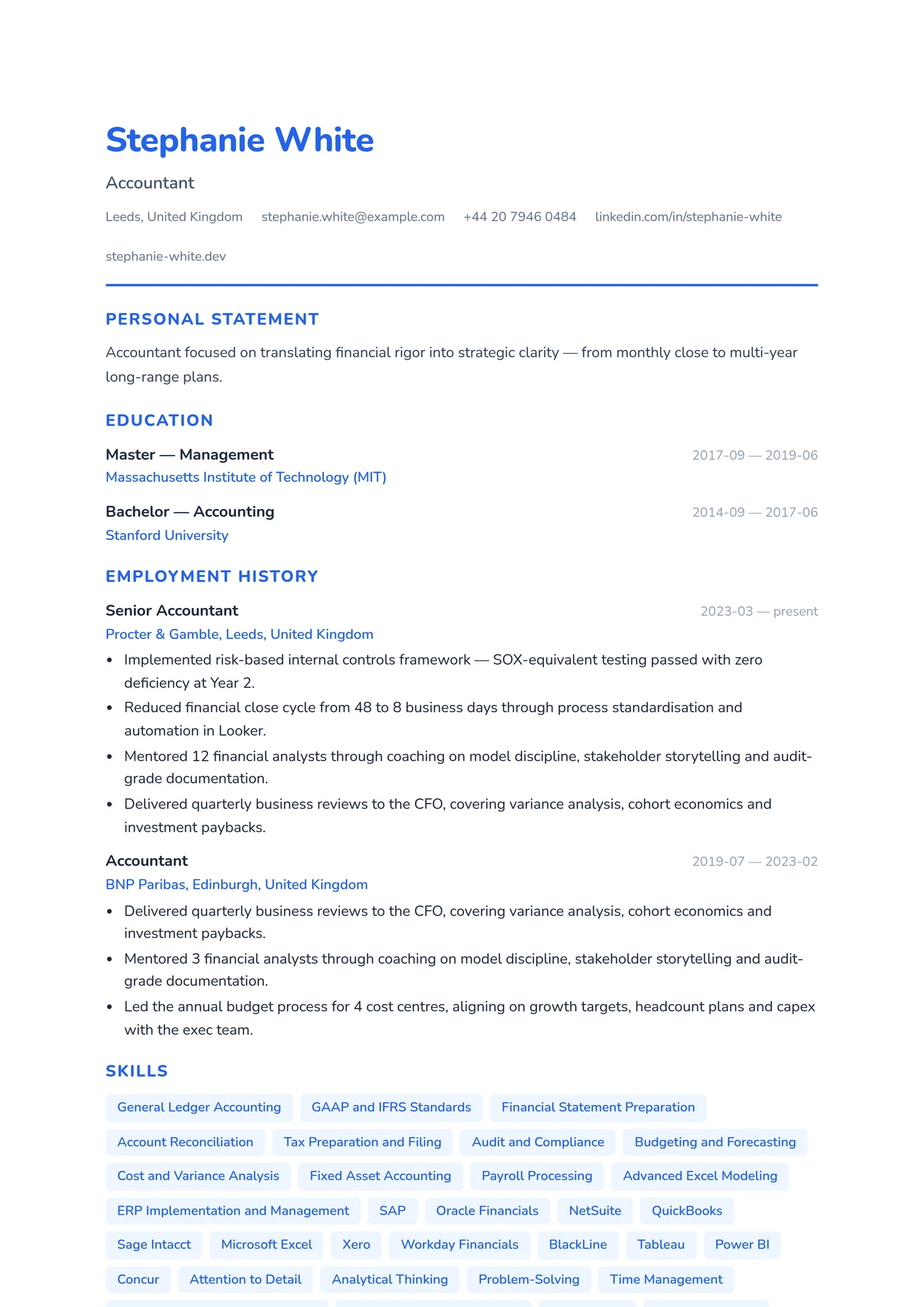
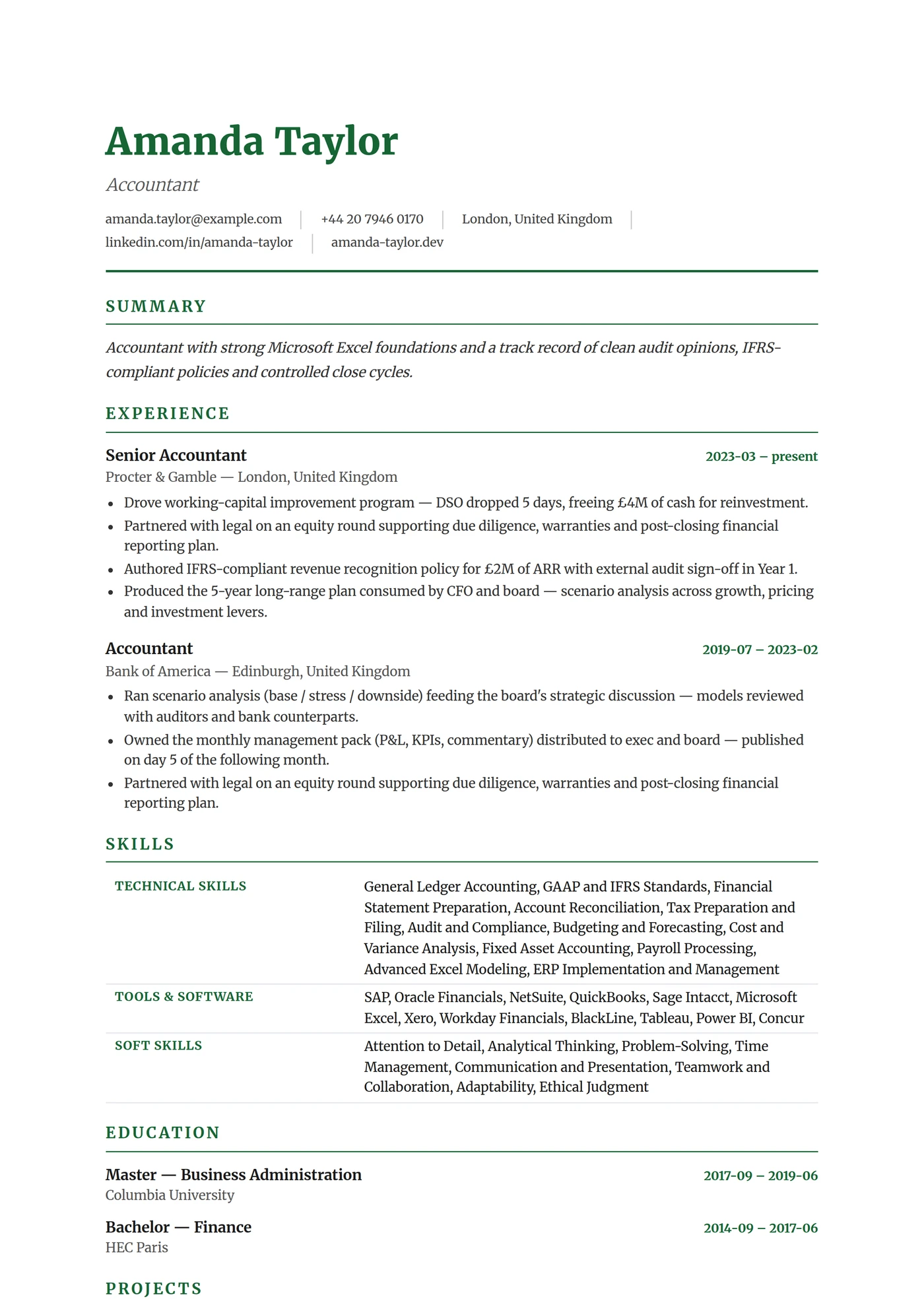
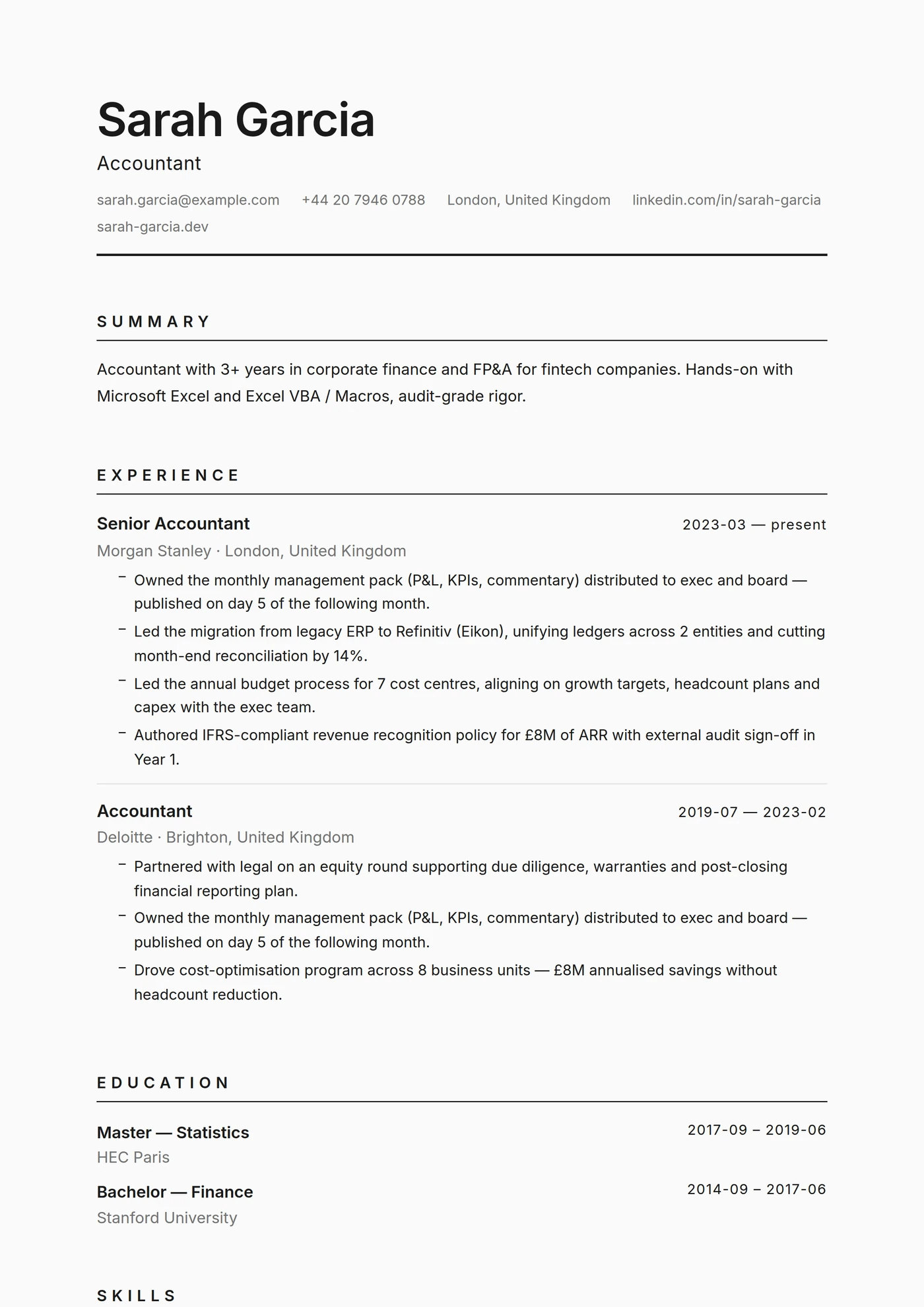
Three templates selected for this role, from junior to senior level. Tap a template to discover its full design and use it in your document.
Skills for Accountant
Hard Skills
Soft Skills
Tools & Software
ATS Keywords
Writing Tips for Accountant
Best Format to Use
The reverse-chronological format is the gold standard for Accountant resumes because it clearly demonstrates career progression and stability—qualities highly valued in finance roles. List your most recent position first, followed by earlier roles, and include dates, company names, and concise bullet points highlighting responsibilities and achievements. This format works best for candidates with consistent work history and allows ATS systems to easily parse employment timelines. A functional or hybrid format may suit career changers or those with employment gaps, emphasizing skills over chronology. However, many ATS platforms and hiring managers prefer chronological layouts, so use alternatives sparingly. For senior roles, consider a hybrid approach that opens with a robust skills summary or key accomplishments section, then follows with detailed work history. Always tailor the format to your experience level and the job description.
Common Mistakes
How to Pass ATS
How to Stand Out
Frequently Asked Questions
Explore more about