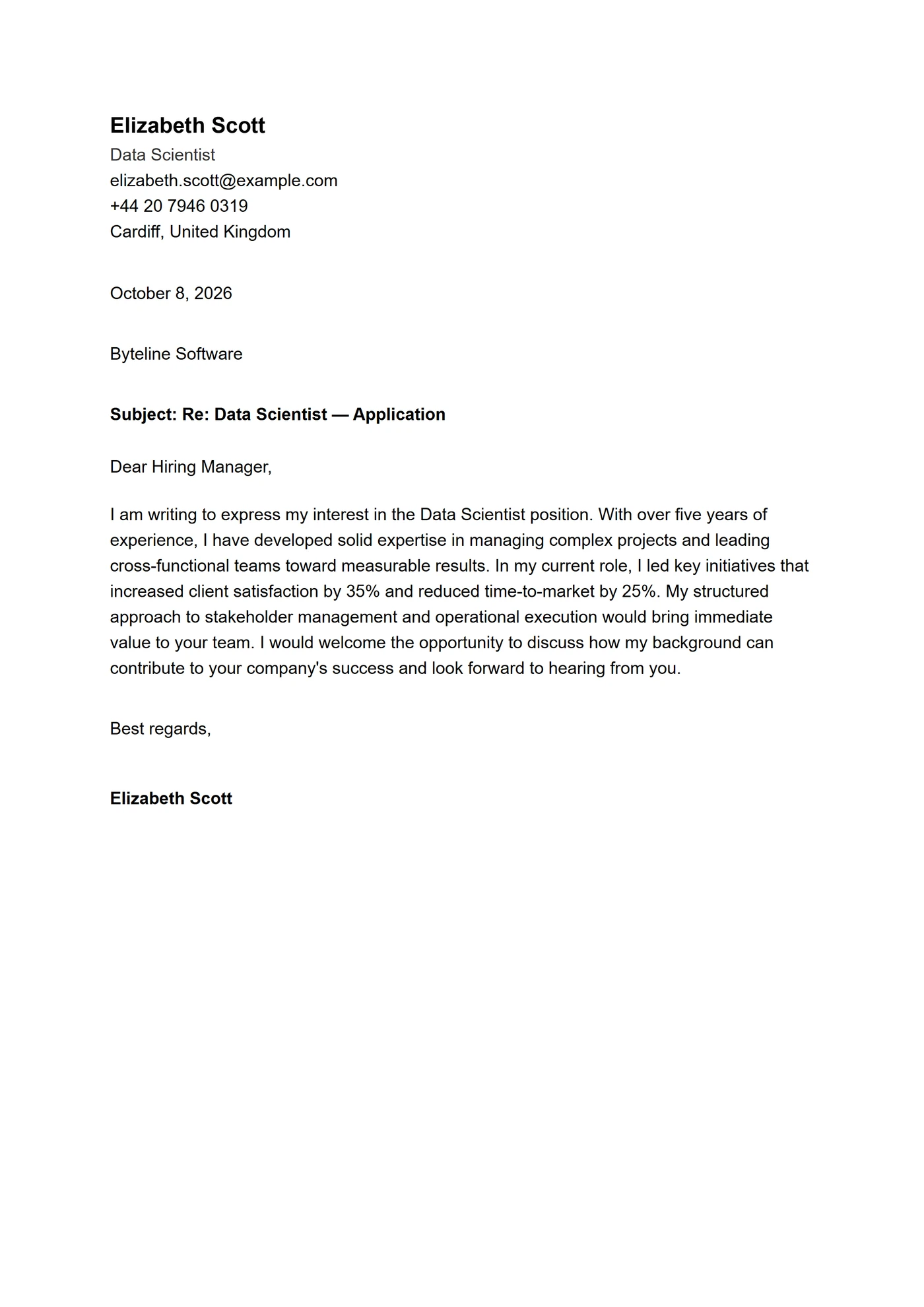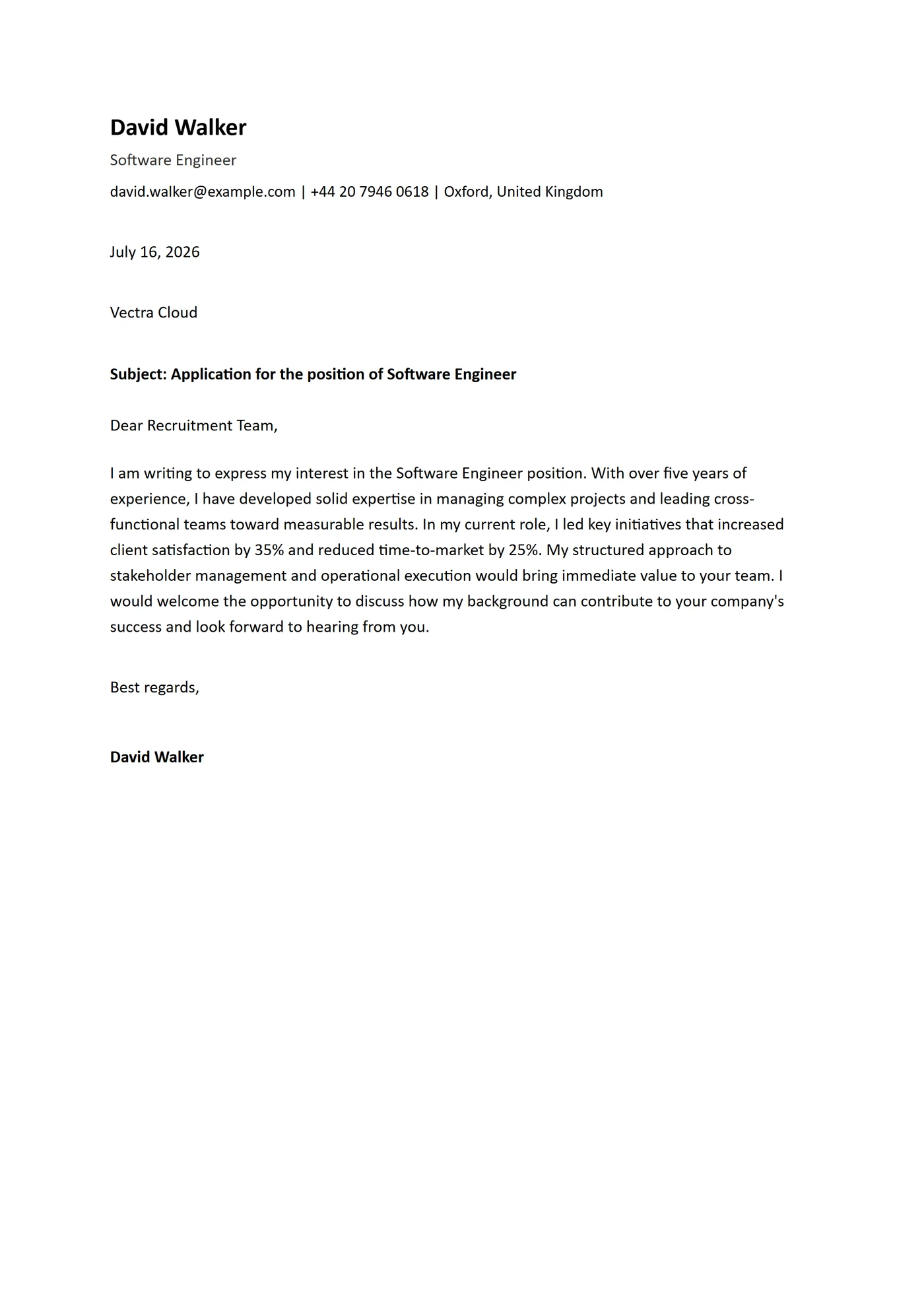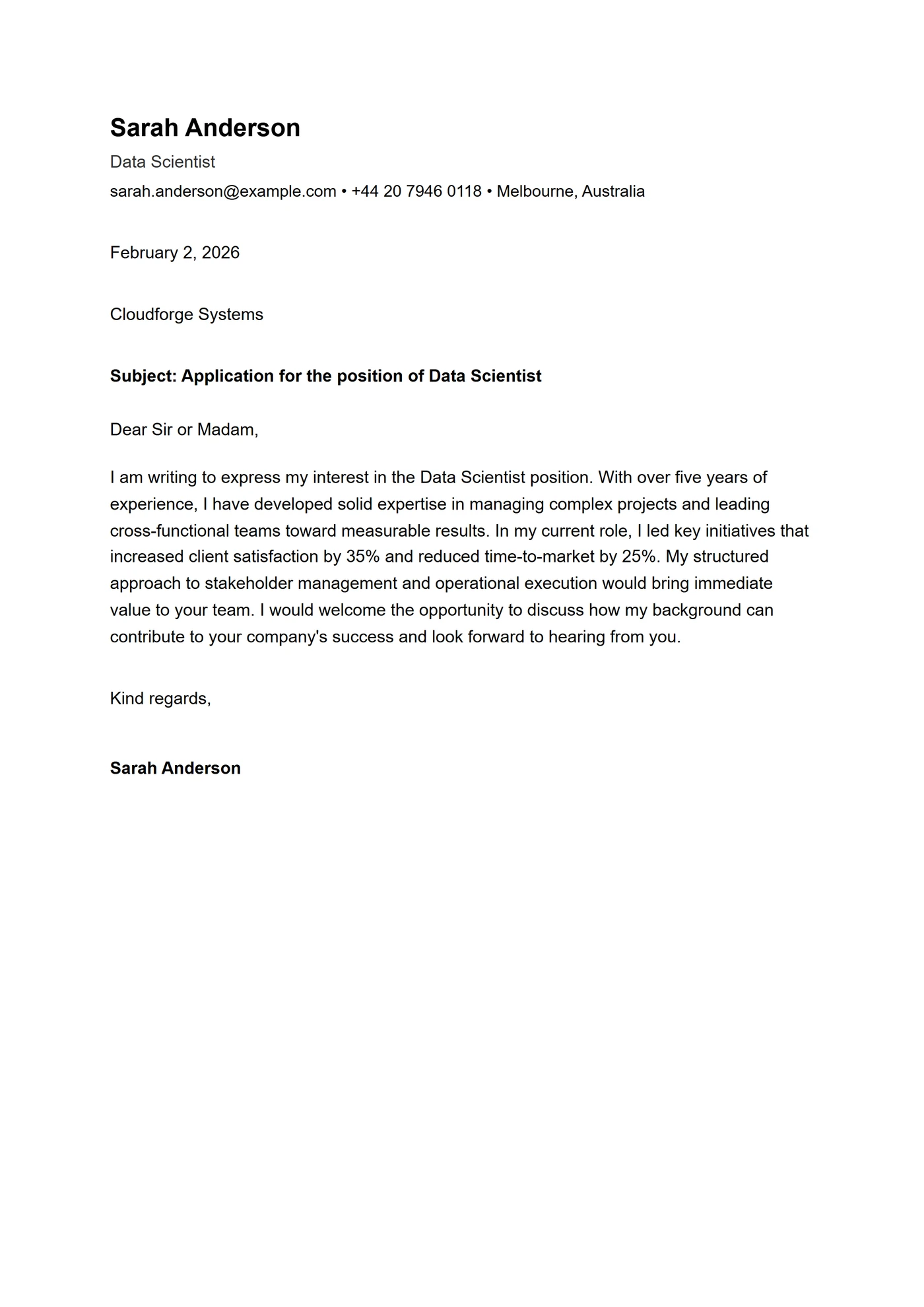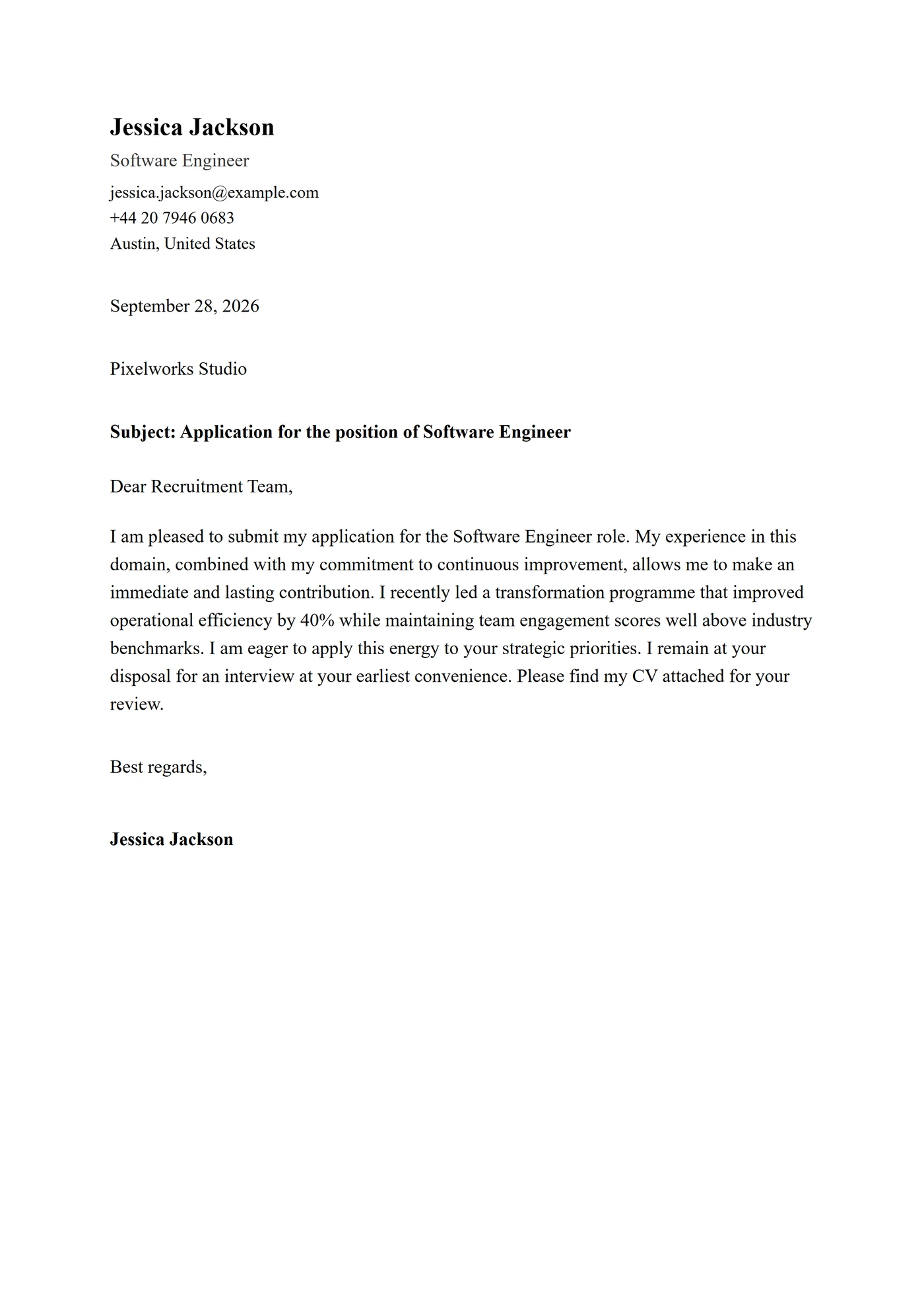
About this template
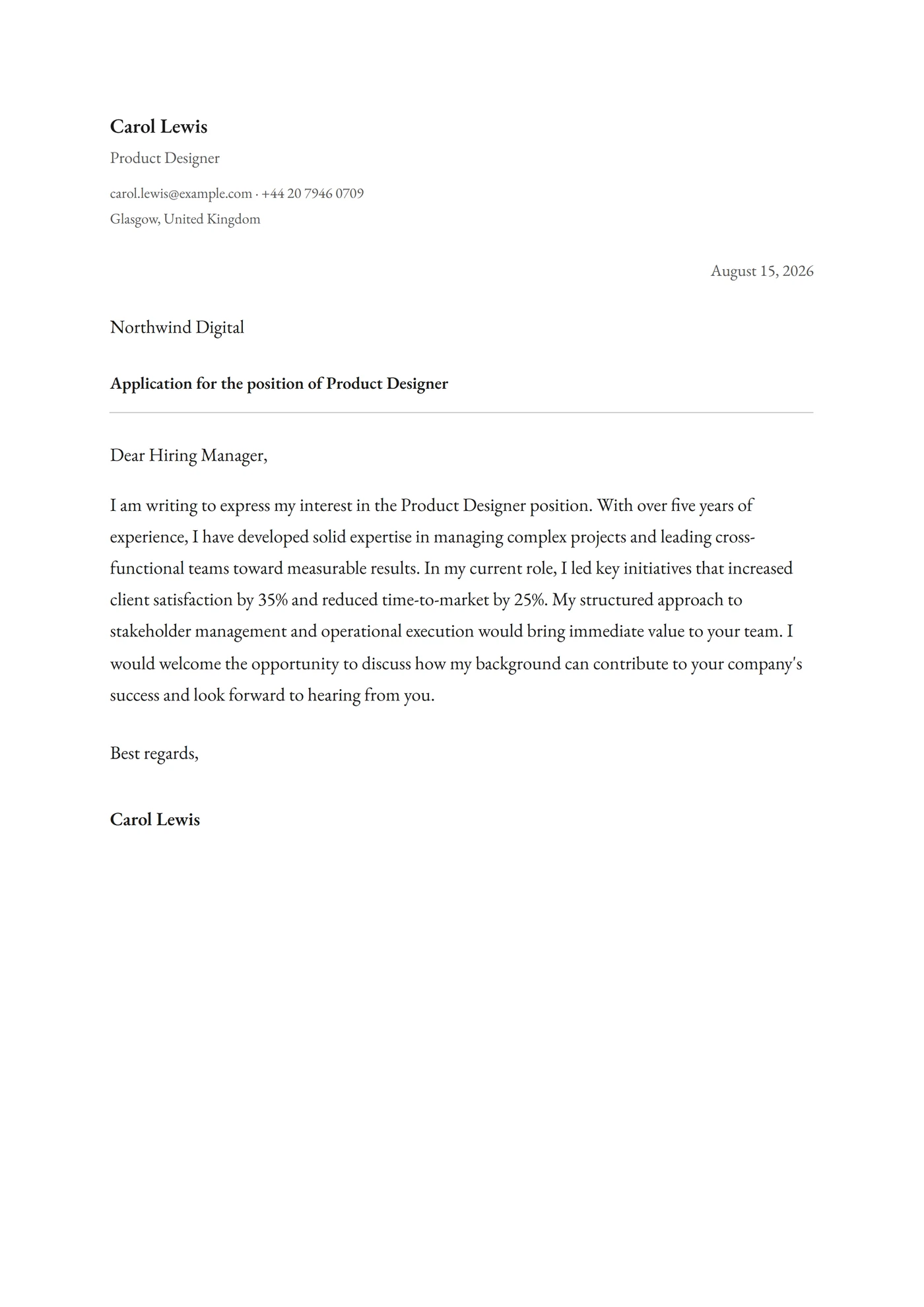
The ATS Georgia template is a cover letter set in Georgia 11pt, a serif designed by Matthew Carter for Microsoft to render crisply on screen at small sizes. One-column structure, neutral contact block — a warm serif voice that survives both PDF parsing and on-screen reading. Georgia was designed for CRT displays in the late 1990s and remains one of the best-tuned serifs at 11pt, making it a happy compromise between tradition (serif weight) and modernity (mobile and screen reading).
Who is it for?
It suits candidates whose application will be read on screen as often as on paper: digital news (The New York Times digital, The Guardian, BuzzFeed News legacy, Politico, Axios), online media, online journalism, content marketing teams (HubSpot, Salesforce Marketing Cloud) and communication agencies. Particularly suited to writers, editors, content managers, communications leads and reporters where a serif tone signals editorial seriousness without feeling old.
How to use it
Keep 11pt — Georgia is calibrated for that size on screen; at 12pt it becomes heavy. Preserve accented capitals if you write in English-with-loan-words ('À la carte', 'Études', 'Édition') — Georgia renders them correctly and an attentive recruiter notices. For digital editorial applications, mention an article or investigation you genuinely read at the publication (no flattery) and tie it to your craft. Avoid telegraphic abbreviations ('comms' for 'communications', 'PR' inside the body without context) — Georgia carries clean prose. Export to PDF; Georgia is embedded natively by every Microsoft and Adobe exporter. The 'screen-readable serif cover letter' search is small but on-target.
Frequently asked questions
Is Georgia really more readable than Times on screen?
Yes, measurably. Georgia was specifically designed for CRT reading and remains optimised for modern LCD: more generous serifs, stronger contrast, wider letterforms. Times remains better in print at 12pt but loses legibility on screen below that. If you know your letter will open on a screen (90% of digital media cases), Georgia is the best choice.
Does it suit a traditional print publishing application?
For Penguin Random House, FSG or Knopf, prefer Garamond — that is the expected cultural code. Georgia fits better for digital-native publishers (Vox Media, BuzzFeed, Substack publications) and contemporary publishing houses that embrace their digital presence. Quick rule: if the publisher prints majority-paper, choose Garamond; if it publishes majority-digital, choose Georgia.
Should I sign the Georgia letter with a scanned handwritten signature?
For digital media, no — a typed name suffices; the letter will be read on screen and the scanned signature only inflates the PDF. For traditional communications agency applications or legacy press, yes — the handwritten signature still reads as a mark of care. If you use it, scan at 600 DPI on white, export to transparent PNG and insert at the correct height (12 to 15mm tall).