About this template
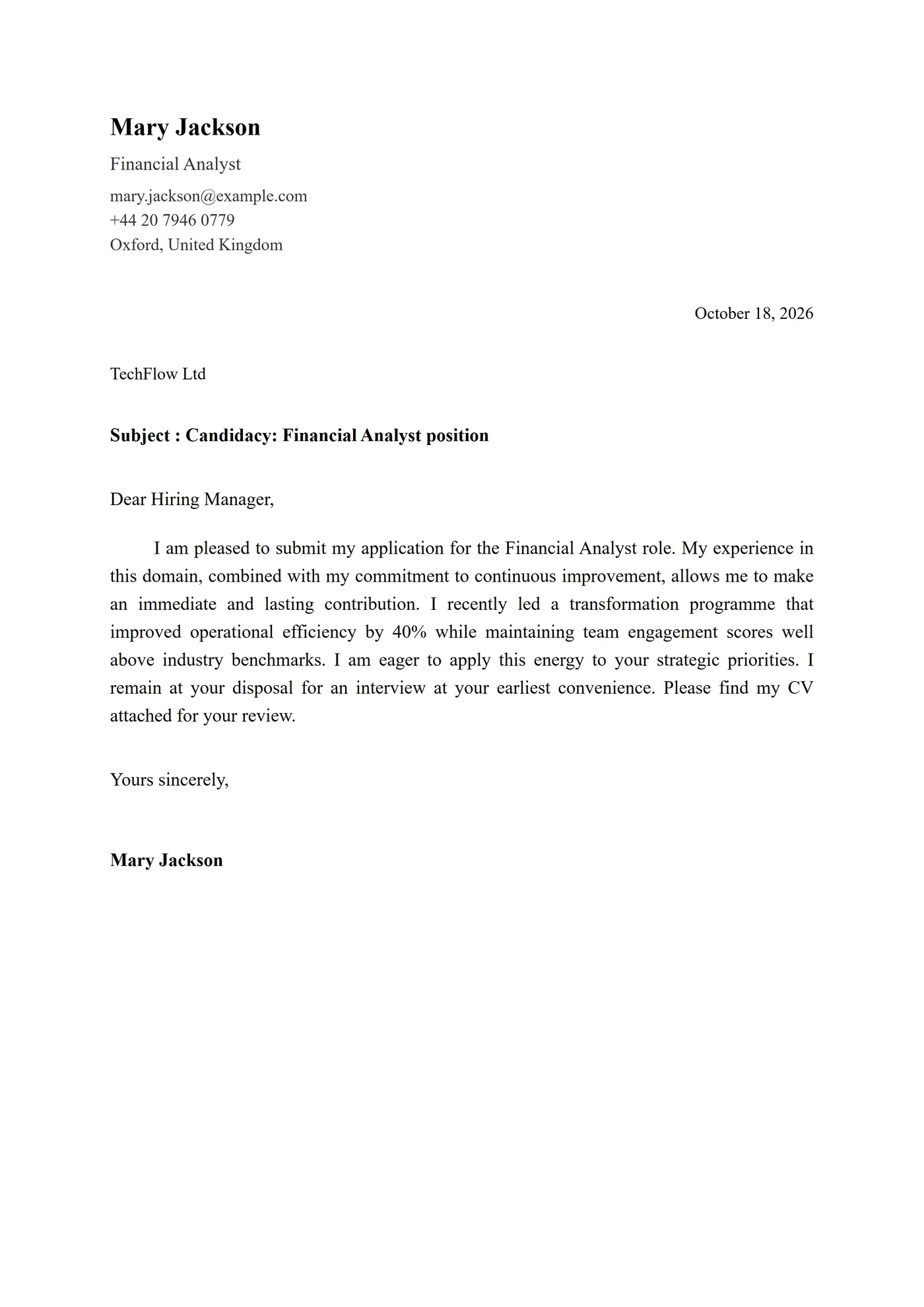
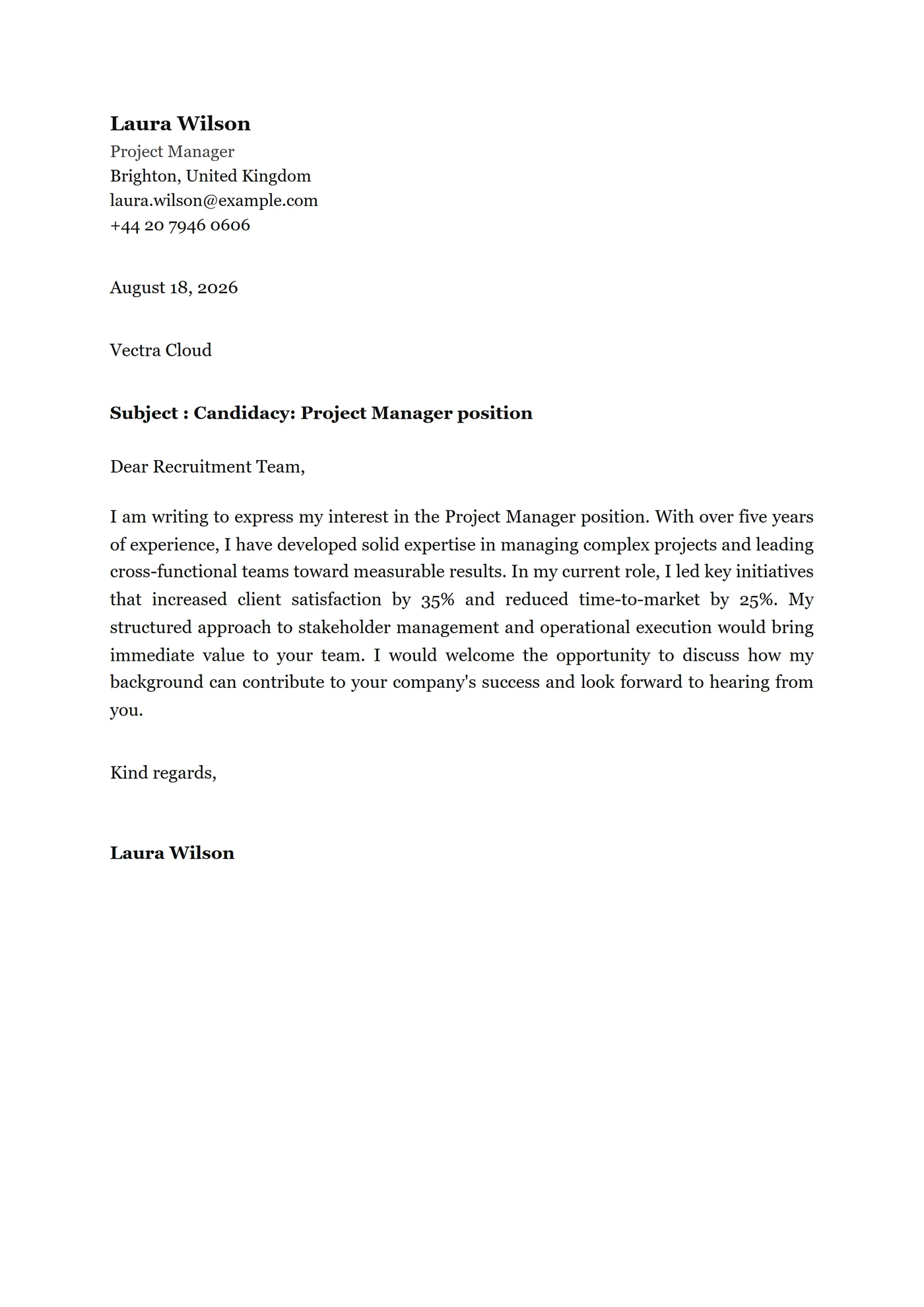
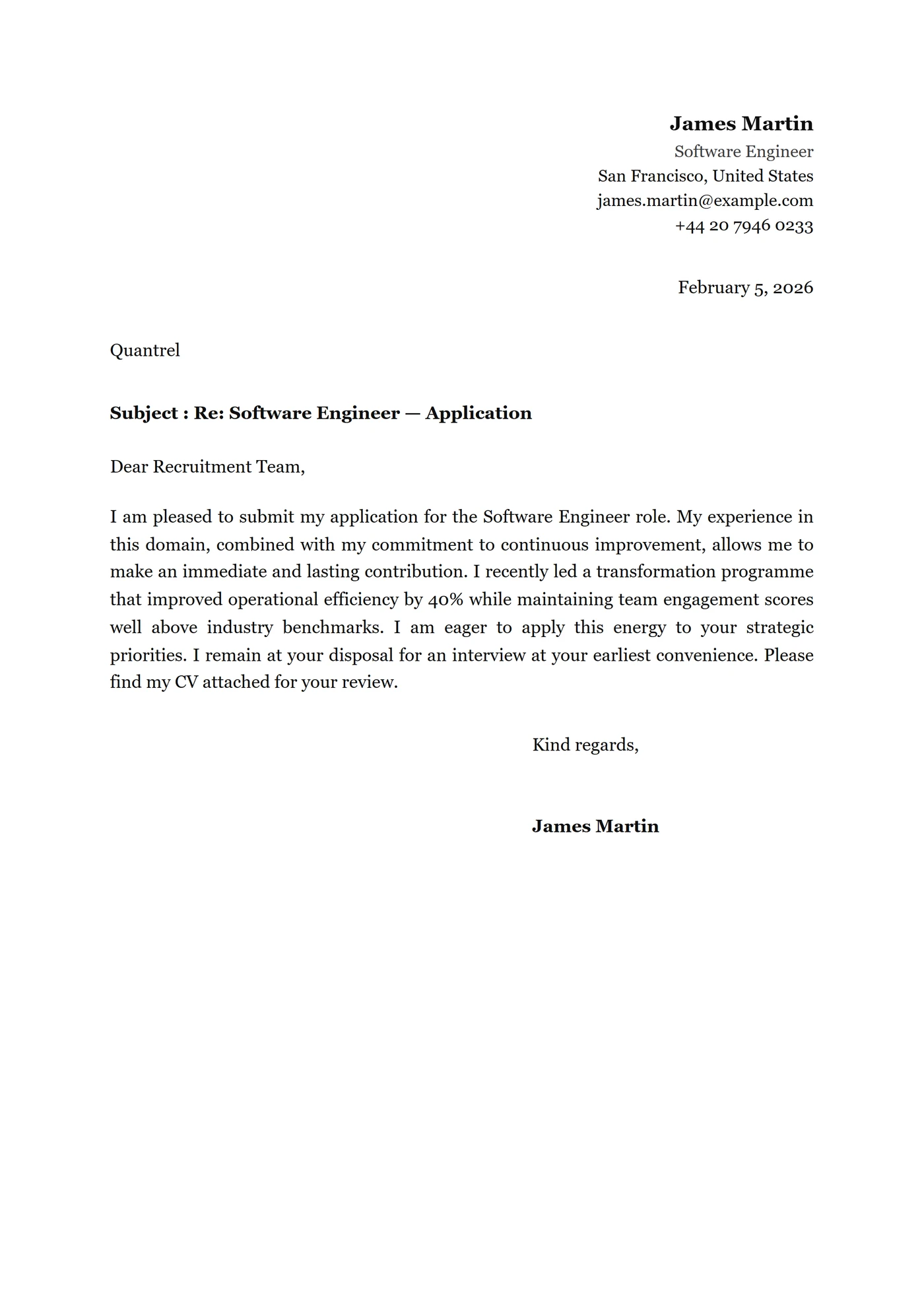
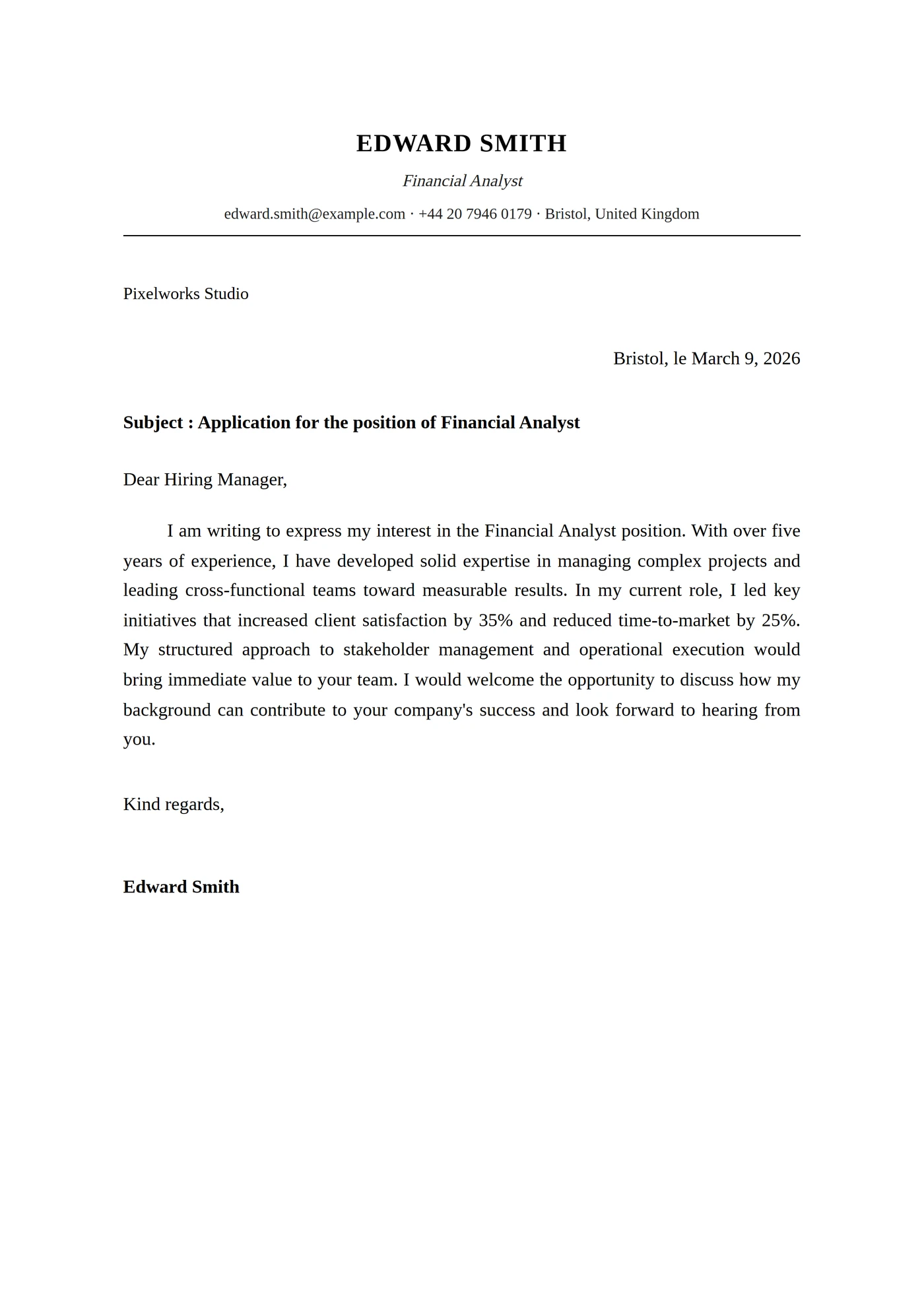
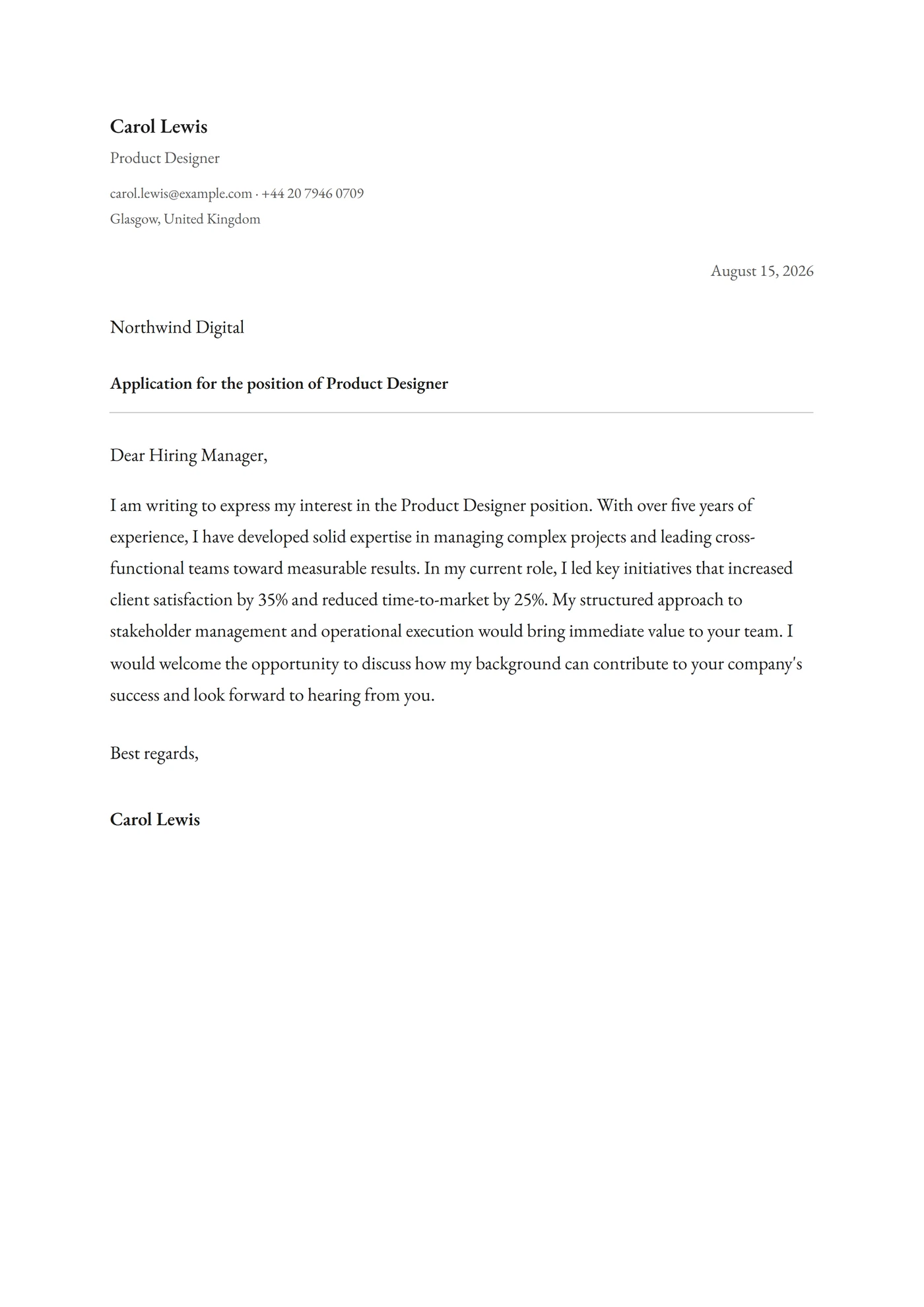
The Classic Academic template is a cover letter set in EB Garamond with full-block alignment, a university-style header and a clean horizontal rule separating contact details from the body. No colour, no flourish — the typographic register of academic correspondence. Compatible with academic ATS systems: Interfolio (US tenure-track searches), AcademicJobsOnline, HigherEdJobs and the institutional Workday instances of R1 universities and Russell Group institutions.
Who is it for?
It suits PhD candidates, postdoctoral researchers, lecturers, university administrators and academic-publishing professionals applying to universities, research institutions (NIH, NSF, Max Planck, CNRS), scholarly journals (Nature, Science, Elsevier, Springer Nature, university presses) and grant-awarding bodies (ERC, Wellcome Trust, MacArthur Foundation). The format is the field's default — using anything else risks reading as outsider.
How to use it
The header carries academic rank (PhD, Dr, Asst Prof, Assoc Prof), current affiliation (department + institution) and ORCID iD. The body follows the academic four-paragraph convention: scholarly positioning, fit with the search profile, research and teaching plans, closing. Cite two or three signature publications in numbered footnotes following the disciplinary norm (Chicago for humanities, Vancouver for clinical, IEEE for engineering, APA for social sciences). The signature includes the ORCID identifier — increasingly required by R1 search committees and ERC panels.
Frequently asked questions
Should I attach the cover letter to my academic CV?
Yes for US tenure-track applications, UK lectureships, Marie Skłodowska-Curie postdoctoral fellowships and international postdoc contracts. The cover letter is read before the CV to calibrate committee attention — it decides whether the CV is read in detail or skimmed. For a job ad explicitly requesting only a CV, attach the letter anyway as a courtesy.
How long should this academic cover letter be?
One page for early-career profiles (postdoc, lecturer, assistant professor). Two pages for senior profiles (associate professor with tenure, chair applications). Beyond two pages, the detailed research statement (5-10 pages) should be a separate document. Never exceed two pages in the cover letter itself.
How do I describe my research project in the letter?
Reserve paragraph three for the project: short title, two or three scientific objectives, methodology in one sentence, articulation with the host laboratory's axis. Detailed methodology belongs in the separate research statement. For ERC Starting Grants or NSF CAREER applications, cite the target programme explicitly.