
About this template
The Warm Sage Garden template is a modern cover letter on warm cream paper with a soft sage-green left-edge border, a hand-drawn herb motif in the corner and a Lyon Display body. Calm, organic, residential — a visual code that speaks to slow-living, organic and sustainable-hospitality brands. It parses through HR ATS systems in lifestyle and organic sectors (Personio, BambooHR, Greenhouse).
Who is it for?
It suits organic-food entrepreneurs (Whole Foods, Erewhon, Local Roots, Patagonia Provisions), urban farmers (Square Roots, Gotham Greens, BrightFarms), herbalists (American Herbalists Guild registered), sustainable-programme leads, landscape architects (GSD Harvard MLA, Penn LARP) and slow-living brand managers applying to small producers (biodynamic vintners, short-supply-chain market gardeners, farmstead cheesemakers), restaurants with local menus and fine-grocery brands. Sage says terroir and patience.
How to use it
The slow-living cover letter must tell a practice through precise references: name the labels (USDA Organic, Demeter Biodynamic, Regenerative Organic Certified, Fair for Life), the partner producers, the short-supply distances (average miles, % local sourcing). For a landscape architect, mention flagship projects, treated surfaces and ecosystems (food forests, wildflower meadows, rain gardens). For an urban farmer, cite the cultivated sites and annual production volumes.
Frequently asked questions
Does sage green suit organic-beauty applications?
Very well for Drunk Elephant clean line, Tata Harper, Pai Skincare, Indie Lee, Florena, certain Aesop teams. Sage matches the natural palette of premium organic cosmetics. For conventional cosmetics (L'Oréal Paris, Maybelline, Garnier mainstream), prefer a more modern template such as Aurora Purple or Warm Coral Sunrise.
Should I mention personal gardening or organic practices?
For producer or landscape-architect applications, yes — it reads as practice-discourse coherence. Cite practices (permaculture, agroforestry, certified biodynamics), duration of experience and credentials (Permaculture Design Certificate, ASLA membership, American Herbalists Guild registration). For a pure brand-management application, less critical but still a plus.
How do I describe a cooperative farm or collective project?
State the legal form (cooperative, LLC, 501(c)(3) non-profit), the collective size, the role structure (rotating or statutory) and the lessons drawn (shared governance, seasonal coordination, cooperative distribution). Sustainable-sector recruiters value maturity around alternative models — it's a signal of genuine engagement beyond surface narrative.
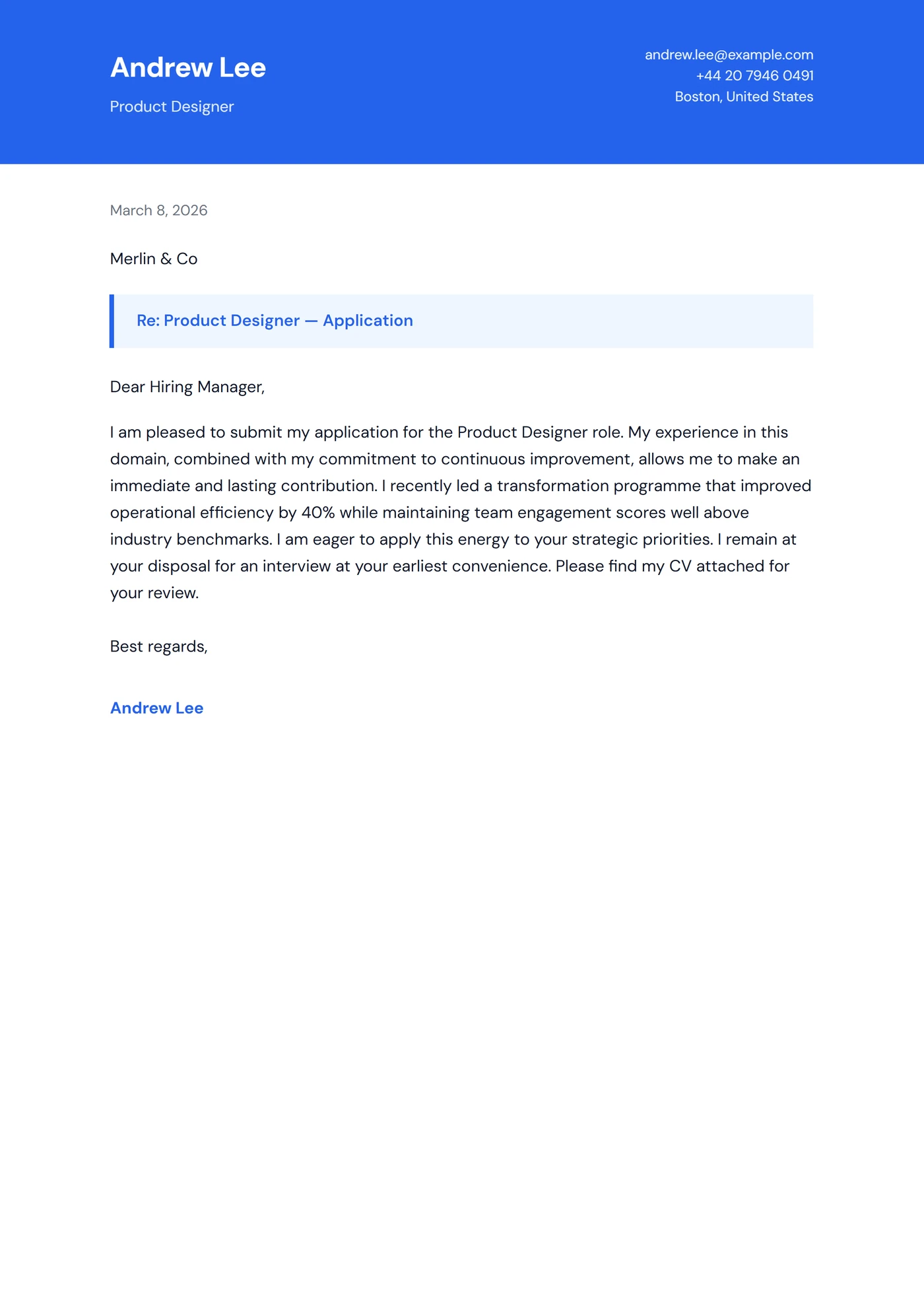
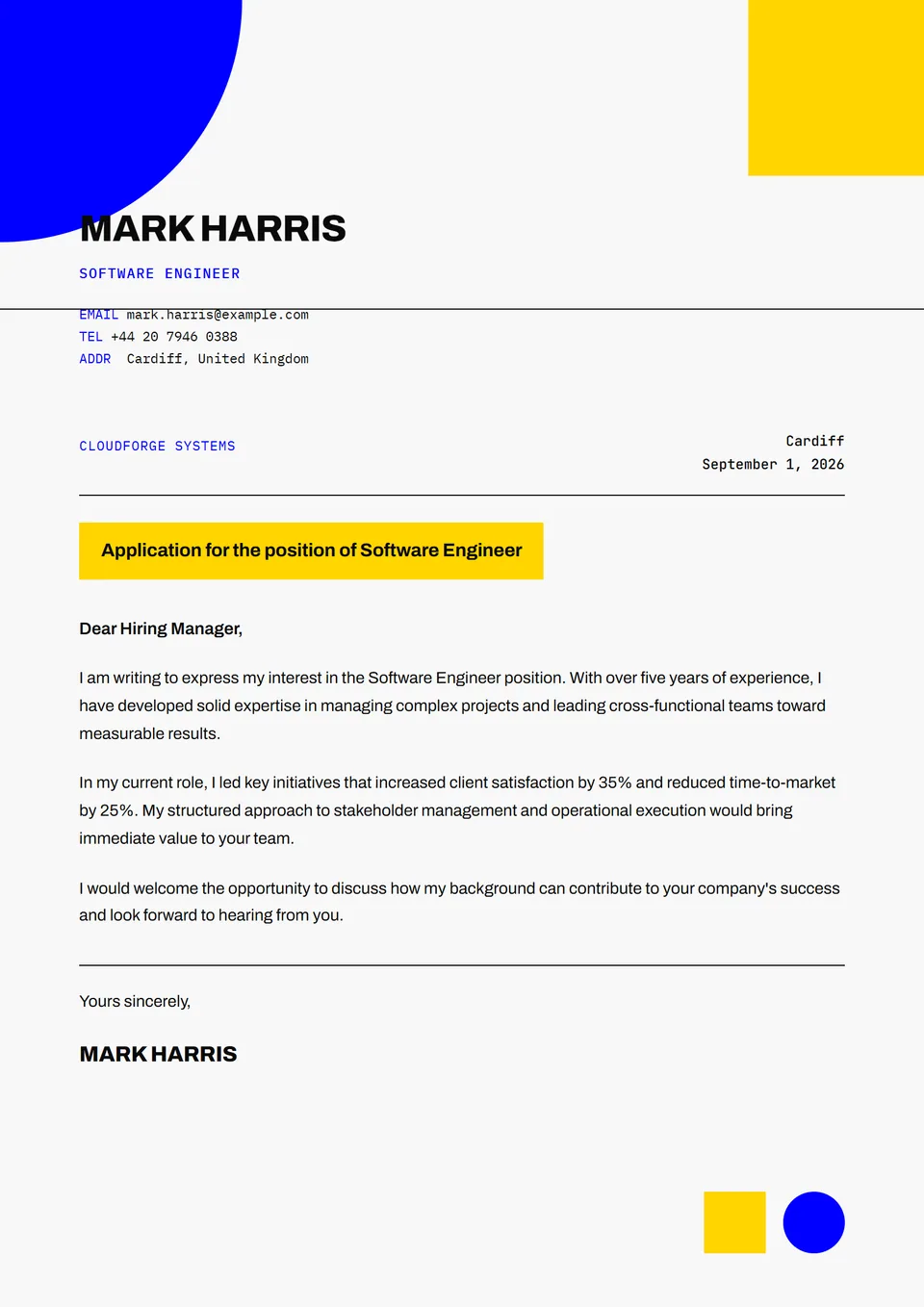
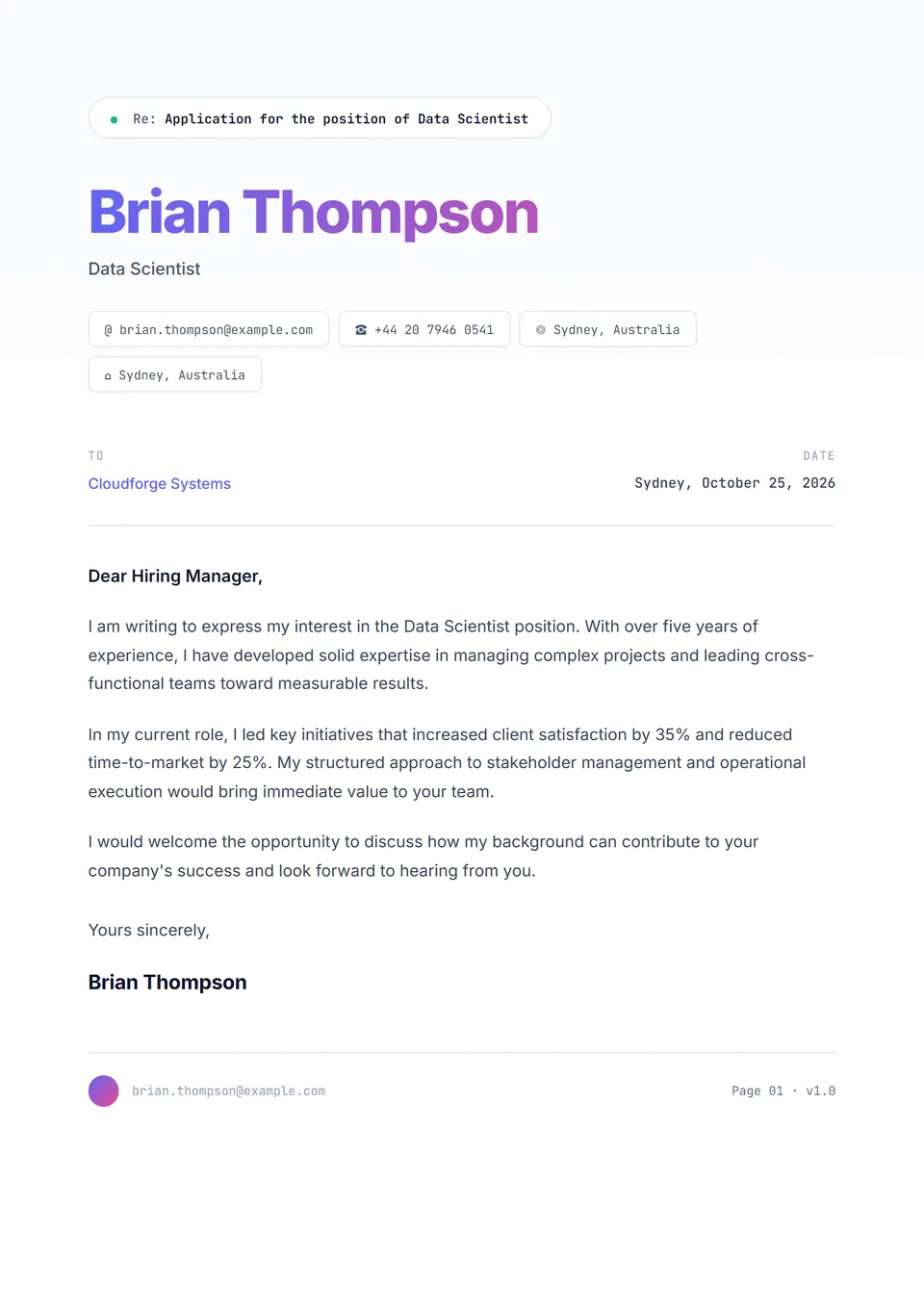
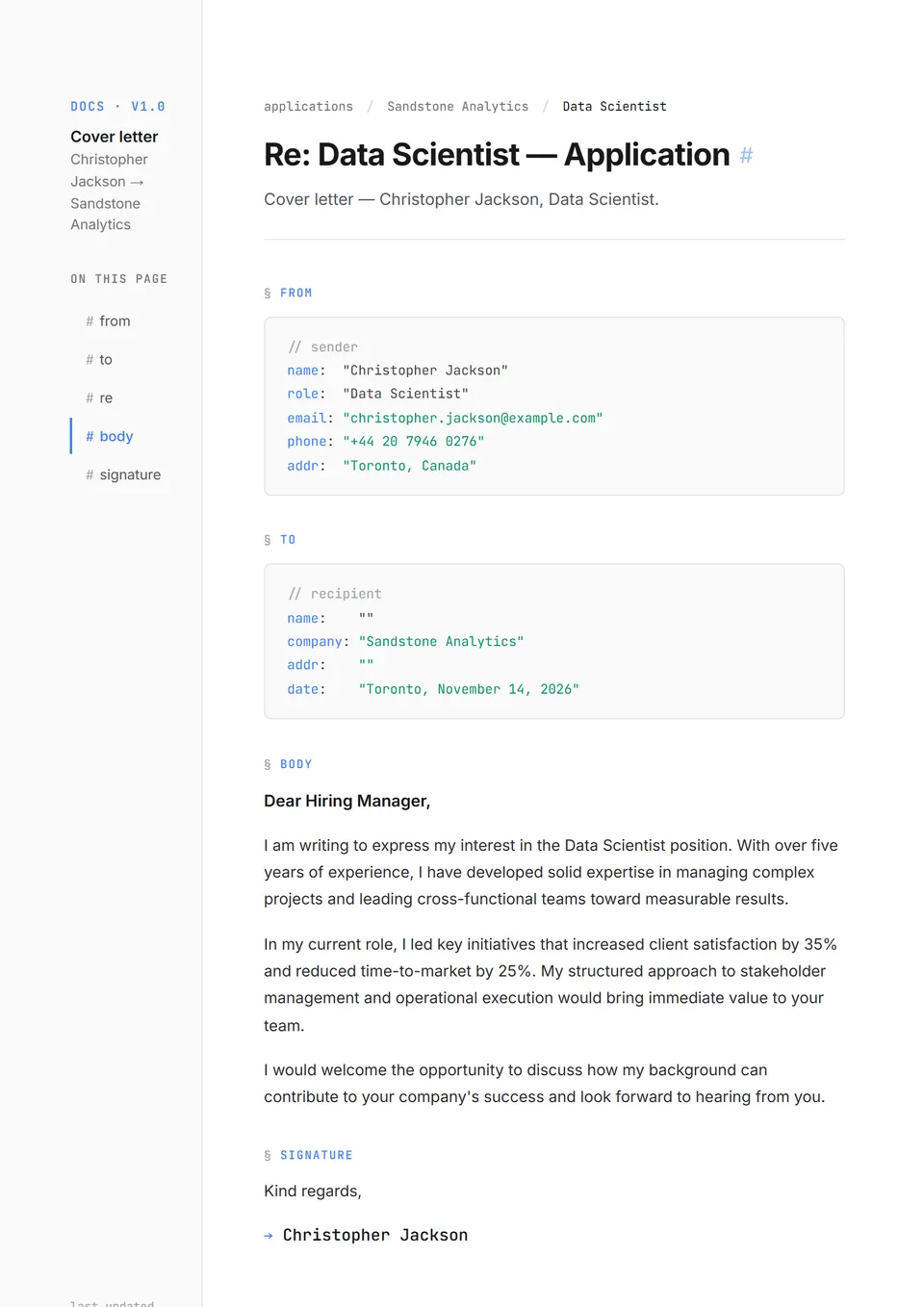
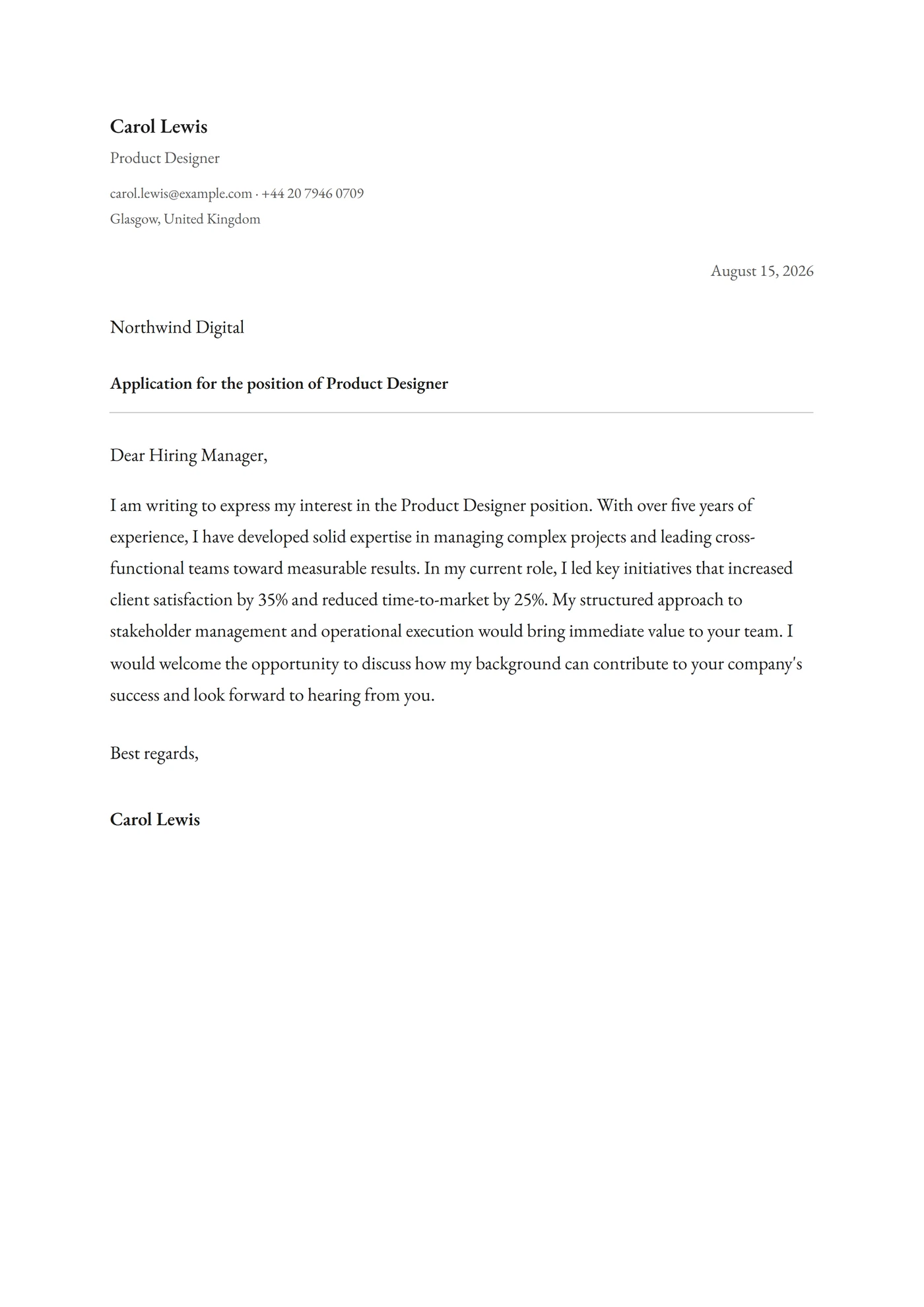
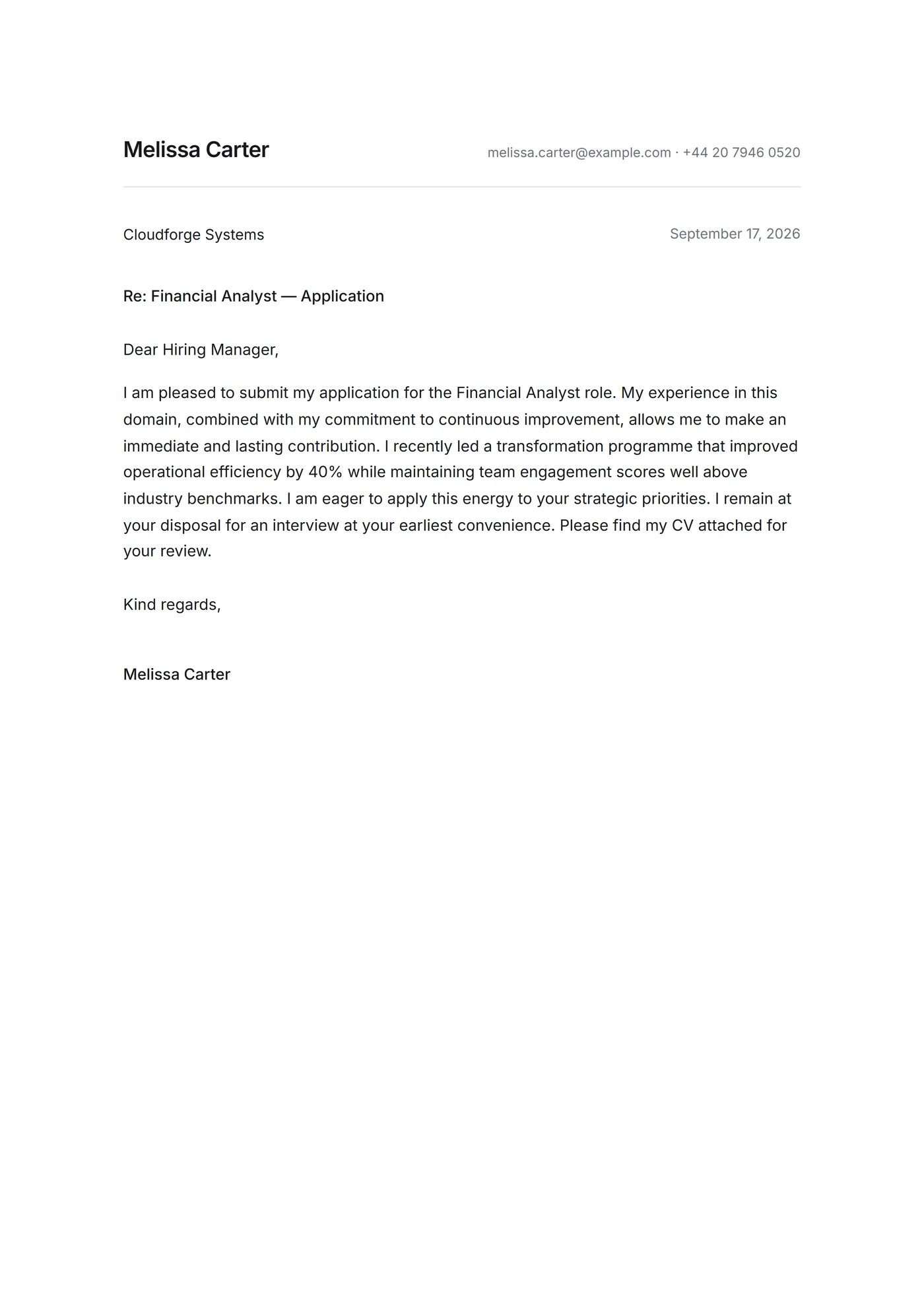
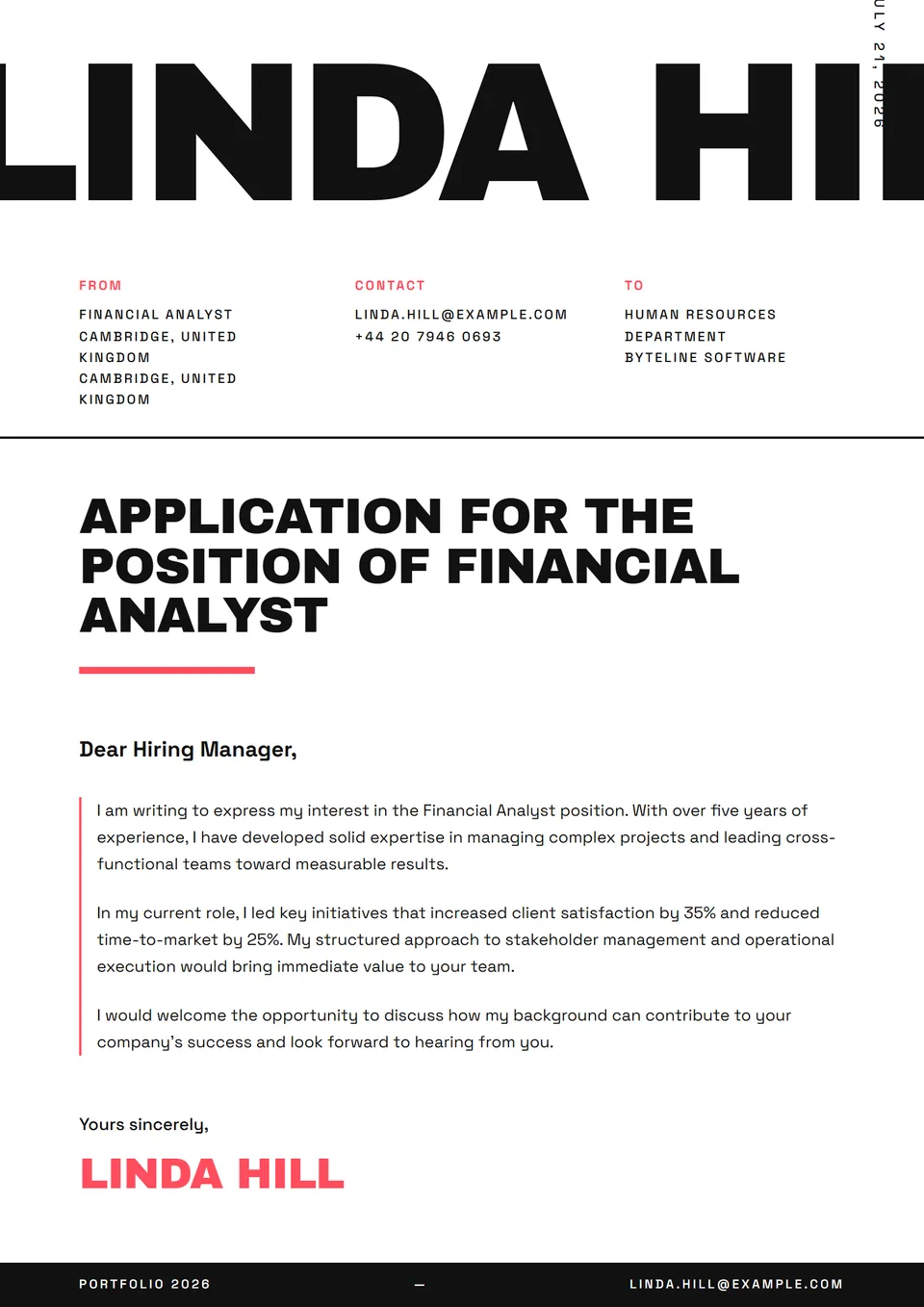
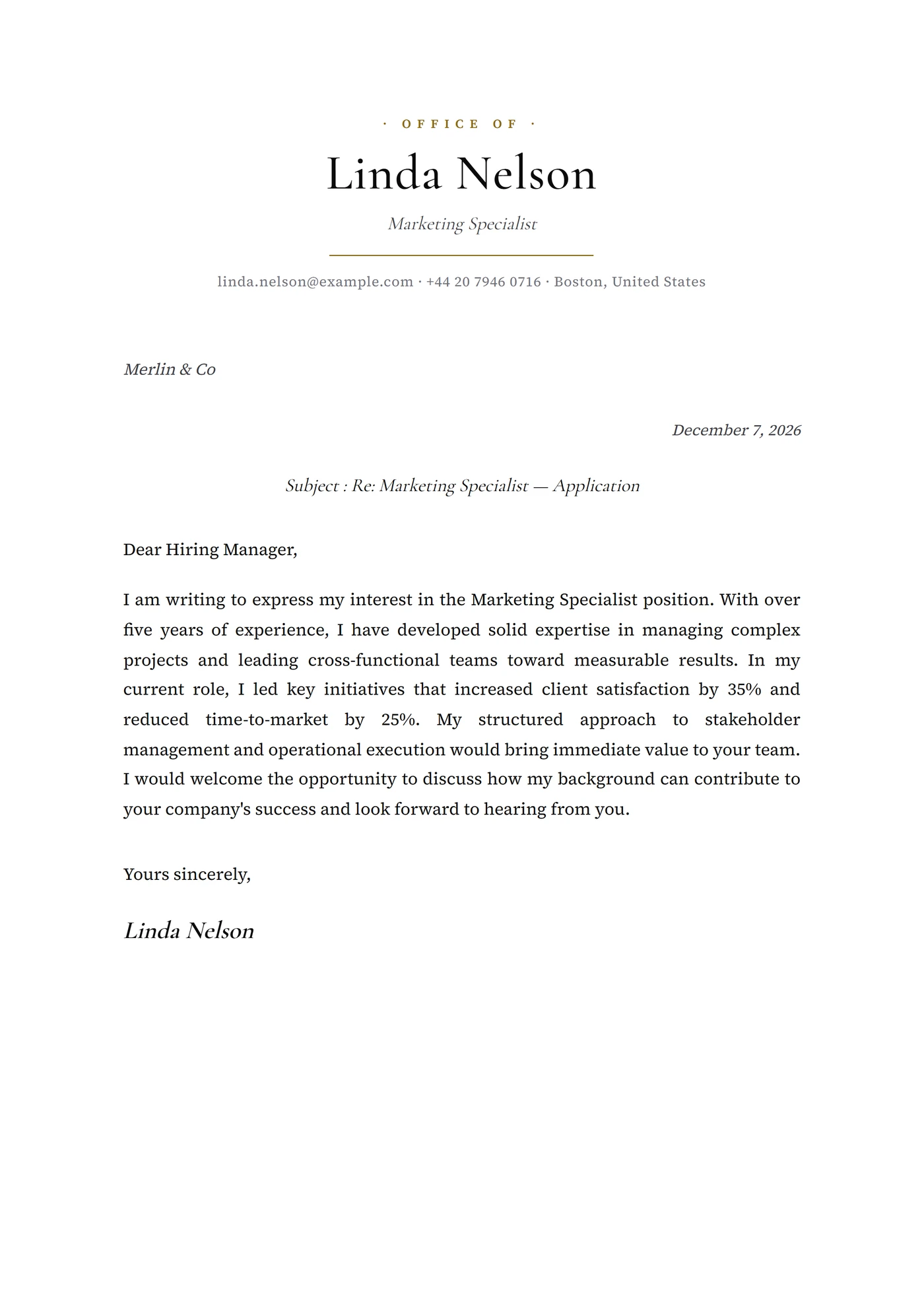
Seen in real examples
Sage Garden in action across real roles
Discover how this template fits different jobs. Each example is written specifically for the role and picks this design as one of its top picks.