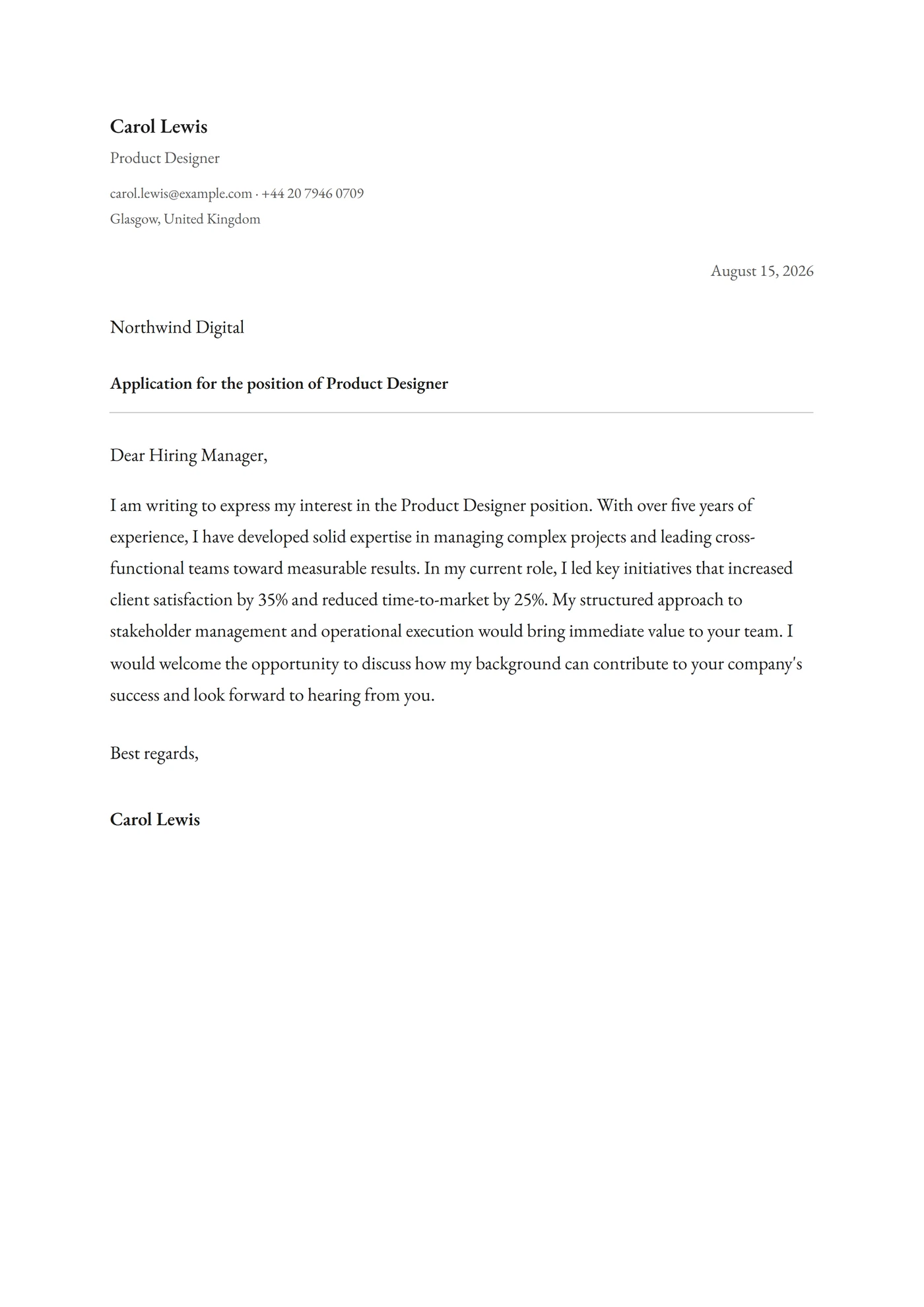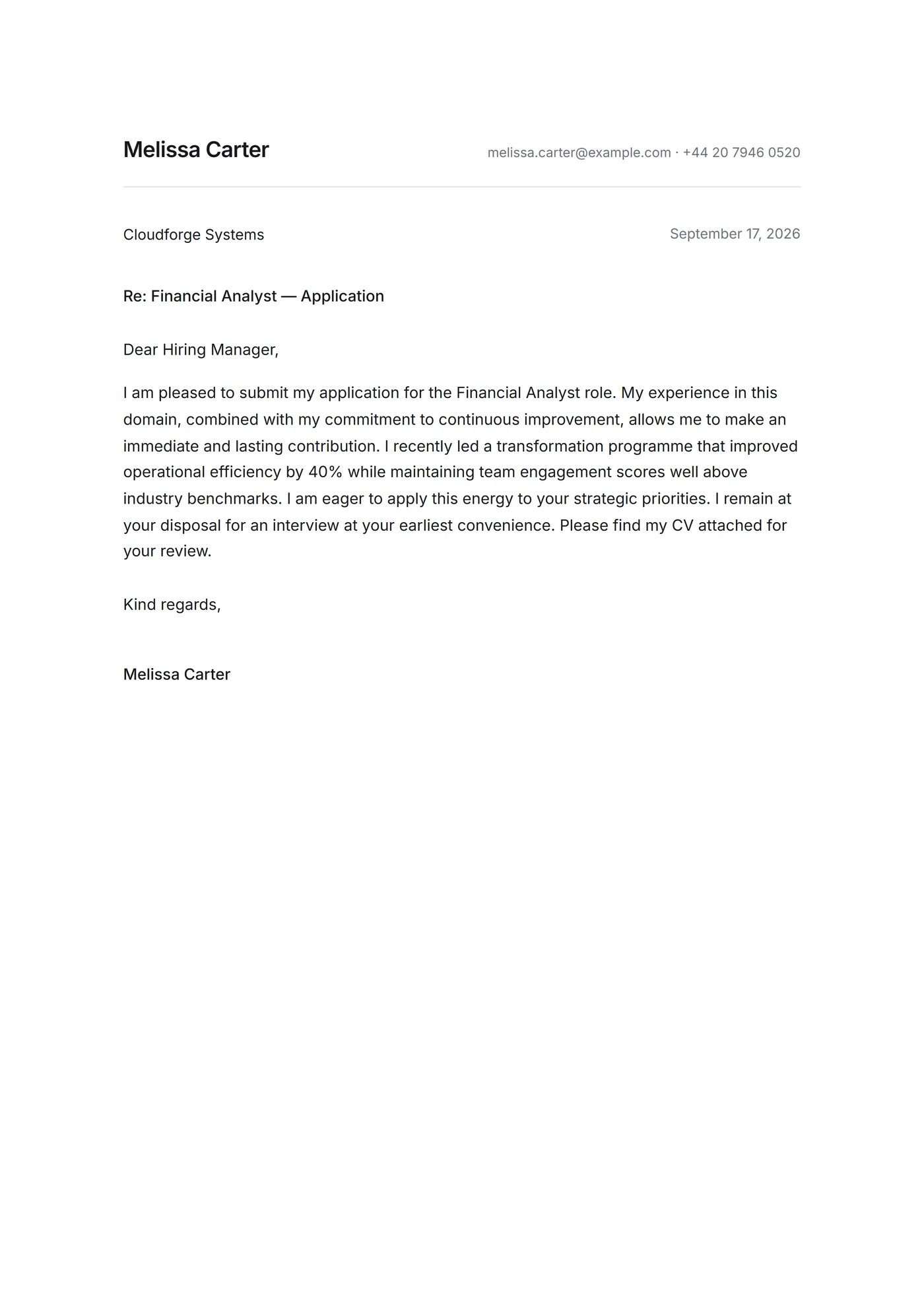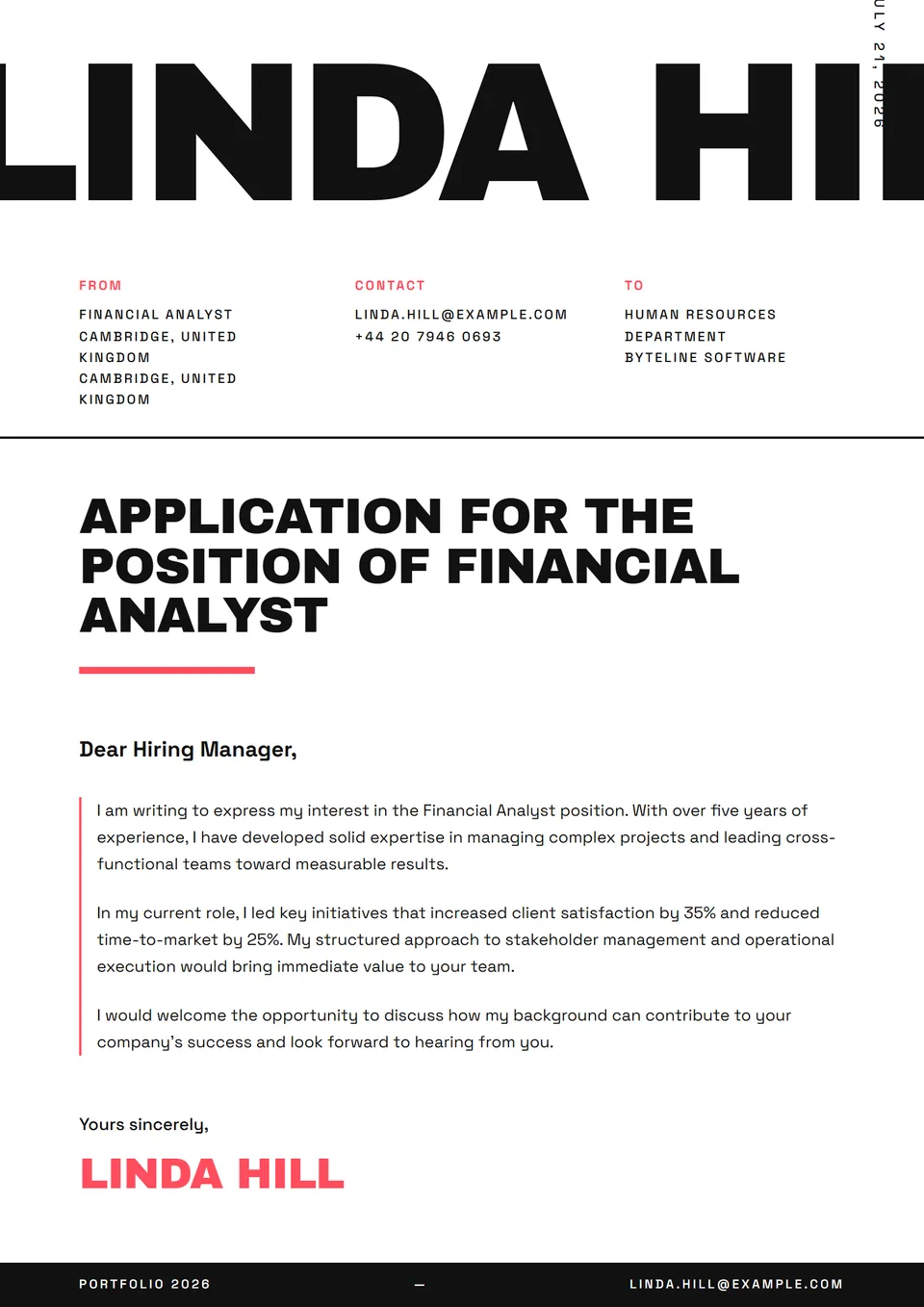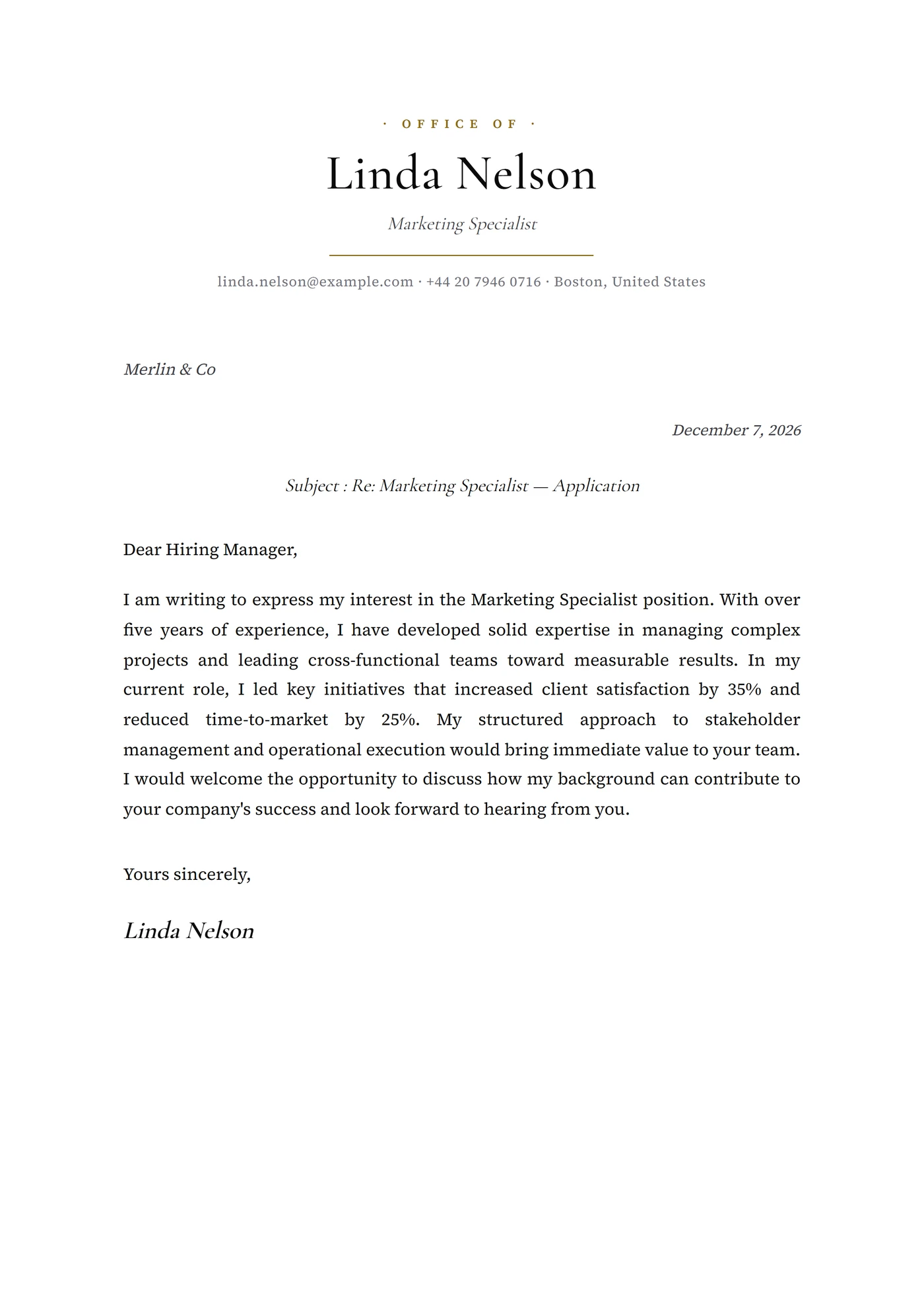
About this template
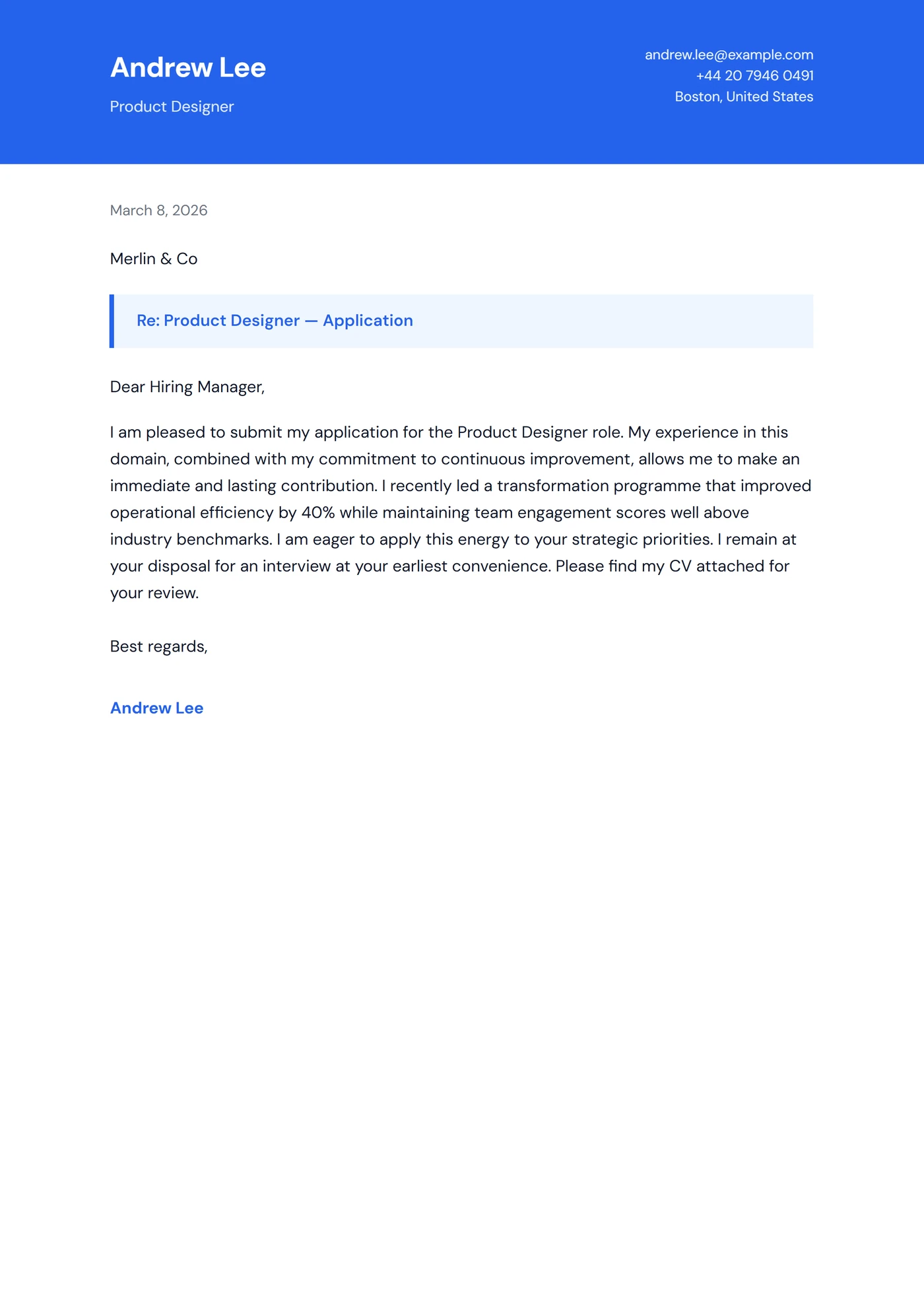
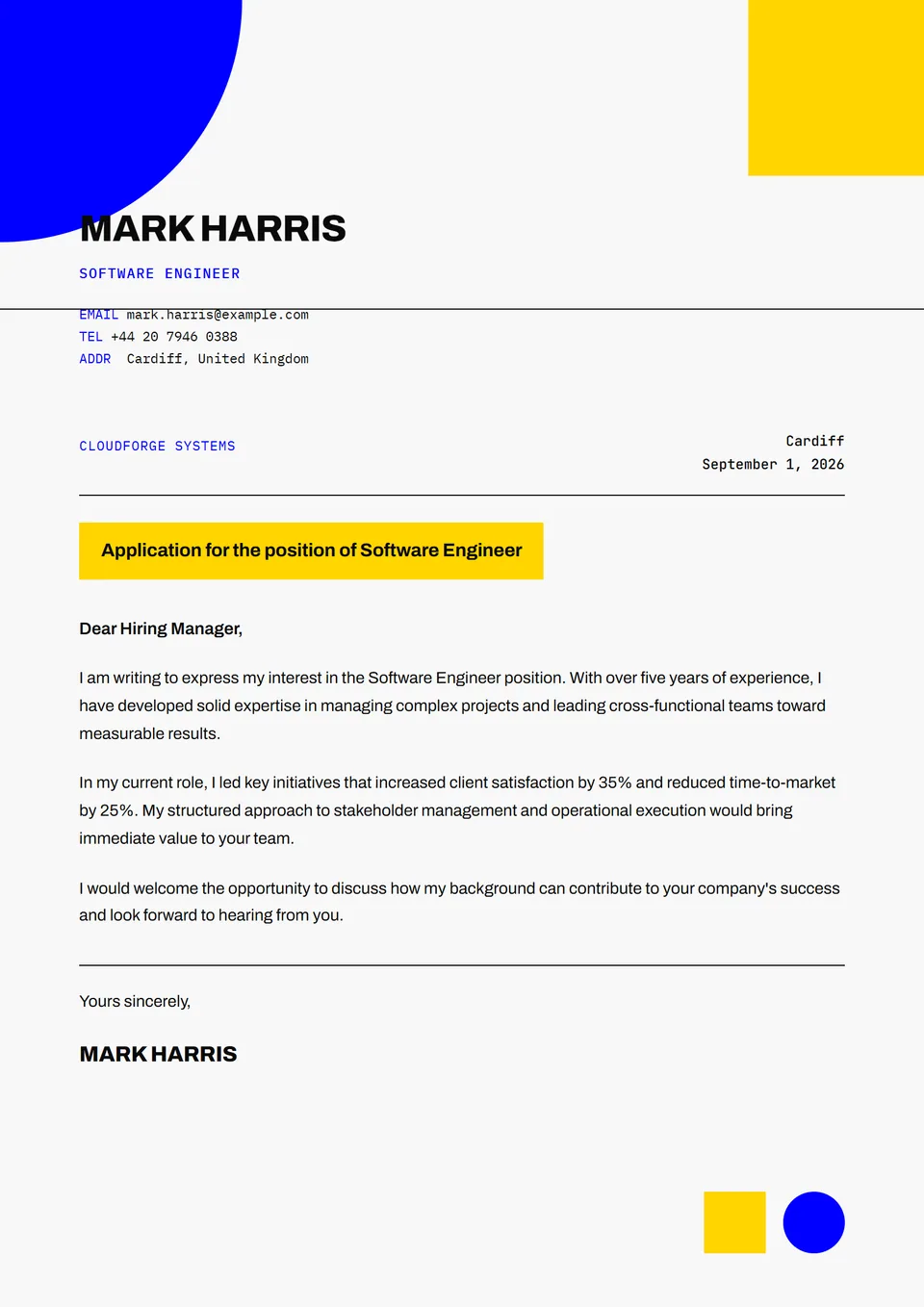
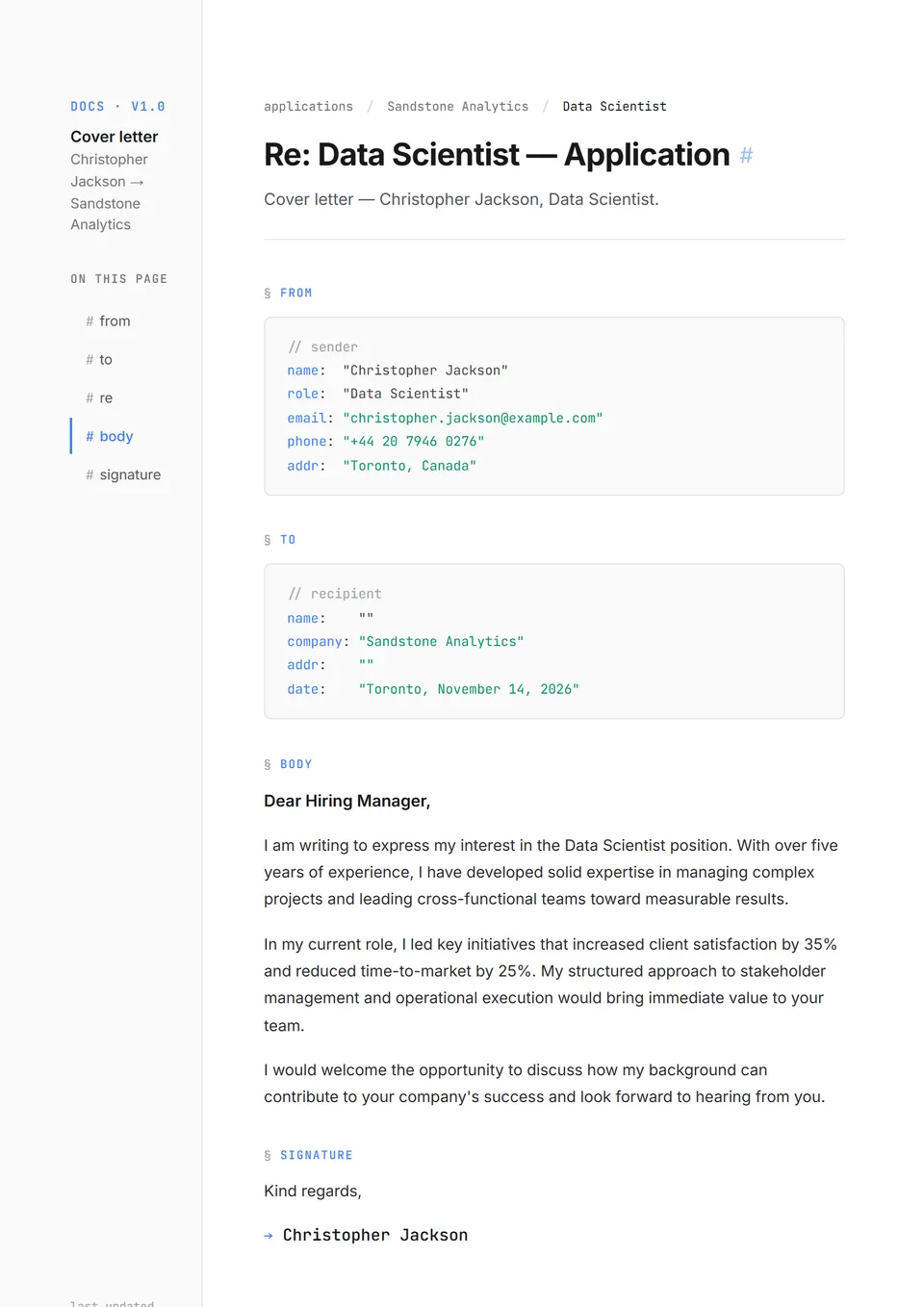
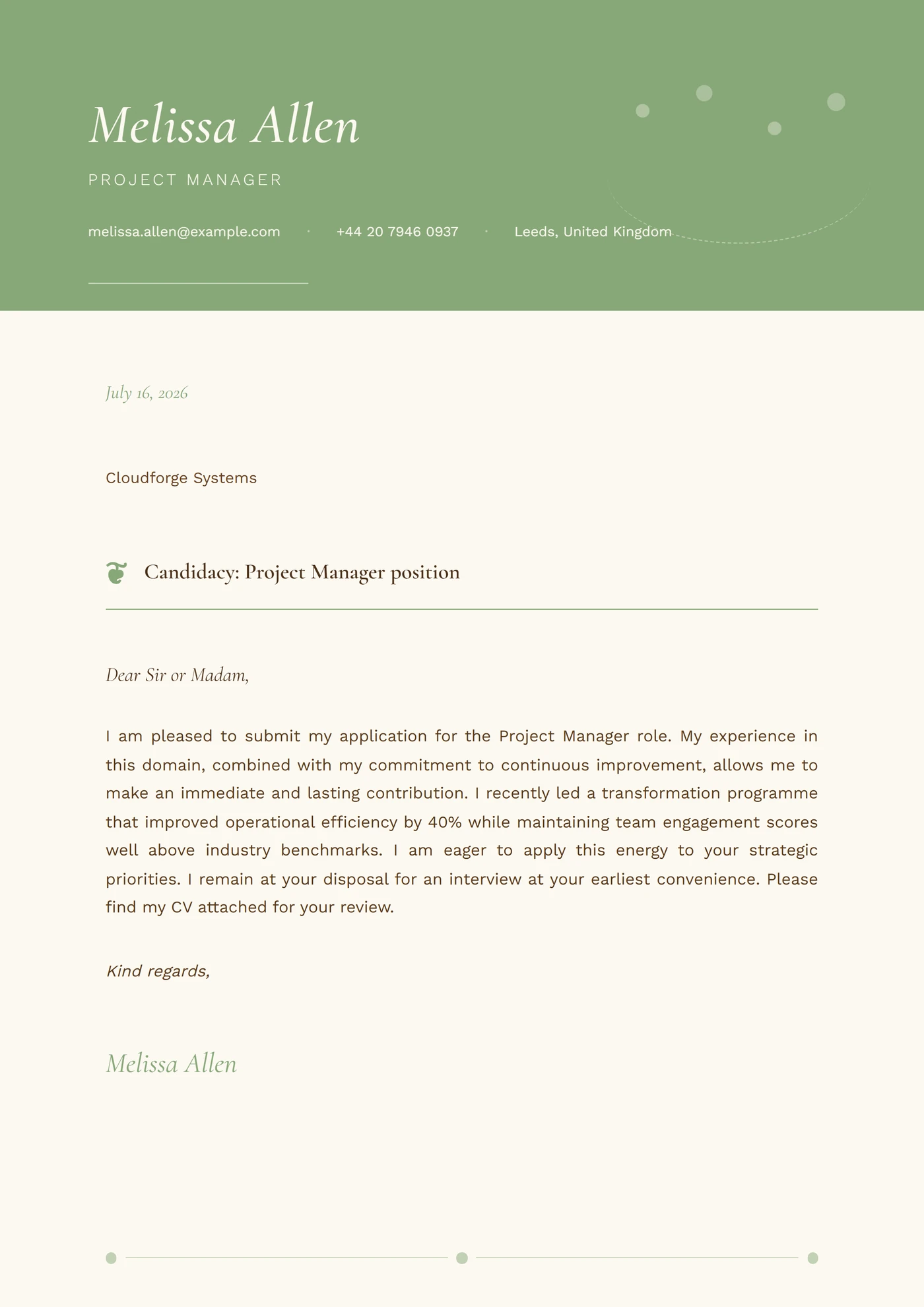
The Tech Startup template is a modern cover letter in two clean columns — a tight metrics block on the left (years shipped, scope, key gains), Inter prose on the right. Indigo accent, generous white — written for founders and hiring managers who read diagonally. It parses through startup and scale-up ATS (Greenhouse, Lever, Ashby, Workable) dominant in the YC and Series A-B ecosystems.
Who is it for?
It suits software engineers (fullstack, backend, frontend), product managers, growth operators, designer-engineers and ops leads applying to YC-type startups (W22, S23, W24 batches), Series A US scale-ups (Vercel, Linear, Anthropic, Mistral, Perplexity) and tech-driven structures. The left-metrics + right-prose format naturally mirrors a modern scale-up's product page — it's a code, not a layout choice.
How to use it
The left metrics column must be surgical: three to five numbers maximum, readable formats ("0→$12M ARR", "3 engineers → 28", "p95 latency 800ms → 120ms"). The right column tells the context in two short paragraphs, plus a discussion proposal ("I'd value a conversation about enterprise churn on your Pro tier"). The founder or hiring manager must understand your fit in 45 seconds — beyond that, you've lost them.
Frequently asked questions
Should I include expected equity?
Never in the letter. Equity is discussed after the technical phase, with the founder or head of people. Quoting an expected % in a first application reads as a startup-culture mismatch — disqualifying with most US Series A founders. The equity conversation happens between matching and offer, never in the opening line.
Does the two-column format parse through ATS?
Yes at Greenhouse, Lever, Ashby — modern scale-up ATS accept columns. Avoid this format for a Fortune 500 application with Workday or Taleo, where column parsing can break. For the startup context, the format is native and expected. For an enterprise application, prefer Swiss Grid or Platinum Edge.
How do I write about a past startup failure?
Very well in startup culture, provided you're analytical. State the context (phase, ARR reached, principal shutdown reason), your operational learning ("we confused product-market fit with enthusiastic early adopters") and what you apply today. Founders read critical maturity positively — a track record with no visible failure can read as suspicious in early-stage rooms.