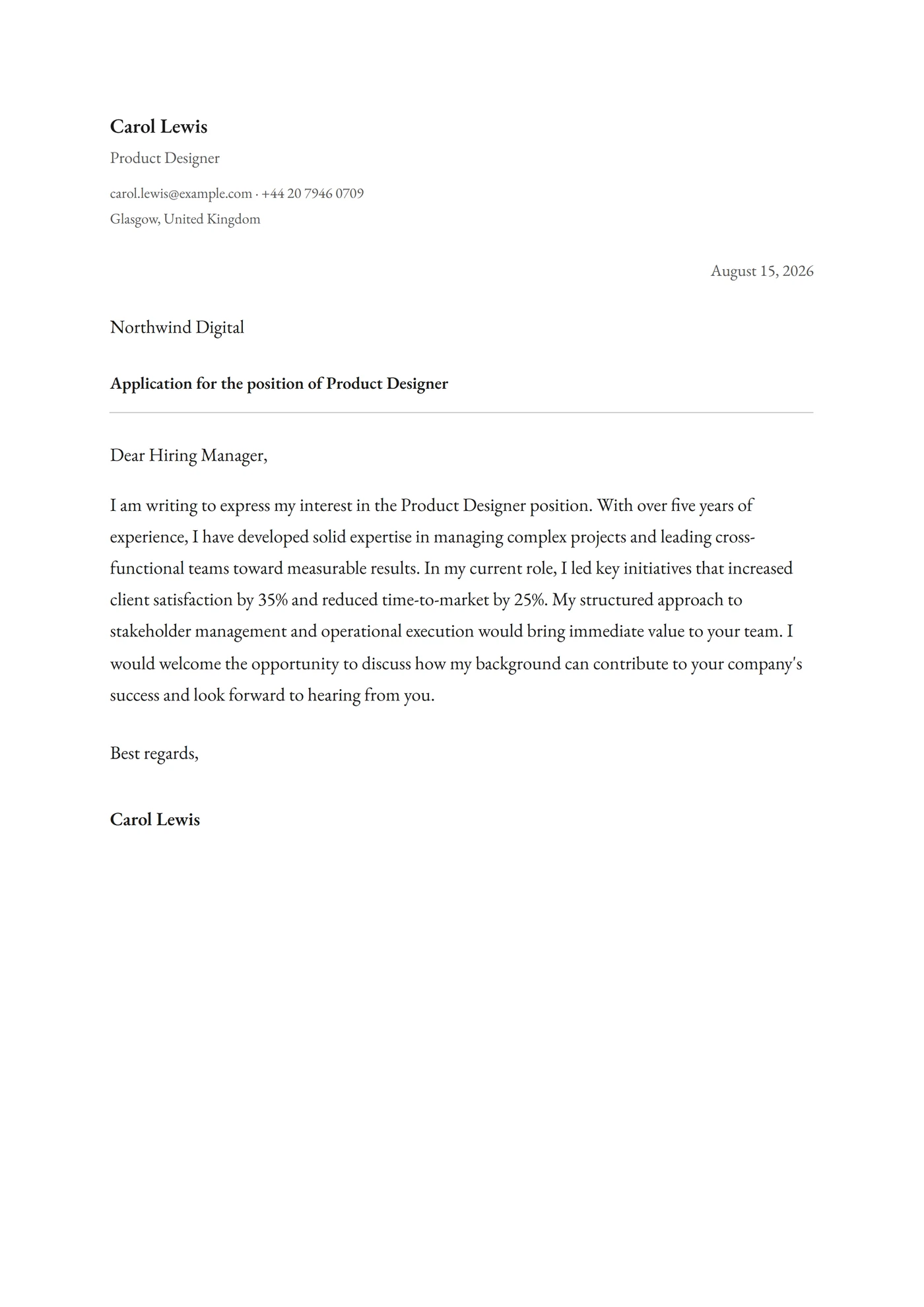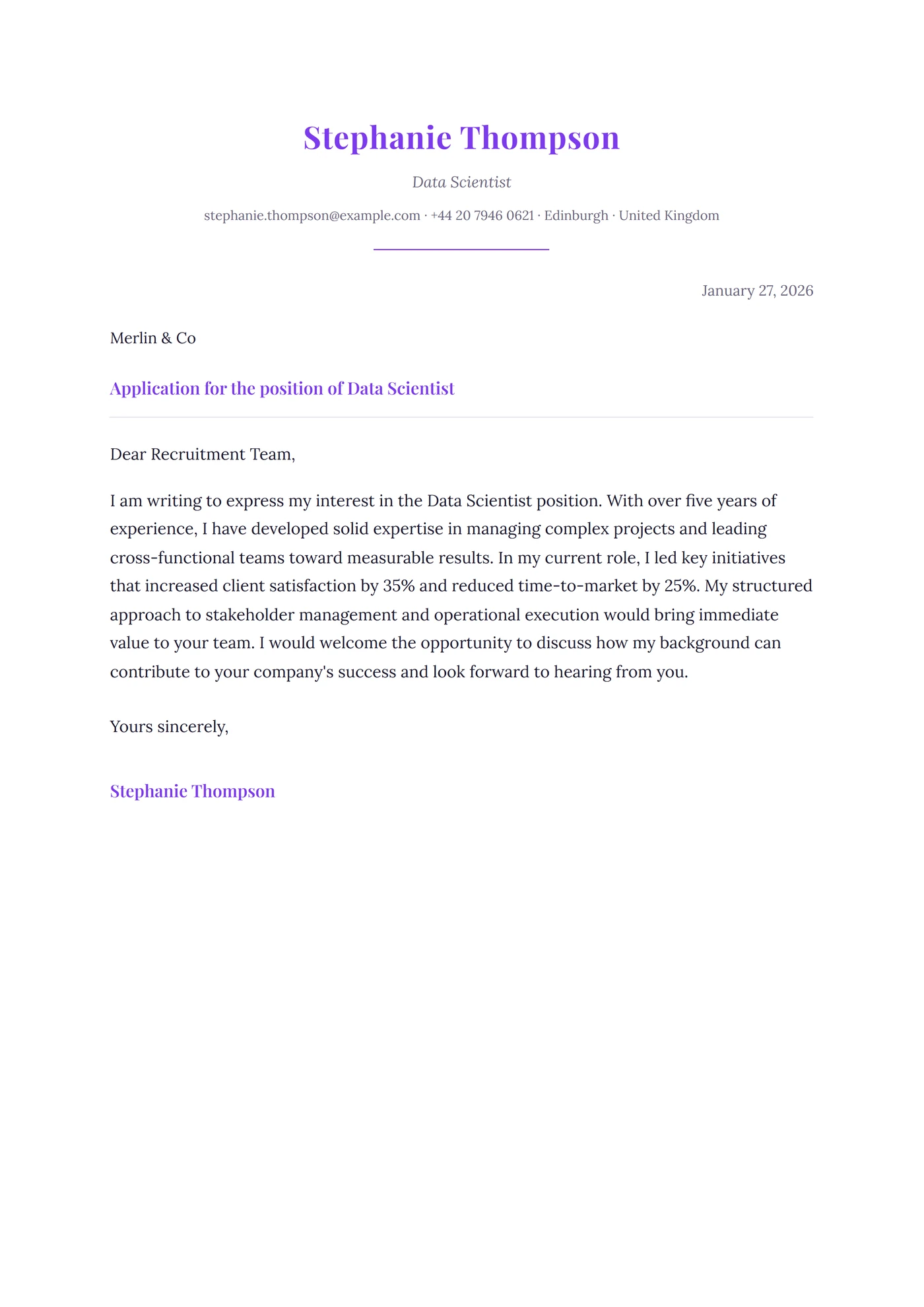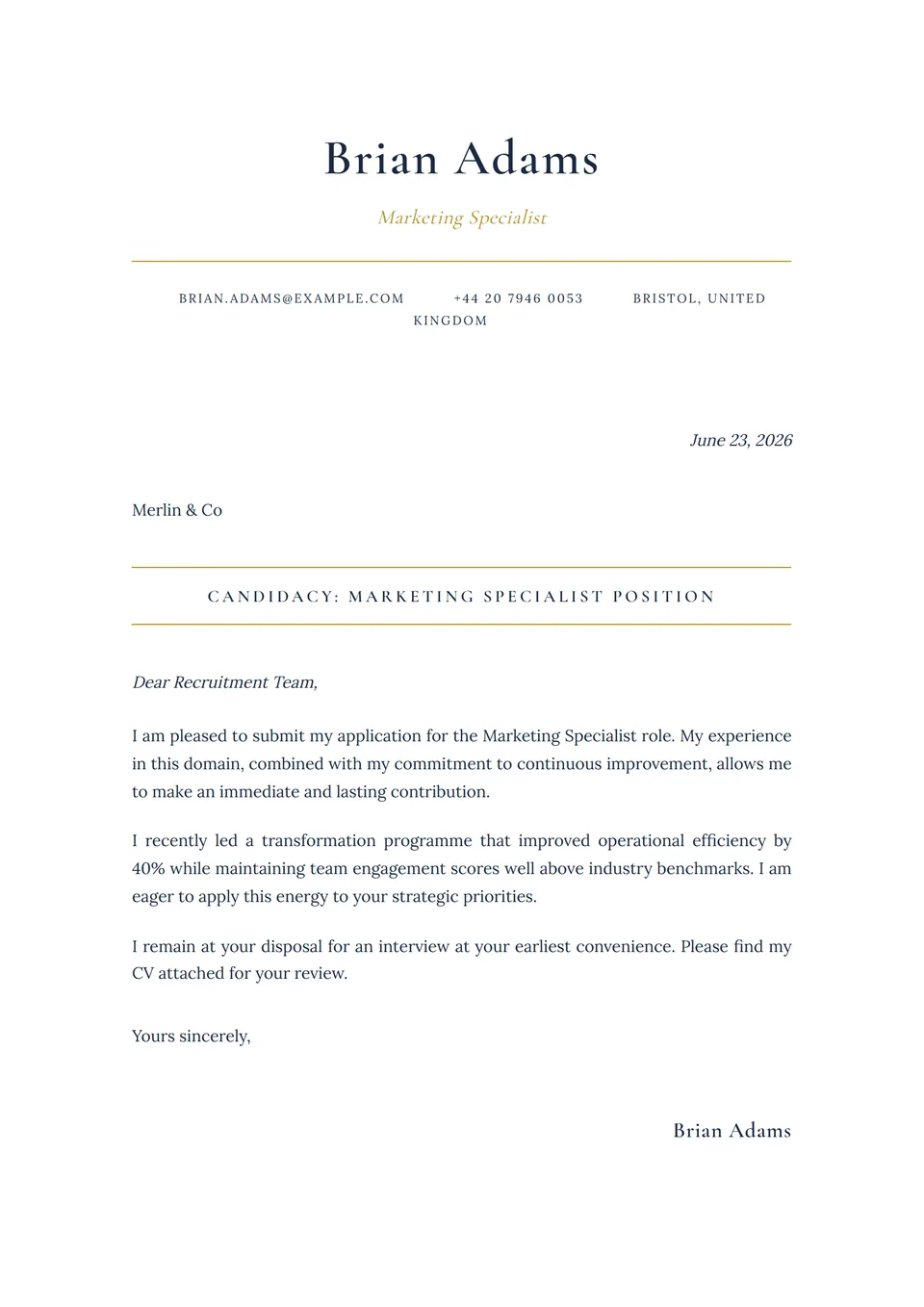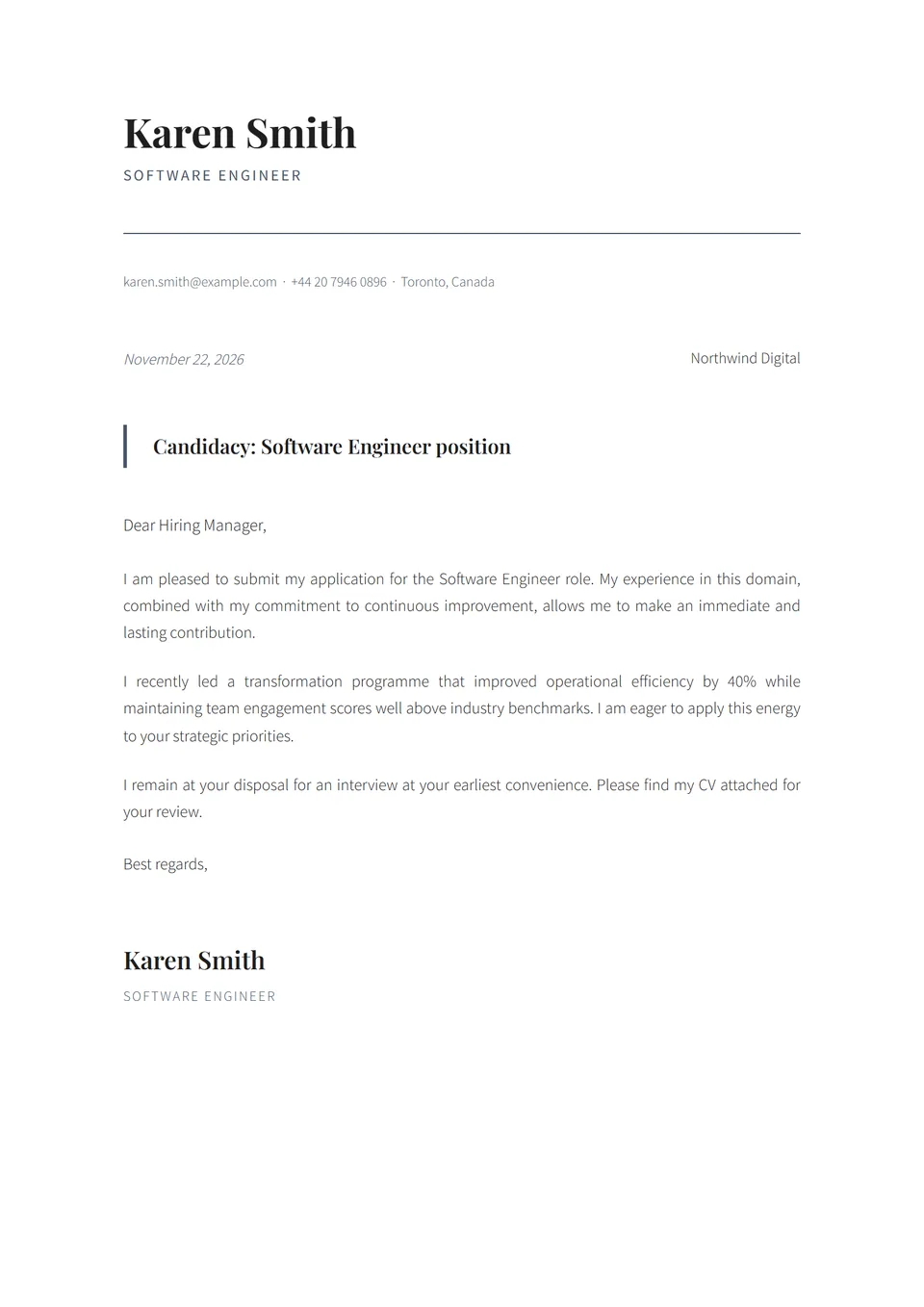
About this template
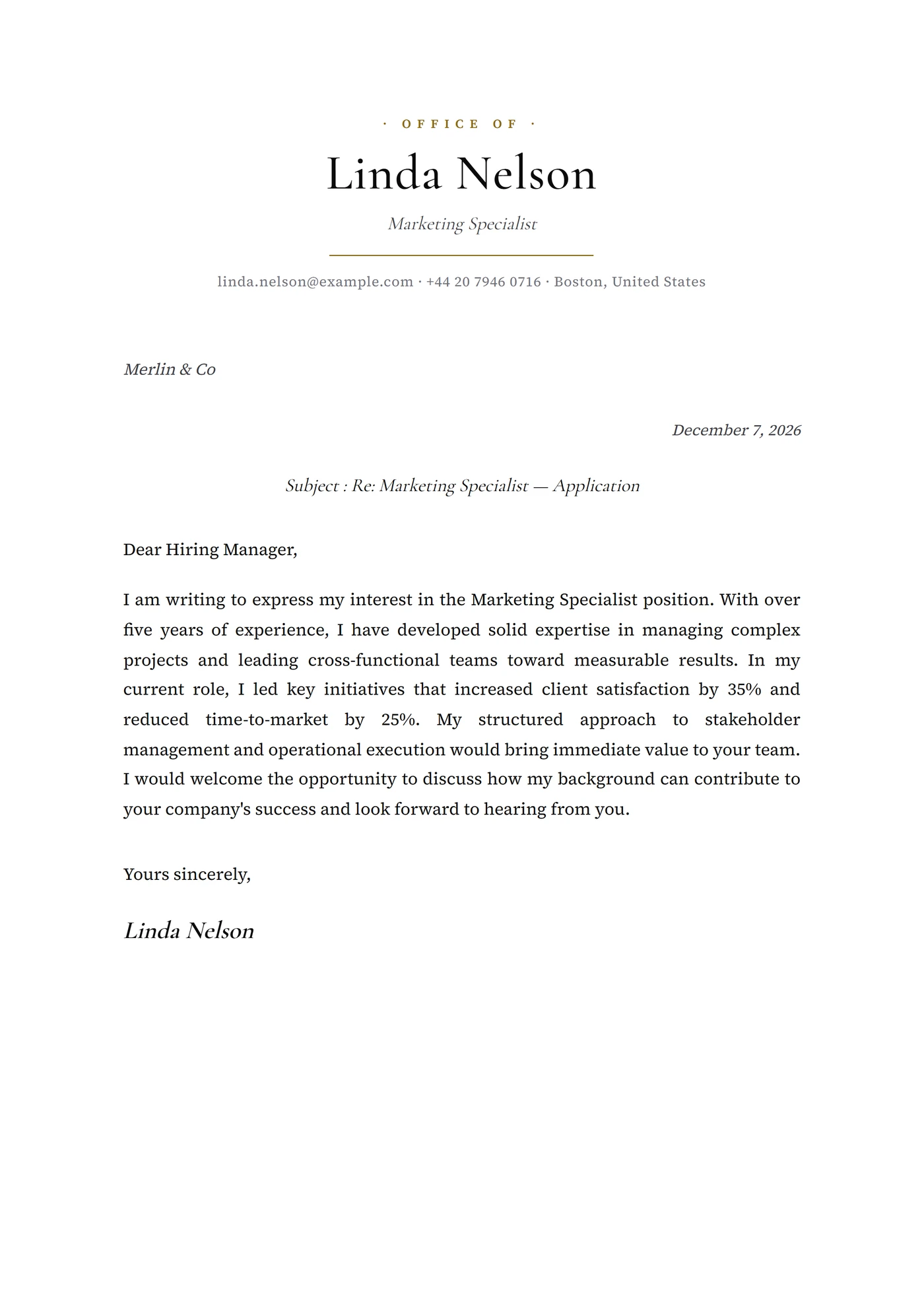
The Honey Amber template is a warm cover letter in Source Serif with honey-yellow accent rules and a cream body. The palette is tighter than Golden Hour — fewer gradients, more solid tone — for a letter that reads as ripe rather than cinematic. Compatible with the ATS used across natural and organic CPG (Lever at Burt's Bees, Greenhouse at Patagonia Provisions, Workday at Stonyfield Farm and Annie's Homegrown) and the cooperative networks (Organic Valley, the National Honey Board, the Cornucopia Institute).
Who is it for?
It fits candidates in beekeeping, organic farming, natural cosmetics (Burt's Bees, Beautycounter, Dr. Bronner's), herbal therapy and small-scale food production. Certified organic producers, farm managers on USDA Organic operations, formulators with EWG VERIFIED experience, retail buyers in the natural-product chain (Whole Foods Standards Compliance, Sprouts), who want a letter that signals nature without sliding into greenwashing — the cardinal sin in a sector that audits itself.
How to use it
Name the certifications precisely (USDA Organic, Demeter Biodynamic, Bee Better Certified, EWG VERIFIED), the conversions ("twelve acres in transition to USDA Organic since 2023"), the volumes ("4.2 tons of varietal sourwood honey per season across fourteen apiaries on rotation"). The tone is earned through matter, not evocation. Avoid activist vocabulary when applying to mainstream natural CPG: the sector knows its files and distrusts posture. One page is enough; a scanned handwritten signature is welcome. Mention the certifier (Oregon Tilth, CCOF, QAI) if you have been audited.
Frequently asked questions
Should I mention organic labels in the opening line?
Not in the opening line, but in the second paragraph, as a fact: "Operation certified USDA Organic since 2019, Demeter Biodynamic in conversion, latest CCOF audit passed without observation in March 2026." The sector reads these markers as proof of operational rigour, not as marketing copy. Avoid generic claims like "committed to the planet" — they sound hollow next to a real conversion file.
Does it suit a conventional grocery application (Kroger Simple Truth, Target Good & Gather)?
With nuance. The mainstream grocers developing their organic private label expect a letter that mixes the natural register with corporate codes. Honey Amber works if you temper the opening with a paragraph centred on shelf placement, margin and cold-chain logistics. For a pure conventional buying role at Costco or Sam's Club, prefer letter-slate-professional or letter-classic.
How do I describe a failed harvest without minimising it?
State the climatic context ("2025 season marked by 28% overwinter colony loss linked to varroa pressure and late-spring frost on tulip poplar bloom"), then what was done (apiary rotation, queen replacement protocol, partnership with a state apiary inspector). Sector recruiters know organic is judged by adaptive management, not by smooth yield curves. Lying about volumes makes them walk: the beekeeping community is small and the numbers circulate.