About this template
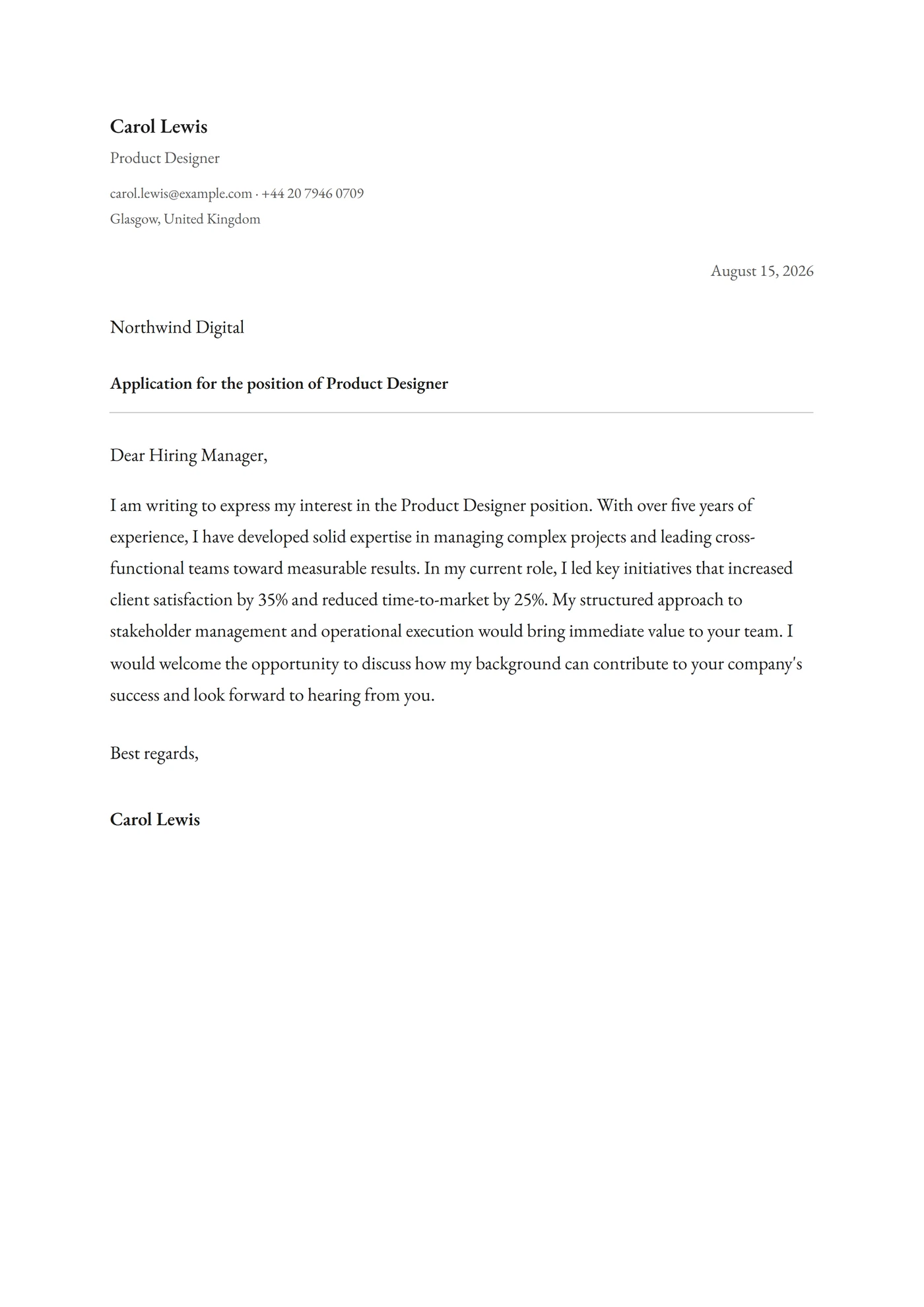
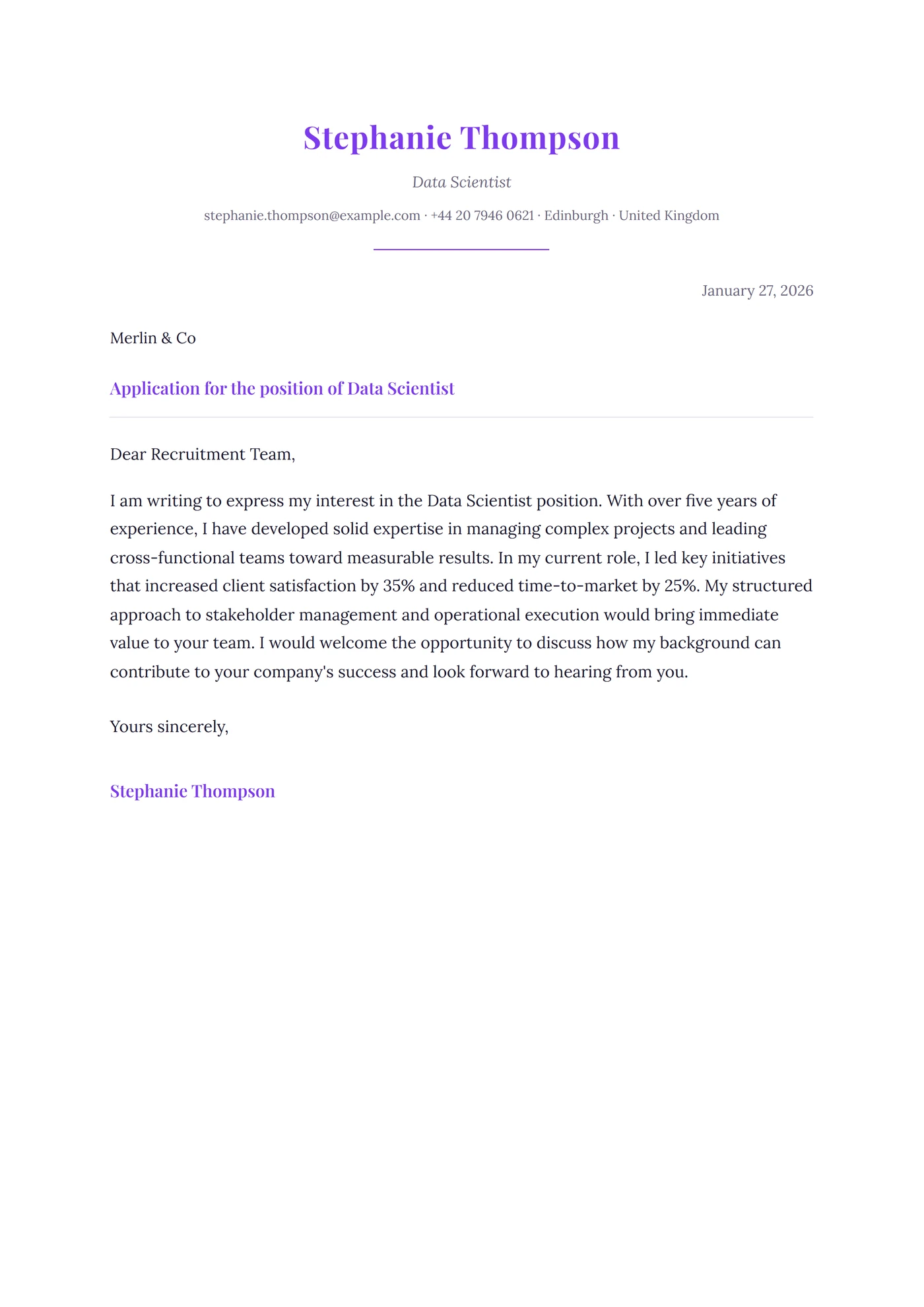
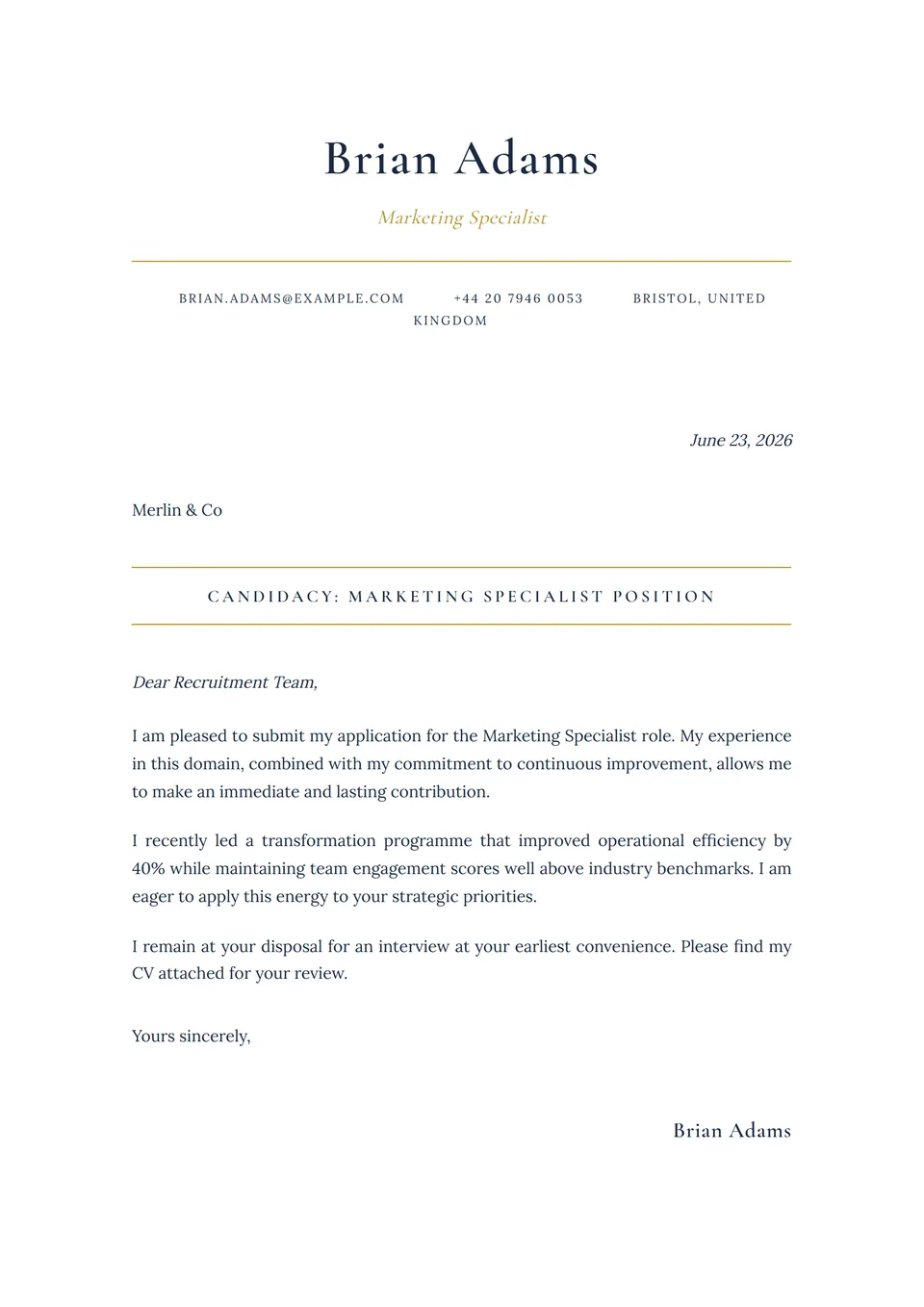
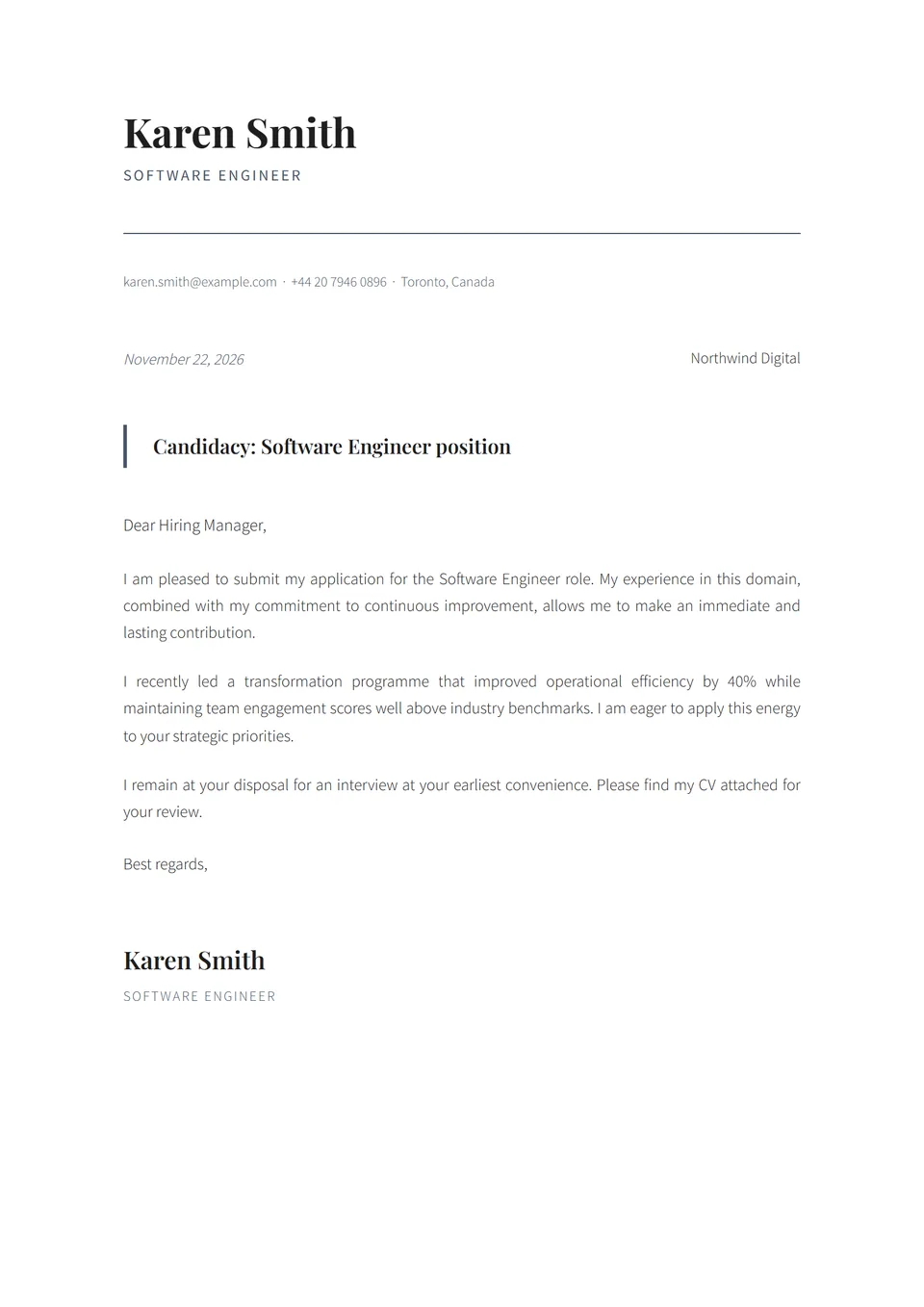
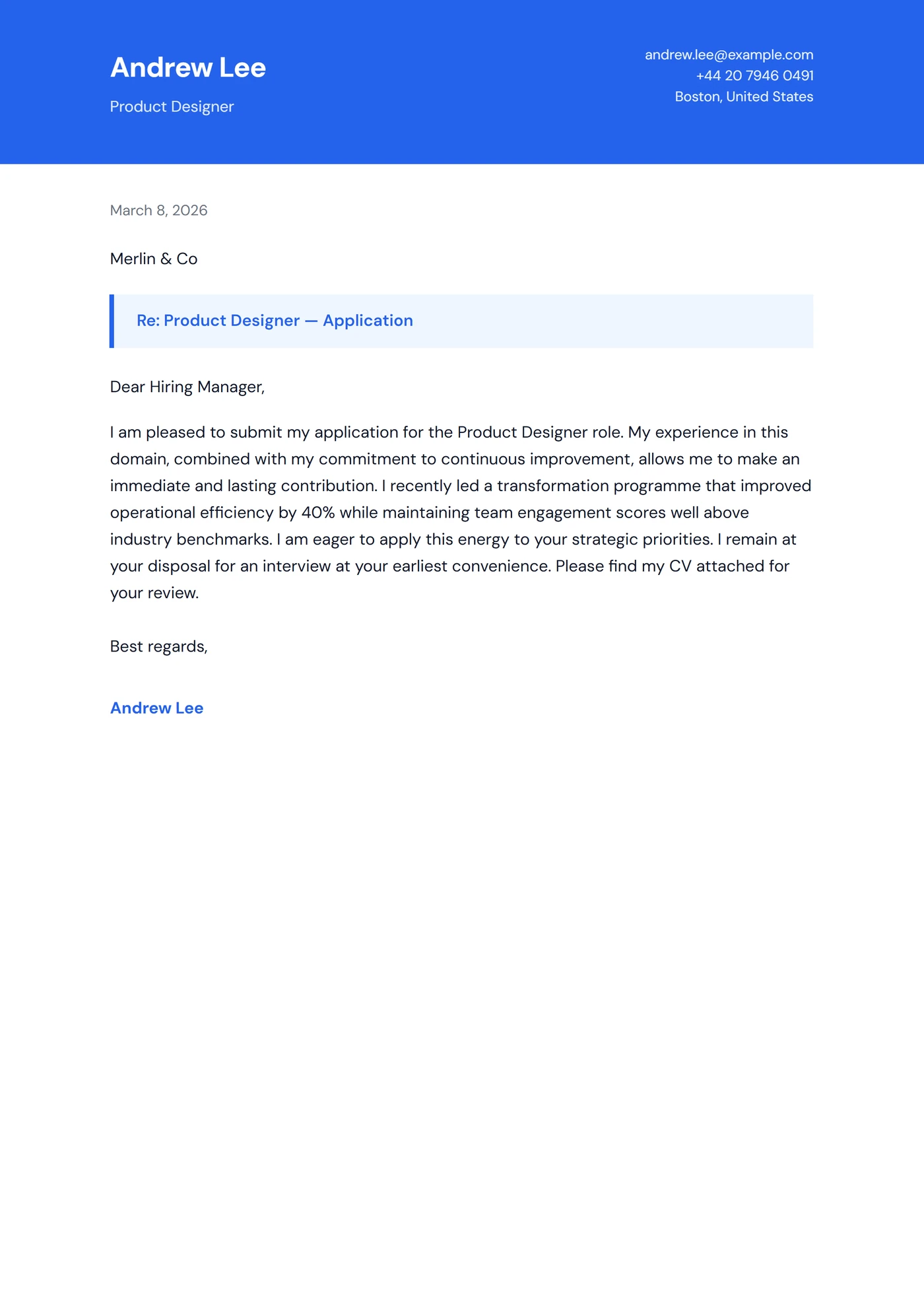
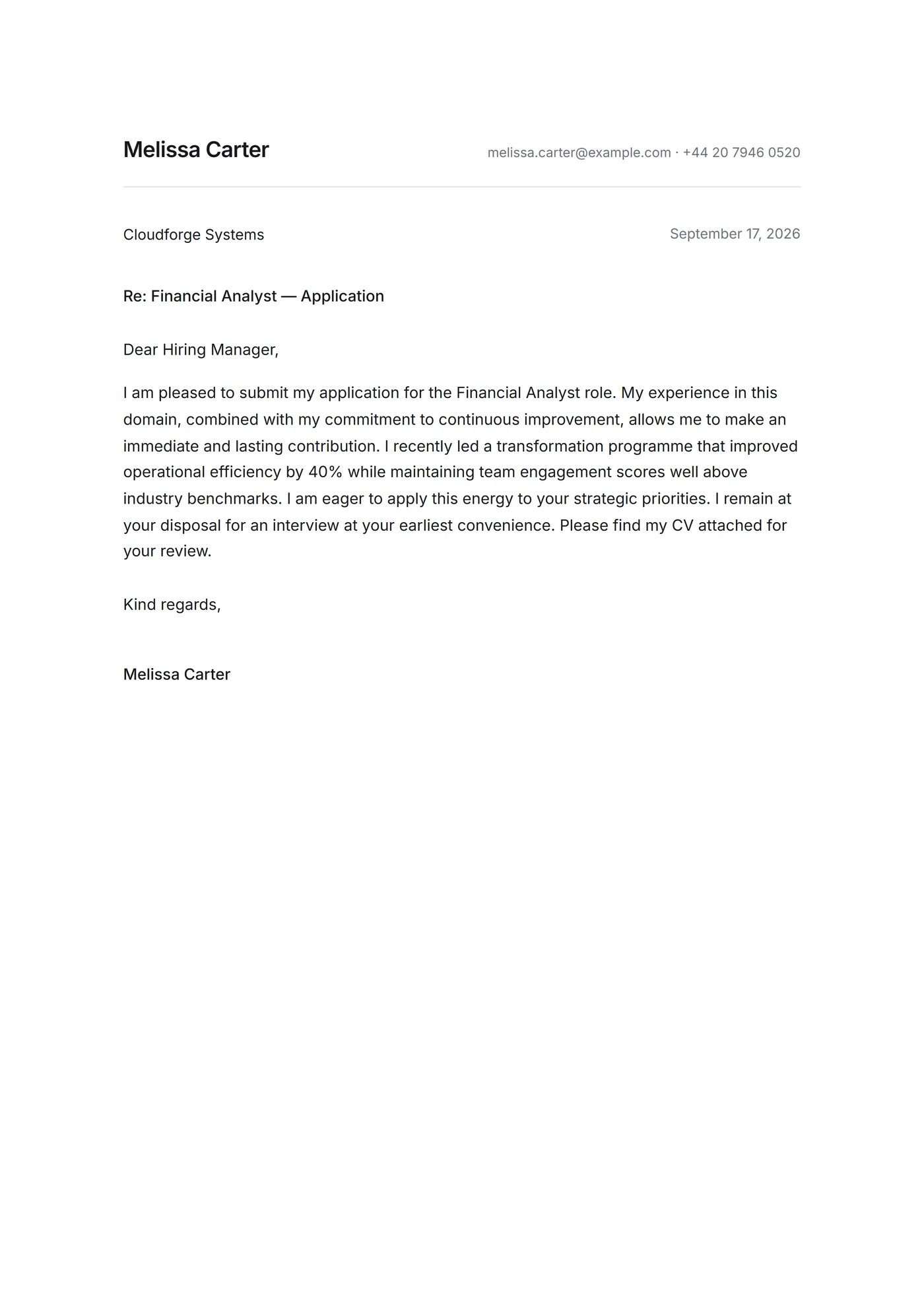
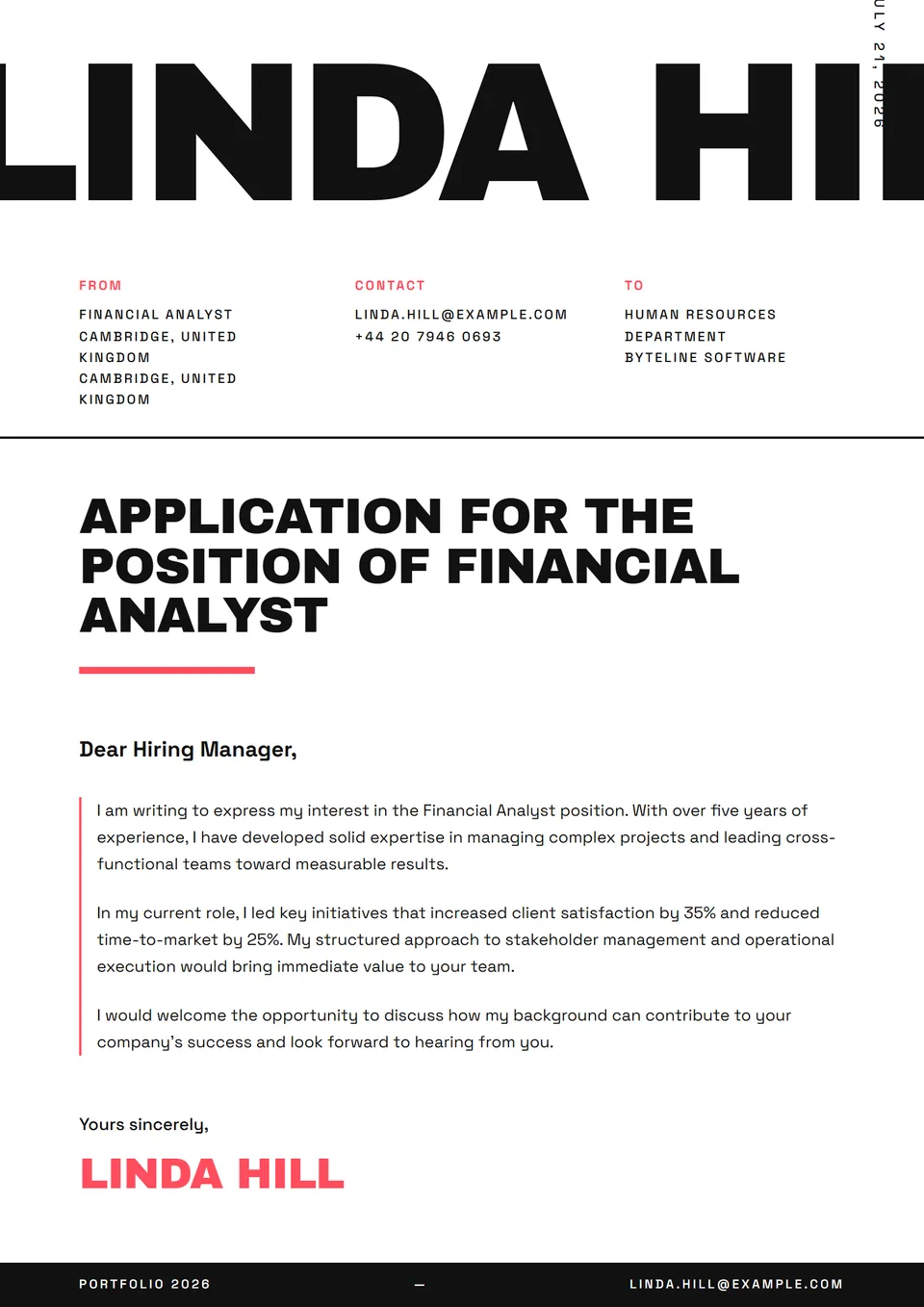
The Royal Navy template is a professional cover letter in Cormorant with a royal-navy header field, gold thin rule and a centred crest above the name. Generous justified body — the codes of an admiralty letter rather than a corporate brief. Compatible with ATS in defence and naval engineering (Workday at BAE Systems, Lockheed Martin, Raytheon, Thales, Northrop Grumman; in-house portals at the Royal Navy, the US Navy, the Australian Defence Force).
Who is it for?
It suits candidates in defence, naval engineering, public administration, ceremonial protocol roles and royal household services. Officers (Royal Naval College Dartmouth, US Naval Academy Annapolis, École Navale), protocol chiefs (the White House Office of Protocol, Buckingham Palace, the Quai d'Orsay), defence civil servants, naval architects who want a letter that already feels signed in front of a flag. Also covers exits from military service to defence-industry private-sector roles.
How to use it
The crest above the name stays sober — no official heraldry (reserved for institutions), just a discreet personal emblem or none. The gold rule (Pantone 871 C) separates band and body. For a defence-industry application (BAE, Lockheed, Thales), state rank (Captain RN, Commander, Lieutenant Commander), commands held (executive officer, commanding officer), vessels served (Astute-class SSN, Type 45 destroyer, Arleigh Burke-class, Charles de Gaulle), and operational theatres (Persian Gulf, Eastern Mediterranean, North Atlantic). For protocol, cite the offices held (ministerial cabinet, presidential office, foreign affairs).
Frequently asked questions
Should I state my security clearance?
Yes in paragraph 1 or 2: clearance level (Confidential, Secret, Top Secret, TS/SCI, NATO Cosmic Top Secret), date of last review, and nature of compartments (COMINT, HUMINT, SIGINT) if relevant to the role. This information is expected by defence recruiters — without it, the application will not be processed.
Is it suitable for a merchant marine application?
Prefer letter-midnight-blue which carries a less military maritime register. The Royal Navy model is coded military navy + defence + state protocol. For commercial maritime (ship master, port operations, marine pilotage), the midnight blue signals the patience of the profession without the military side.
Is the crest mandatory?
No, often best omitted. For civilian applications in private-sector defence, the crest may seem ostentatious. For internal applications to the Royal Navy or US Navy, the service emblem (anchor, star) stays discreet and acceptable. Adapt by recipient — search committees in defence read every cue.