About this template
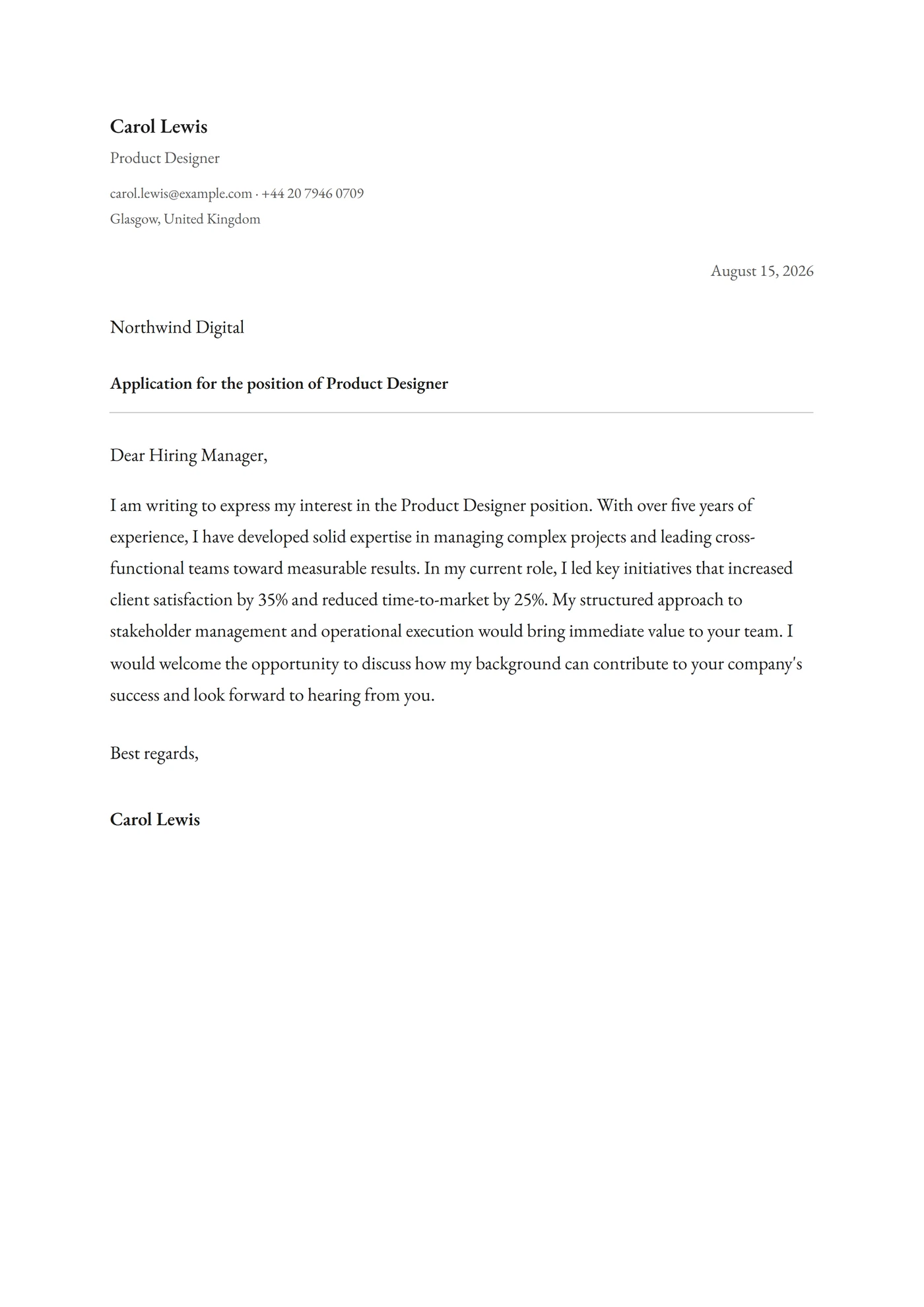
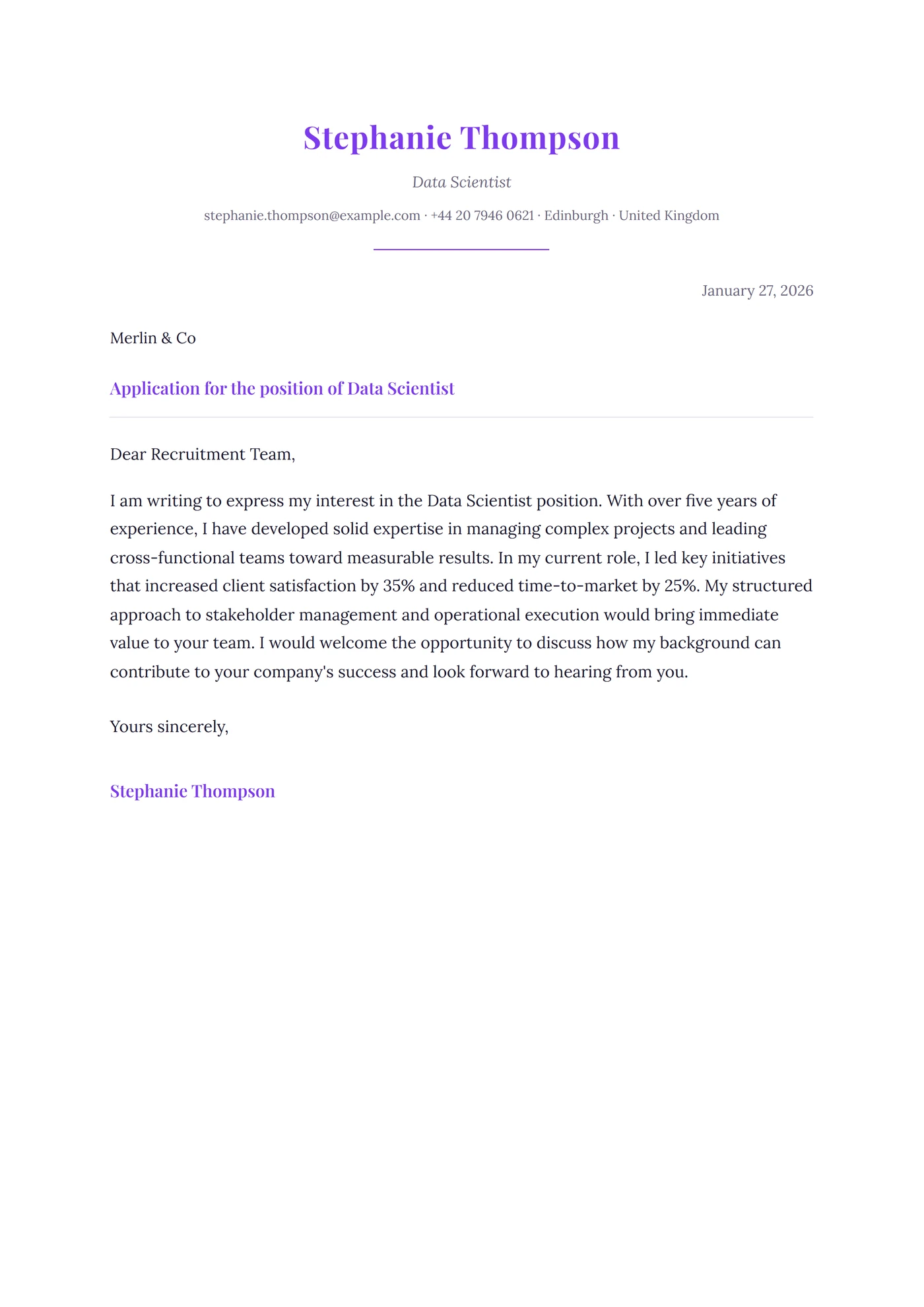
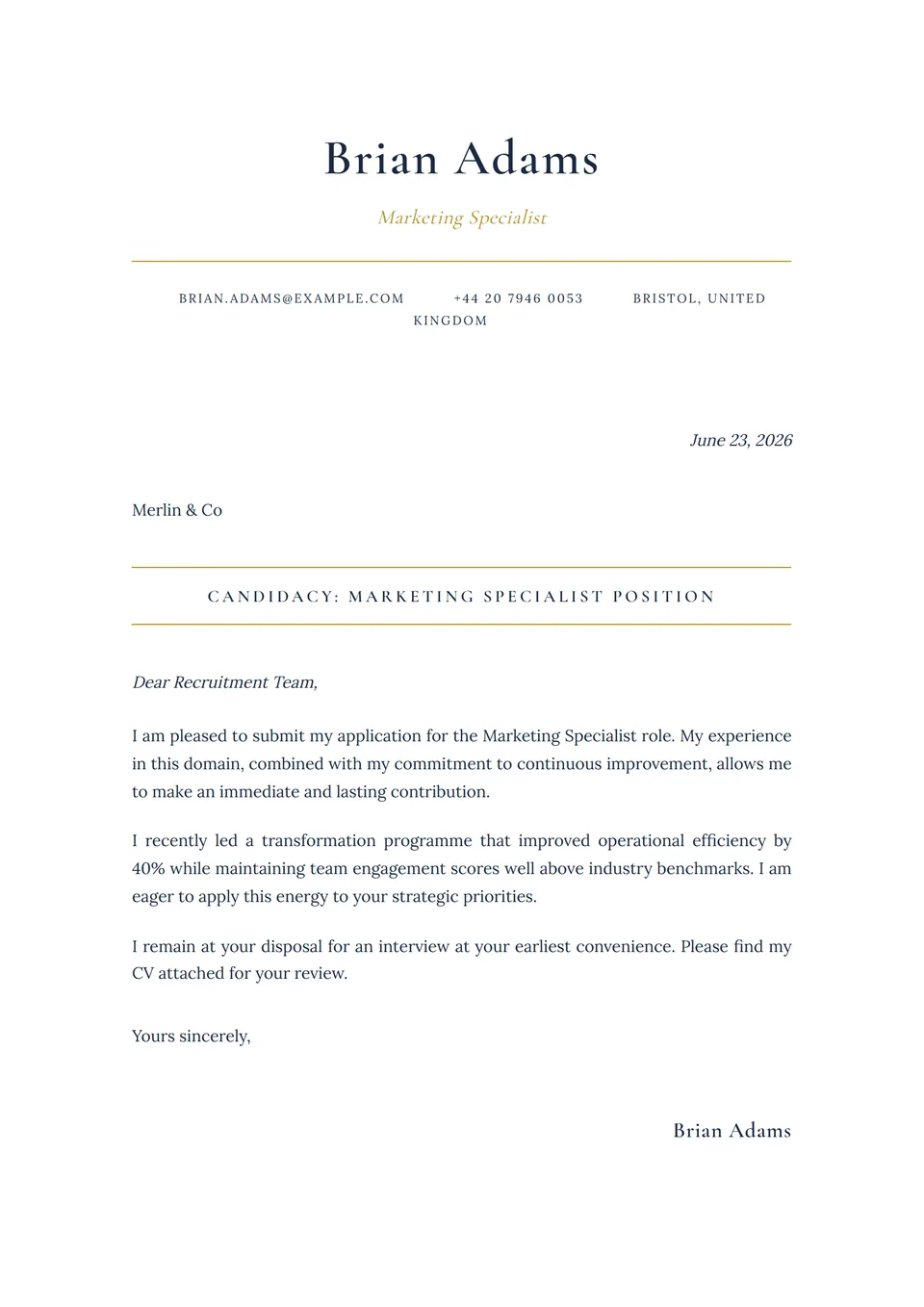
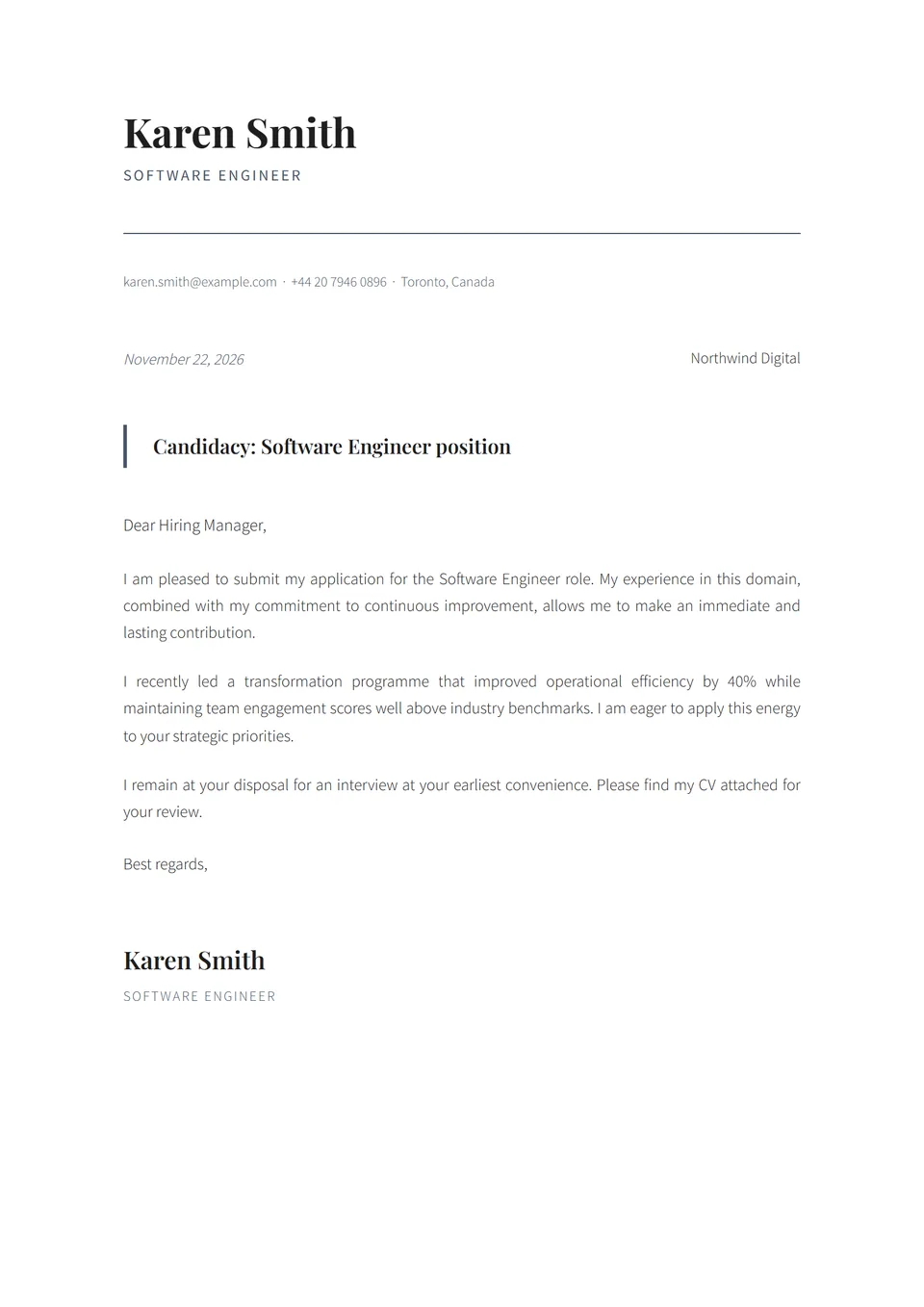
The Sage Wisdom template is a professional cover letter in Lora with sage-green accent rules, soft cream body and a hand-set quote line under the name. Its visual register is that of a counselling brochure or a teaching philosophy statement, never a corporate pitch. Compatible with the ATS at education and healthcare-allied employers (Workday at Kaiser Permanente Behavioral Health, SmartRecruiters at the National Education Association affiliate boards, Greenhouse at BetterUp and Lyra Health for coaching profiles) and the specialised job boards (Psychology Today, the ICF Coach Directory, Edutopia Jobs).
Who is it for?
It fits candidates in counselling, therapy (licensed psychologists, marriage and family therapists, art therapists), certified coaching (ICF ACC/PCC/MCC, EMCC), education (Montessori or Waldorf school principals, independent school heads), mediation (ABA-certified mediators, restorative justice facilitators) and slow-care professions. Licensed therapists in private practice, special-education directors, executive coaches working with C-Suite clients, family mediators, palliative-care leads in hospice or hospital settings, who want a letter that signals patience, listening and ethical practice.
How to use it
The quote line under the name must be brief and avoid effect — a fragment from Viktor Frankl, Bessel van der Kolk or Brené Brown works without emphatic quotation marks. The opening can lead with the practice frame ("Eleven years in clinical psychology private practice in greater Boston, after five years on a community mental-health team") followed by scope (active caseload, target population, ongoing supervision). The sector values mentions of supervision and continuing education (CEUs filed with the state board, EMDR certification level, IFS Institute level training). Avoid commercial vocabulary: "process," "scalable," "ROI" clash immediately and signal a poor fit.
Frequently asked questions
Isn't the quote line under the name too showy?
If it stays sober, no. A line from Viktor Frankl, Carl Rogers or Brené Brown, set in small type without ornament, signals the professional culture expected in therapeutic and educational settings. Avoid marketing quotes ("Become the best version of yourself"), telegenic-coach phrases and pop-psychology fragments — they disqualify instantly with hospice directors, independent-school heads and licensed clinical practice owners.
Should I mention my own therapy or supervision?
For psychologists, psychoanalysts, family therapists and ICF coaches: yes, soberly, mentioning the frame (monthly individual supervision, peer group supervision, cross-disciplinary consultation team). For school directors, mediators and education profiles: less central, but a mention of reflective practice can signal professional maturity. Transparency about the personal support frame is read as a sign of ethical posture, not as weakness.
Does it suit a public-medical-social application (hospital, nursing-home)?
Yes, especially well. The directors of senior-living communities, community mental-health centres, and hospital palliative-care services read this register as proof of alignment with the professional culture they expect. Mention the multidisciplinary team experience (attending physician, occupational therapist, social worker), the management of shift handoffs and the family-systems work. For purely private practice, the model stays accurate but add a practice info box (hours, sliding-scale availability, insurance panels accepted).