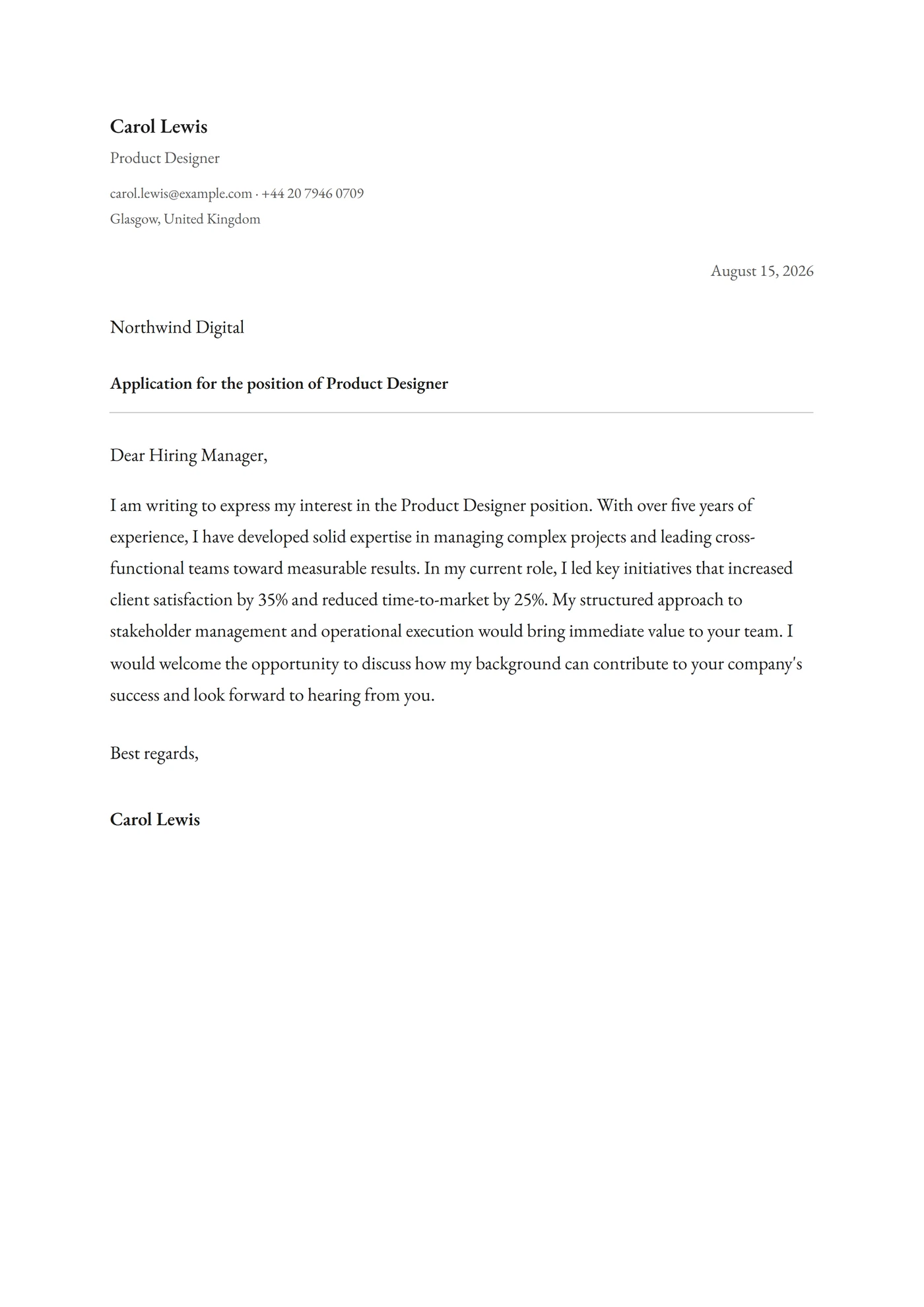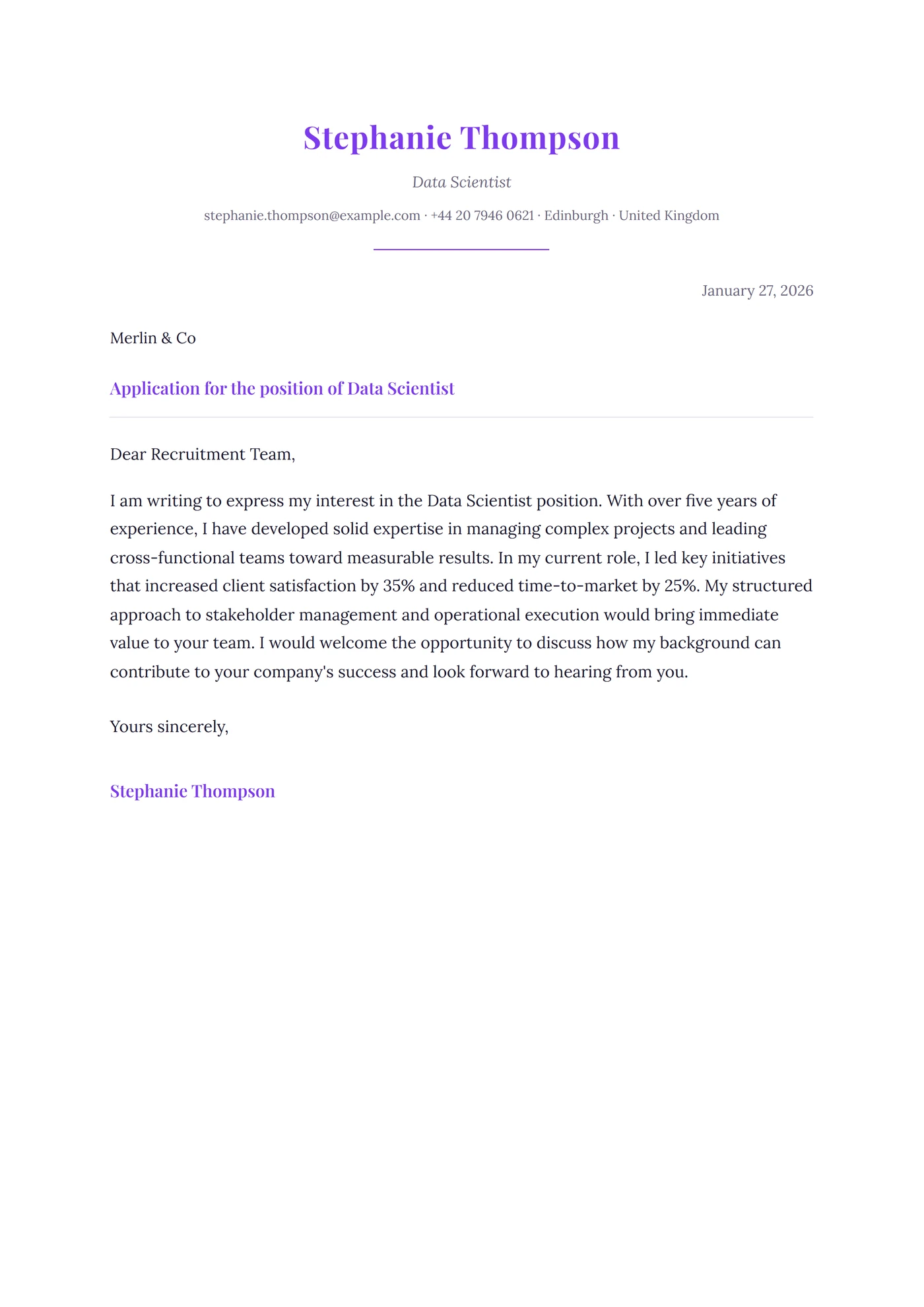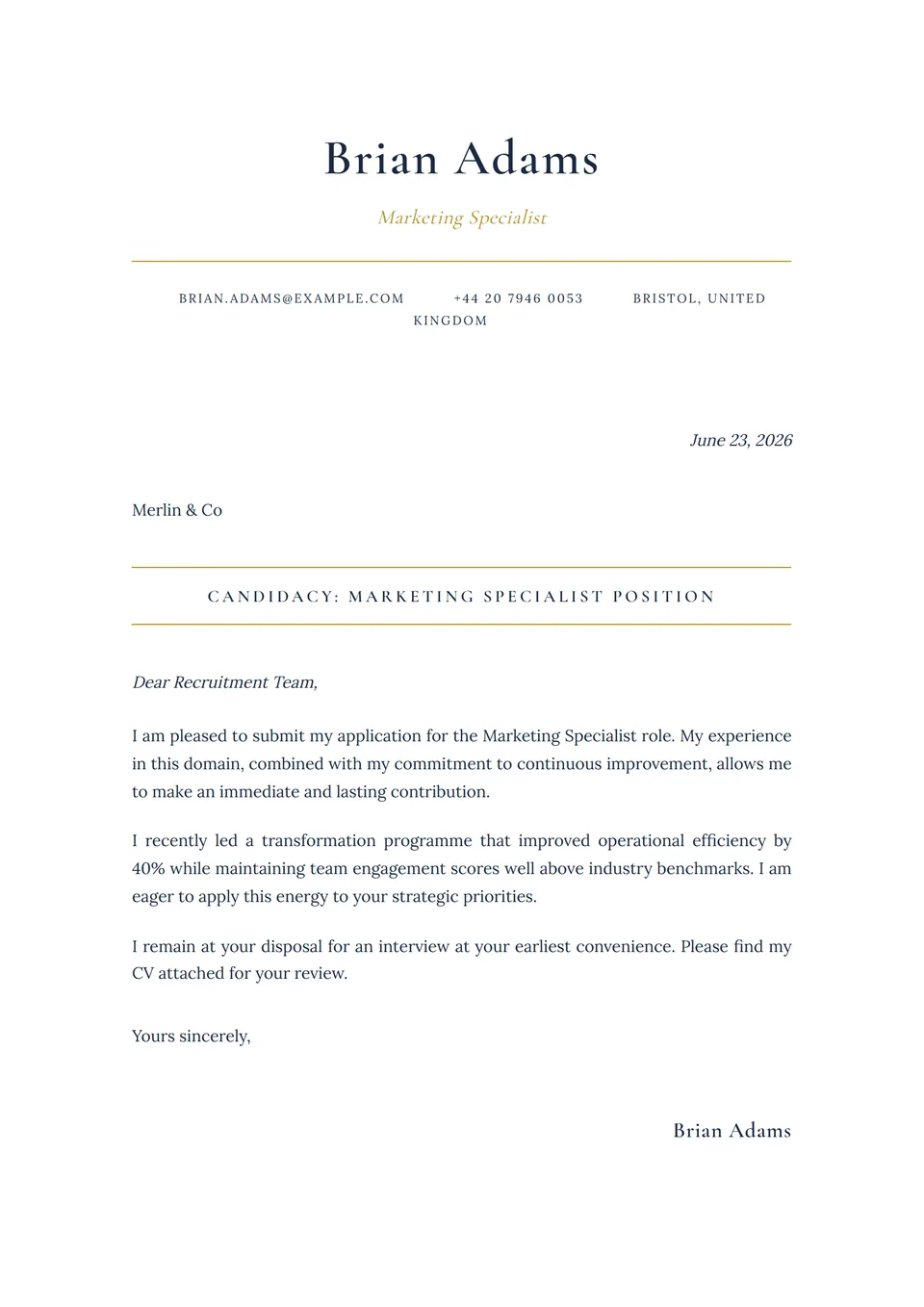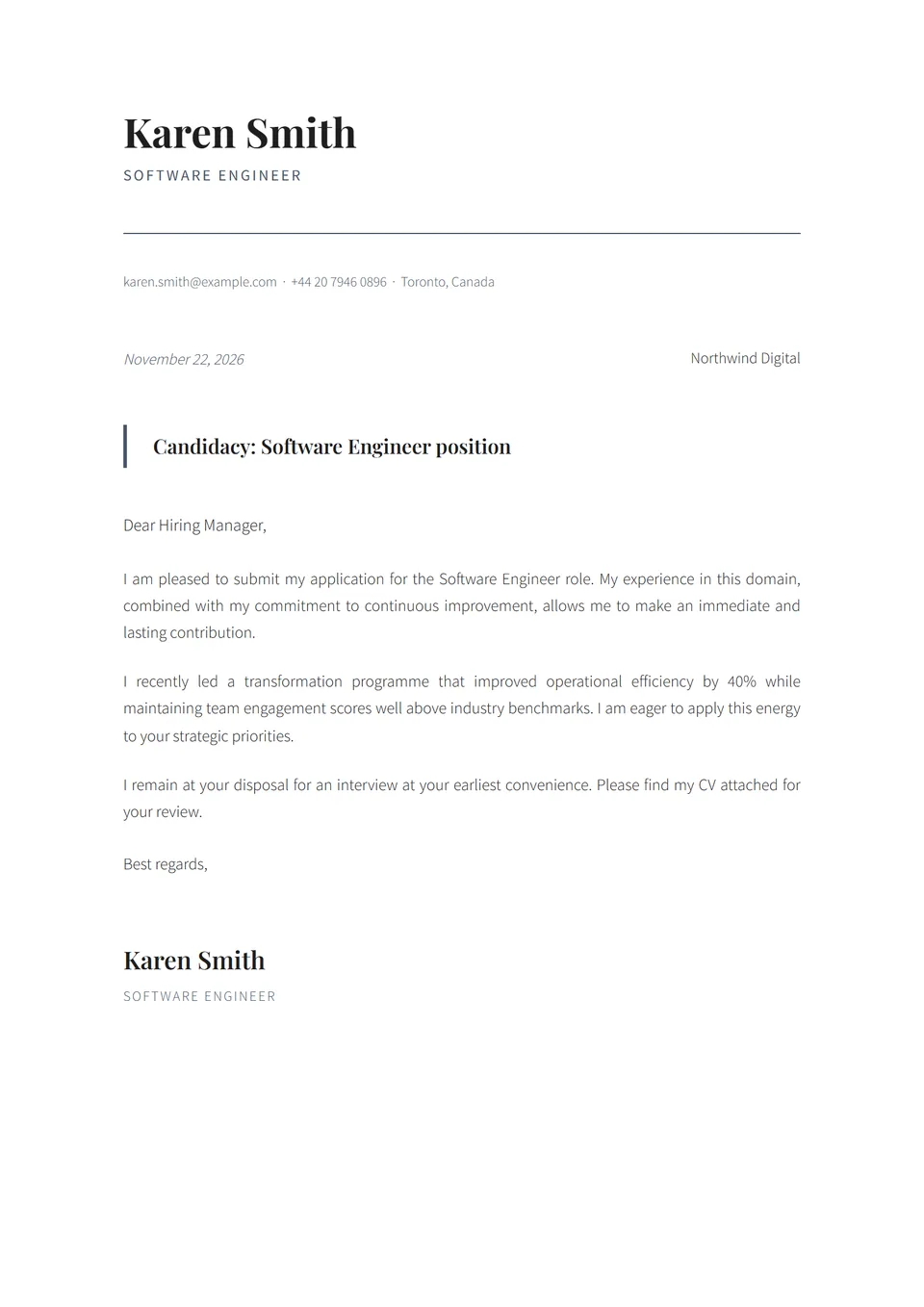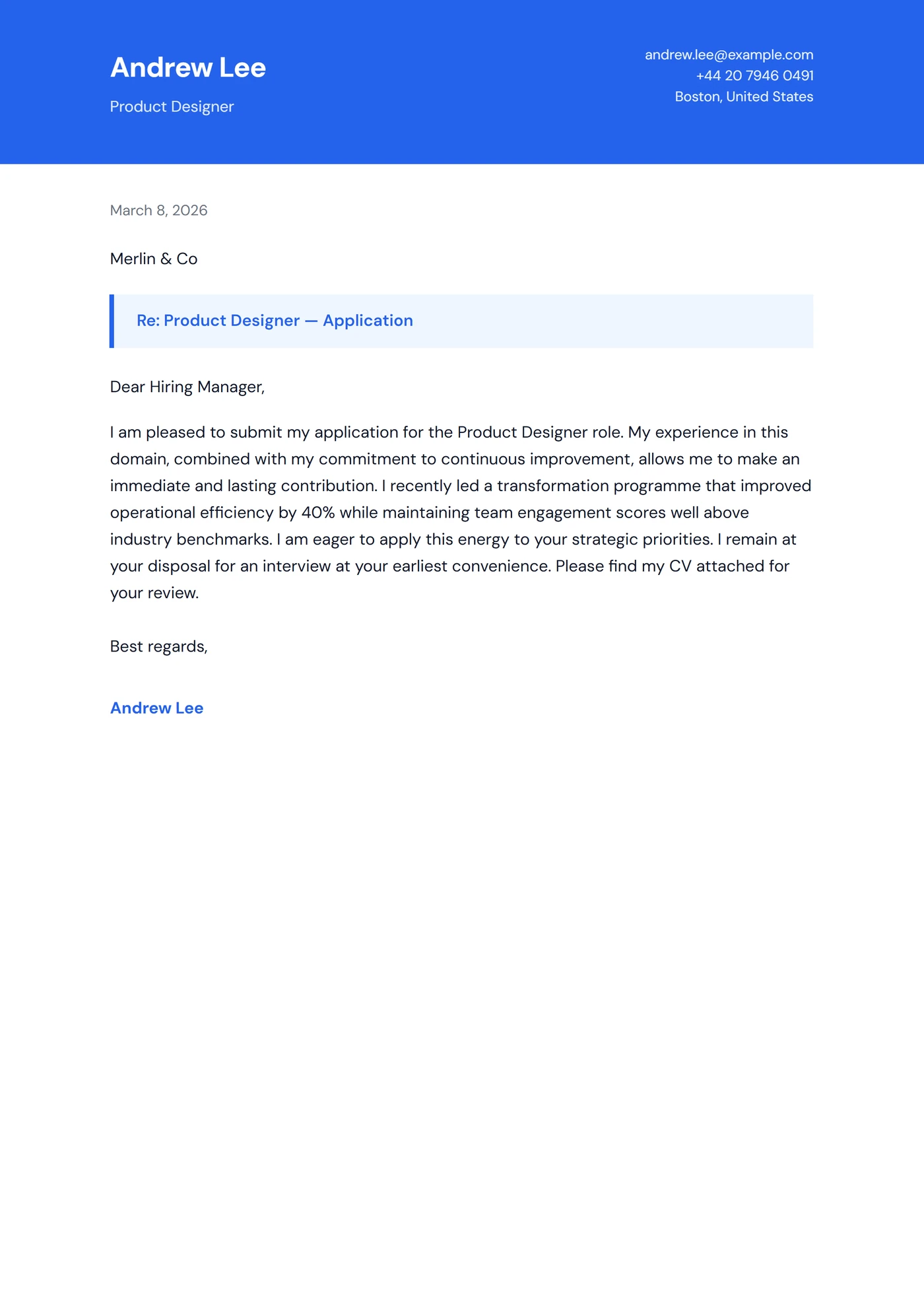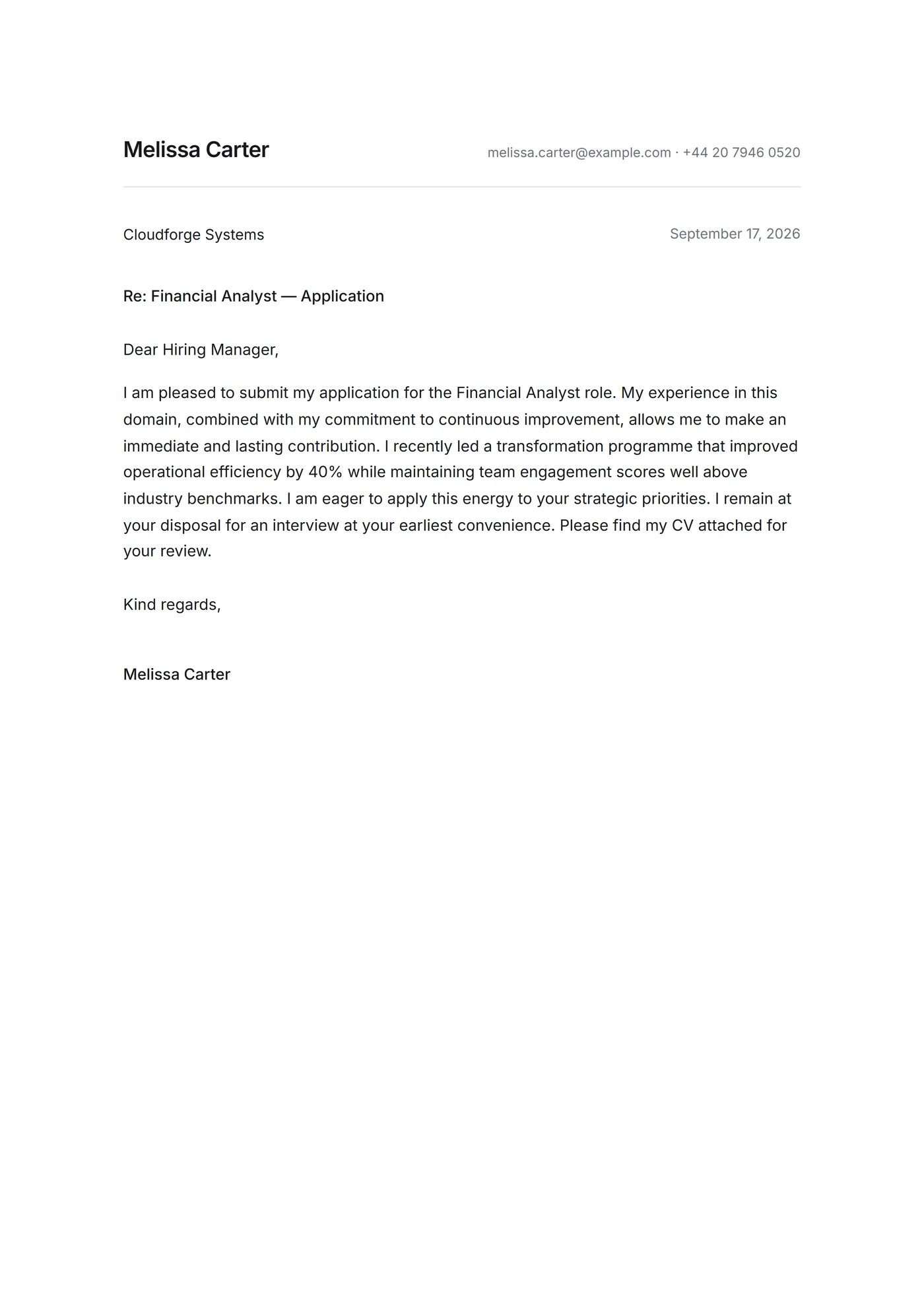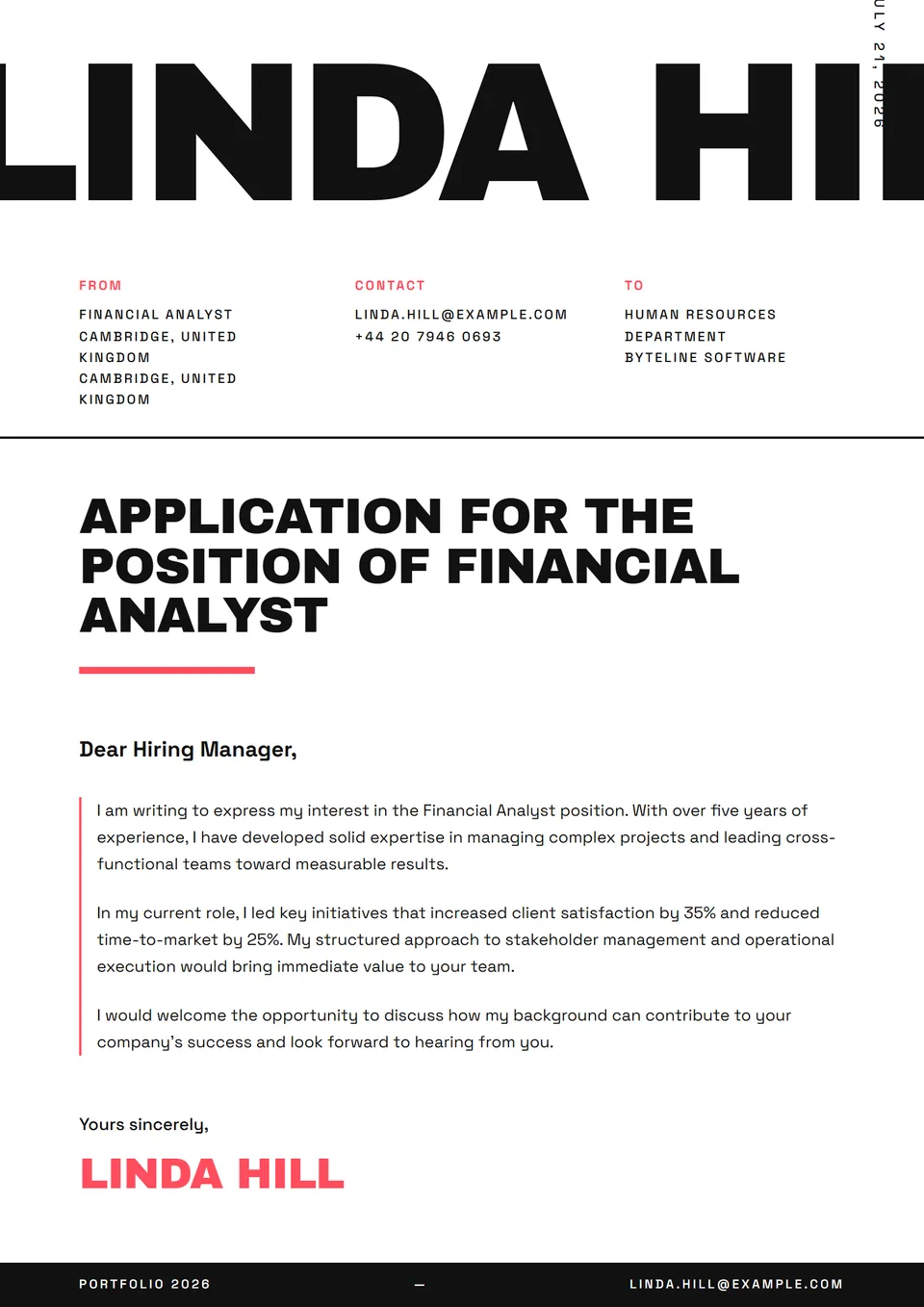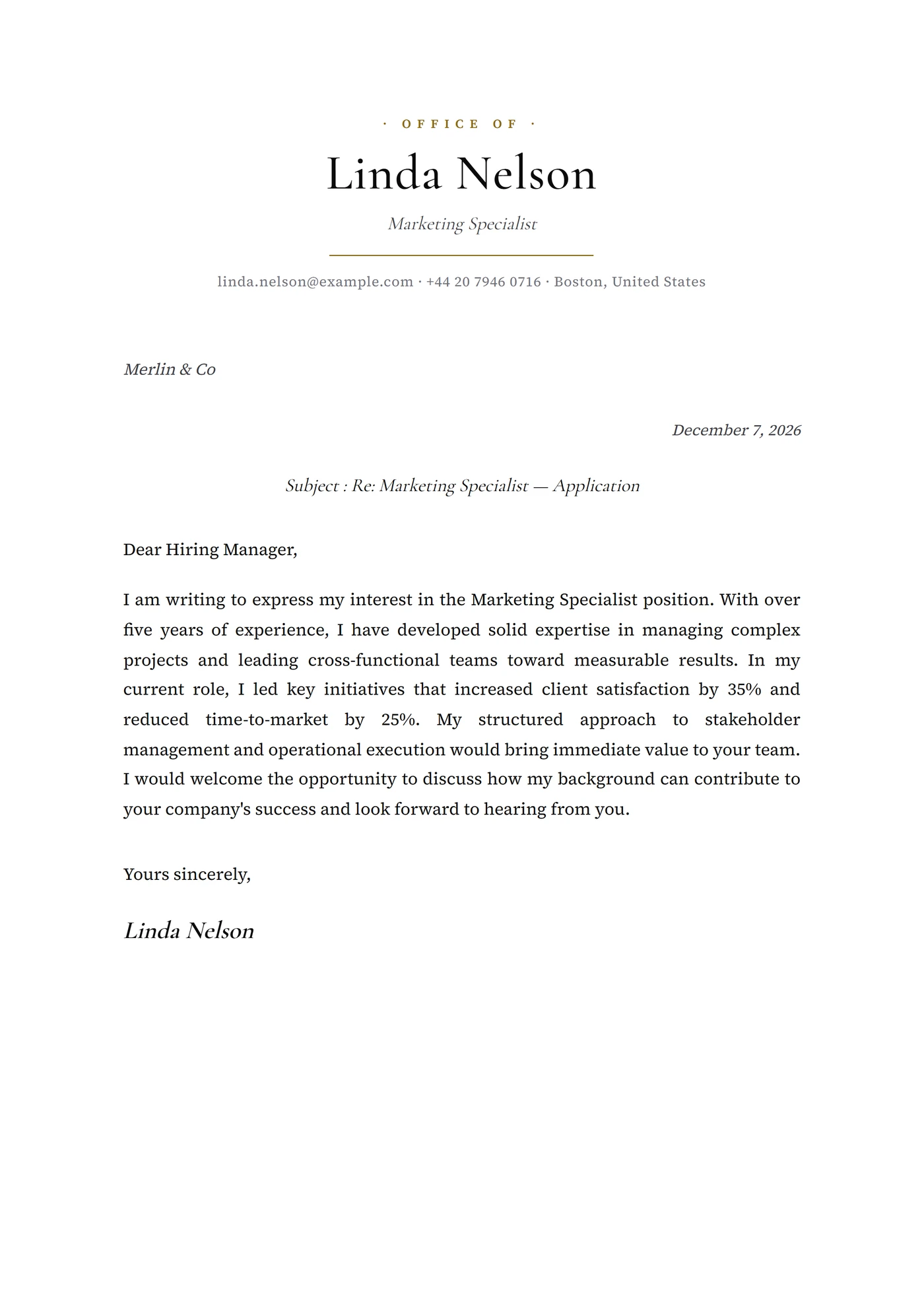
About this template
The Wine Cellar template is a serif cover letter in EB Garamond with a deep wine-red header rule, parchment-toned body and a small grape-cluster glyph next to the signature. Sister of Burgundy Velvet — wine, but the cellar rather than the curtain. Compatible with the ATS in the wine sector (Workday at Constellation Brands and E. & J. Gallo, Lever at Jackson Family Wines, Greenhouse at Treasury Wine Estates Americas) and the professional platforms (Wine-Searcher Pro, Court of Master Sommeliers job board, GuildSomm Career Center).
Who is it for?
It fits candidates in viticulture, oenology, wine importing (Kermit Lynch, Polaner Selections, Skurnik Wines), sommelier roles (Master Sommelier candidates and certified diploma holders, James Beard nominee sommeliers) and cellar management. Cellar masters at premium California or Oregon producers, consulting oenologists in the Michel Rolland or Andy Erickson tradition, wine buyers for Total Wine or for high-end retailers like Sherry-Lehmann, sommeliers at three-Michelin-starred restaurants, estate managers at Napa or Sonoma single-vineyard properties who want a letter rooted in the cellar — quieter than ceremonial wine letters.
How to use it
The opening can name the house by its signature ("Five vintages assisting the winemaker at a Napa Valley cult Cabernet producer"), followed by craft proof (volume vinified, block-level oversight, élevage protocol). Mention the appellations worked by their AVA (Napa Valley Oakville AVA, Willamette Valley Dundee Hills, Sonoma Coast extreme-coastal) or the legal designation (DOCG, Grand Cru), the oenological practices (biodynamic Demeter certification, native ferment, élevage in 228-litre Burgundy barrels) and the distinctions earned. Avoid superlatives and marketing references: the sector values block-level precision and repeated craft, never posture. One page is enough, handwritten signature reinforces the rooting.
Frequently asked questions
Should I mention Parker, Galloni or Wine Spectator scores?
Yes, but soberly, and only for vintages you have personally signed or seconded. Format: "Estate X 2018, 96 WS / 95 AG / 94 RP, élevage in 30% new French oak, single-block Crocker Vineyard." Recruiters verify against Wine Advocate, Vinous and Wine Spectator — any approximation is visible in two clicks. For an assistant winemaker, mention only the vintage to which you contributed, without claiming final signature on the cuvée.
Does the model work for a mass-market wine retail application?
With nuance. For a wine buyer at Costco, Total Wine or grocery wine departments, the Wine Cellar model signals an upstream profile (cellar, winemaking, fine-wine importing) that the buying offices respect but do not systematically seek. For pure mass-market retail, prefer letter-slate-professional. Wine Cellar stays more accurate for retailers like Astor Wines, K&L Wine Merchants, Wally's, or for specialty wine clubs and direct-to-consumer wineries.
How do I present cooperative-cellar versus single-estate experience?
Without hierarchy. A cooperative cellar — California's Bronco Wine Company, the Lodi Wine Commission grower network — handles volumes and parcel-level diversity that many single estates do not reach. Mention the volumes vinified ("480,000 cases/year, 28 different cuvées across appellations") and the technical complexity (multi-parcel blends, AVA traceability, oversight of 240 grower contracts). Serious recruiters value this scope — it is even the school many cult-Cabernet winemakers come from.