About this template
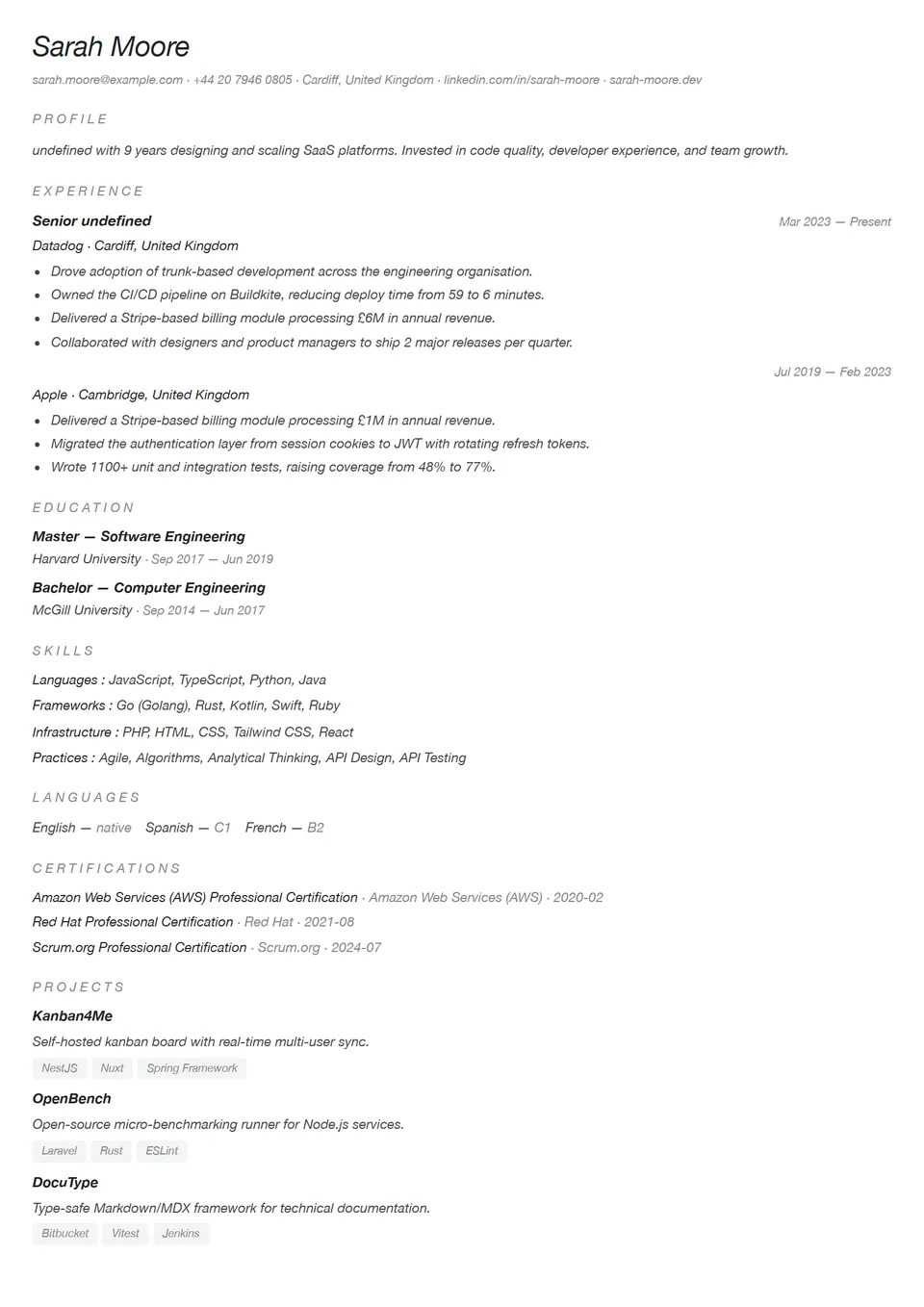
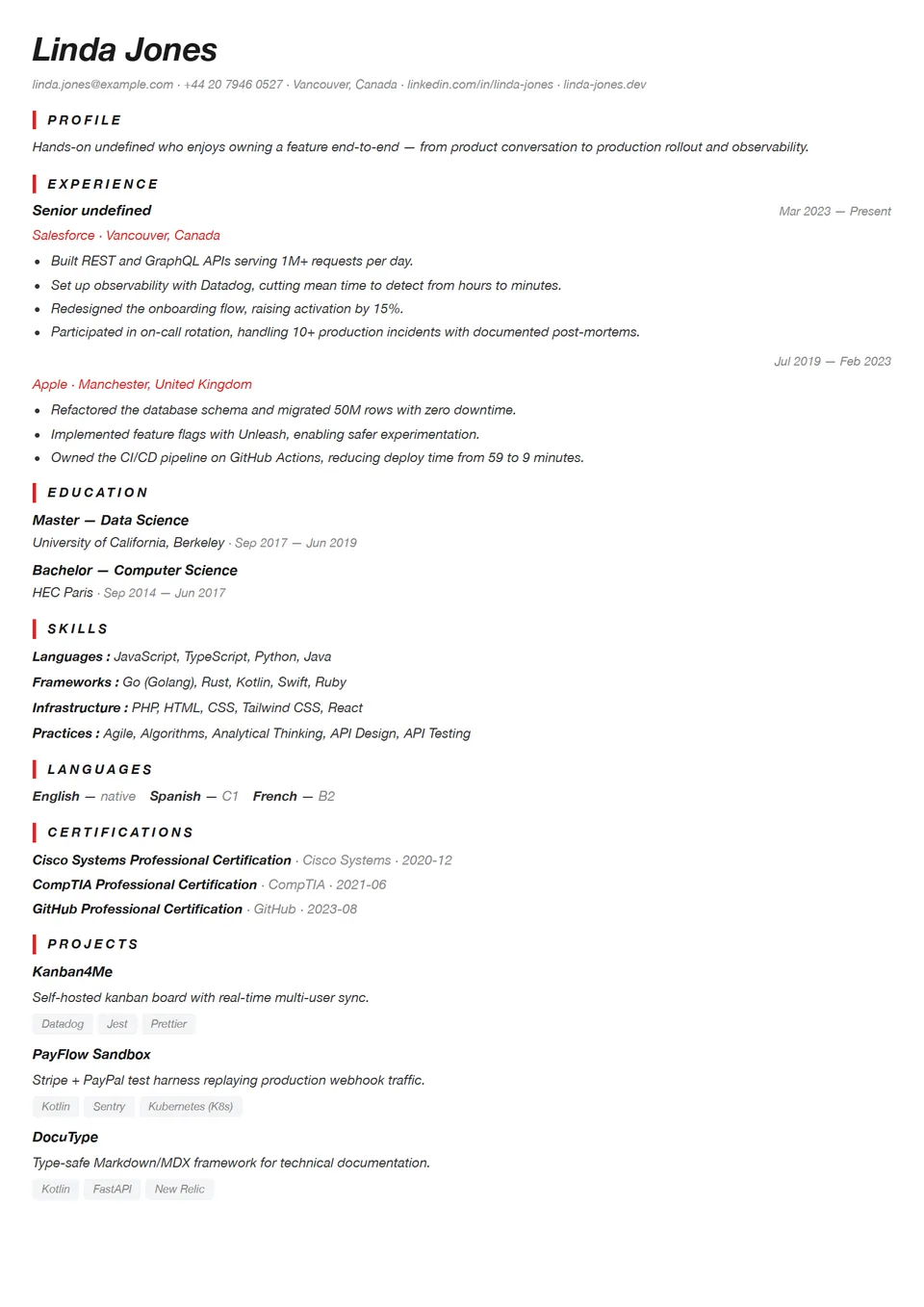
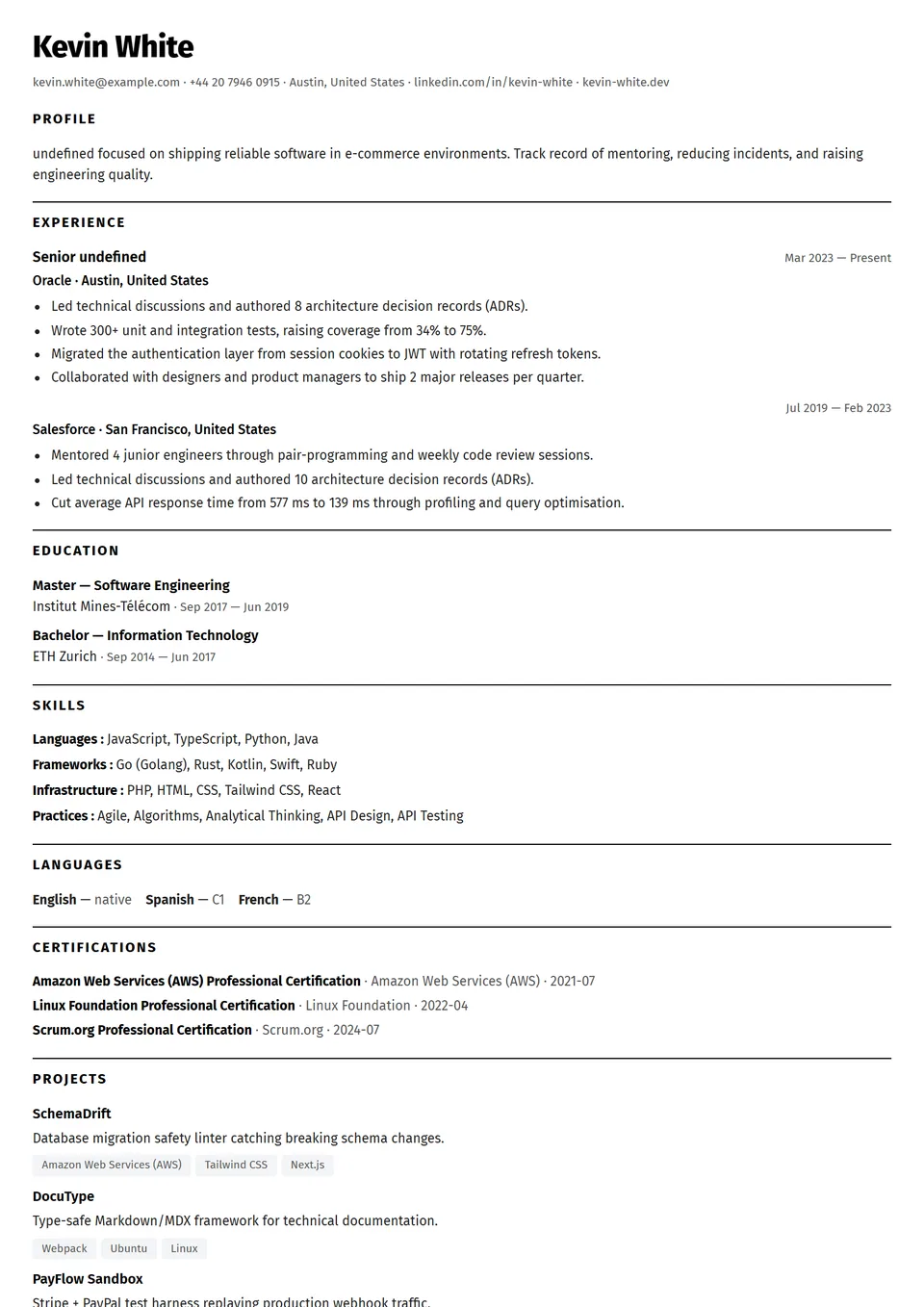
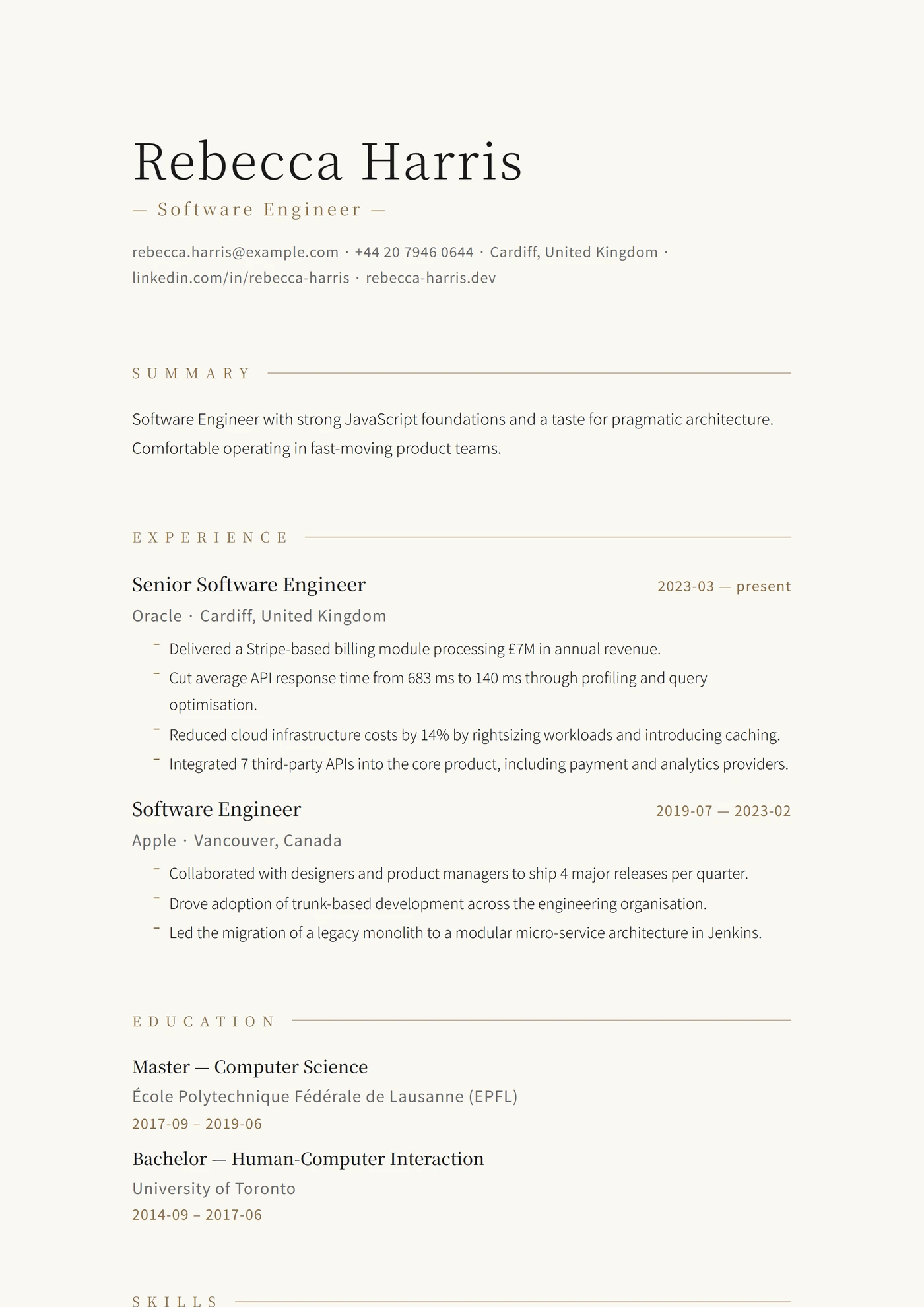
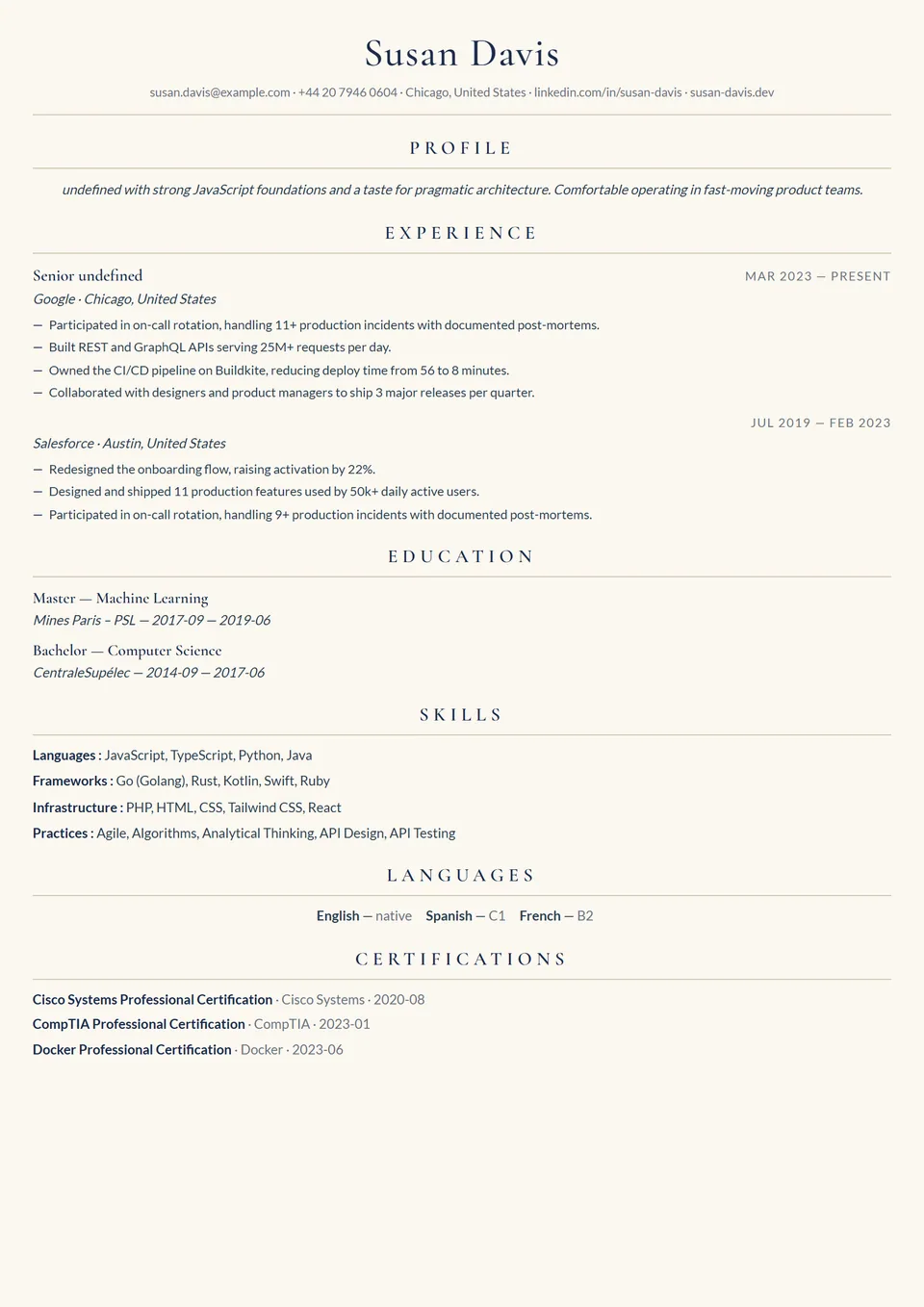
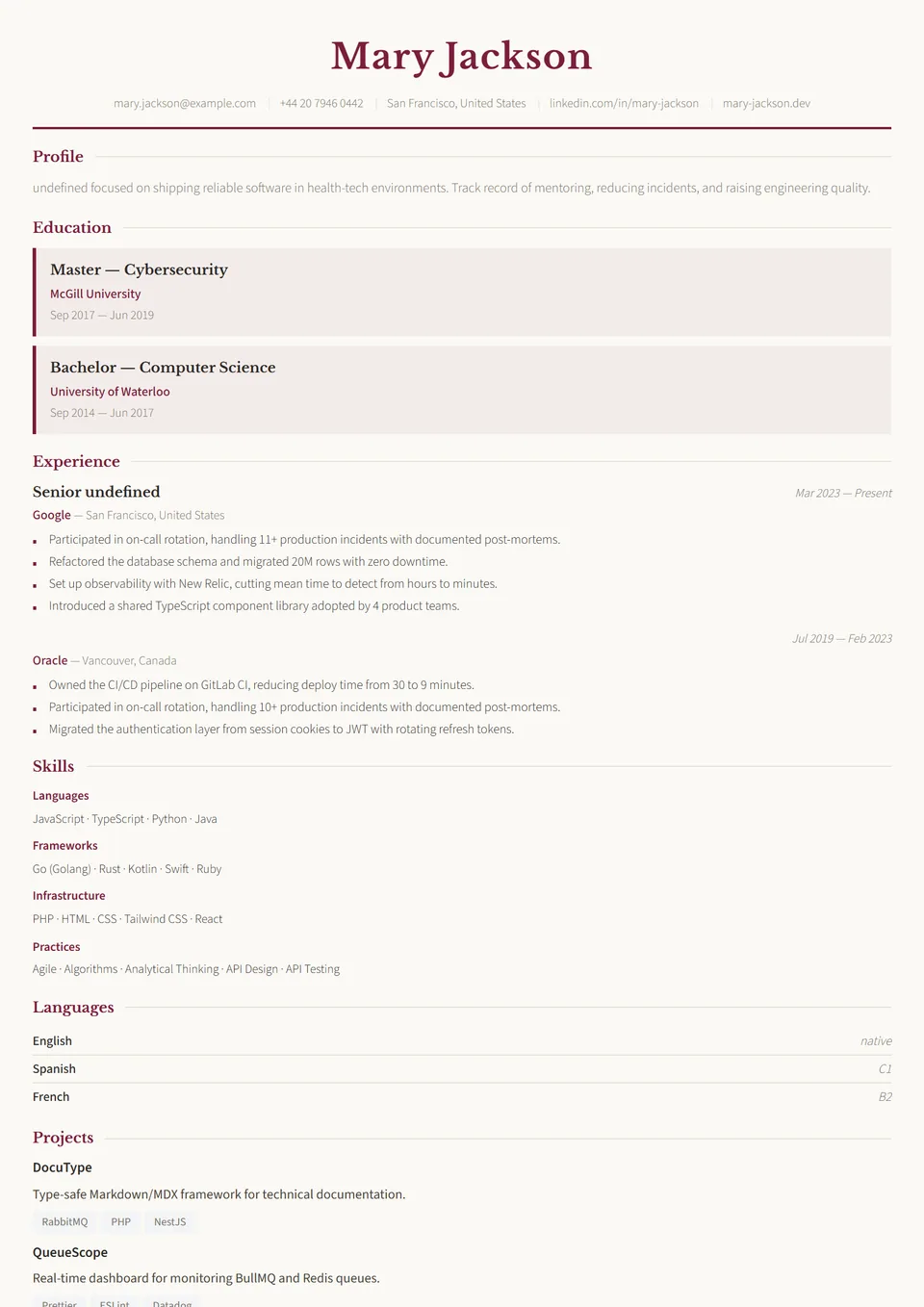
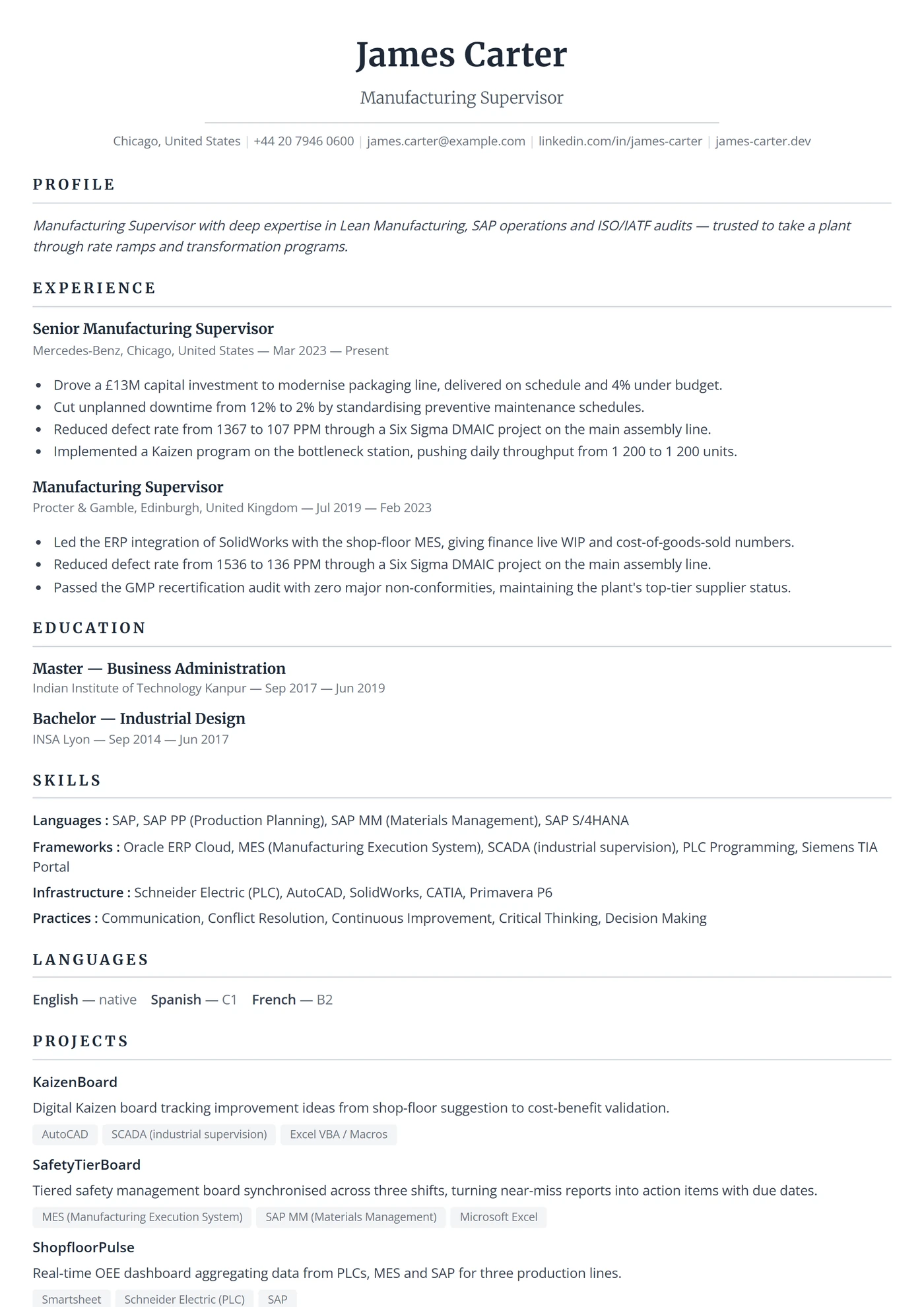
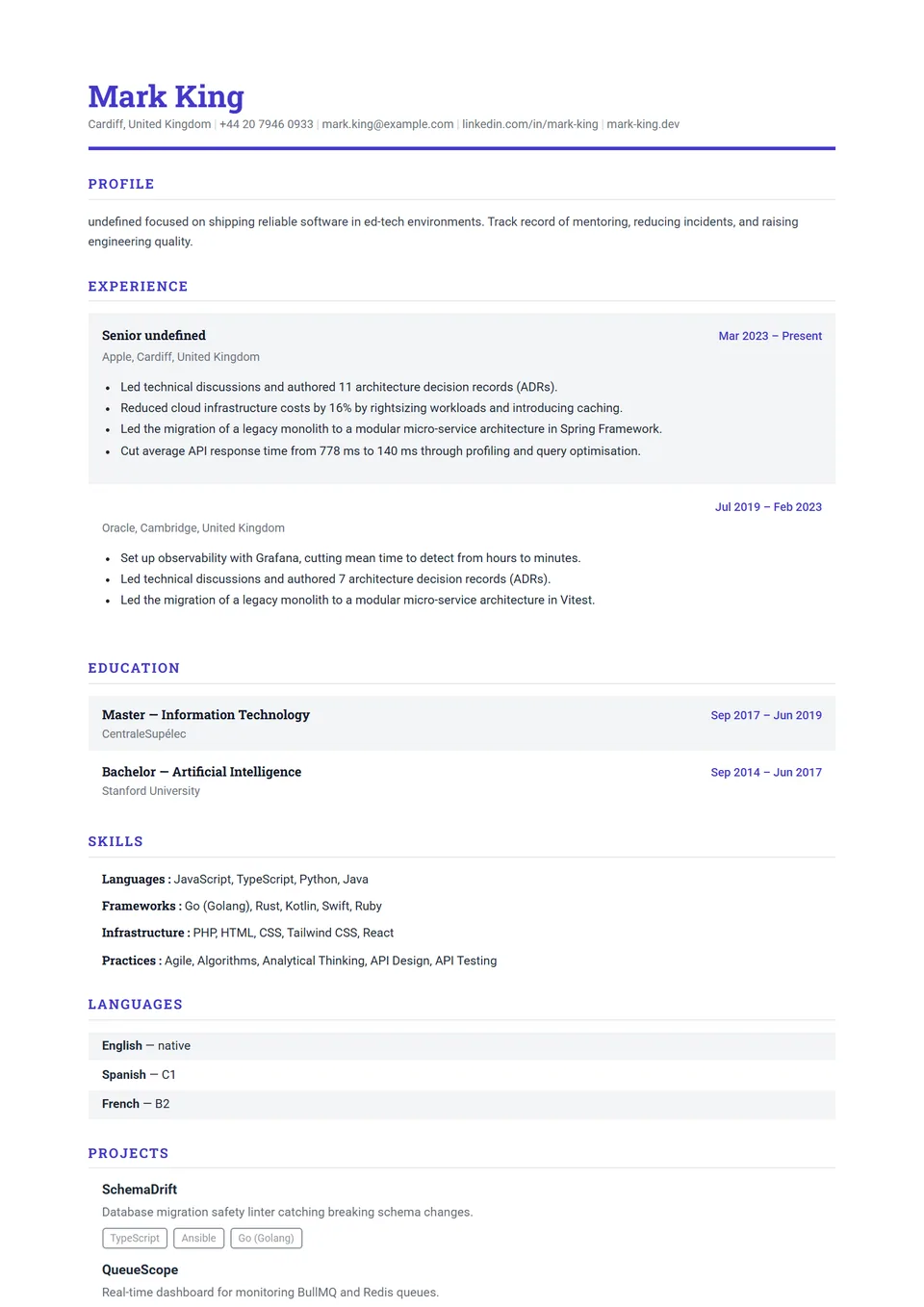
The ATS Nordic template is a quiet layout in IBM Plex Sans on bone-white paper with a warm caramel accent. Single column, short headings and a discreet colour — Scandinavian restraint applied to a document that must remain compatible with parsers like Workday, Greenhouse and Lever. The caramel warms the document without breaking machine reading since it is used only on rules, never on text.
Who is it for?
It fits candidates targeting Nordic-headquartered employers and their international subsidiaries — IKEA, H&M, Spotify, Volvo, Maersk, Equinor, Novo Nordisk, Vestas — as well as design-driven companies and consultancies in Scandinavia. Equally good for senior profiles such as Senior Product Designer, Lead UX Researcher, Design Director who want a sober ATS-friendly file with just enough warmth not to feel cold-blooded.
How to use it
Place a three-line professional summary under the header, then experience in reverse chronology. On each role, two or three quantified bullets are enough — Nordic sobriety rewards precision over volume. Skills sit in a final block in plain text, no icons. Note language level using the CEFR grid (B2, C1) rather than percentages. For a design role, place the portfolio URL in the header, not at the bottom — Scandinavian recruiters click through fast.
Frequently asked questions
Does the caramel accent print correctly in black and white?
Yes. The caramel was chosen for sufficient greyscale contrast in B&W printing, and it is limited to rules. All textual content remains 100% black on white, so no information is lost in administrative printing on a standard laser printer.
Is it suitable for a UK or US application?
Yes, particularly in Nordic-owned subsidiaries (Spotify London, Volvo USA, Maersk Singapore) and design-led agencies. For traditional US banking or UK Civil Service applications, prefer ATS Monochrome — strictly black and white — which matches the local recruiter expectation better.
Can I adapt it for a bilingual application?
Yes. IBM Plex Sans natively handles English, French, German and Nordic characters. For a bilingual CV, keep the master version in your native language and create a second file in the target language — each adapted to the local market conventions (US one-page, German Lebenslauf format, UK two-page personal statement opener).