
When You Need a Cover Letter for Order Picker
A cover letter for an Order Picker position lets you demonstrate reliability, speed, and safety awareness that a resume alone cannot fully convey. It gives you space to explain your familiarity with warehouse equipment, shift flexibility, and attendance record, which are critical factors hiring managers weigh heavily for this role. A well-written letter can set you apart in a high-volume applicant pool by showing genuine interest in the specific warehouse or distribution center.
For an internship or entry-level Order Picker role, the cover letter should focus on transferable qualities like physical stamina, punctuality, basic math skills, and willingness to learn new systems such as RF scanners or warehouse management software. Since formal experience may be limited, highlight any part-time jobs, sports, or volunteer work that show you can follow instructions, meet quotas, and work safely in a fast-paced environment. Emphasize eagerness to be trained and availability for the required shifts.
When moving into an Order Picker role from another field, frame your cover letter around transferable skills such as attention to detail, physical endurance, time management, and experience following safety protocols in previous jobs. Mention any exposure to inventory systems, manual labor, or customer-facing roles that required accuracy and speed, and explain your motivation for choosing warehouse work. Reassure the employer that you understand the physical demands and are ready to commit to shift schedules.
For an internal promotion to a lead or senior Order Picker position, the tone should be confident and achievement-focused, highlighting your track record of accuracy rates, efficiency, and mentoring newer team members. Reference specific metrics like units picked per hour, error reduction, or safety incidents avoided, and connect these results to the company's operational goals. Keep the letter concise since the hiring manager already knows your work history, and focus on readiness for added responsibility.
Recommended templates for Order Picker
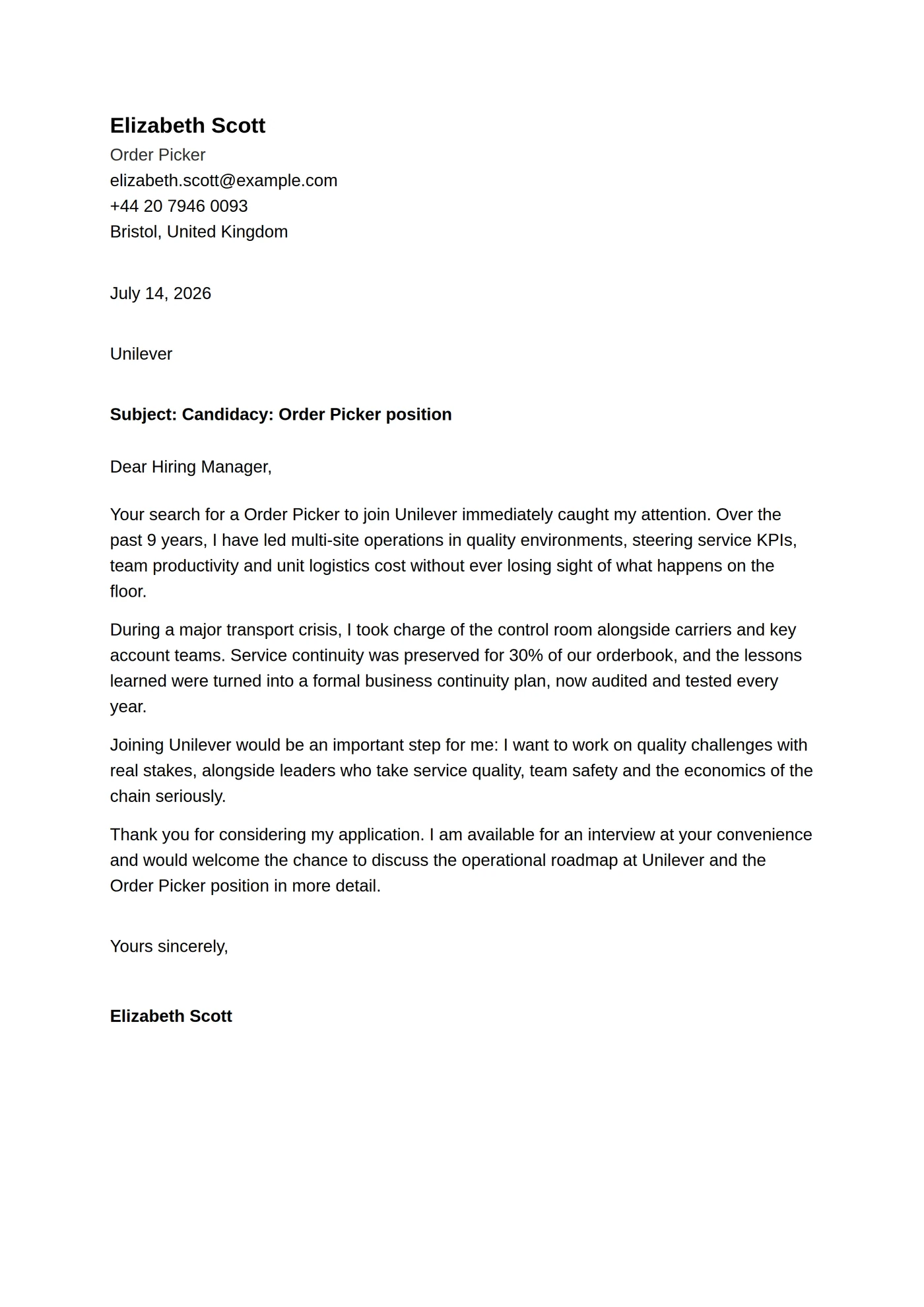
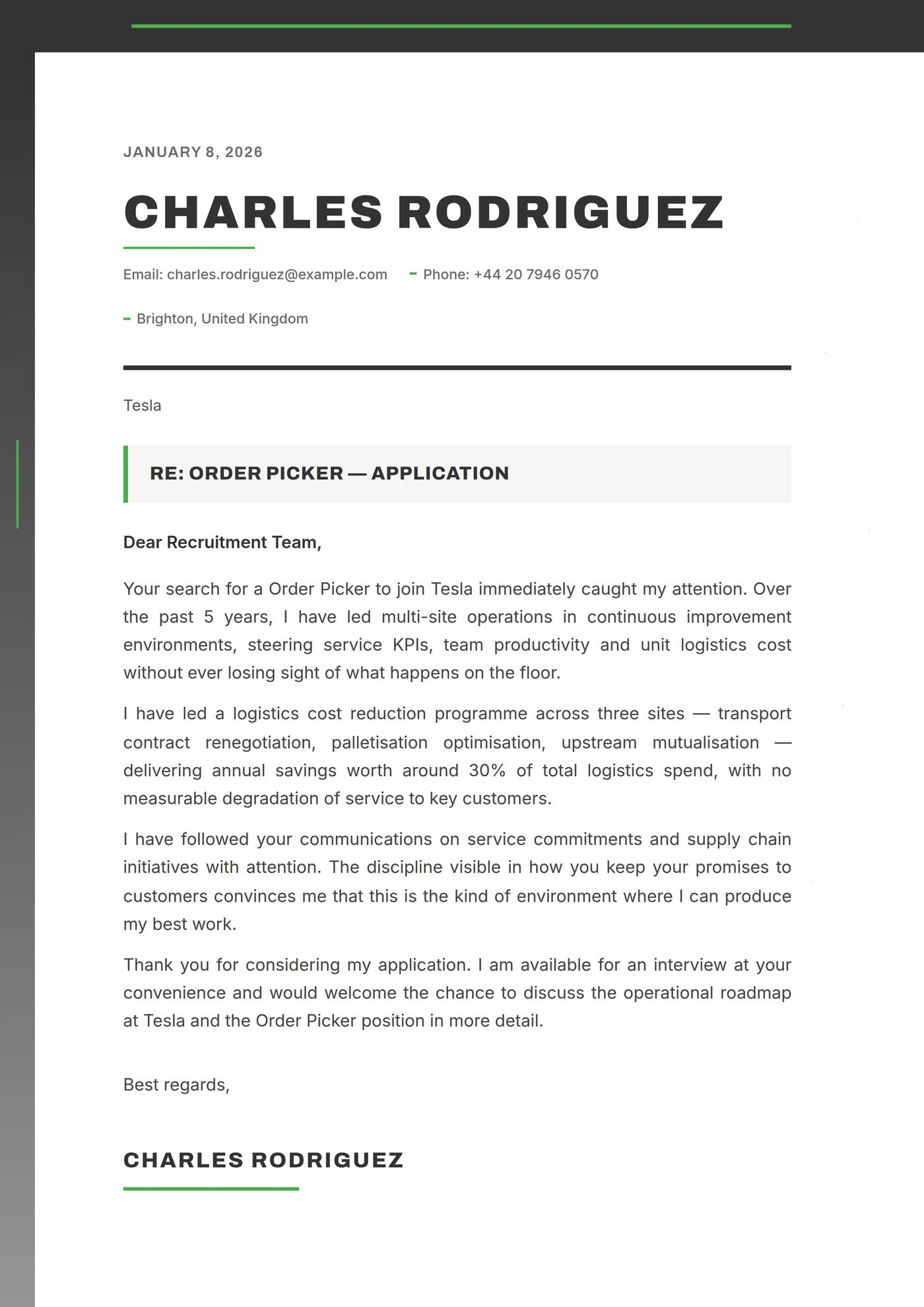
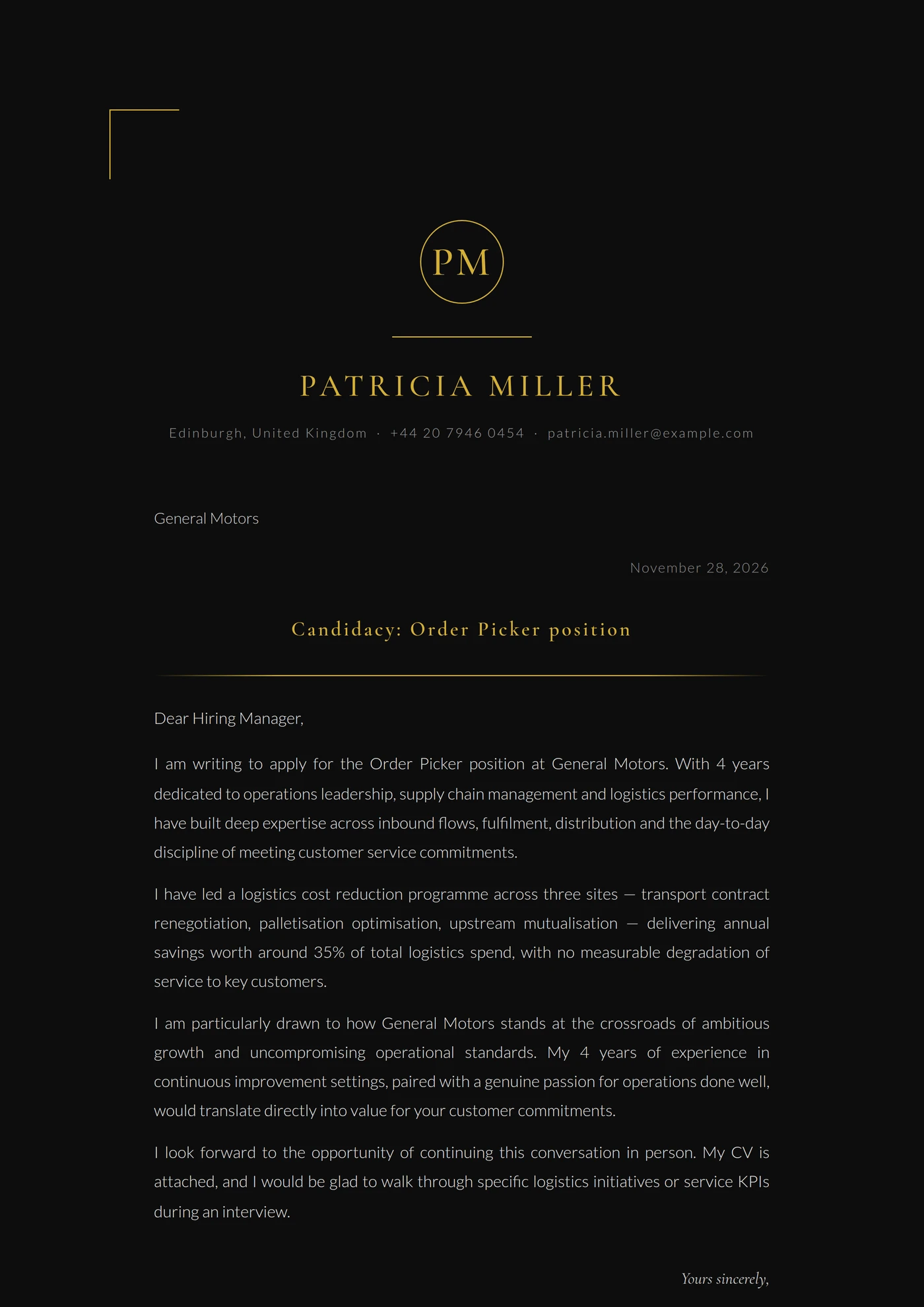
Three templates selected for this role, from junior to senior level. Tap a template to discover its full design and use it in your document.
How to Write a Order Picker Cover Letter
Open your Order Picker cover letter with a direct statement of the position you are applying for and one strong reason you are a good fit, such as years of warehouse experience or a key certification like OSHA 30. Avoid generic openers like “I am writing to apply for the job posting I saw online” since they add no value and sound interchangeable with every other applicant. If possible, address the letter to the hiring manager or warehouse supervisor by name, which shows you researched the company and took the application seriously. A strong first sentence might reference a specific skill the job posting emphasizes, such as experience with forklift certification, RF scanner use, or meeting daily quotas in a fast-paced distribution center. This immediately signals relevance and encourages the reader to continue rather than skim past a generic introduction.
The body of an Order Picker cover letter should typically run two to three short paragraphs. The first should cover your relevant experience, including types of warehouses or industries you have worked in, equipment you are trained on, and your typical shift availability. The second paragraph should highlight a specific achievement, such as consistently exceeding pick accuracy targets, reducing errors, or maintaining a strong safety record, using numbers wherever possible to make the claim credible. A third paragraph, if included, can address soft skills like teamwork, reliability, and adaptability to different shifts or seasonal demand spikes, which matter greatly in warehouse environments. Balance is key: do not simply restate your resume's job duties, instead connect your experience to what this specific employer needs, such as handling high-volume order fulfillment during peak seasons or working safely alongside automated systems.
Close the letter with a clear call to action, such as expressing enthusiasm for an interview and stating your availability to start or discuss the role further. Thank the reader for their time and consideration, and reaffirm your interest in contributing to their warehouse team's efficiency and safety goals. Avoid vague or overly casual sign-offs; instead use a professional closing like “Sincerely” or “Best regards” followed by your full name. Do not end with demands about pay or scheduling in the closing paragraph, as this can come across as presumptuous before an interview has even been offered. Keep the final note positive and forward-looking, reinforcing that you are ready to contribute immediately.
The tone for an Order Picker cover letter should be professional but straightforward, avoiding overly formal corporate language that feels out of place for a hands-on warehouse role. Employers value directness, reliability, and a can-do attitude, so simple, confident sentences work better than flowery language or jargon. Mentioning specific equipment, safety practices, or performance metrics signals professionalism without sounding stiff or overly scripted.
Skills to Mention in Your Order Picker Cover Letter
Common Mistakes
A generic cover letter that could apply to any warehouse job without mentioning the specific company, equipment, or shift requirements signals low effort to hiring managers. Fix this by naming the employer, referencing their specific products or distribution needs, and tailoring your skills to match the exact job posting language.
An Order Picker cover letter should stay to one page, ideally three to four short paragraphs, since hiring managers for warehouse roles often review large volumes of applications quickly. Cut unnecessary background details or lengthy job histories and focus only on the most relevant experience and measurable results.
Simply listing duties like “picked orders and loaded trucks” fails to differentiate you from other candidates who performed the same tasks. Reframe these into achievements by including numbers, such as consistently achieving 99% pick accuracy or processing 150+ orders per shift, to show measurable impact.
Common formatting mistakes include submitting the letter as an unusual file type instead of PDF, using an unprofessional font, or forgetting to include a proper subject line when emailing the application. Keep formatting simple, legible, and consistent with your resume to maintain a professional, cohesive application package.
Frequently Asked Questions
While not always required, a cover letter can help you stand out in a competitive applicant pool by highlighting reliability, availability, and relevant experience not fully covered in your resume. Many warehouse employers still appreciate the extra effort, especially for roles with physical demands or shift flexibility requirements.
Keep it to one page, ideally just three to four short paragraphs, since hiring managers for warehouse positions typically review applications quickly. Focus on your most relevant skills and one or two measurable achievements rather than a full work history.
Yes, tailoring each letter to mention the specific company, warehouse type, or equipment listed in the job posting significantly improves your chances. Even small adjustments, like referencing their products or shift patterns, show genuine interest compared to a copy-paste letter.
In the US, a cover letter is often optional but recommended for standing out, while in the UK and much of the EU, it is more commonly expected as part of a complete application, especially for staffing agency placements. Regardless of region, including one rarely hurts and can demonstrate professionalism and genuine interest.
Yes, AI tools can help you draft a strong starting point, especially for structuring paragraphs and suggesting relevant keywords, but you should always personalize it with your own experience and the specific company details. Avoid submitting an unedited AI draft, as hiring managers can often tell when a letter lacks genuine personal detail.
Submit your cover letter as a PDF to preserve formatting across devices, using a simple, legible font and a reverse-chronological style that mirrors your resume. Avoid elaborate graphics or tables, since simple, clean layouts are easier for both hiring managers and ATS systems to process.
Related Job Titles
Explore more about