
A Registered Nurse provides direct patient care, coordinates treatment plans, and acts as a critical liaison between patients, families, and physicians across hospitals, clinics, and specialty care settings. Employers look for resumes that clearly demonstrate clinical competencies, licensure status, and measurable patient outcomes rather than vague duty lists. Strong candidates highlight specialty certifications, patient-load management, and interdisciplinary collaboration, typically holding 1-3 years of experience for mid-level roles and 5+ years for charge nurse or leadership positions. Average salaries range from $65,000 for entry-level positions to $95,000+ for experienced specialists or nurse leaders. Standing out requires quantifying patient outcomes, showing EHR proficiency, and listing current licensure and specialty credentials prominently.
What Makes a Great Registered Nurse Resume
A great Registered Nurse resume leads with licensure, certifications, and clinical specialty front and center, since hiring managers and ATS systems scan for credentials before anything else. The format should be clean and reverse-chronological, organized by role with bullet points that quantify patient ratios, unit size, and outcome improvements such as reduced infection rates or improved patient satisfaction scores. Clinical terminology should be precise and consistent with job posting language to pass automated screening while remaining readable to a human recruiter under time pressure. Content priorities include a concise professional summary emphasizing years of experience and specialty, a dedicated certifications section, and measurable achievements tied to patient care quality, safety compliance, and teamwork. Tone should be professional and fact-driven, avoiding generic phrases like hardworking in favor of specific clinical responsibilities such as triage, medication administration, or care plan development. Including Electronic Health Record (EHR) systems experience, specialty unit exposure, and any precepting or mentoring duties helps differentiate candidates in a highly competitive and credential-driven field.
Key Skills Needed
Typical Experience Level
Entry-level Registered Nurses typically hold an ADN or BSN degree with clinical rotations and may have 0-2 years of hands-on hospital or clinical experience, often starting in med-surg or general care units. Recruiters expect new graduates to show licensure (NCLEX-RN), internship or preceptorship experience, and foundational competencies like vital signs monitoring and basic charting. Mid-level nurses with 3-7 years of experience are expected to demonstrate specialty certifications (such as CCRN or CEN), independent decision-making, and possibly charge nurse responsibilities. Senior nurses or nurse leaders with 8+ years typically showcase supervisory experience, quality improvement initiatives, mentorship of junior staff, and involvement in policy or protocol development, often moving toward nurse manager, clinical educator, or advanced practice roles.
ATS Keywords for This Role
Recommended templates for Registered Nurse
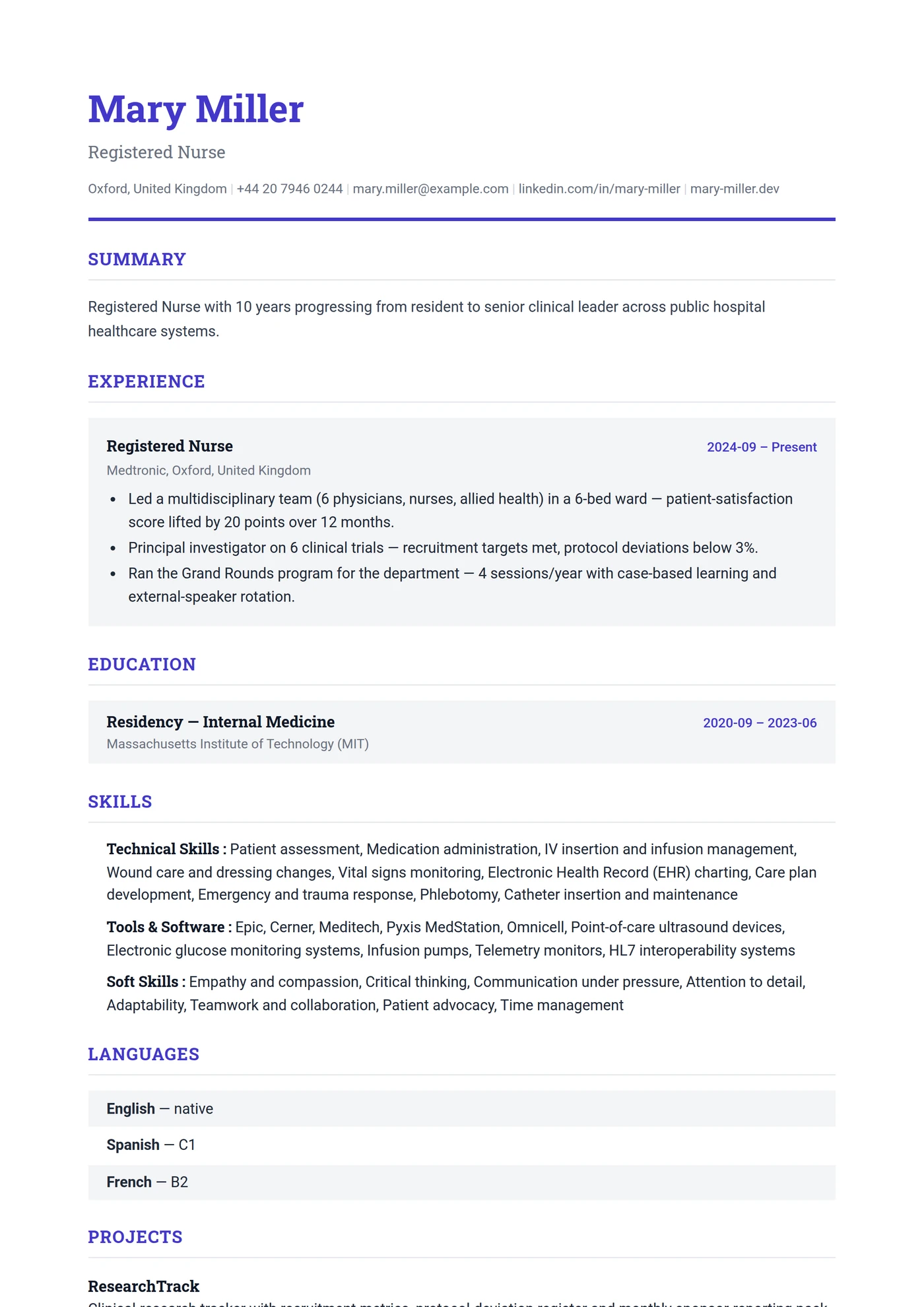
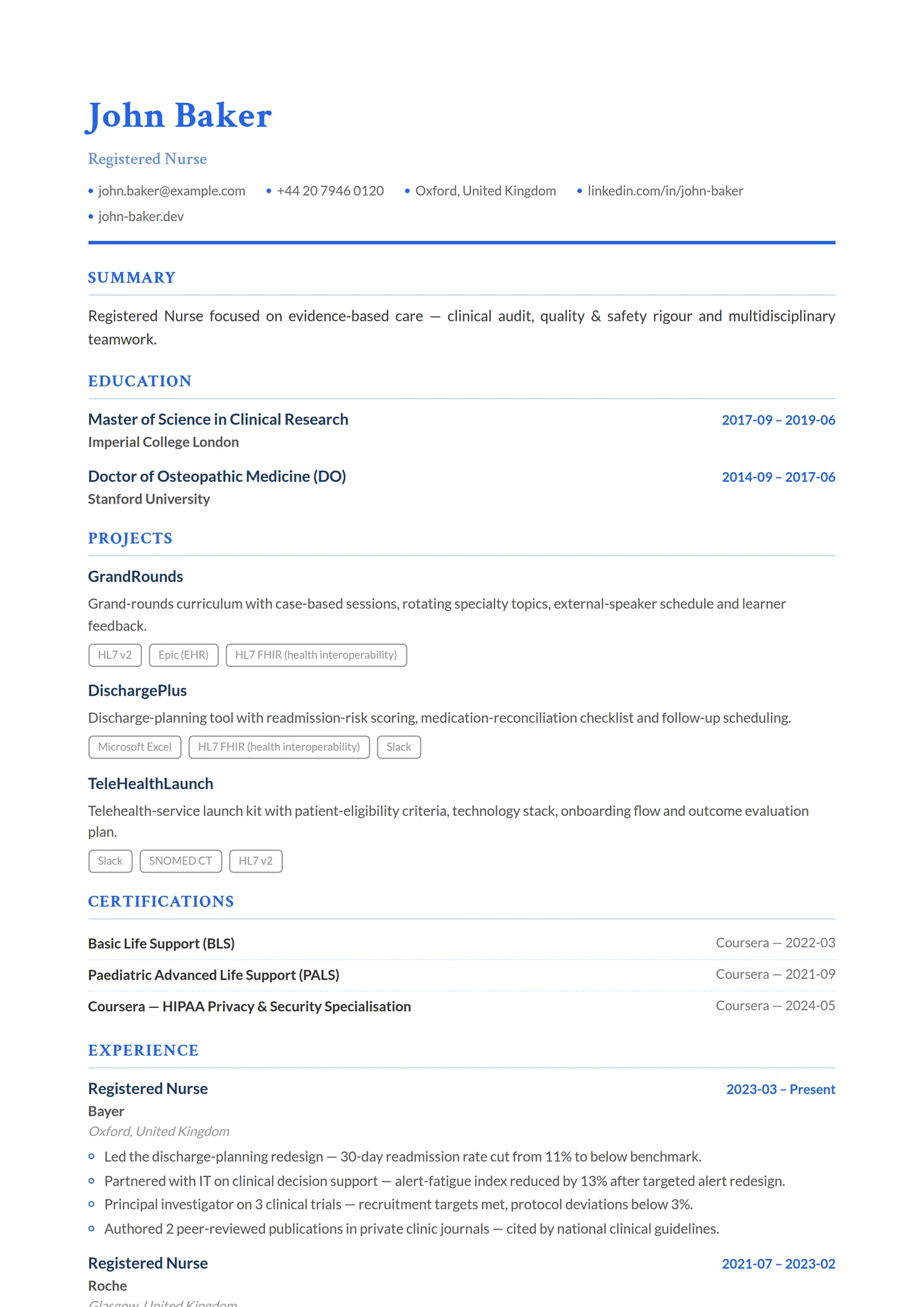
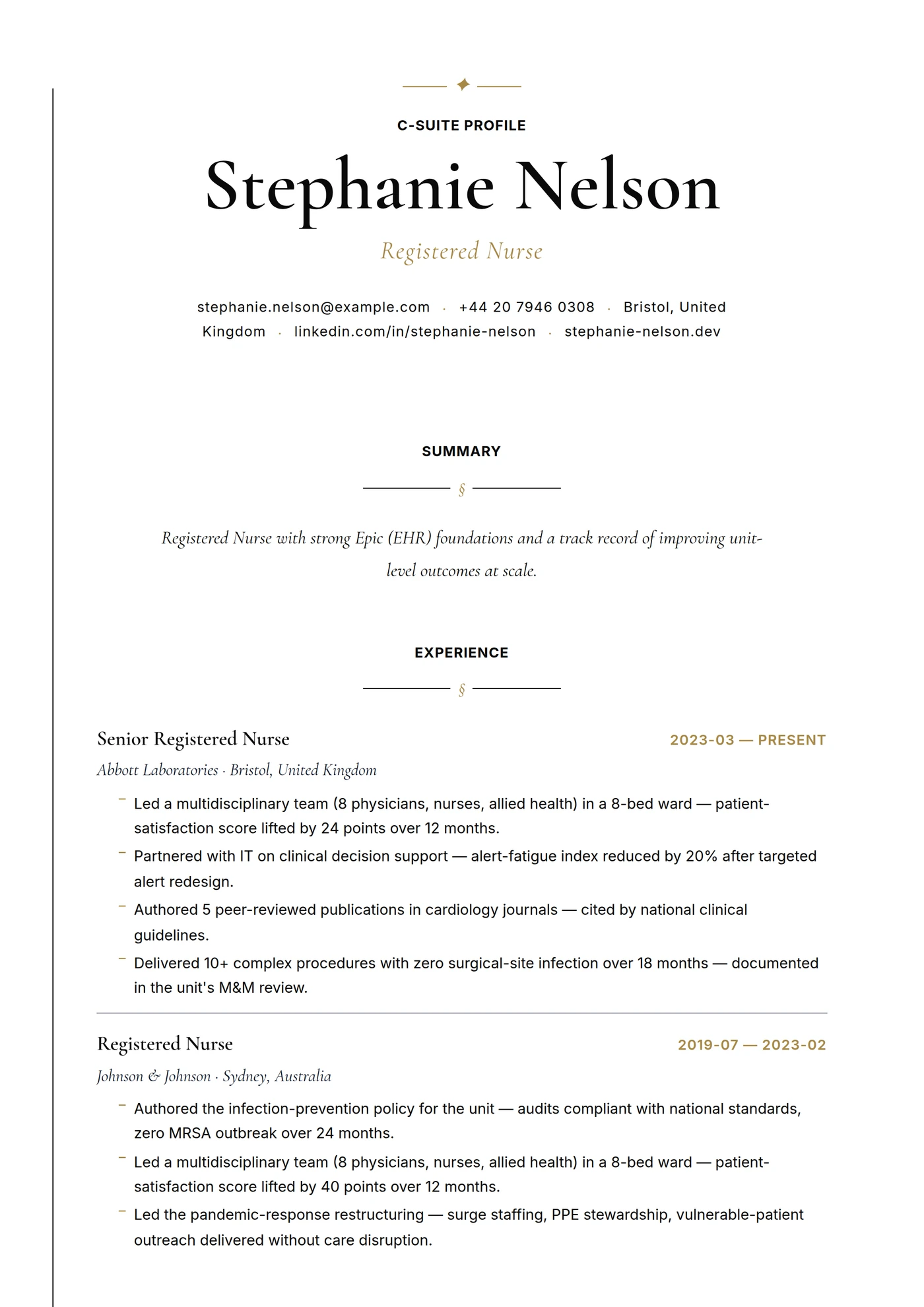
Three templates selected for this role, from junior to senior level. Tap a template to discover its full design and use it in your document.
Skills for Registered Nurse
Hard Skills
Soft Skills
Tools & Software
ATS Keywords
Writing Tips for Registered Nurse
Best Format to Use
A reverse-chronological format works best for Registered Nurses because employers want to quickly trace clinical progression, unit experience, and specialty growth over time. This format also aligns well with how hospital HR systems parse employment history and licensure dates. A hybrid approach can work for career changers or new graduates, placing a skills and certifications summary at the top before diving into clinical rotations and employment history. Functional formats are generally discouraged since they obscure critical timeline details like licensure renewal and clinical hours, which recruiters specifically verify.
Common Mistakes
How to Pass ATS
How to Stand Out
Frequently Asked Questions
Explore more about