
A Server takes orders, delivers food and beverages, and ensures a positive dining experience for guests in restaurants, bars, hotels, and banquet settings. Employers look for resumes that highlight customer service skills, speed under pressure, teamwork, and familiarity with POS systems, along with a track record of upselling and handling high-volume shifts. Strong candidates stand out by quantifying tips, sales, table turnover, and guest satisfaction scores rather than just listing duties. Most Servers start with little formal experience, and the role rewards reliability, a friendly demeanor, and menu knowledge. Pay varies widely by region and establishment, often supplemented significantly by tips, so base wage alone should not be the sole compensation reference on a resume.
What Makes a Great Server Resume
A strong Server resume leads with a concise summary that signals customer service excellence, speed, and reliability, followed by a work history that quantifies achievements — average check size, upselling percentages, tables served per shift, or guest satisfaction ratings. Recruiters in hospitality skim quickly, so clean formatting, short bullet points, and a reverse-chronological structure work best, especially for candidates targeting fast casual, fine dining, or banquet roles where tone and presentation differ. The resume should be limited to one page unless the candidate has extensive supervisory or fine-dining experience. Content priorities include highlighting POS software familiarity, food and beverage knowledge (including allergen awareness and wine or cocktail pairing where relevant), and soft skills like multitasking, teamwork, and conflict resolution. Certifications such as food handler cards or alcohol service permits should be clearly listed since they are often legally required and frequently screened by ATS systems. Tone should be friendly but professional, avoiding overly casual language while still conveying warmth and approachability, which are core to the guest experience employers are hiring for.
Key Skills Needed
Typical Experience Level
Entry-level Servers typically have 0-2 years of experience, often gained in fast casual or family-style restaurants, and recruiters expect basic POS familiarity, food safety certification, and a customer-friendly attitude. Mid-level Servers with 2-5 years of experience are expected to handle high-volume shifts, train new staff informally, and demonstrate consistent upselling or repeat-guest results, often in casual dining or hotel settings. Senior Servers or those transitioning toward lead server, host captain, or fine-dining roles typically have 5+ years of experience, including formal wine or menu certifications, banquet or VIP service experience, and sometimes informal supervisory duties like scheduling or training. At this level, resumes should emphasize leadership, mentorship, and guest retention metrics alongside service excellence.
ATS Keywords for This Role
Recommended templates for Server
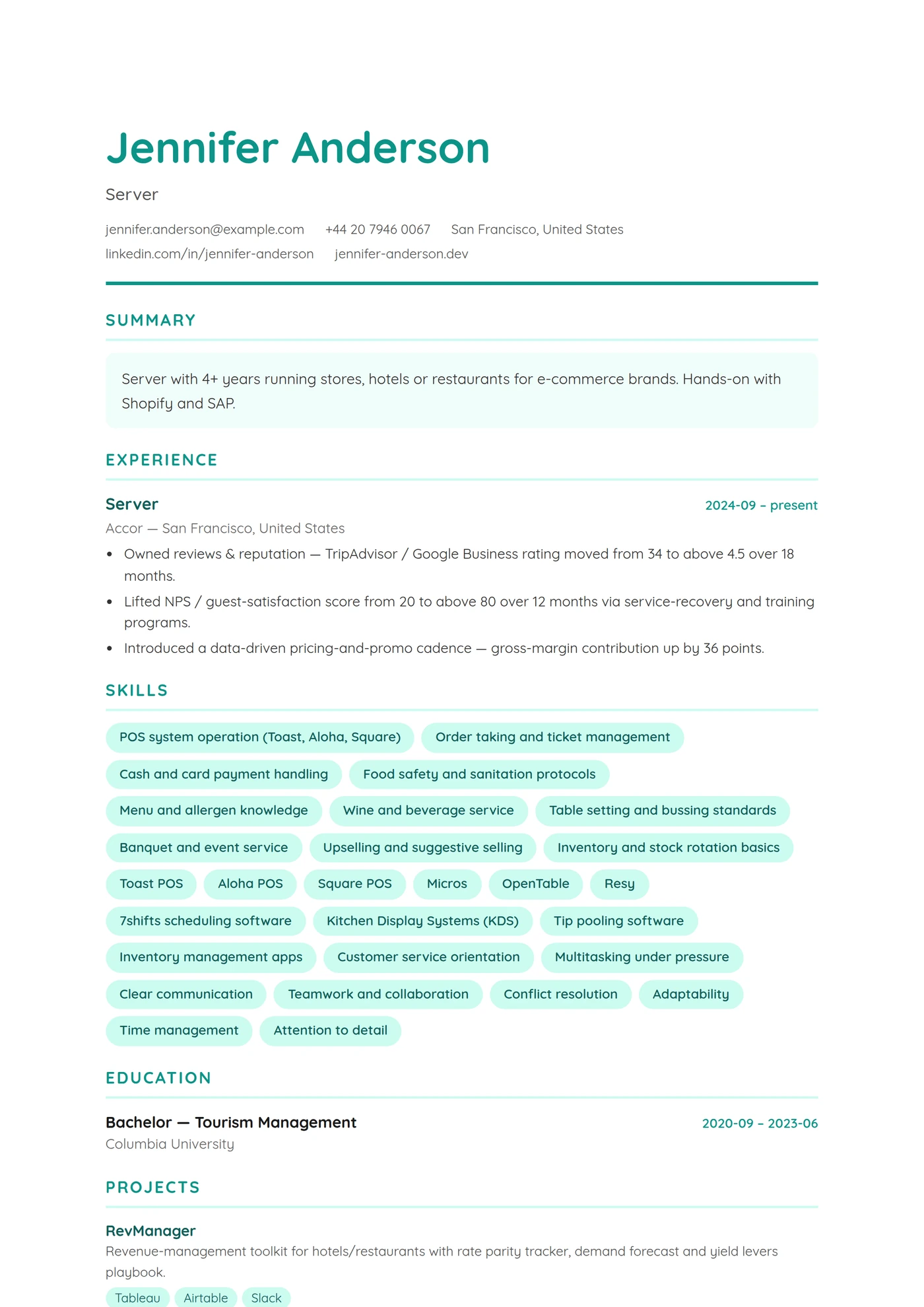
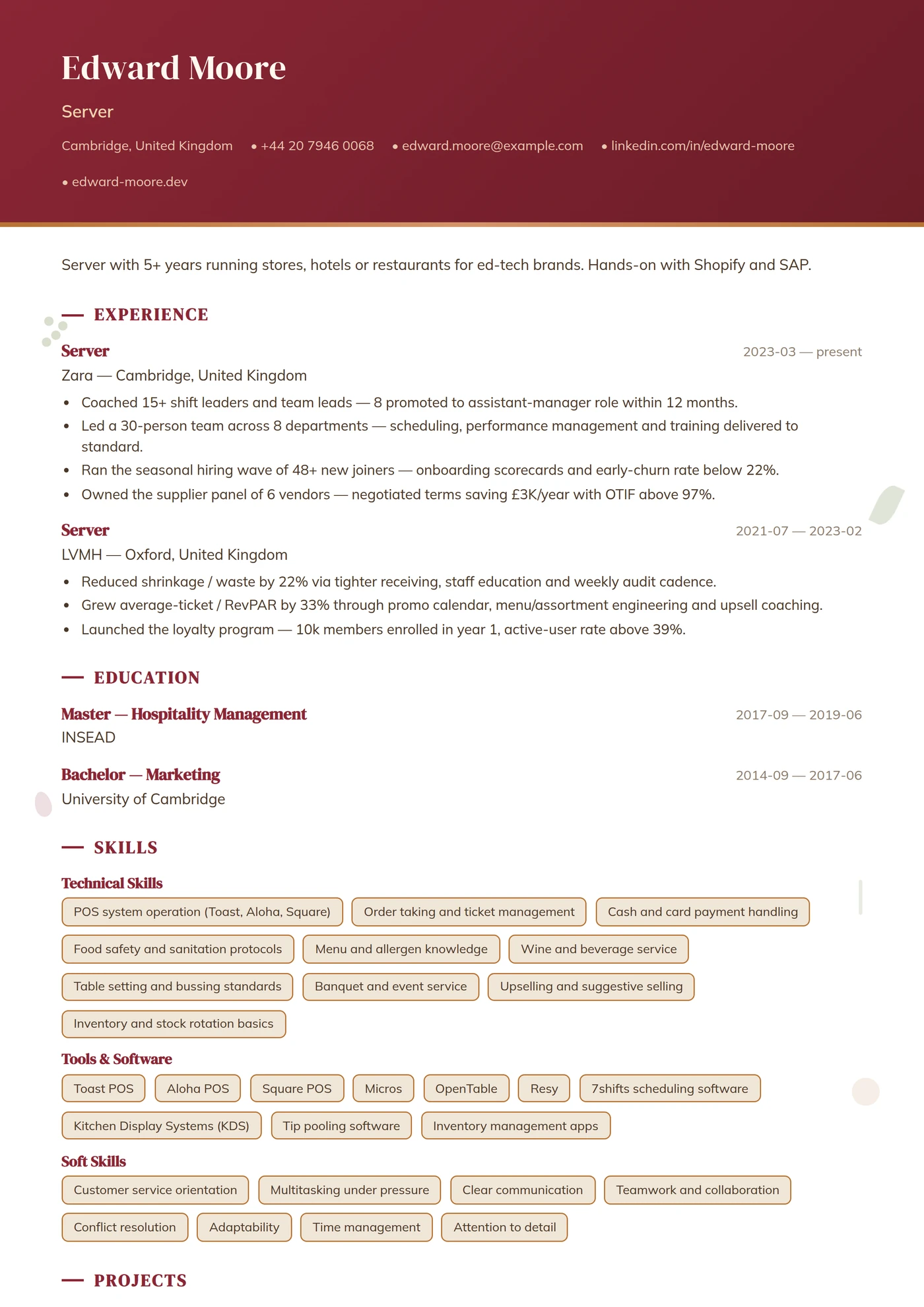
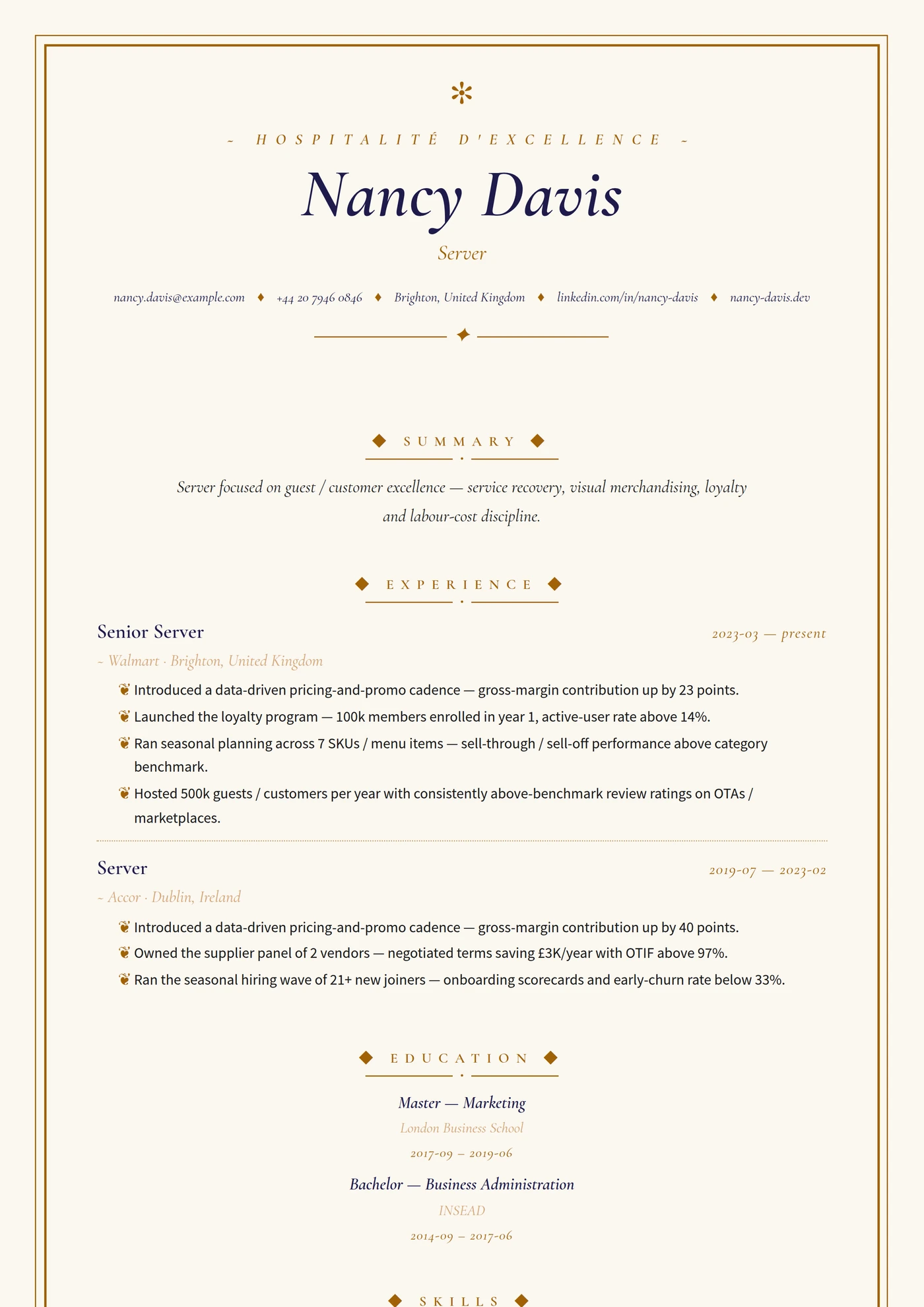
Three templates selected for this role, from junior to senior level. Tap a template to discover its full design and use it in your document.
Skills for Server
Hard Skills
Soft Skills
Tools & Software
ATS Keywords
Writing Tips for Server
Best Format to Use
A reverse-chronological format works best for most Server resumes because it clearly shows career progression, shift responsibility growth, and increasing guest-facing complexity, which hiring managers scan for quickly. This format is especially effective for candidates with steady employment history in food service. A hybrid format combining a skills summary at the top with chronological work history can benefit career changers or those returning to hospitality after a gap, allowing them to lead with customer service and POS skills before detailing employment history. Functional resumes are generally discouraged in this field since employers want to see specific venues, shift volume, and consistency of employment.
Common Mistakes
How to Pass ATS
How to Stand Out
Frequently Asked Questions
Related Job Titles
Explore more about