
A Waiter takes orders, serves food and beverages, and ensures a positive dining experience for guests in restaurants, hotels, and event venues. Employers look for resumes that highlight customer service skills, speed under pressure, menu knowledge, and reliability, along with any experience handling POS systems or upselling. Strong candidates stand out by quantifying their impact, such as tables served per shift, upselling revenue, or guest satisfaction scores. Most waiters enter with little to no formal training, though experienced or senior waiters may earn certifications in food safety or wine service. Typical hourly wages plus tips vary widely, but a well-crafted resume can help candidates secure roles in higher-end establishments with better pay potential.
What Makes a Great Waiter Resume
A strong Waiter resume is clean, concise, and easy to scan — hiring managers in restaurants often review dozens of applications quickly, so clarity matters more than creativity. Use a reverse-chronological format that lists recent roles first, highlights measurable achievements (like guest satisfaction scores or average tips per shift), and demonstrates reliability through steady work history or shift flexibility. Keep the resume to one page unless you have extensive management or fine-dining experience. Content should emphasize customer-facing skills, ability to multitask during busy service periods, and familiarity with POS systems like Toast or Aloha. Including specific numbers — such as tables managed per shift, average check size, or percentage increase in repeat customers — helps the resume stand out. Tone should be professional yet warm, reflecting the hospitality mindset employers seek.
Key Skills Needed
Typical Experience Level
Entry-level waiters typically have 0-2 years of experience, often gained in casual dining or fast-casual settings, and are expected to demonstrate reliability, basic customer service skills, and willingness to learn. Mid-level waiters with 2-5 years of experience are expected to handle high-volume shifts, train new staff, and show consistency in guest satisfaction and sales performance. Senior waiters or those in fine-dining and hospitality settings often have 5+ years of experience and may take on head waiter or shift-lead responsibilities, including staff training, VIP guest handling, and coordination with management on service standards. At this level, resumes should highlight leadership, specialized knowledge (like wine service or formal table settings), and measurable contributions to revenue or guest retention.
ATS Keywords for This Role
Recommended templates for Waiter
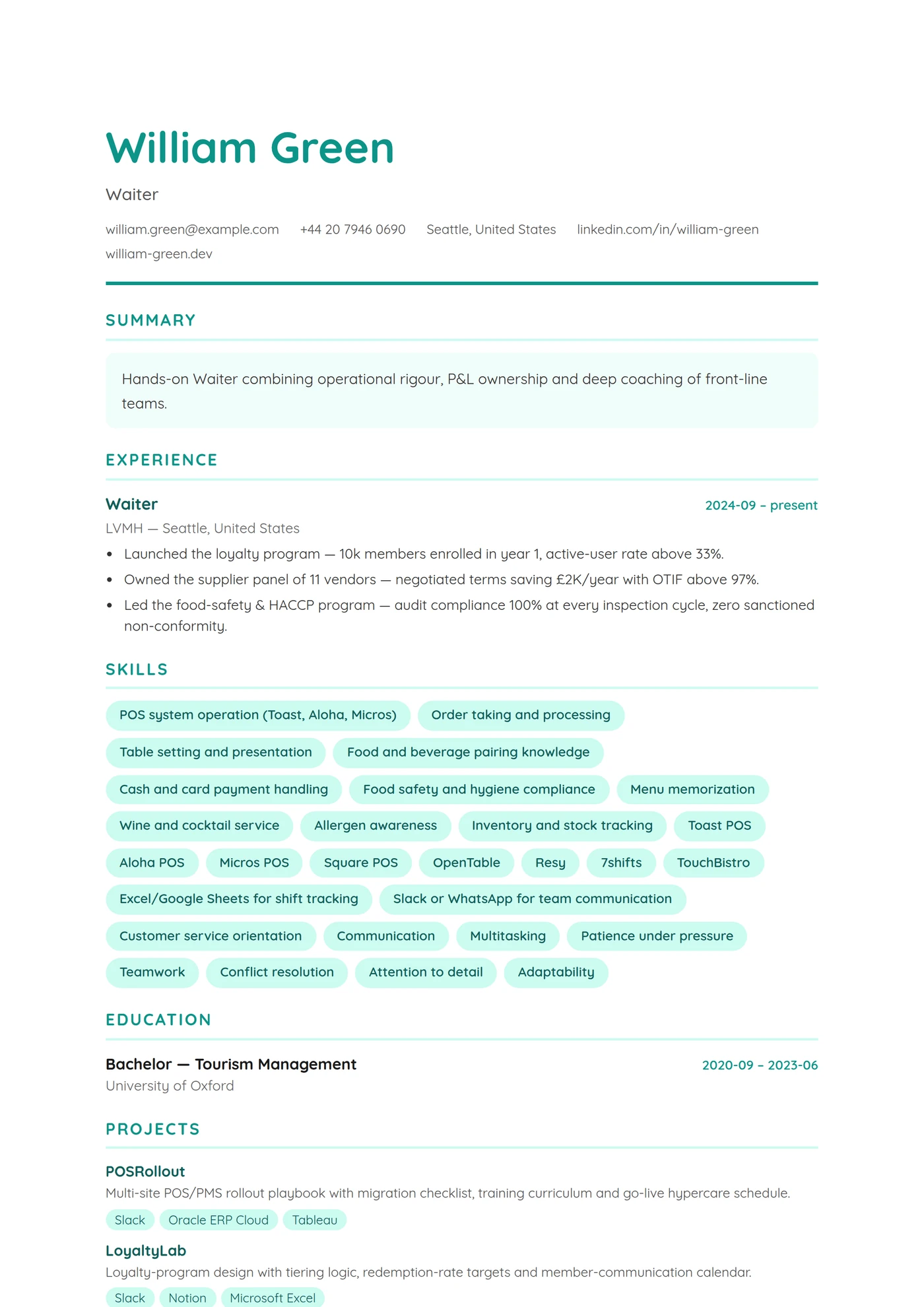
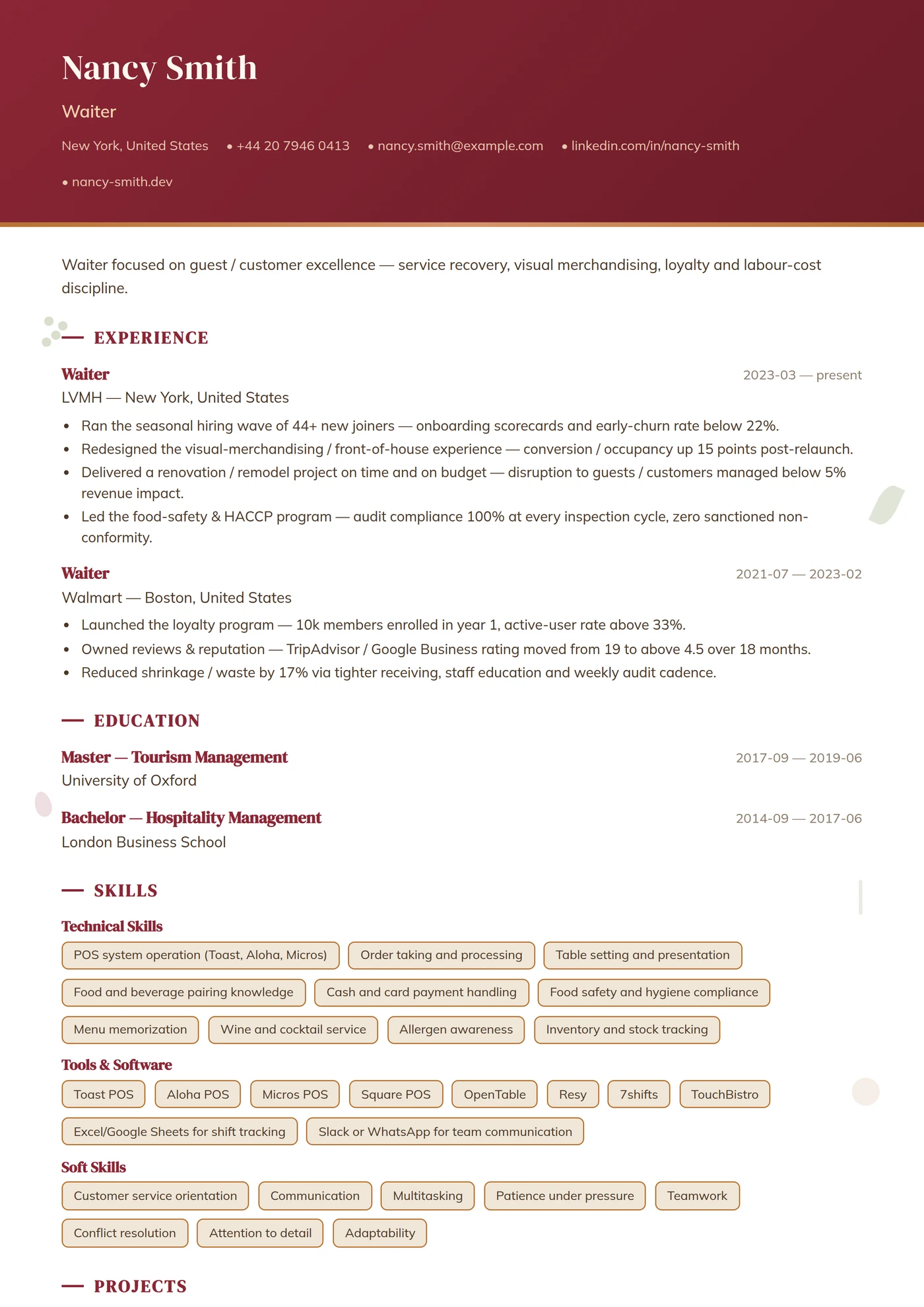
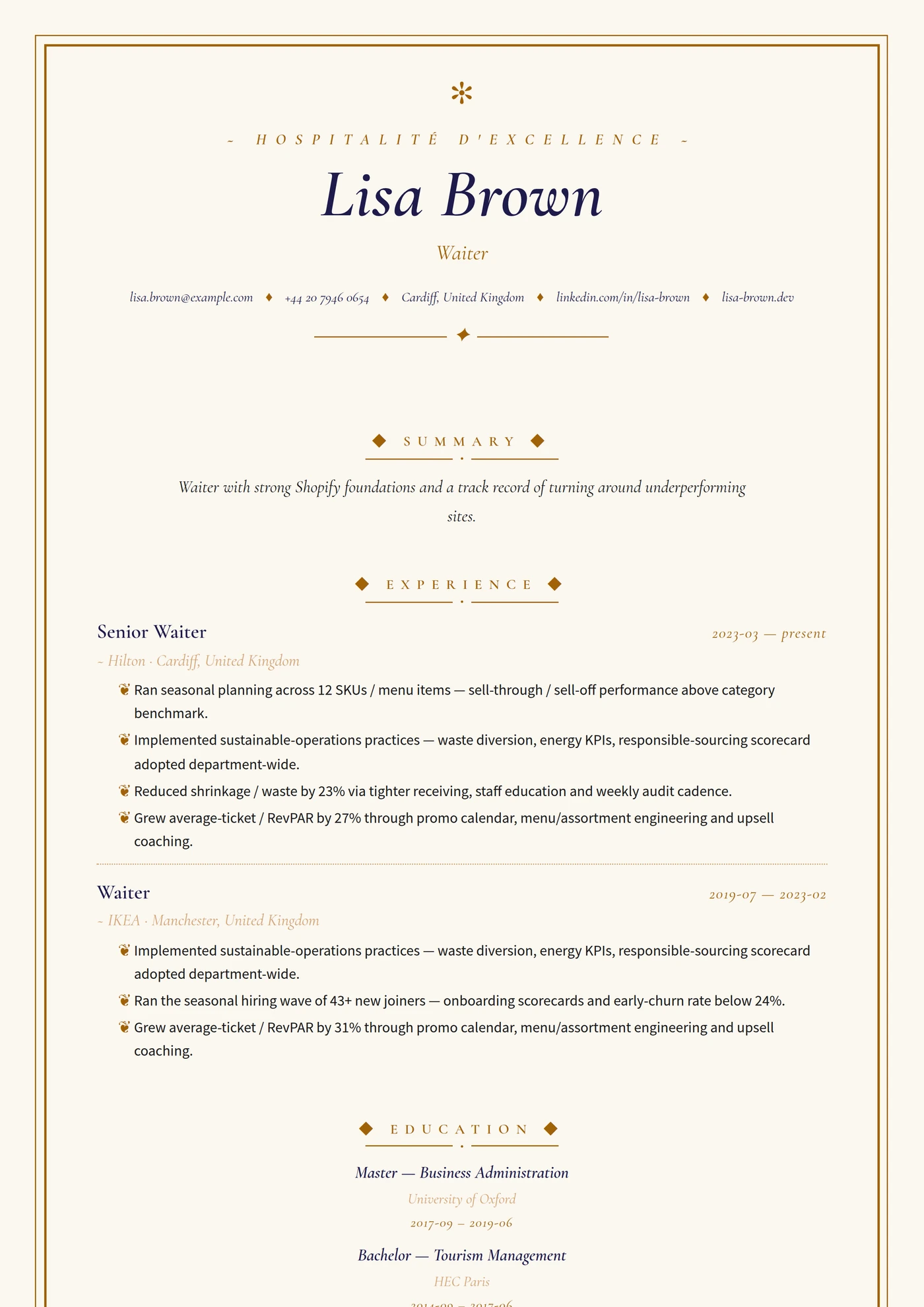
Three templates selected for this role, from junior to senior level. Tap a template to discover its full design and use it in your document.
Skills for Waiter
Hard Skills
Soft Skills
Tools & Software
ATS Keywords
Writing Tips for Waiter
Best Format to Use
The reverse-chronological format works best for most waiters, as it clearly shows career progression and recent relevant experience, which hiring managers scan quickly. For candidates transitioning from another industry or with gaps in employment, a hybrid format that opens with a skills summary before listing work history can better highlight transferable customer service abilities. Avoid functional-only resumes that omit employment dates, as restaurant managers value consistency and reliability and may view gaps or vague timelines with suspicion.
Common Mistakes
How to Pass ATS
How to Stand Out
Frequently Asked Questions
Related Job Titles
Explore more about