
When You Need a Cover Letter for Waiter
A cover letter for a standard Waiter application lets you show personality, hospitality mindset, and genuine interest in the specific restaurant, which a resume alone cannot convey. It helps hiring managers see how you handle customer interactions, teamwork, and busy service before ever meeting you, giving you an edge in a competitive, high-turnover field.
For a Waiter internship or trainee position, the cover letter should focus less on past restaurant experience and more on transferable qualities like reliability, willingness to learn, customer-facing exposure from any job, and enthusiasm for the hospitality industry. Mentioning relevant coursework, part-time customer service roles, or volunteer experience can compensate for a thin resume.
When moving into serving from another field, frame skills like multitasking, conflict resolution, cash handling, or teamwork from previous roles as directly transferable to a fast-paced dining environment. Explain briefly why you are drawn to hospitality now, and reassure the employer that you understand the physical and social demands of the job.
For an internal promotion, such as moving from server to head waiter or shift lead, the tone should be confident and specific, referencing tenure, guest satisfaction results, and instances of mentoring newer staff. Highlight familiarity with the restaurant's standards, menu, and management to show you are ready for added responsibility without needing onboarding.
Recommended templates for Waiter
Three templates selected for this role, from junior to senior level. Tap a template to discover its full design and use it in your document.
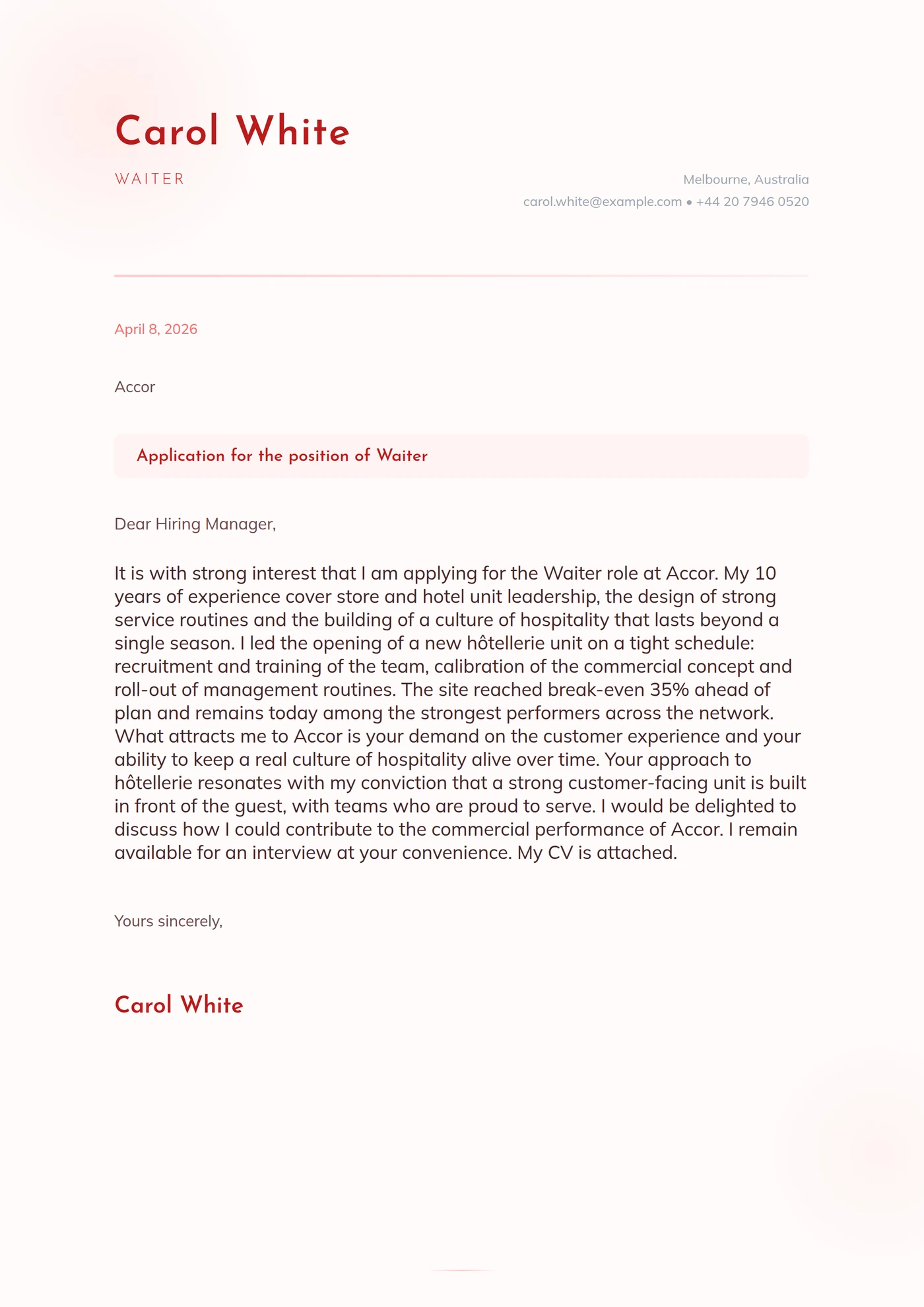
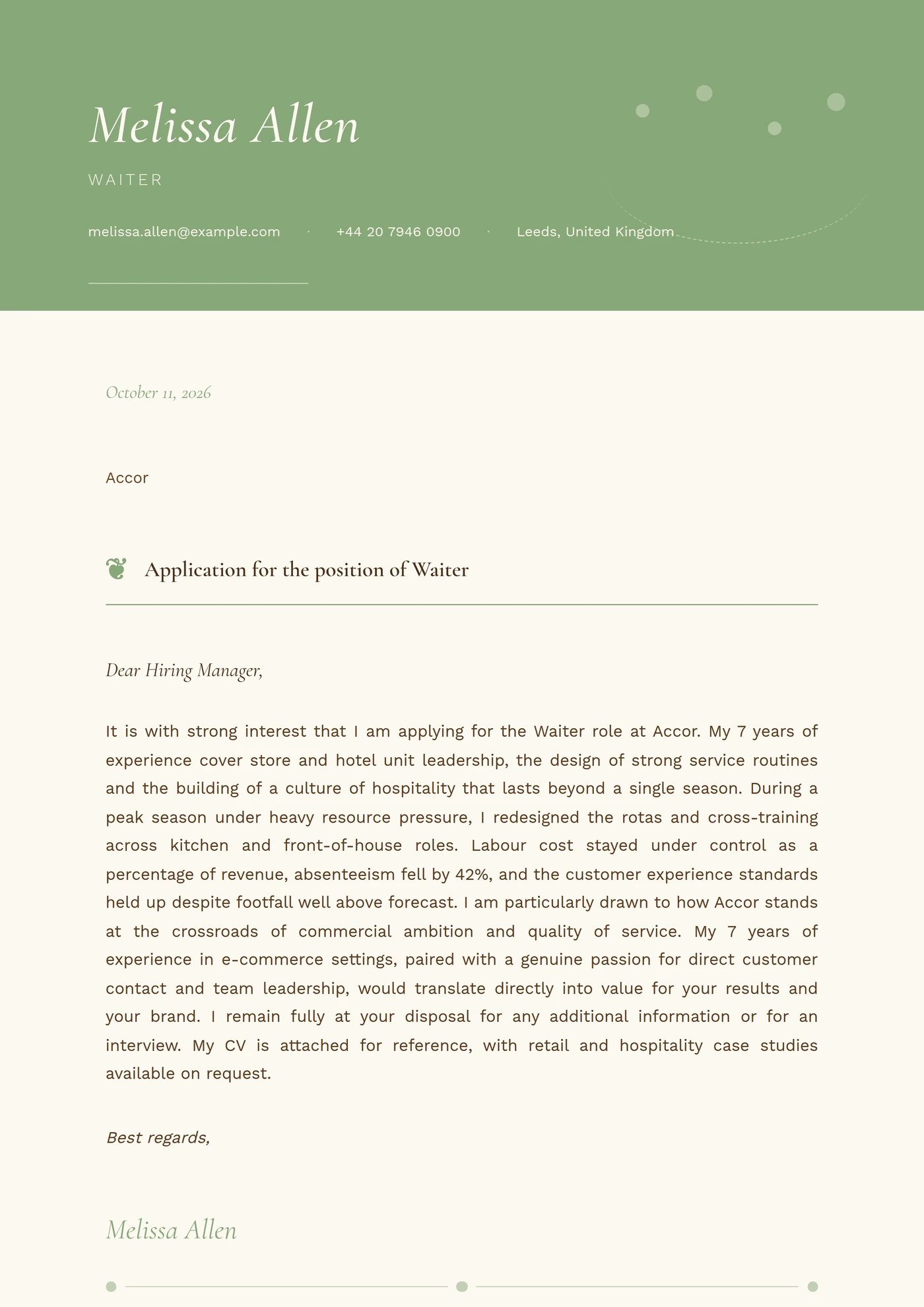
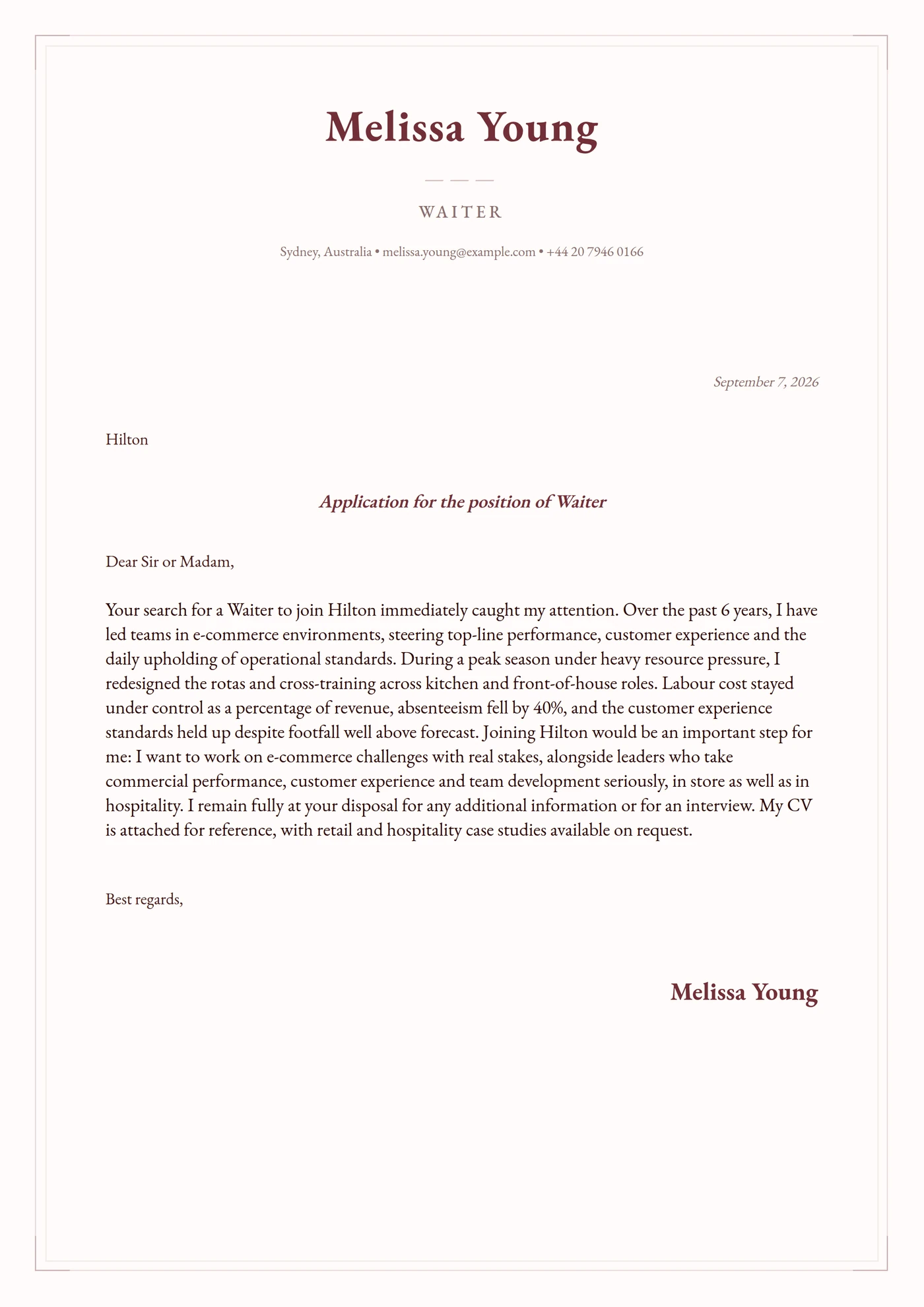
How to Write a Waiter Cover Letter
Open with a specific, energetic sentence that names the restaurant and role, and briefly states why you are excited about that particular establishment rather than serving in general. Avoid generic openers like ‘I am writing to apply for the Waiter position’ and instead reference something concrete, such as the restaurant's reputation, cuisine style, or a recommendation from a current employee. Personalize the greeting by using the hiring manager's or restaurant owner's name when available, found on the job posting or the restaurant's website, rather than defaulting to ‘Dear Hiring Manager.’ This small detail signals genuine interest and attention to detail, both valued traits in hospitality.
The body should typically run two to three short paragraphs. The first should connect your relevant experience or transferable skills directly to the demands of the role, such as handling high-volume shifts, memorizing menus, or managing multiple tables simultaneously. Use one or two concrete examples with numbers where possible, such as consistently serving 20+ tables during peak hours or contributing to a 15% increase in dessert upsells. The second paragraph should shift toward soft skills and cultural fit, describing how you stay calm under pressure, work as part of a team, and prioritize guest satisfaction even during difficult situations like complaints or large parties. Balance duties with achievements, avoiding a laundry list of tasks and instead framing each example around a positive outcome for guests or the restaurant. A short third paragraph can express enthusiasm for the specific restaurant's values, menu, or service style, showing you have done your research. This is also a good place to mention flexibility with scheduling, certifications like food handler permits, or experience with POS systems, if relevant to the posting.
Close with a confident but polite call to action, expressing interest in discussing your fit further in an interview and stating your availability. Thank the reader for their time and consideration, and sign off with a professional closing such as ‘Sincerely’ or ‘Best regards’ followed by your full name.
The tone should be warm, professional, and personable, reflecting the hospitality nature of the job while remaining polished enough to be taken seriously. Avoid overly casual language or slang, but also steer clear of stiff corporate phrasing; a friendly, confident voice that mirrors good customer service signals professionalism without sounding robotic.
Skills to Mention in Your Waiter Cover Letter
Common Mistakes
A generic cover letter that could apply to any restaurant fails to mention the specific establishment, its cuisine, or its service style, making it obvious you mass-applied. Fix this by referencing something unique about the restaurant, such as its menu concept, location, or reputation, to show genuine interest.
A Waiter cover letter should stay within half a page to one page, ideally three to four short paragraphs, since hiring managers in hospitality often review many applications quickly. Cut unnecessary background details and focus only on the most relevant experience and enthusiasm for the role.
Simply listing duties like ‘took orders’ or ‘served food’ without context fails to show impact; instead, reframe experiences around outcomes, such as maintaining 95%+ positive guest feedback or handling large party reservations smoothly during busy weekends. Quantifying results, even estimates, makes your contribution tangible to the reader.
Common formatting errors include using decorative fonts, submitting the letter as an unsupported file type instead of PDF or .docx, or forgetting to include a proper subject line when emailing. Keep formatting clean and simple, use a standard professional font, and follow any submission instructions in the job posting exactly.
Frequently Asked Questions
While some restaurants only require a resume, submitting a short cover letter can set you apart by showing enthusiasm and personality, both important in a customer-facing role. Even a brief note explaining why you want to work at that specific restaurant can make a strong impression.
Keep it concise, ideally around half a page to one page, focusing on a few strong examples rather than a full career history. Hiring managers in hospitality typically skim applications quickly, so brevity and clarity matter more than length.
Yes, even small changes like mentioning the restaurant's name, cuisine, or values make your letter feel genuine rather than copy-pasted. Tailoring also shows the hiring manager that you have done basic research and are seriously interested in that specific job.
In the US, cover letters are common but not always required for entry-level Waiter roles, while in the UK and much of the EU, especially for hotel or fine-dining positions, a short cover letter is often expected as standard practice. When in doubt, including one is rarely a disadvantage and can only strengthen your application.
AI tools can be helpful for structuring your letter or overcoming writer's block, but you should always personalize the content with real examples from your own experience. Avoid submitting an unedited AI draft, as hiring managers can often tell when a letter feels generic or impersonal.
Submit your cover letter as a PDF to preserve formatting, unless the employer specifically requests a .docx file or a direct email message. Use a clean, standard font, keep paragraphs short, and follow any application instructions precisely.
Related Job Titles
Explore more about