
When You Need a Cover Letter for Cleaner
Use a cover letter when applying for a Cleaner role to show why you are reliable and how your experience matches the specific site, whether it is an office, hotel, school, healthcare facility, or residential property. It adds context beyond a resume by demonstrating attention to hygiene, safety procedures, scheduling flexibility, and pride in maintaining clean spaces.
For a Cleaner internship, focus on your willingness to learn safe cleaning procedures, use equipment correctly, and follow site instructions. When formal experience is limited, highlight dependable attendance, physical stamina, relevant volunteer work, coursework, and a careful approach to hygiene and customer service.
When moving into cleaning from another field, connect your previous work to transferable skills such as time management, following checklists, customer care, stock control, and working independently. Explain your motivation for entering the field and provide practical examples that prove you can meet cleanliness, safety, and reliability expectations.
For an internal promotion, use a confident but respectful tone and show how you have already contributed to consistent cleaning standards and team performance. Highlight measurable improvements, dependable attendance, knowledge of the facility, mentoring experience, and readiness to take on duties such as shift coordination or quality inspections.
Recommended templates for Cleaner
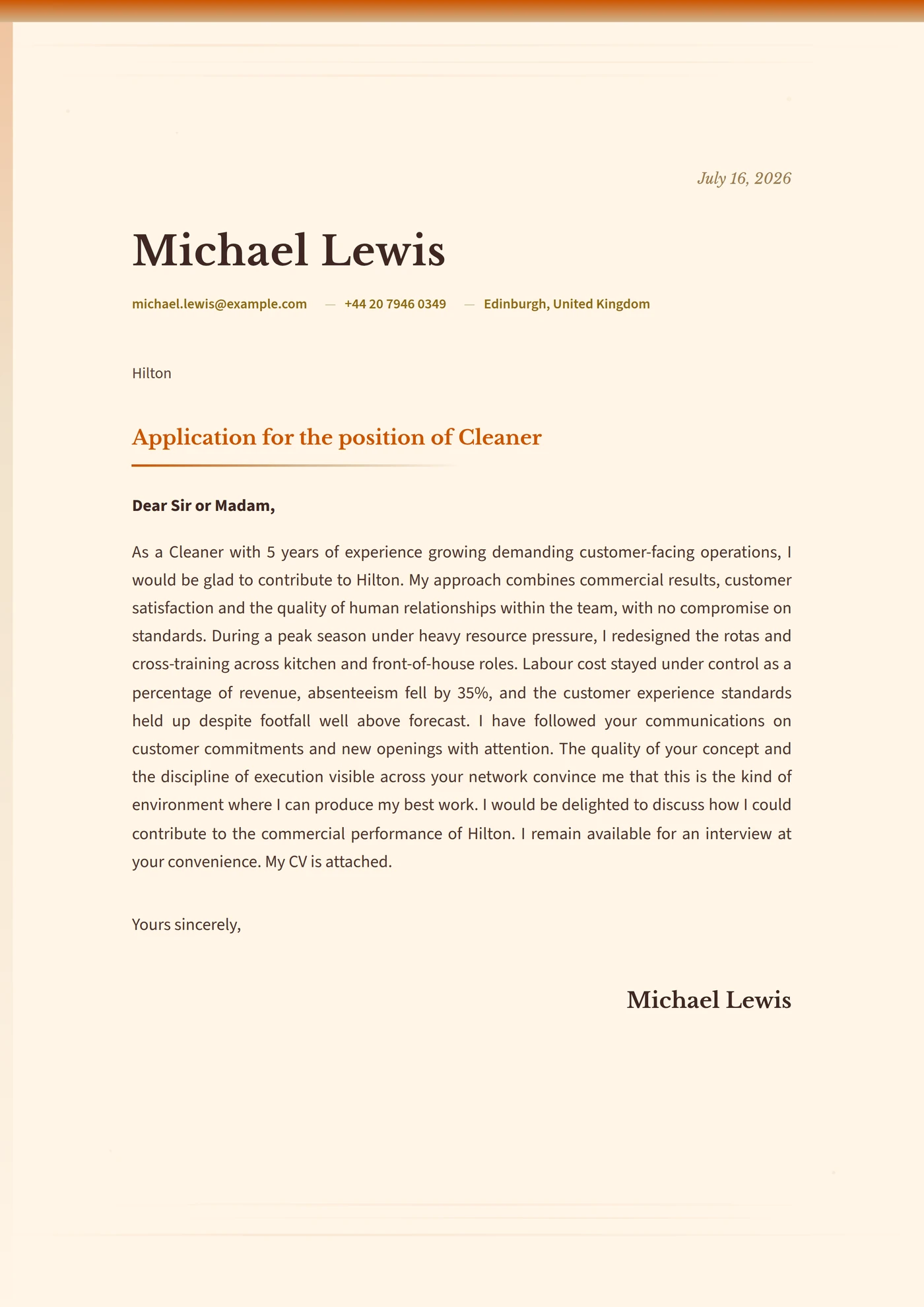
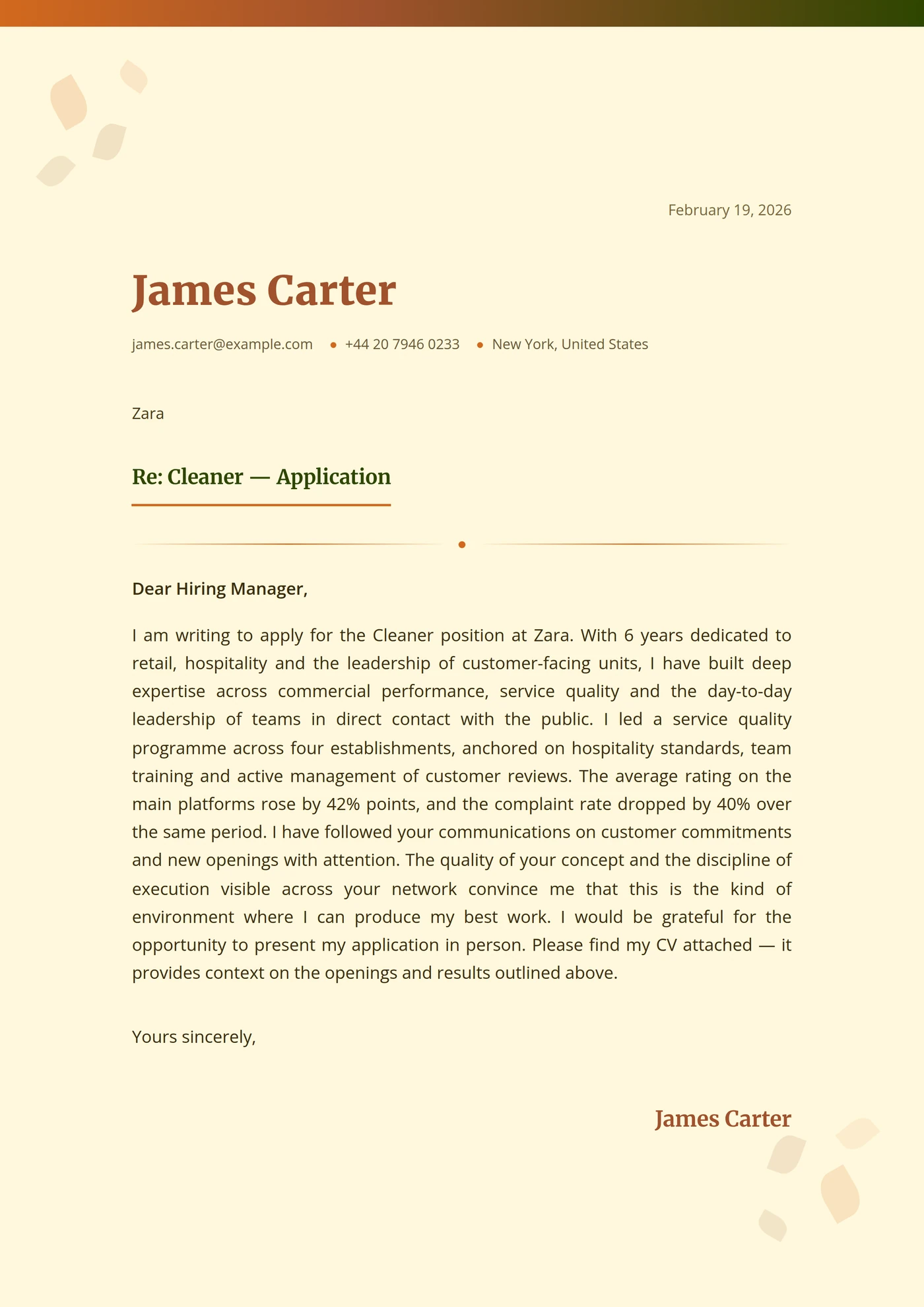
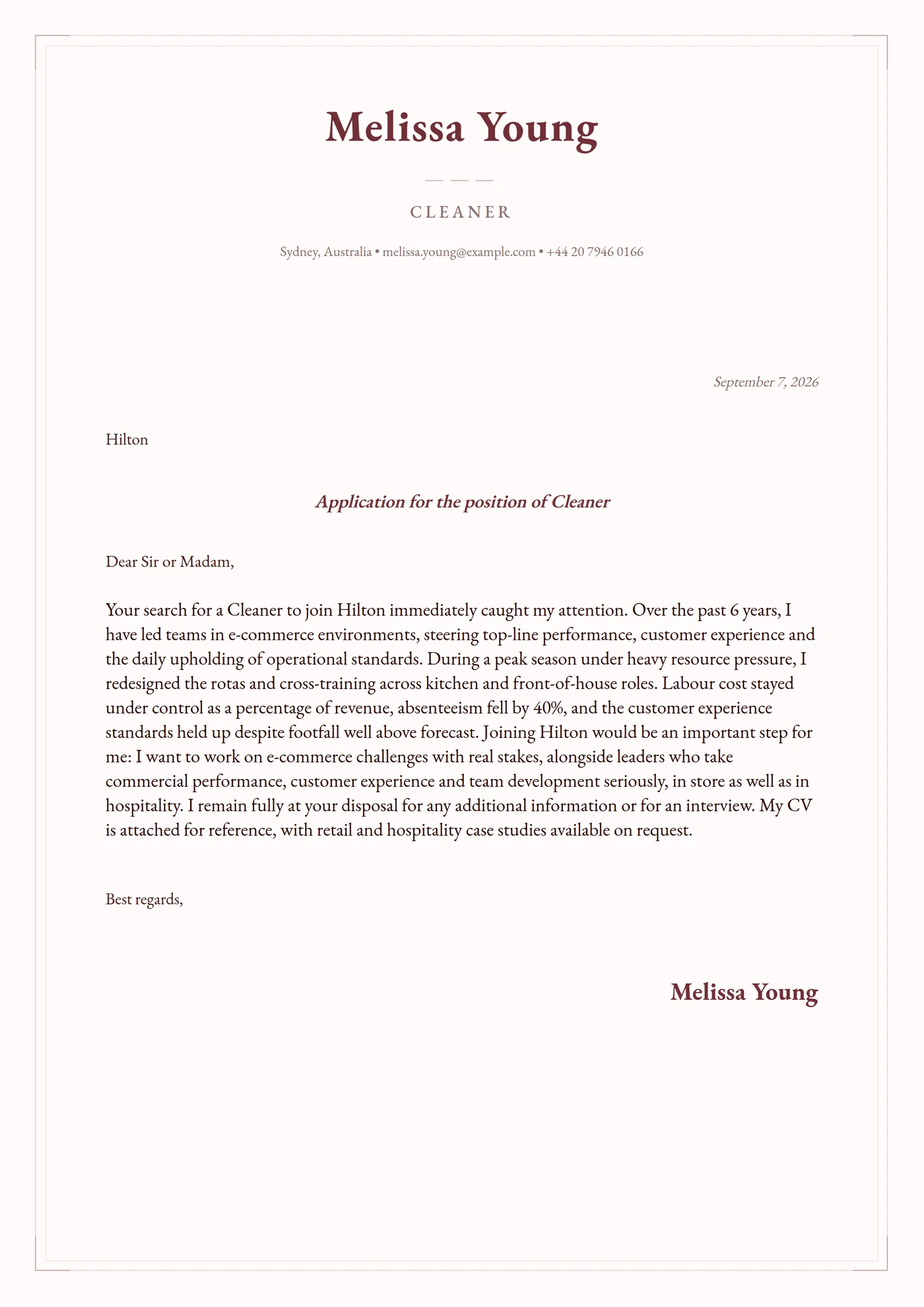
Three templates selected for this role, from junior to senior level. Tap a template to discover its full design and use it in your document.
How to Write a Cleaner Cover Letter
Address the letter to the hiring manager or facilities manager by name whenever possible. Open by naming the role, the workplace or employer, and one strong reason you fit, such as experience maintaining healthcare-grade hygiene or managing cleaning duties across a large office site. Avoid generic openings that only say you are applying because you need work. Instead, use the first few lines to establish reliability, relevant experience, and awareness of the employer’s environment, such as guest-facing hospitality, school sanitation, or commercial cleaning standards.
Use two or three paragraphs after the opening. In the first, match your practical experience to the job description: cleaning surfaces, restrooms, floors, waste areas, touchpoints, and shared spaces while following schedules and safety instructions. In the next paragraph, show outcomes rather than only tasks. Mention examples such as maintaining inspection-ready areas, completing assigned zones ahead of schedule, reducing supply waste, receiving positive feedback, or training colleagues on infection-control procedures. End the body by connecting your motivation to the employer’s needs. Show that you understand the importance of dependable service, respectful conduct around occupants, and consistent presentation of the facility, while avoiding unsupported claims or exaggerated achievements.
Close by expressing interest in discussing how you can support the employer’s cleaning standards and daily operations. Include a clear, polite call to action, confirm your availability for an interview, and thank the reader for their time. Use a professional sign-off such as Sincerely or Kind regards, followed by your name. Do not use overly casual language, make demands, or write that you will accept any job; keep the close focused on professional value and next steps.
Use a respectful, straightforward, and service-focused tone. Cleaner hiring managers generally value applicants who communicate dependability, care, discretion, and a practical understanding of safe cleaning work more than elaborate language. Choose active wording such as maintained, sanitized, inspected, replenished, reported, and followed. A slightly conversational style is appropriate for smaller employers, but keep spelling, grammar, and references to OSHA guidance or site procedures professional.
Skills to Mention in Your Cleaner Cover Letter
Common Mistakes
A generic letter says the same thing to every employer, such as claiming you are hardworking without proving it. Customize each letter by referring to the facility type, shift requirements, listed duties, and the cleaning standards mentioned in the job posting. Use one or two relevant examples that connect directly to the employer’s setting. This shows that you understand whether the role requires guest service, school hygiene, office upkeep, or infection-control awareness.
A Cleaner cover letter should usually stay within half a page to one page. Hiring managers often review many applications, so focus on the most relevant experience, skills, availability, and results. Cut repetition of resume details, long career histories, and unrelated personal information. Keep only examples that show you can clean safely, work reliably, and meet the site’s operational needs.
Listing duties alone, such as cleaned offices and emptied bins, does not show the quality or impact of your work. Quantify achievements where accurate, for example maintaining 20 rooms per shift, completing daily inspections, or helping reduce supply waste. If numbers are unavailable, describe observable results such as consistently passing supervisor checks, earning positive client feedback, or maintaining clean public areas during high-traffic periods. Strong evidence makes routine responsibilities more credible.
Use a readable font, consistent spacing, and a simple business-letter structure that fits on one page. Save the final document as a PDF unless the employer specifically requests another format. For email applications, use a clear subject line such as Cleaner Application – Your Name. Avoid tables, decorative graphics, tiny text, and file names such as final version, which can look unprofessional or confuse an ATS.
Frequently Asked Questions
A cover letter is not always required, but it can help you stand out when employers receive similar resumes. Use it to highlight reliability, relevant cleaning environments, shift availability, and knowledge of sanitation or safety procedures.
Aim for half a page to one page, usually around 250-350 words. Include only the experience and examples that directly support the cleaning role you want.
Yes, you should tailor the letter for each position, especially when the workplace type or duties differ. Match your examples and keywords to the posting, such as commercial cleaning, school sanitation, floor care, or PPE compliance.
In the US, cover letters are often optional but useful for competitive roles or direct applications. In the UK and many EU markets, employers may expect a brief supporting statement or cover letter, particularly for contract, hospitality, healthcare, and public-sector cleaning positions.
You can use AI to create a first draft, organize your experience, and identify relevant ATS keywords. However, you should personalize the final version with truthful details about your cleaning duties, achievements, availability, and the employer’s specific site.
Use a simple business-letter format with your contact details, the employer’s details when available, a personalized greeting, short paragraphs, and a professional sign-off. Submit a PDF with a clear filename unless the application portal requests a .docx file.
Related Job Titles
Explore more about