
When You Need a Cover Letter for Porter
Use a cover letter when applying for a Porter role to connect your reliability, customer service, and safety awareness to the specific workplace. It adds context beyond a resume by showing how you will support clean, safe, and welcoming operations for guests, patients, residents, or staff.
A Porter internship cover letter should emphasize your willingness to learn, dependable attendance, and ability to follow health and safety procedures. When experience is limited, draw on school, volunteer work, part-time jobs, or team activities that demonstrate responsibility and service.
When moving into a Porter position from another field, focus on transferable strengths such as customer support, cleaning standards, stock handling, or working on your feet. Clearly explain how your previous experience prepares you to deliver safe and efficient daily service in a fast-paced environment.
For an internal Porter promotion, use a confident and respectful tone that recognizes your current employer and team. Highlight your record of dependable performance, knowledge of site procedures, and examples of supporting colleagues or improving daily operations.
Recommended templates for Porter
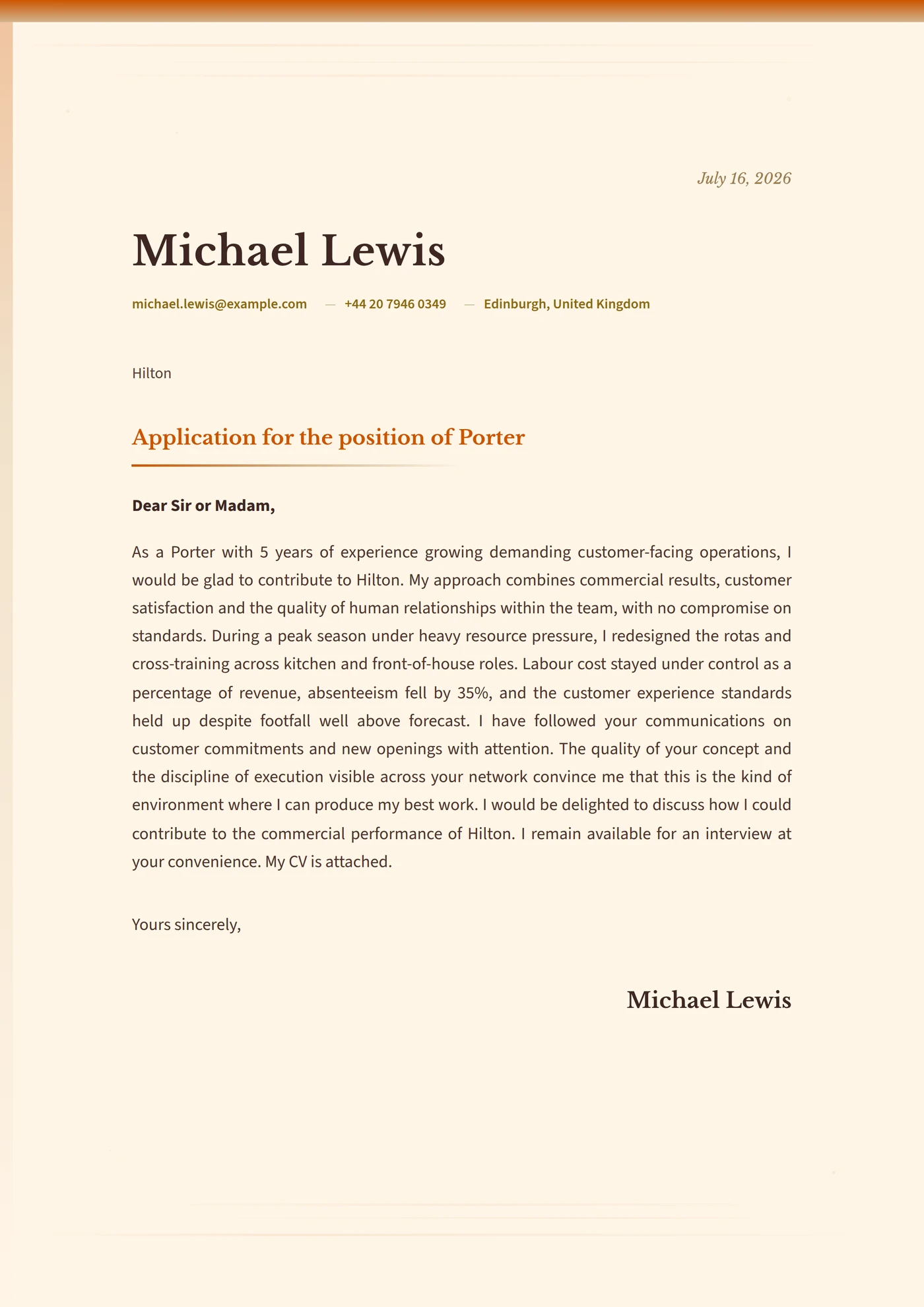
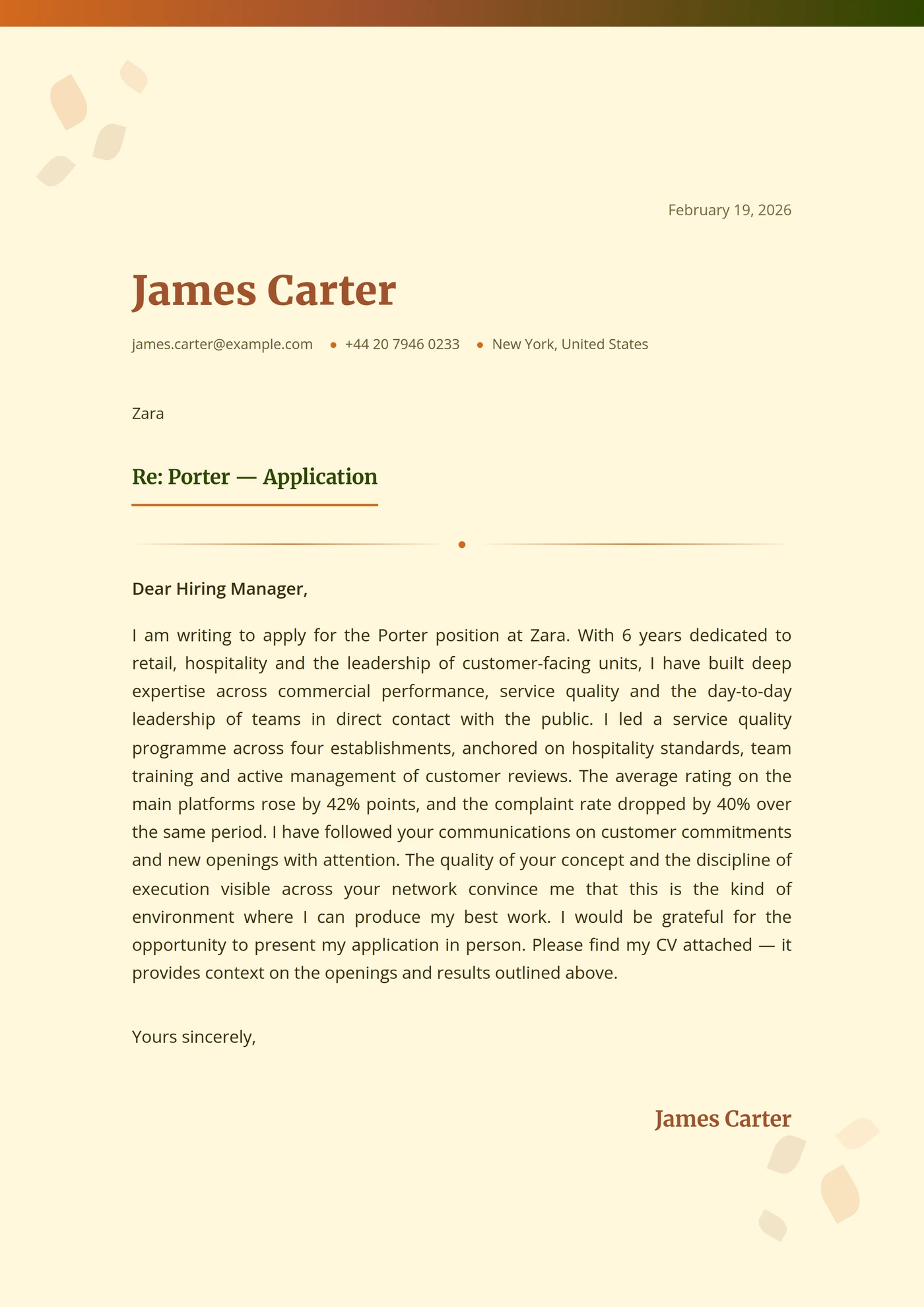
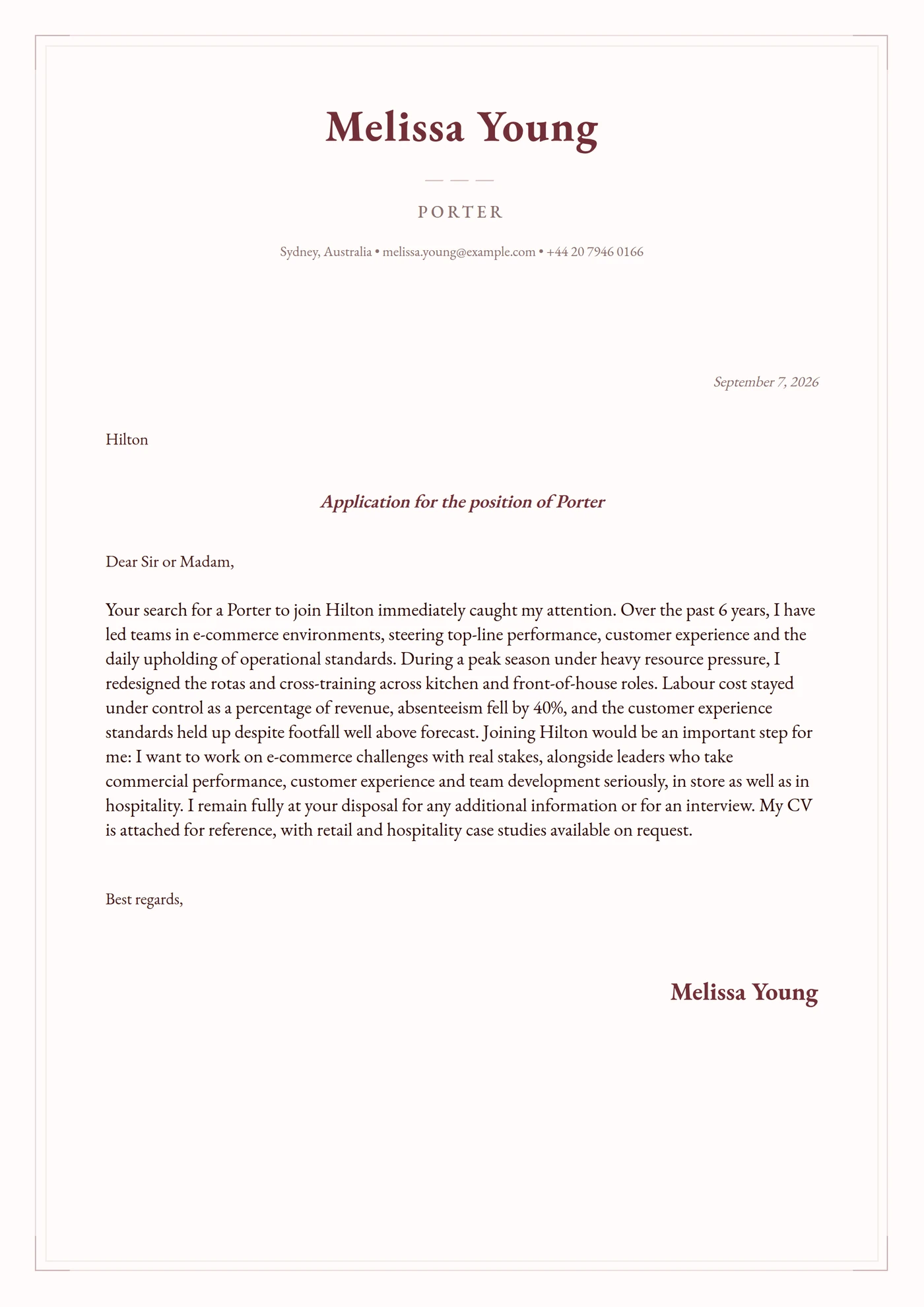
Three templates selected for this role, from junior to senior level. Tap a template to discover its full design and use it in your document.
How to Write a Porter Cover Letter
Address the hiring manager by name whenever possible, such as the Facilities Manager, Housekeeping Manager, or Guest Services Manager. Open by naming the role and stating a specific reason you are interested in supporting that organization’s service and cleanliness standards. A strong first sentence refers to the workplace, shift requirements, or type of environment, such as a hotel, hospital, residential building, or transport hub. Avoid generic openings that only say you are applying because you need work; instead, immediately show relevant value and dependable motivation.
Use two or three short paragraphs for the body. In the first, match your experience to the job requirements, including moving supplies, maintaining public areas, assisting visitors, handling deliveries, or following sanitation procedures. In the next paragraph, give one or two concrete examples of results, such as helping maintain clean common spaces during busy periods, responding quickly to guest requests, or completing tasks while following OSHA and site safety rules. End the body by explaining why the employer’s environment and standards appeal to you, balancing practical capability with genuine interest.
Close by reaffirming your interest and inviting an interview to discuss how you can contribute to safe, orderly operations. Use a direct call to action such as expressing that you welcome the opportunity to discuss your availability and qualifications. Thank the reader for their time and use a professional sign-off such as Sincerely or Kind regards. Do not sound demanding, repeat your full resume, or make unsupported claims about being the best candidate.
Use a respectful, practical, and service-oriented tone. Porter employers value applicants who sound dependable, safety-conscious, and approachable rather than overly formal or overly casual. Choose clear action language that demonstrates accountability, such as maintained, assisted, inspected, transported, responded, and followed. Keep the focus on how your work helps customers, residents, patients, guests, and colleagues experience a well-run facility.
Skills to Mention in Your Porter Cover Letter
Common Mistakes
A generic letter says the same thing for every employer and does not mention the facility type, service standards, or job requirements. Customize the opening with the employer’s needs and connect your experience to its guests, residents, patients, or operations.
Keep a Porter cover letter to one page and typically around 250-400 words. Cut unrelated work history, repeated skills, and long personal background details so the reader can quickly identify your fit.
Listing duties alone can make your letter sound like a job description rather than evidence of performance. Quantify every achievement where possible, such as supporting a busy shift, maintaining multiple floors, reducing supply shortages, or completing tasks on time.
Use a readable font, consistent spacing, and short paragraphs that are easy to scan on a phone or computer. Submit a PDF unless the employer requests another format, and use a clear email subject line that includes the Porter role and your name.
Frequently Asked Questions
A cover letter is not always required, but it can help you stand out when several applicants have similar hands-on experience. It is especially useful for showing reliability, shift flexibility, and awareness of the employer’s service expectations.
Aim for one page with concise, relevant content, generally between 250-400 words. Focus on the experience and skills most closely connected to cleaning, safety, customer assistance, and facility support.
Yes, tailor each letter to the specific work setting and job description. Mirror keywords from the posting, such as sanitation, guest service, deliveries, public areas, or safety procedures, when they accurately describe your background.
In the US, cover letters are often optional but can strengthen applications for competitive hospitality, healthcare, and facilities roles. In the UK and many EU markets, expectations vary by employer, so submit one when requested and use it when you need to explain experience, availability, or a career transition.
You can use AI to create a first draft or organize your relevant experience, but you should verify every detail before sending it. Personalize the final version with real examples, the employer’s name, and your own voice to avoid vague or inaccurate claims.
Use a standard business-letter format with your contact details, the date, the employer’s details, a personalized greeting, and a concise closing. Save it as a PDF to preserve formatting unless the application system specifically requests a .docx file.
Related Job Titles
Explore more about