
When You Need a Cover Letter for Server
A cover letter for a Server role lets you show personality, warmth, and customer-service instincts that a resume alone cannot convey. Restaurants hire for fit as much as skill, so a short letter proving you understand their pace, menu style, or guest experience can set you apart from equally qualified candidates.
For an entry-level or training-style Server position, the cover letter should lean on transferable experience — school, retail, volunteering, or teamwork roles — rather than restaurant history. Emphasize reliability, willingness to learn fast, availability for shifts, and genuine enthusiasm for hospitality.
When moving into serving from an unrelated field, frame skills like multitasking, cash handling, conflict resolution, and working under pressure as directly transferable. Explain briefly why you are drawn to hospitality now, and reassure the manager you understand the physical and social demands of the floor.
For an internal move — such as server to shift lead or trainer — the tone should be confident and specific, citing tenure, guest feedback, and measurable contributions like upsell numbers or training new hires. Focus on leadership readiness and knowledge of house standards rather than basic serving duties.
Recommended templates for Server
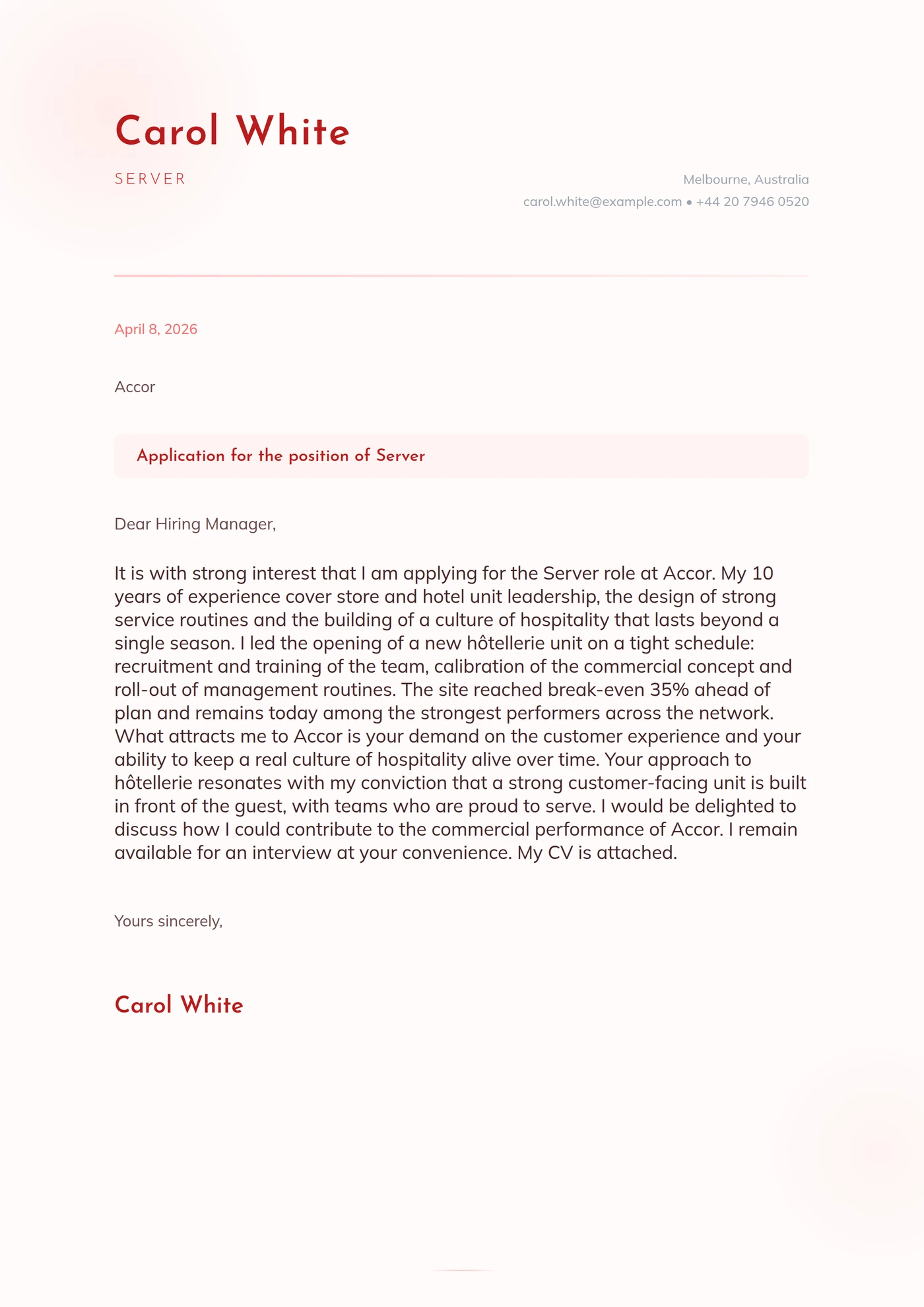
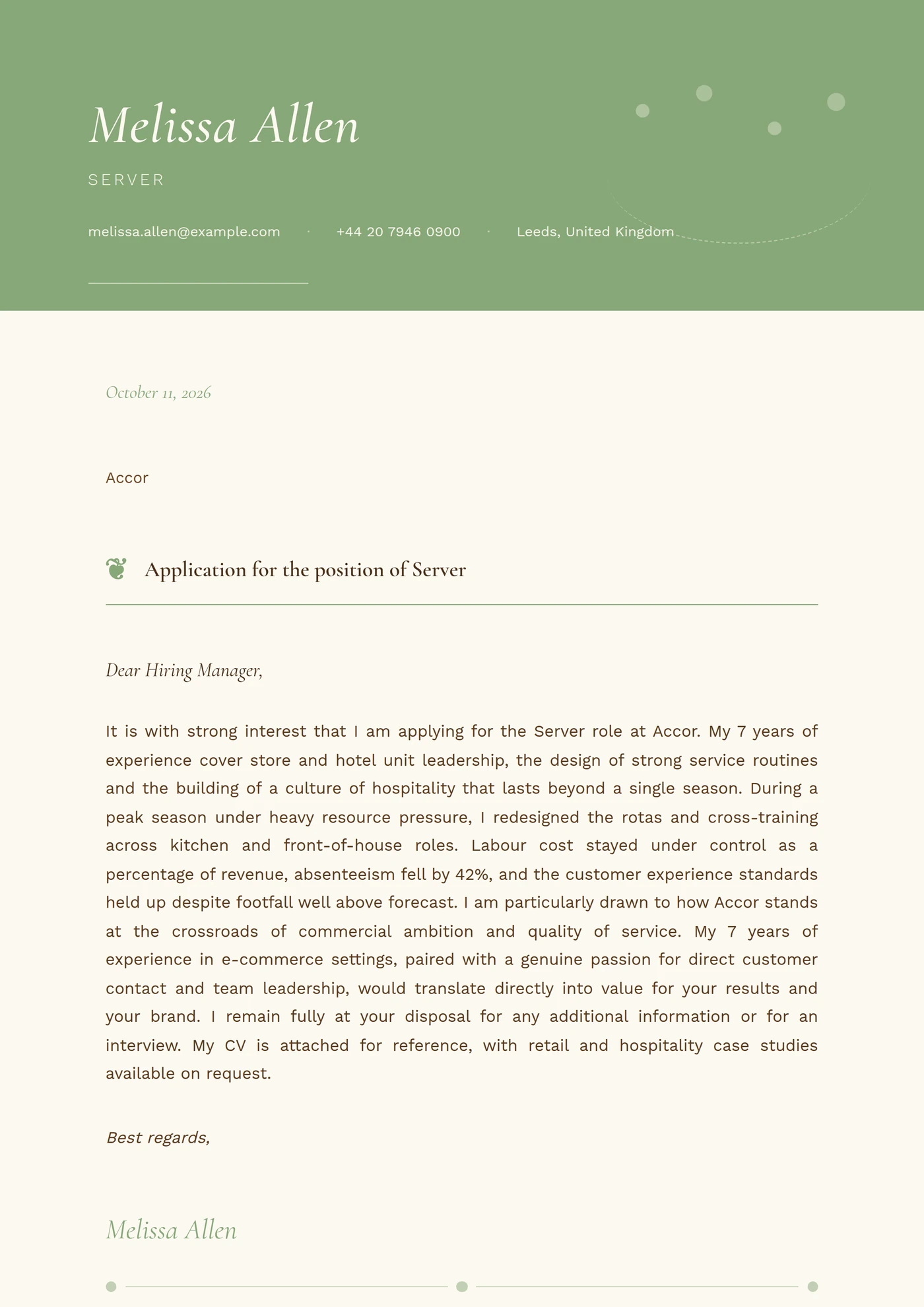
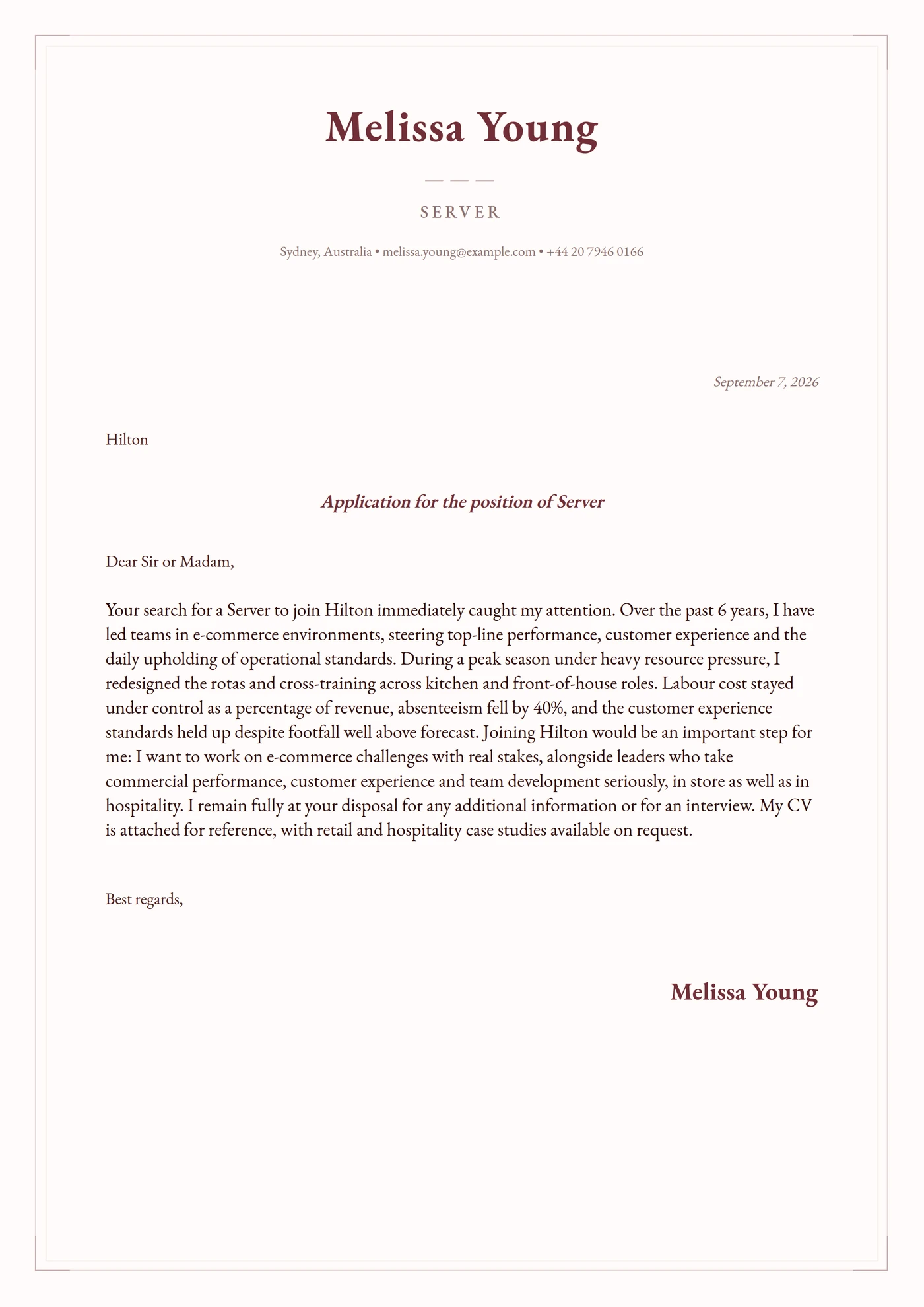
Three templates selected for this role, from junior to senior level. Tap a template to discover its full design and use it in your document.
How to Write a Server Cover Letter
Open with a specific, energetic sentence that names the restaurant and the exact role — avoid generic lines like ‘I am writing to apply for the position of Server.’ Instead, reference something concrete: the restaurant's concept, reputation, or a shared value like fast-paced fine dining or family-style hospitality. Whenever possible, address the letter to the actual hiring manager or restaurant owner by name rather than ‘Dear Hiring Manager.’ A personalized greeting signals that you researched the business and are not mass-sending applications. Mention your years of experience or a standout qualification in the first two sentences, such as 3 years in high-volume dining or a strong record of guest satisfaction, so the reader immediately sees relevance.
Keep the body to two to three short paragraphs. The first should connect your experience (or transferable skills) directly to the restaurant's service style — fine dining, casual, high-volume, or fast-casual. The second should include one or two specific achievements, such as increasing average check size, maintaining a 95%+ guest satisfaction rating, or training new staff. Balance hard skills like POS systems, menu knowledge, and food safety certification with soft skills like teamwork, composure under pressure, and warmth with guests. Avoid simply repeating your resume; instead, tell a brief story or example that shows how you handled a busy shift or turned around a difficult table. Close the body by explaining your motivation for wanting to work at this specific restaurant — whether it is their menu, values, or reputation — to show genuine interest rather than a generic job search.
End with a confident, polite call to action, such as expressing eagerness to discuss availability for an interview or trial shift. Reiterate one key strength briefly and thank the reader for their time and consideration. Avoid overly casual sign-offs like ‘Thanks!’ or overly stiff corporate language; a simple Sincerely or Best regards followed by your name works well for hospitality roles.
The tone should be warm, personable, and confident, mirroring the friendly professionalism expected on a restaurant floor. Avoid overly corporate or stiff language — hospitality hiring managers respond well to genuine enthusiasm and clear communication. Still, maintain professional grammar and structure; sloppy writing suggests carelessness, which is a red flag for a guest-facing role. Show energy and reliability without sounding overly casual or using slang.
Skills to Mention in Your Server Cover Letter
Common Mistakes
A generic cover letter that could apply to any restaurant — without mentioning the specific establishment, its service style, or menu — signals low genuine interest. Fix this by referencing something concrete about the restaurant, such as its concept, hours, or reputation, to show you actually researched the job.
A Server cover letter should stay under 250-300 words and fit on a single page; hiring managers reviewing dozens of applications will skim, not read, long letters. Cut background unrelated to service, teamwork, or customer interaction, and keep sentences short and direct.
Simply listing duties like ‘took orders’ or ‘cleared tables’ fails to differentiate you from other applicants. Reframe with results, such as increased average check size by 10% through upselling, or consistently received 5-star guest reviews, to show measurable impact.
Avoid unusual fonts, colorful graphics, or overly casual formatting that look unprofessional; stick to a clean, readable font and standard business letter structure. Submit as a PDF unless the application explicitly requests a .docx file, and never leave a placeholder subject line like ‘Cover Letter’ without the role and your name.
Frequently Asked Questions
While some restaurants only require a resume, including a short cover letter can help you stand out, especially for competitive or upscale venues. It shows initiative and gives you a chance to convey personality and genuine interest that a resume alone cannot.
Keep it to half a page to one page, roughly 150-300 words. Hiring managers in hospitality want a quick, engaging read, not a lengthy essay.
Yes — even small changes like the restaurant's name, service style, and a specific reason you want to work there make a big difference. A tailored letter shows genuine interest rather than a mass application.
In the US, a cover letter is often optional but appreciated, especially for higher-end restaurants. In the UK and much of the EU, a brief cover note or email introduction is more commonly expected alongside the CV, even for hospitality roles.
AI tools can help you structure ideas or fix grammar, but the final letter should reflect your own voice and specific experience. Always personalize AI-generated drafts with real details about your background and the restaurant to avoid sounding generic.
A clean, single-page PDF with a standard font is the safest choice unless the employer specifies otherwise. Avoid graphics-heavy templates that might not display correctly across devices or applicant tracking systems.
Related Job Titles
Explore more about