About this template
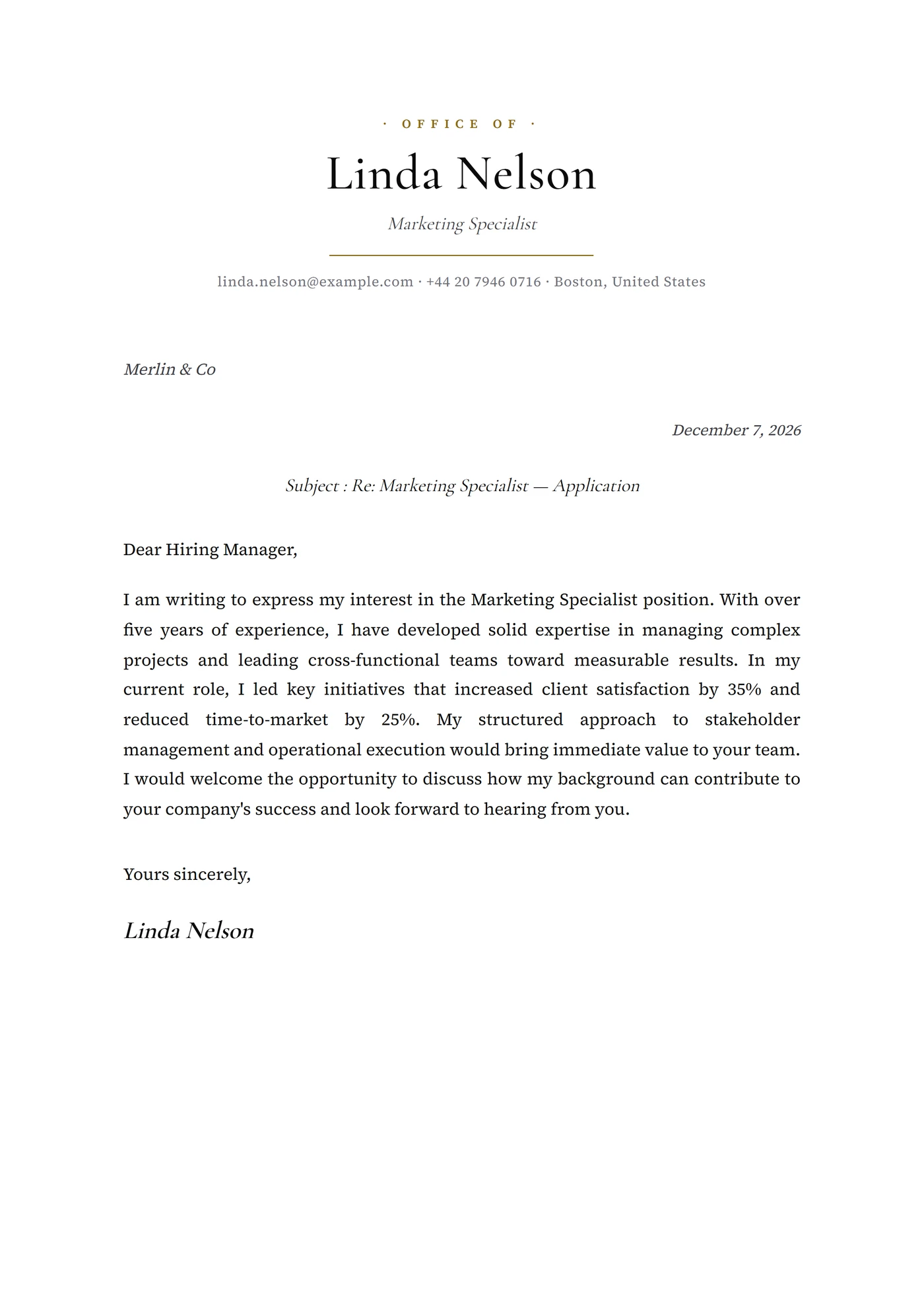
The Imperial template is a senior letter in midnight purple and brushed silver: Trajan small-caps name centred, Centaur body, thin silver underline. The colour pair evokes state ceremony rather than corporate advisory. Compatible with the HR and document-management systems used by diplomatic corps and ceremonial institutions (SAP HR at the Foreign Office, Oracle HCM at the State Department, HR-Access at royal foundations).
Who is it for?
It suits senior executives applying to royal courts, sovereign-wealth-fund boards (ADIA, Mubadala, GIC Singapore, NBIM Norway), diplomatic appointments (ambassadors, cultural attachés) and ceremonial cultural institutions (Royal Society, American Academy of Arts and Sciences, Académie Royale de Belgique). Senior diplomats, board candidates, foundation presidents and chiefs of protocol. Out of place in tech, fast commercial sectors or start-up contexts.
How to use it
The centred Trajan small-caps name follows the convention of official invitation cards — resist any urge to bold it. The Centaur body has a Renaissance drawing that demands wide margins (35 mm minimum). The opening hook uses a full courtesy formula ("Your Excellency", "Ambassador") and only mentions the role in the second paragraph. The silver underline must never cross a handwritten signature — leave it its own line at the bottom of the signature block.
Frequently asked questions
Should I list my honorific titles on this letter?
Yes — Knight Bachelor, OBE, CBE, Légion d'Honneur, Order of the British Empire — in the signature block, abbreviated (KBE, OBE, CBE). These titles are verified in official directories by chiefs of protocol before the interview is granted.
Is the letter suitable for a UN or OECD application?
Yes for D1-D2 roles, Special Adviser positions and Special Adviser to the Secretary-General appointments. For more operational P3-P4 grade roles, choose letter-exec-meridian, which replaces the ceremonial code with a technocratic geometry.
Is it suitable for Gulf sovereign-wealth funds?
Yes for ADIA, Mubadala, QIA, PIF — which appreciate the ceremonial register in senior correspondence. Have the letter translated to Arabic by a sworn translator for the official version; keep the English version for the diplomatic channel (UK Foreign Office, US State Department, Quai d'Orsay).