About this template
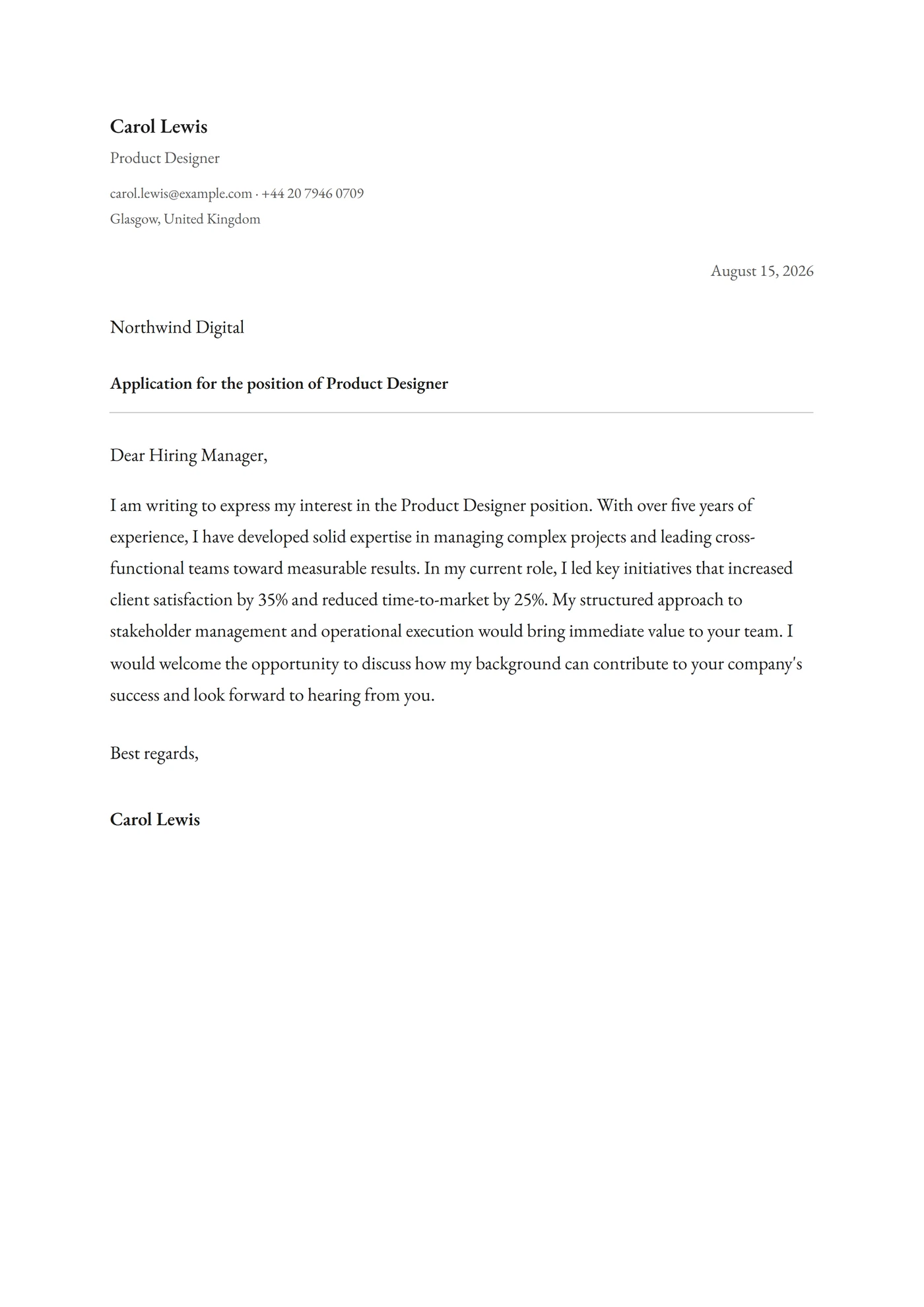
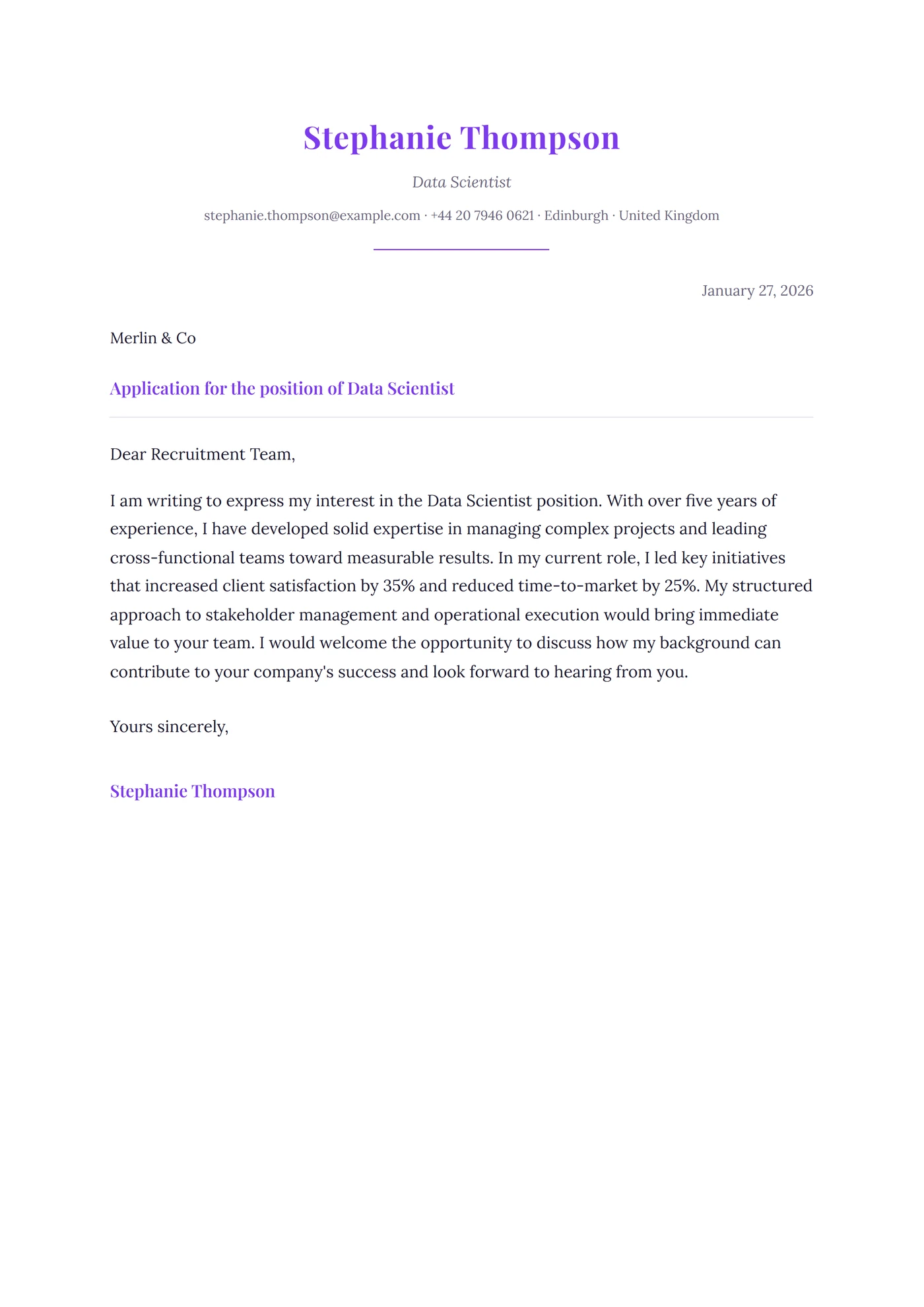
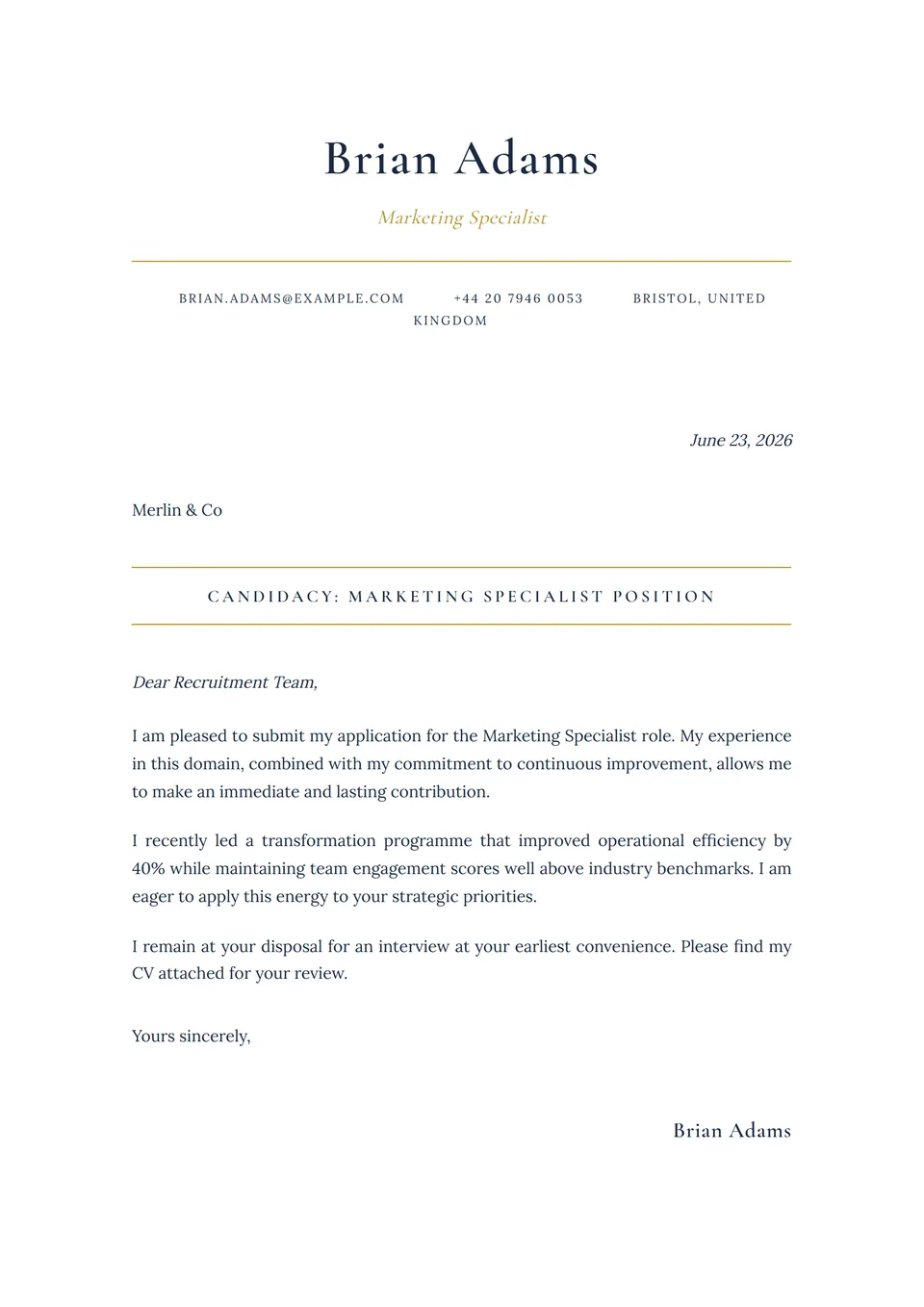
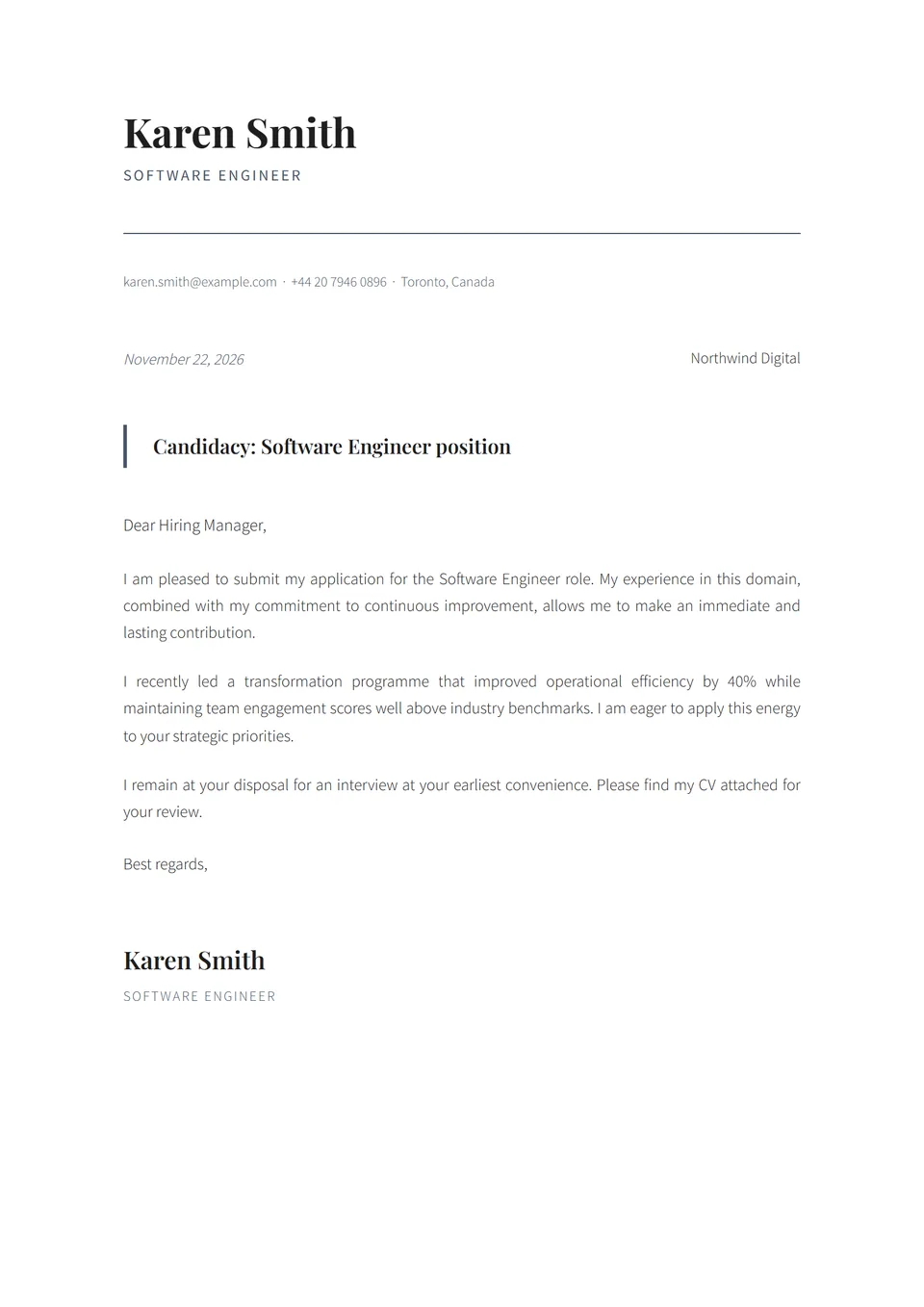
The Private Equity template is a professional cover letter in Source Serif with a deep navy and gold deal-tombstone block at the top: fund name, sector, vintage, multiple. The body stays in tight serif, no decoration — built around a single deal credential rather than a long story. The format echoes the closing announcements published in Mergermarket, PitchBook News and the Wall Street Journal Pro PE. Compatible with the ATS at PE funds (Workday at KKR, Lever at Blackstone, Greenhouse at Apollo Global Management, SmartRecruiters at Carlyle Group) and at family offices (the Rockefeller, Pritzker and Hilton family offices recruiting via private executive search).
Who is it for?
It fits PE associates, principals, partners and investment directors, as well as ex-M&A bankers crossing to the buy-side. Profiles whose deal track record speaks louder than any cover-letter prose — they have signed on the Heinz-Kraft merger, the Refinitiv take-private, the Athenahealth secondary — and who want the visual format itself to signal the league they play in. Equally pertinent for venture-growth profiles (TPG Growth, General Atlantic, Insight Partners Growth) who adopt the traditional PE codes.
How to use it
The deal tombstone at the top must cite a single deal — the one defining your current seniority, not your best-ever deal. Format: "Project Alpha / Industrials / 2024 / 3.2x MoIC." The letter body, in four short paragraphs, articulates investment thesis, personal contribution, lesson learned and angle for the target fund. Avoid superlatives: the sector prefers an average deal well described to ten stacked deals without context. Mention your current carry (vesting status) only if you are applying for a partner role where carry dilution is negotiated.
Frequently asked questions
Should I mention carry and transition terms?
At partner and investment director level, yes — it is what the selection committee wants to know. Mention soberly the vesting status ("carry 60% vested on Fund IV"), your contractual availability ("six-month non-compete on core sector of current fund") and the possibility of a partial roll-over on live deals. At associate level, it is unnecessary: your letter rests on the cited deal, not on the terms.
How do I describe a deal that went wrong (write-off, disappointing return)?
Mention it soberly in the body ("Project Beta / Tech / 2021 / 0.7x MoIC, partial exit under covenant pressure"), followed by the lesson retained. PE funds value the capacity to diagnose a failure more than the image of an unblemished track record. Lying about a MoIC is verified in five minutes via PitchBook or Preqin — any approximation detected burns you across the entire community.
Does the format work for a foreign-fund application (KKR Hong Kong, Carlyle London)?
Yes, without structural change. The deal-tombstone codes are international: a KKR Hong Kong partner or a Carlyle London MD reads the format immediately. Adapt only the language (business English) and the deal-naming conventions according to whether you are applying for LBO mid-cap, growth or infrastructure practice. For US megafunds (KKR, Apollo, Blackstone), letter-prof-private-equity remains more accurate than letter-prof-due-diligence.