About this template
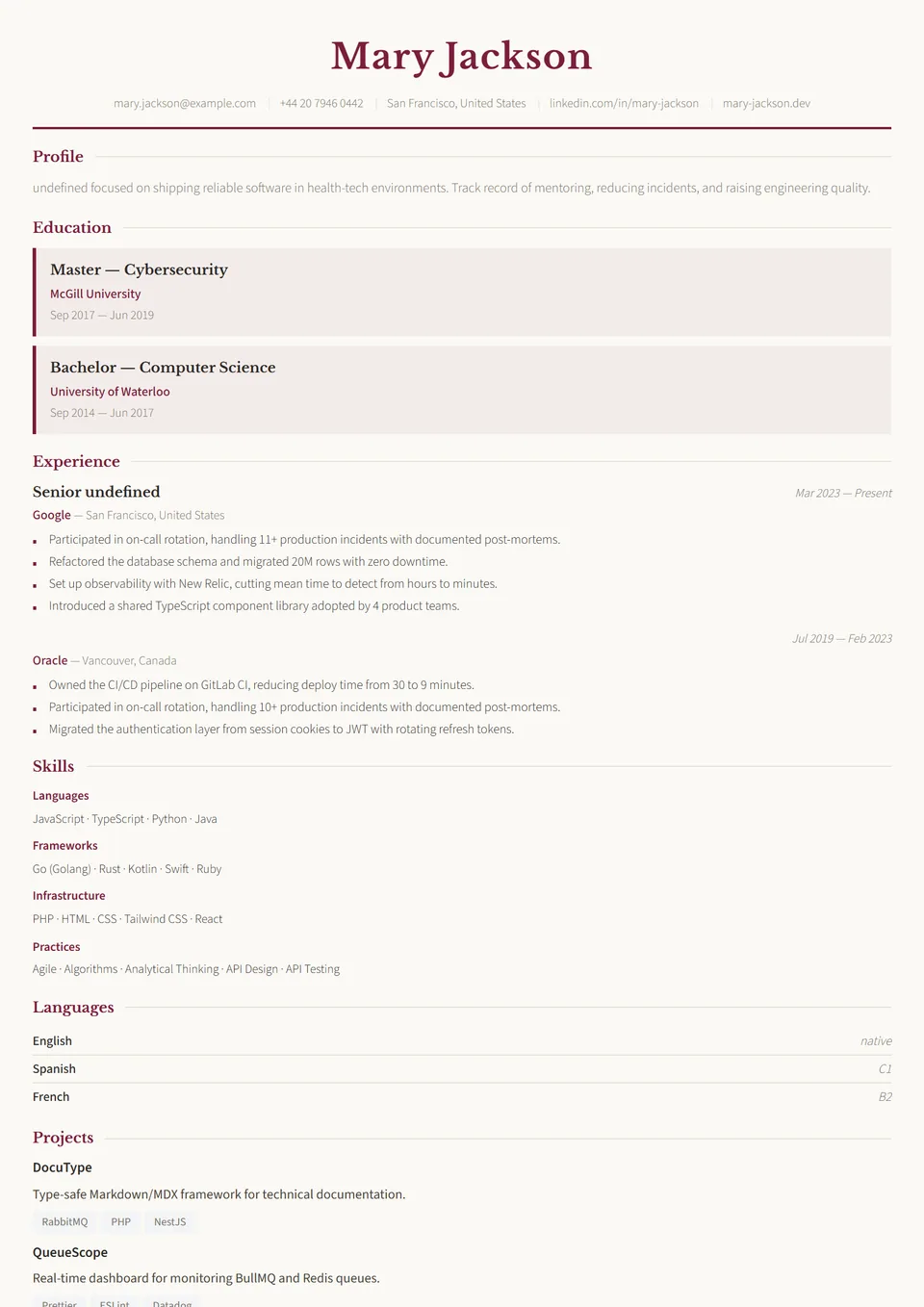
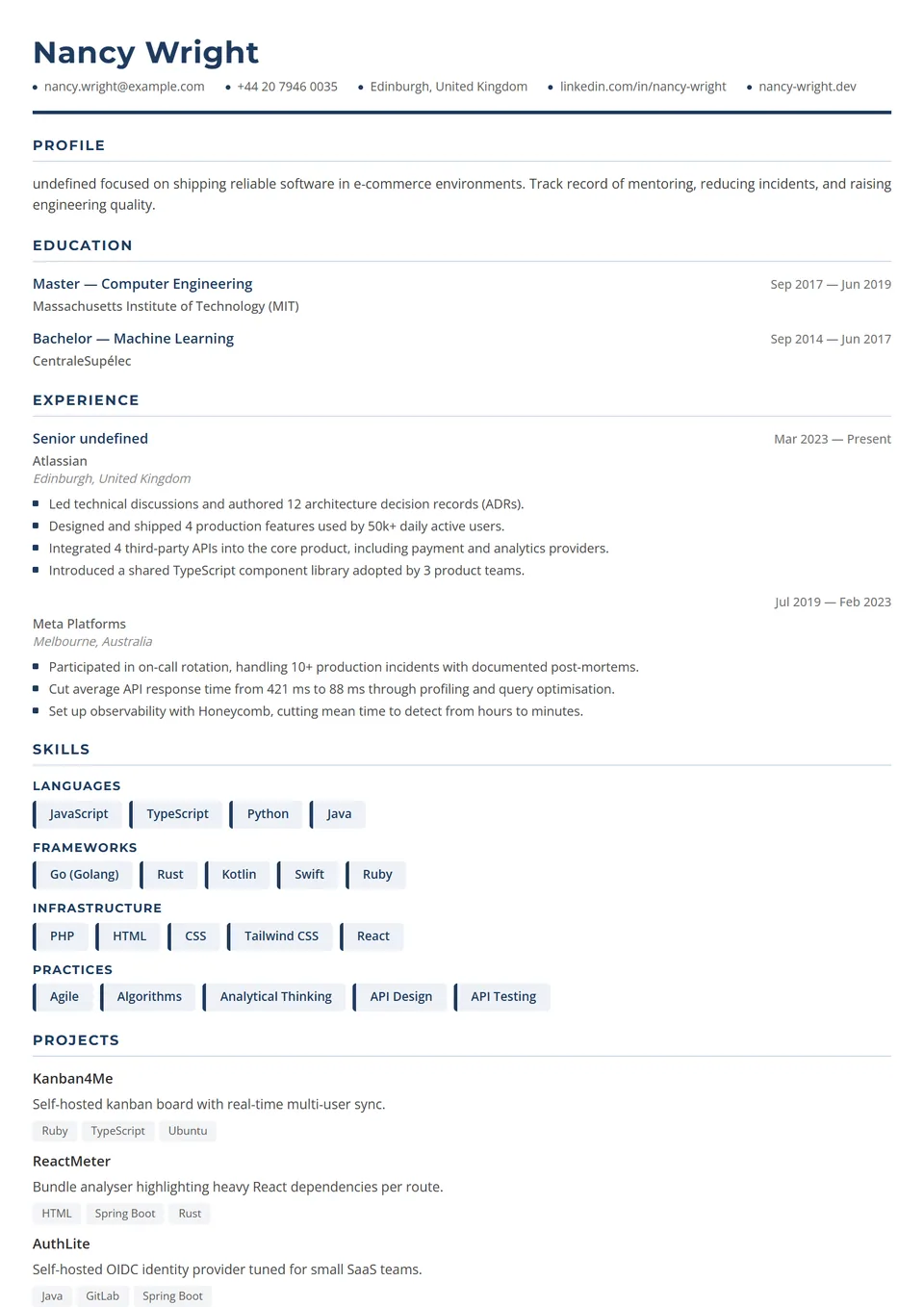
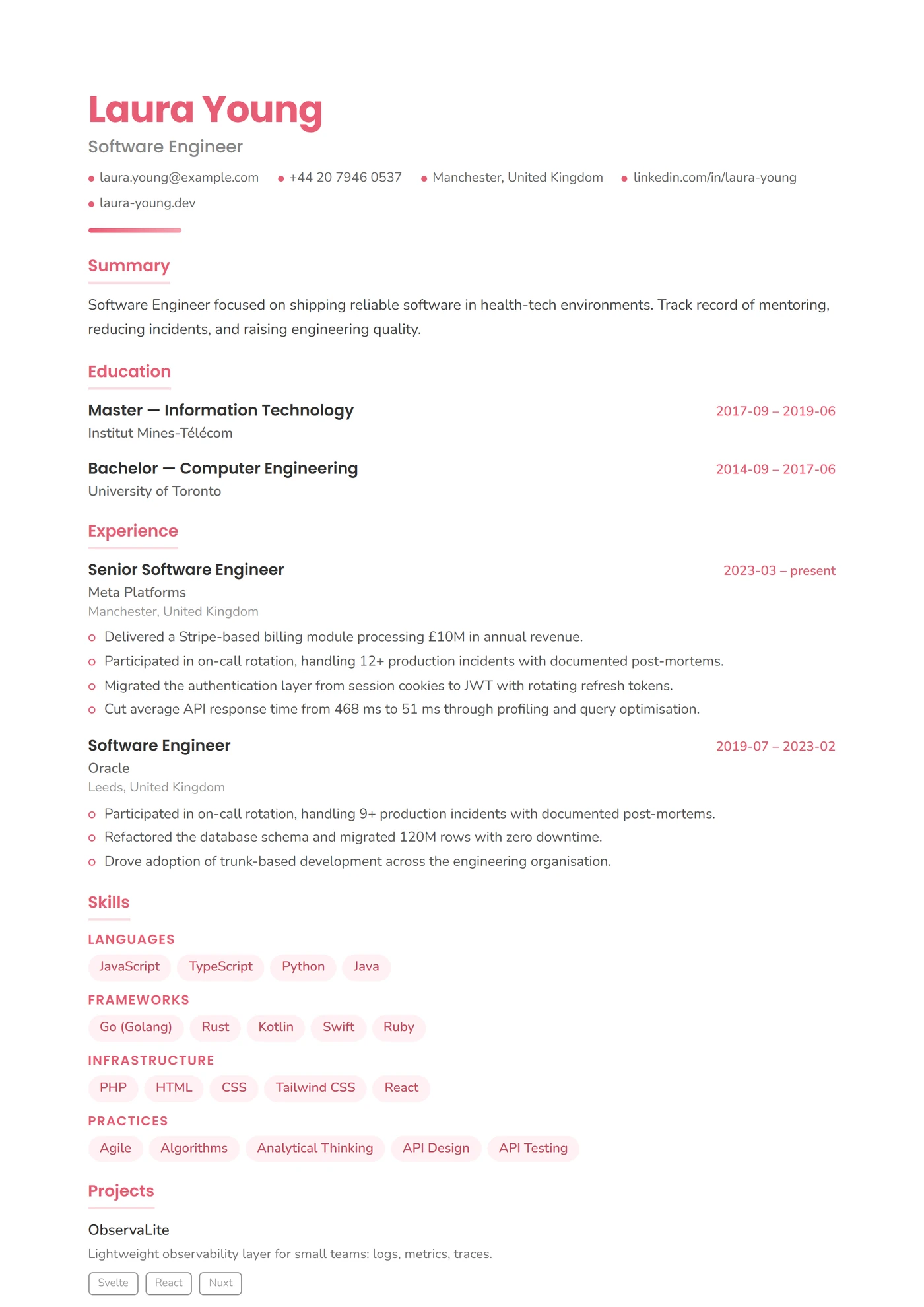
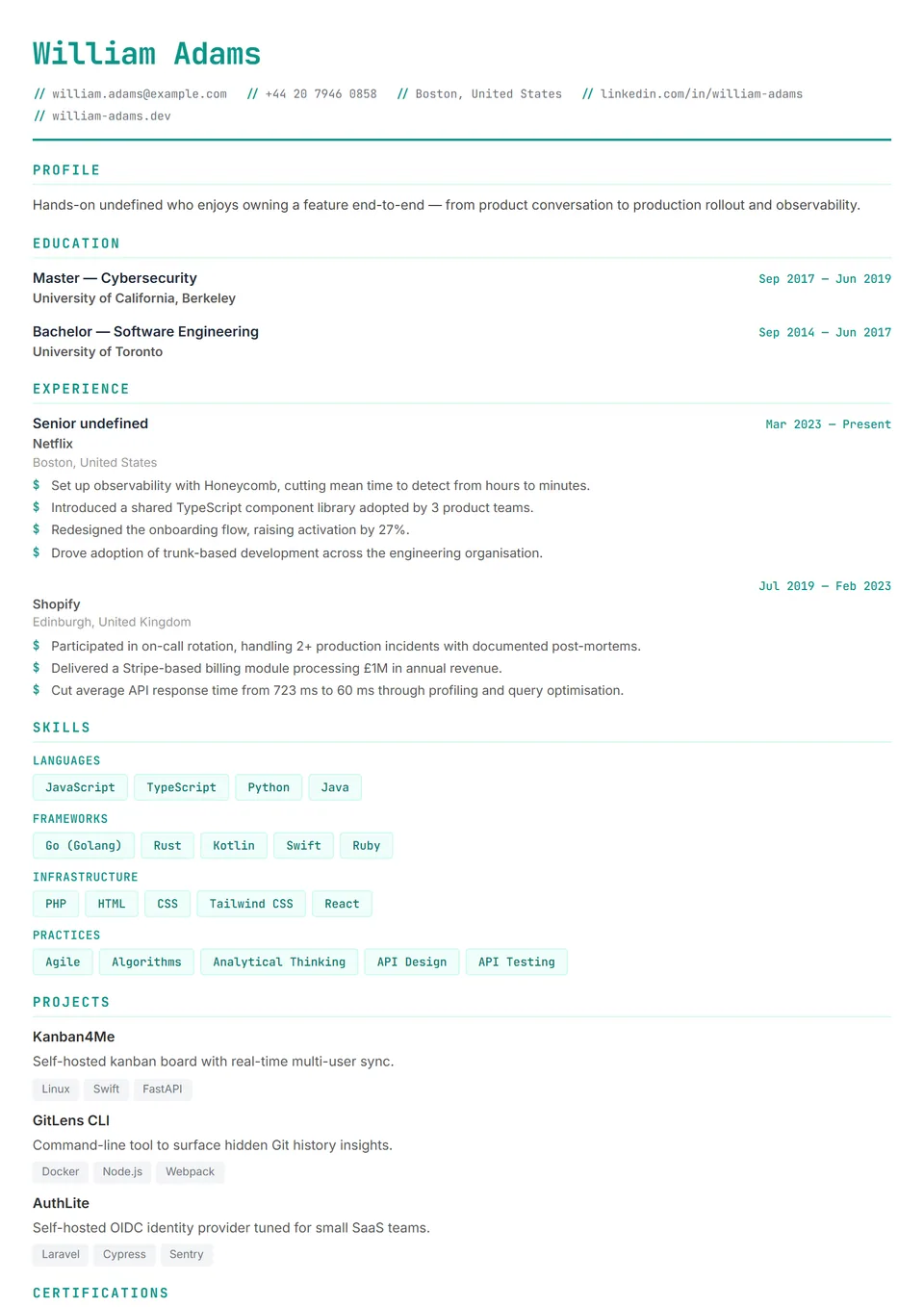
The Environmental Science template is an academic CV calibrated for researchers in climate science, ecology, soil science and environmental policy. Its DM Sans typography and forest-green accent signal scientific rigour without sliding into eco-marketing aesthetics. The layout handles technical Unicode characters (CO₂, pH, °C, μg/m³) natively and parses cleanly through the ATS of major NGOs (WWF, IUCN, GRID-Arendal), public research institutes (NOAA, Met Office, INRAE, Helmholtz Centre for Environmental Research, Stockholm Resilience Centre) and university recruitment platforms.
Who is it for?
It suits climate scientists and ecologists in tenure-track applications at R1 universities or Russell Group institutions, Marie Skłodowska-Curie postdocs in environmental sciences, IPCC and IPBES Lead Authors and Contributing Authors, research engineers stationed at long-term observatories, and environmental-policy experts moving into academic chairs. Also fits applications to joint research units pairing universities with national research bodies (US LTER Network, UK NERC centres, French INRAE-CIRAD units).
How to use it
Five blocks structure the document — Research (thematic axes aligned with the host lab), Field campaigns (with geolocation and duration), Publications, Contributions to assessment reports (IPCC AR6, IPBES Global Assessment, US National Climate Assessment), Doctoral supervision. List sampling methodology and observation frequency for long-term field sites. Useful long-tail SEO: 'climate scientist CV template', 'environmental research PhD resume', 'IPCC Lead Author CV', 'ecology postdoc tenure-track CV', 'environmental policy academic CV NERC'.
Frequently asked questions
How do I list an IPCC report contribution?
State the assessment cycle (AR5, AR6, AR7), the working group (WGI, WGII, WGIII), the chapter, and your exact role (Lead Author, Contributing Author, Review Editor). Lead Author status remains the most valued by tenure committees and REF panels. For IPBES, apply the same granularity with the chapter title and the assessment in question. Add a stable URL to the official summary once the report is published.
Should I geolocate field campaigns?
Yes for international search committees and for NSF/NERC/ERC grant applications. State the site (Long-Term Ecological Research network station, Mauna Loa Observatory, Concordia Antarctica, ZA Pyrénées), approximate GPS coordinates for lesser-known sites, and stay duration. This lets evaluators gauge the breadth of environments observed and the logistical robustness of your profile — both of which committees weigh more than is often acknowledged.
How do I present IPCC or IPBES expertise without overstating engagement?
Use a dedicated 'Institutional expertise and policy contributions' block for missions with the IPCC, IPBES, NCA, Climate Change Committee or Royal Society. Distinguish scientific missions (chapter authorship, peer review) from outreach missions (parliamentary hearings, media interviews). REF panels and tenure committees count the former as scholarly contribution and the latter as impact and esteem — the layout makes that distinction legible at a glance.