About this template
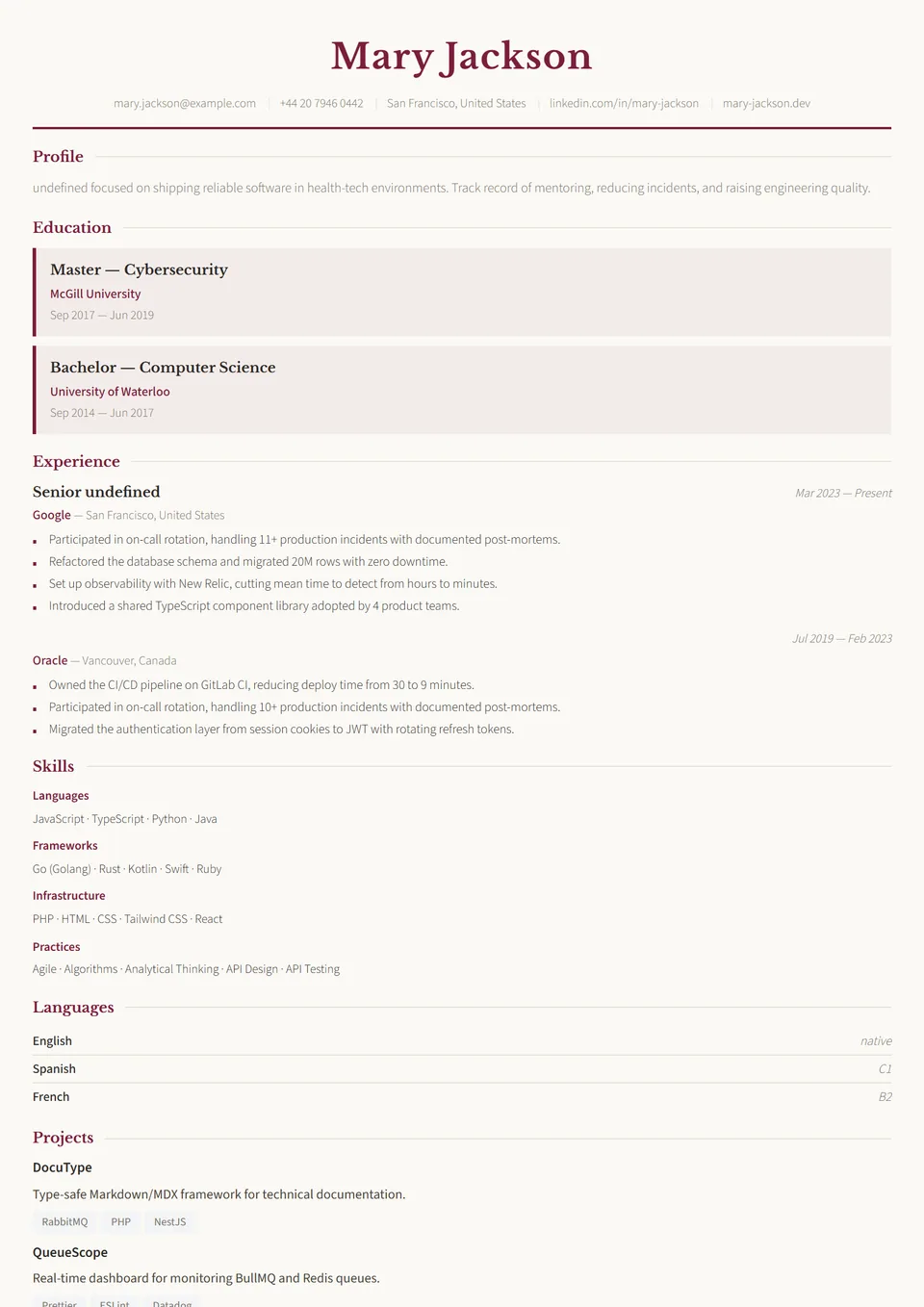
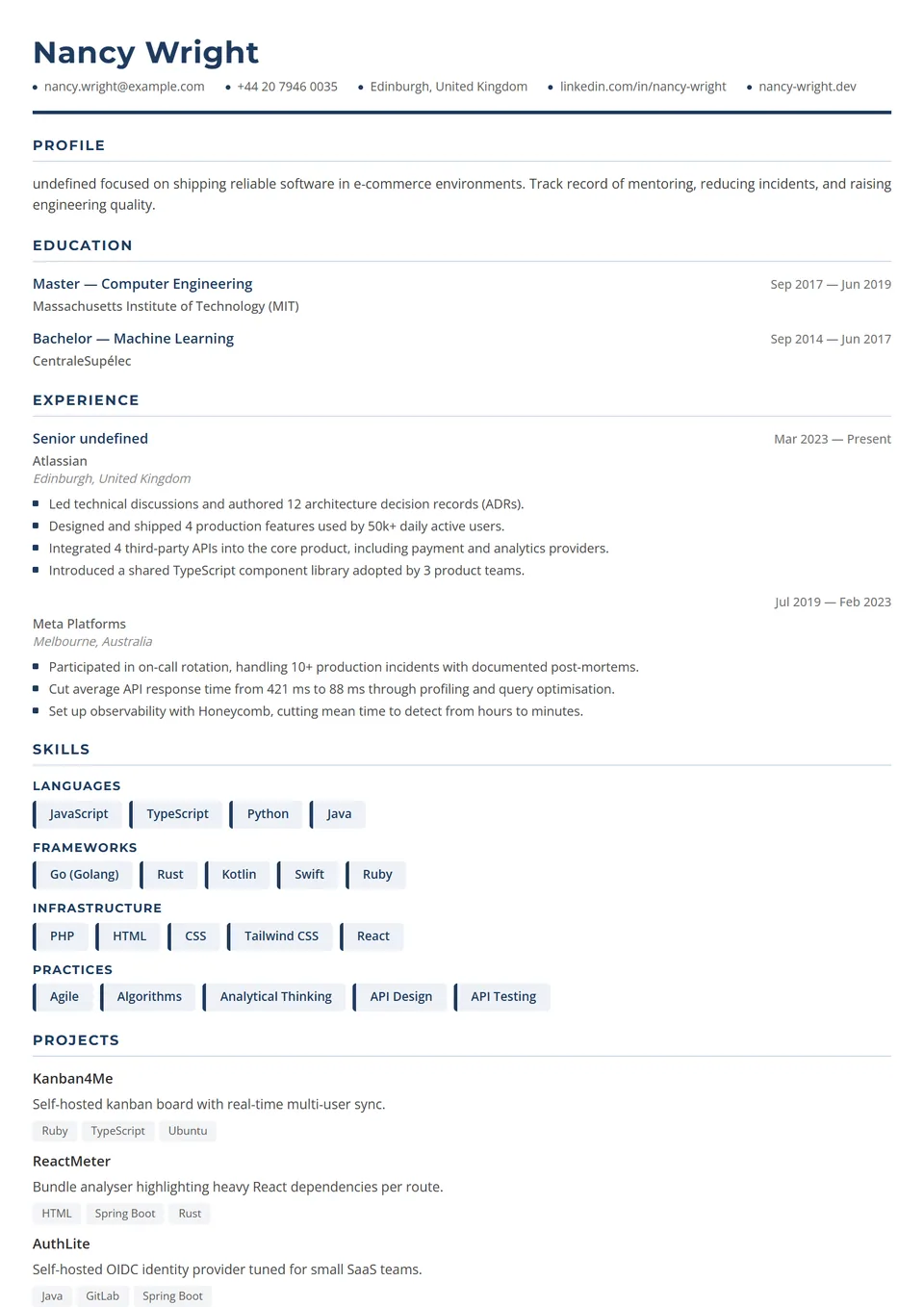
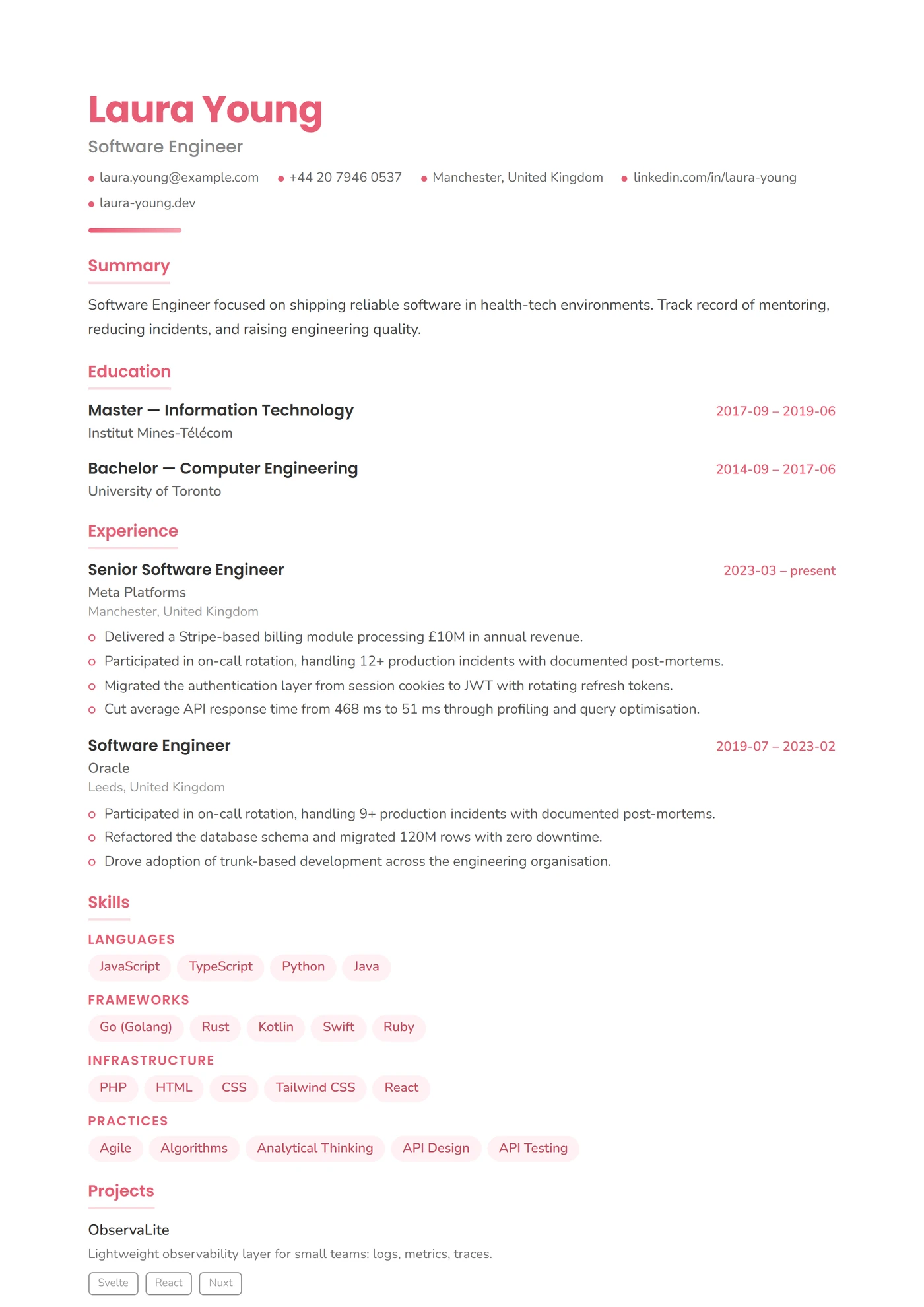
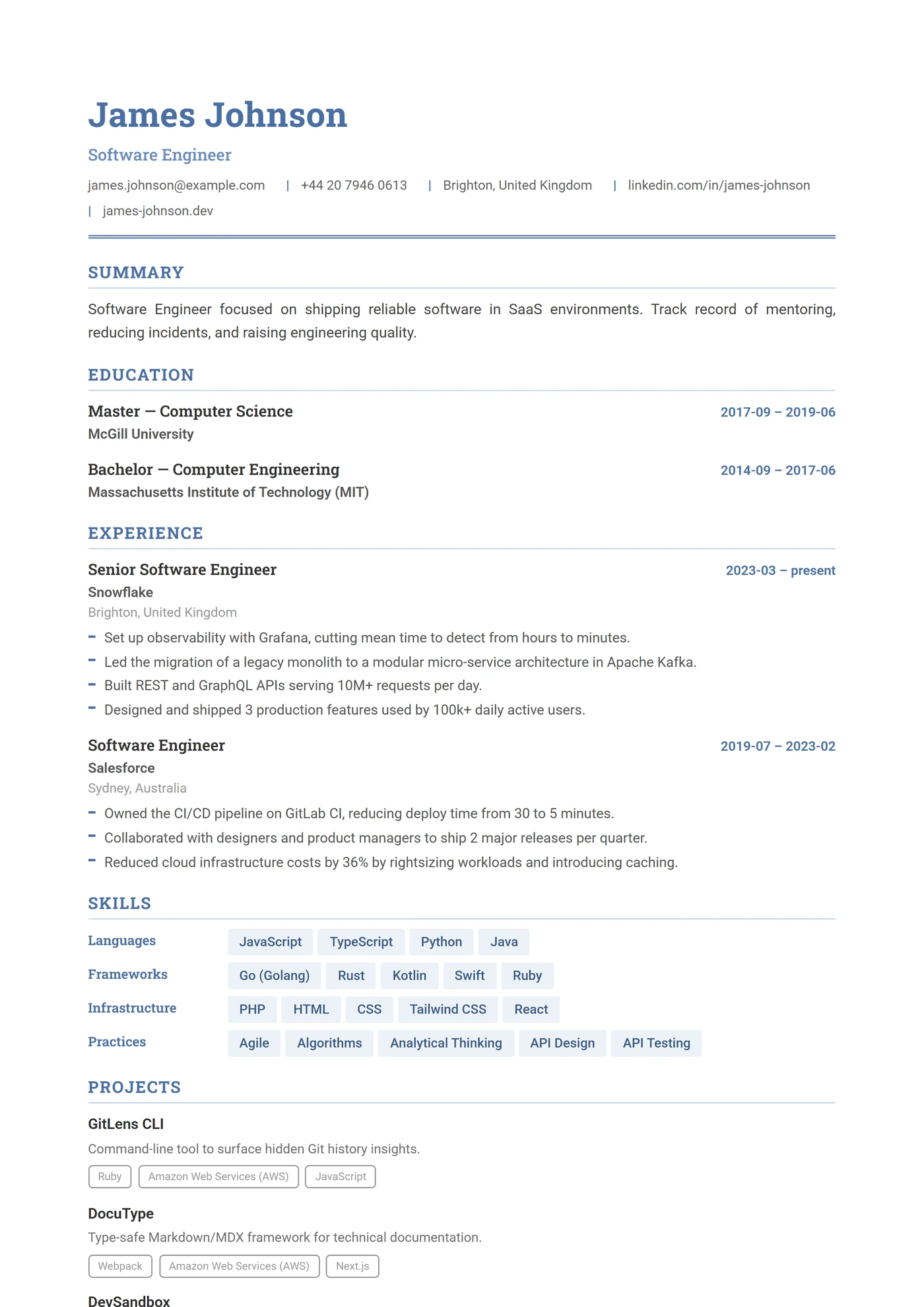
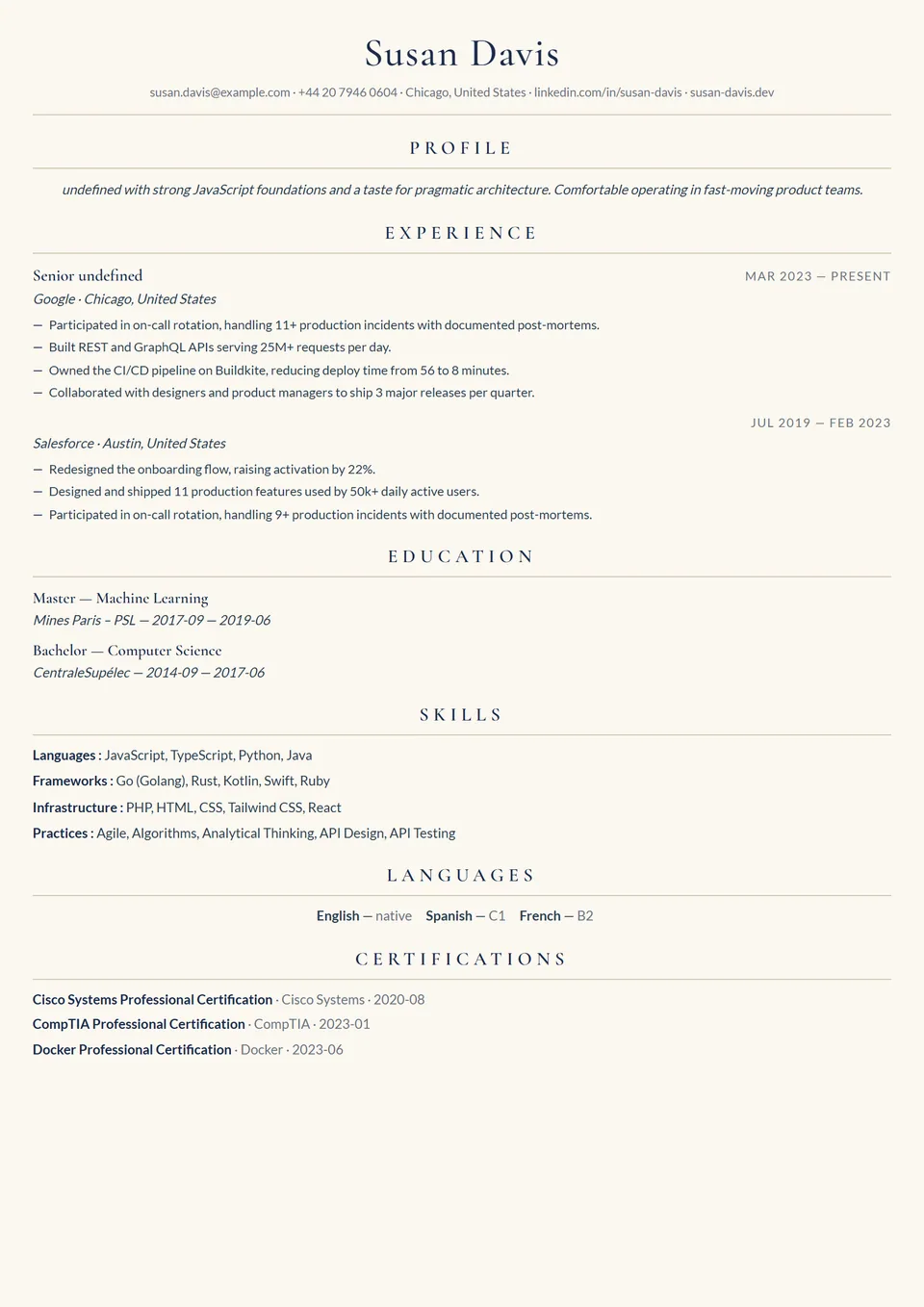
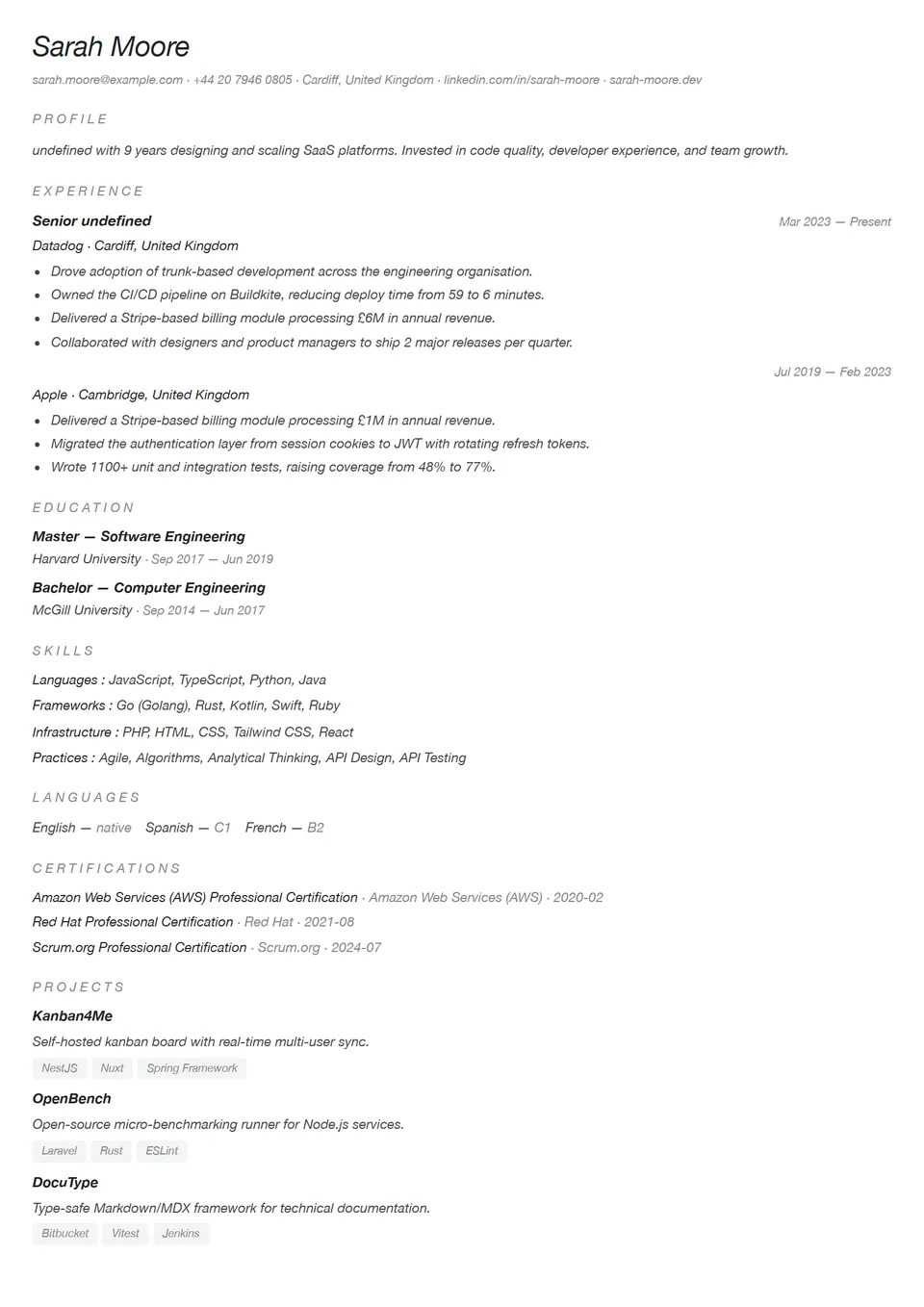
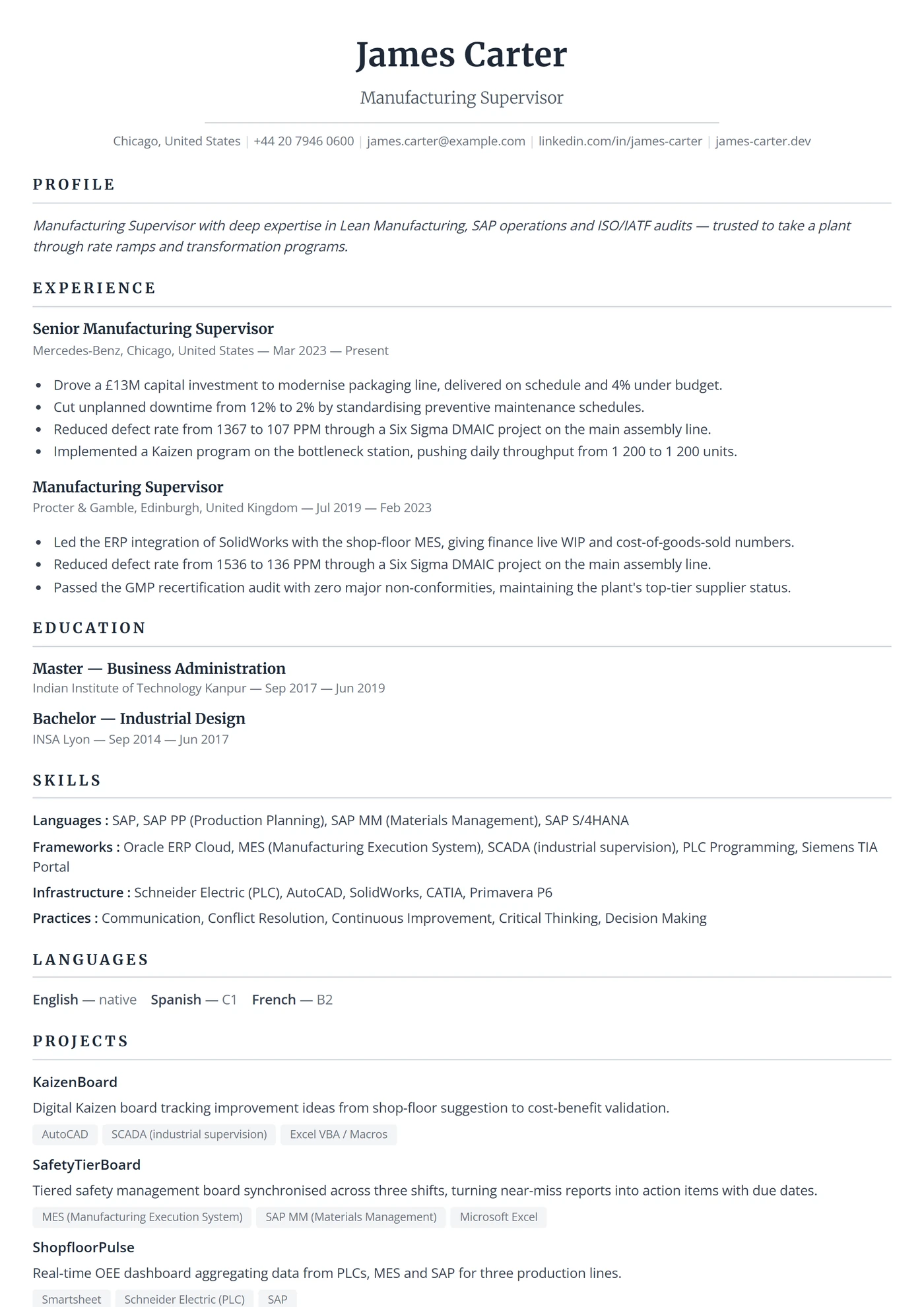
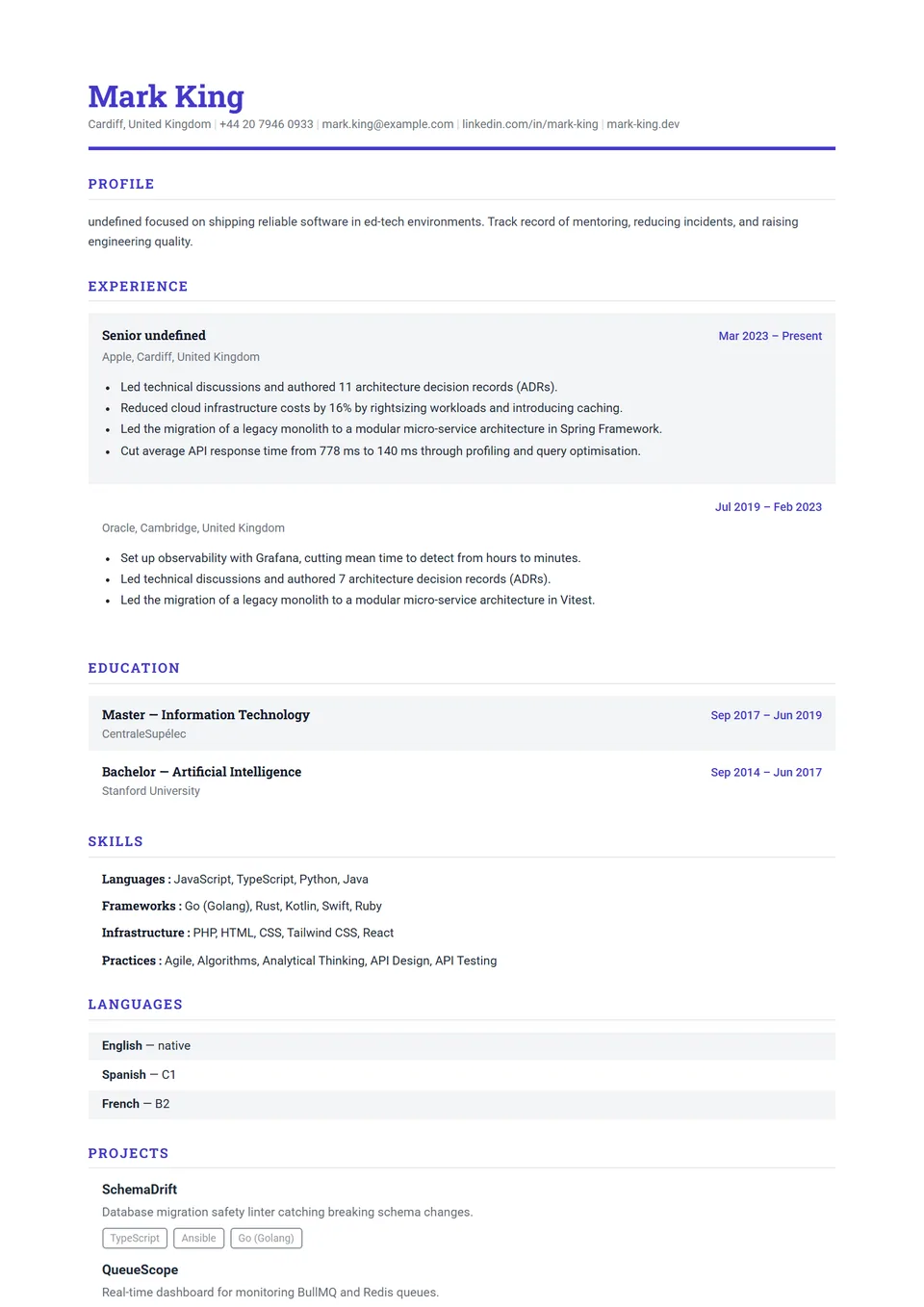
The Computer Science & IT template is an academic CV in JetBrains Mono with a teal accent. The terminal aesthetic feels native to the audience — engineering-school search committees, recruiters at industrial research labs (Google DeepMind, Meta FAIR, Microsoft Research, Anthropic, MIT CSAIL, INRIA, ETH Zurich), and computer-science faculty hiring committees at R1 universities and Russell Group institutions. The layout handles technical Unicode (∀, ∃, λ, →) and parses through Workday, Greenhouse and Interfolio without breaking.
Who is it for?
It fits PhD candidates in computer science on the academic job market (NeurIPS, ICML, POPL, OSDI, CVPR), postdocs targeting tenure-track positions in the US or UK, ML/AI researchers in industrial labs (DeepMind, Anthropic, OpenAI, Mistral) competing for sponsored chairs, and senior engineers moving into academic R&D. Also fits CR/DR CNRS sections 6 and 7, faculty positions at MIT CSAIL, Stanford SAIL, CMU SCS, ETH Zurich, EPFL, TU Delft, Imperial, and INRIA permanent positions.
How to use it
Five blocks structure the document — Research (axes aligned with the lab), Publications (with CORE A/A/B venue ranking and venue type — conference vs journal), Open-source contributions (with GitHub, ORCID, DBLP, Google Scholar h-index URLs), Doctoral supervision, Industry and advisory roles. For ML conferences, distinguish NeurIPS/ICML/ICLR (A) from co-located workshops. State the acceptance rate when applying to a non-specialist committee. Useful long-tail queries: 'CS PhD job market CV', 'ML tenure-track resume', 'DeepMind to academia CV', 'open-source contribution academic CV', 'INRIA permanent position CV'.
Frequently asked questions
How do I rank conference venues without cluttering the CV?
Use the CORE Conference Ranking (A, A, B, C) in parentheses after the venue name (for example 'NeurIPS 2025 (CORE A)'). For journals, the JCR or Scimago quartile (Q1, Q2) is enough. Avoid citing acceptance rates except for exceptionally selective venues (POPL, OSDI, SOSP) — an experienced committee will know them already, and listing common rates can read as defensive.
Should I display GitHub profile and h-index?
Yes for CS, ML/AI and systems profiles. The template header reserves slots for GitHub, Google Scholar and DBLP. List h-index and citation count as metrics for US tenure-track committees, but contextualise them by sub-field: an h=15 in programming-languages theory is comparable to h=40 in ML, and committees know this — under-stating context is worse than overstating numbers.
How do I present a significant open-source contribution?
Use a 'Software contributions' block distinguishing three statuses: maintained project (lead maintainer, with GitHub URL, stars and contributor count), major contribution (accepted pull request on a significant third-party project), published package (npm, PyPI, crates.io, with monthly downloads). For tenure-track committees and INRIA positions, these contributions count as a form of applied publication and weigh in evaluation.