About this template
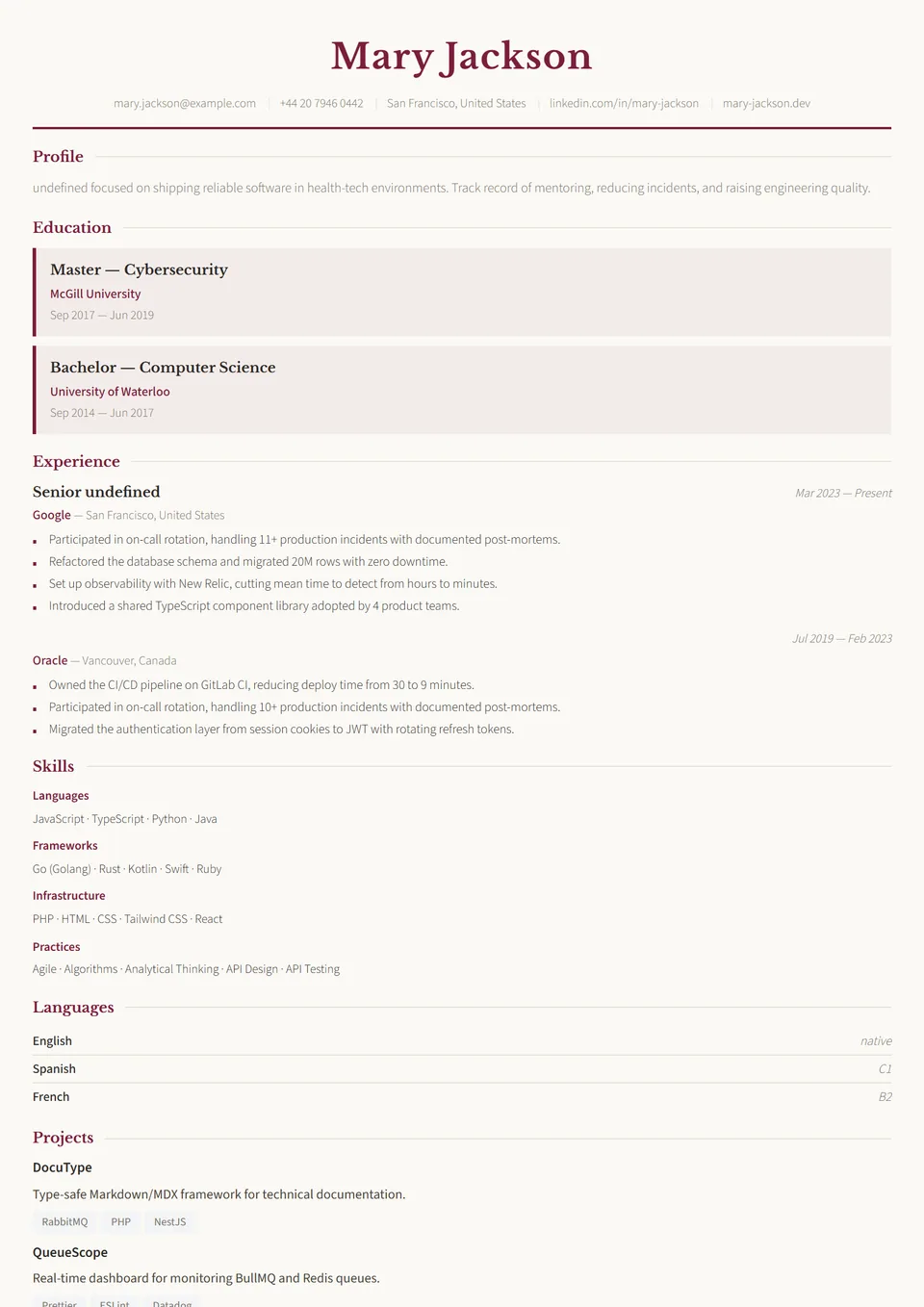
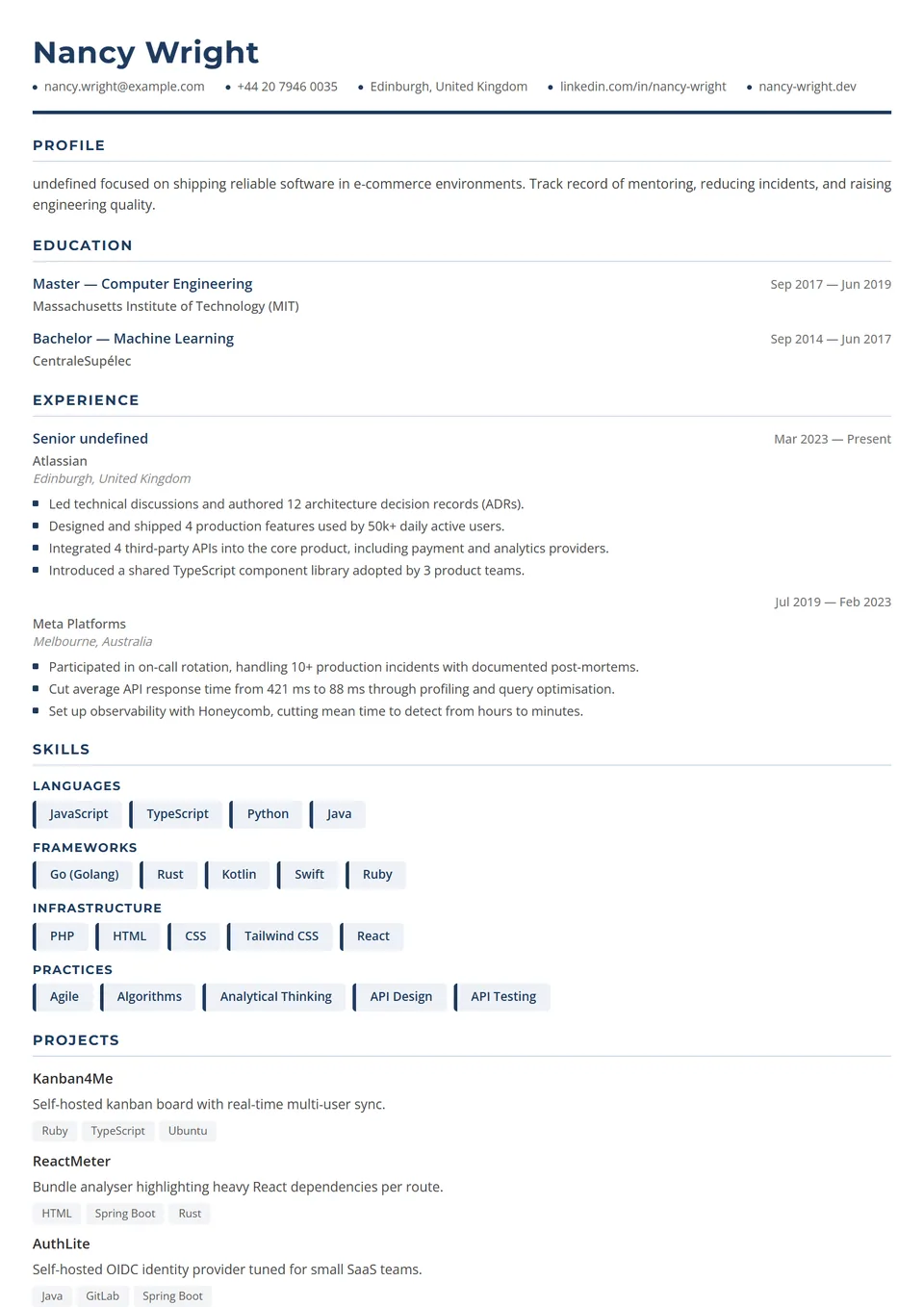
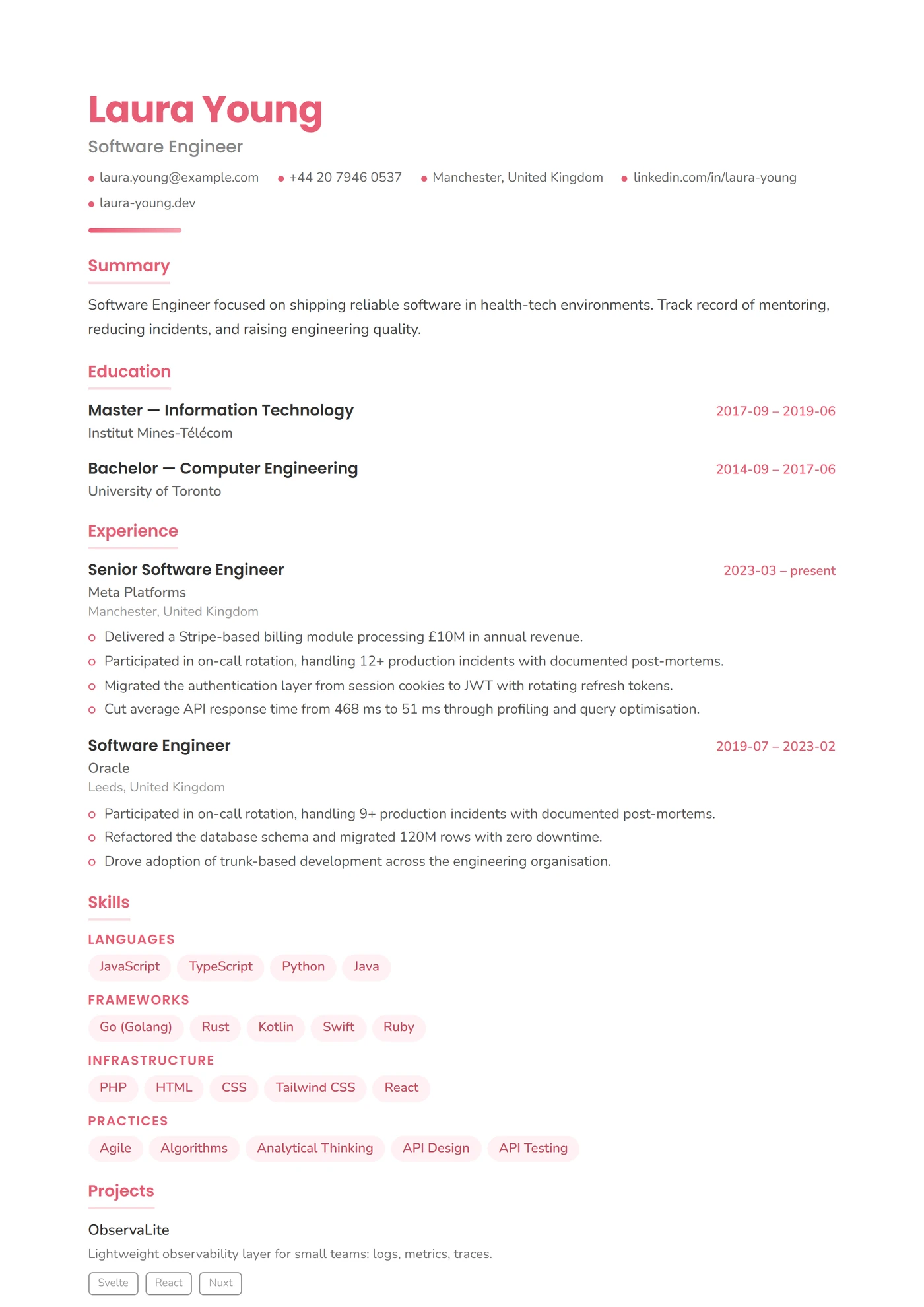
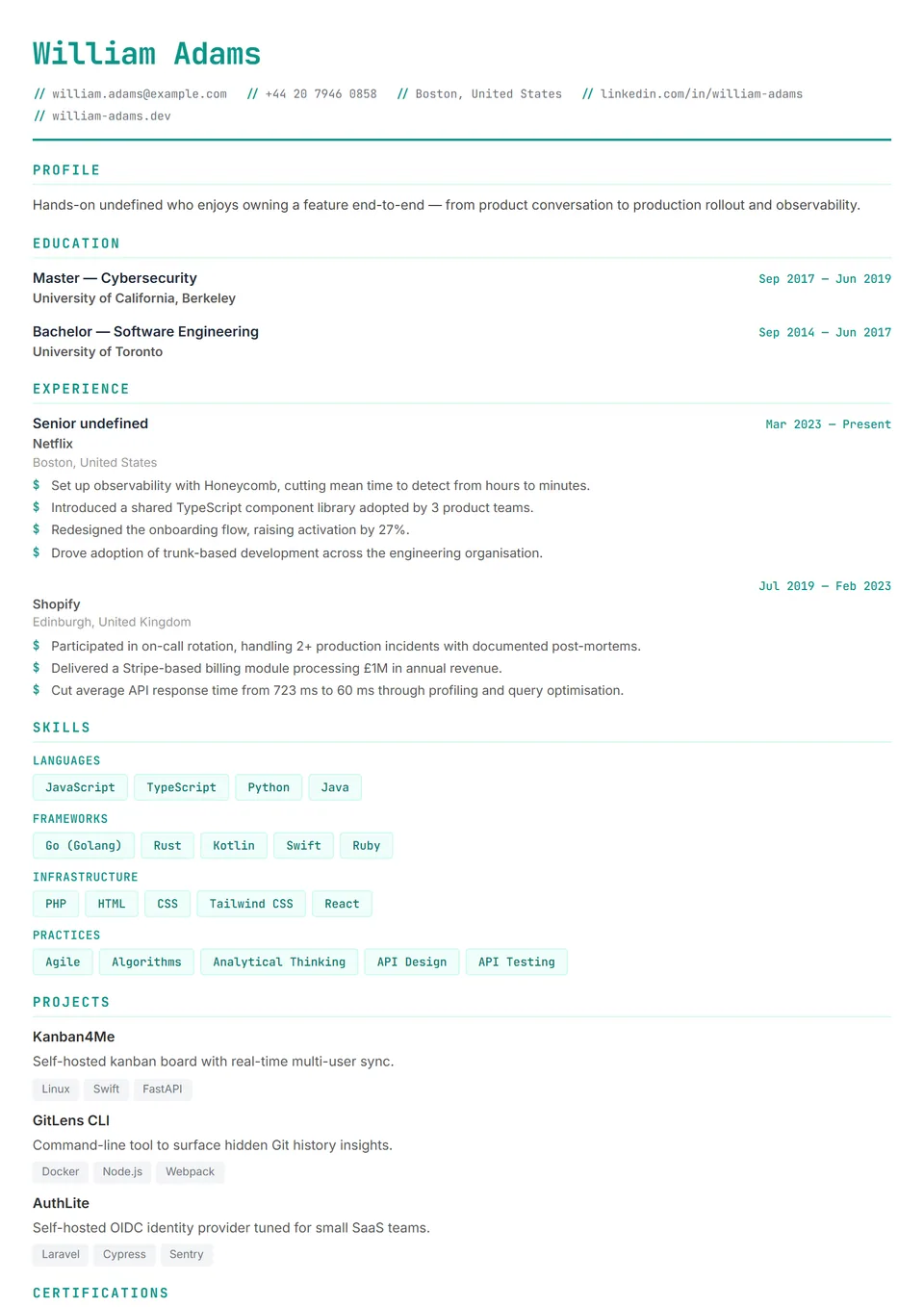
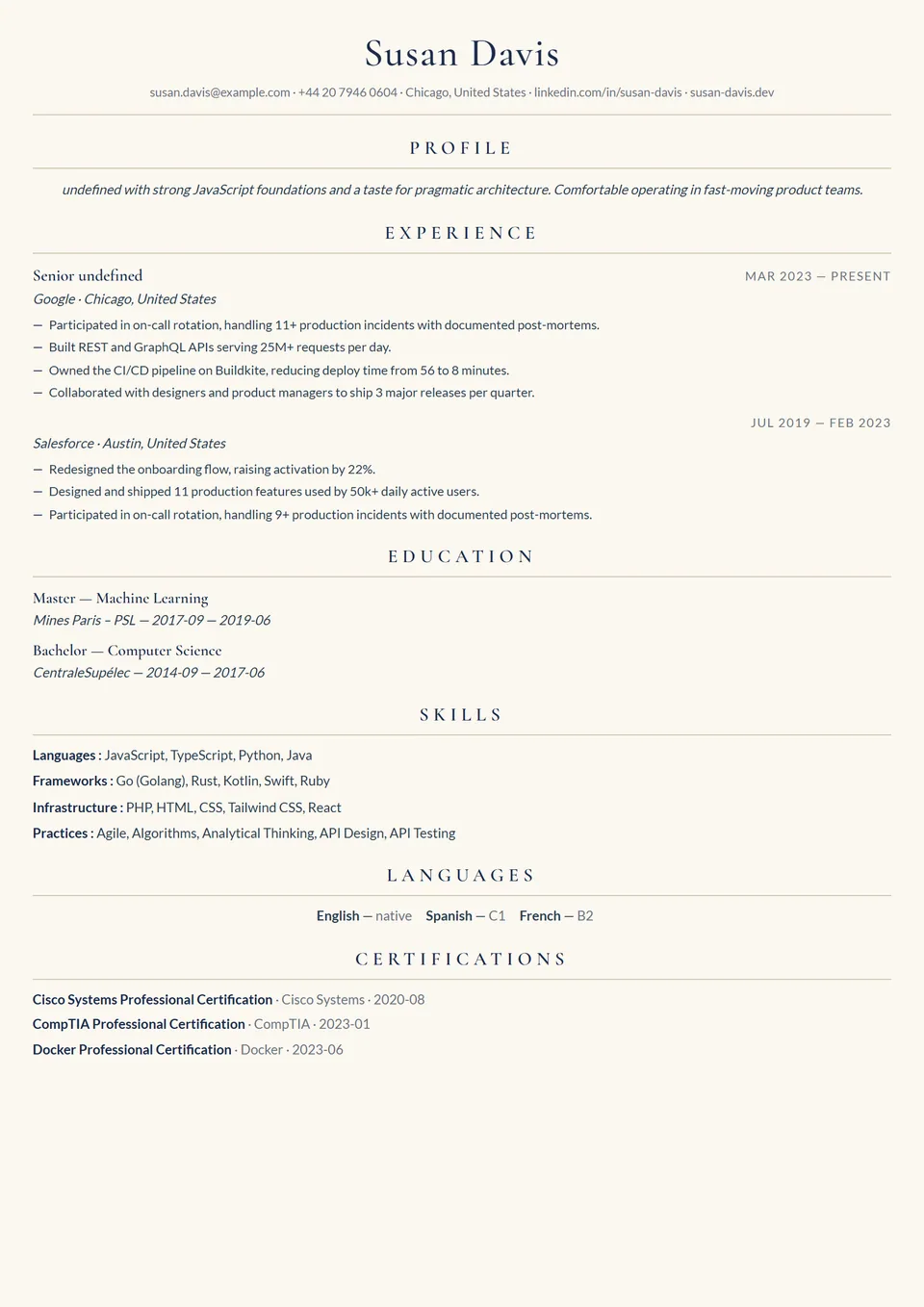
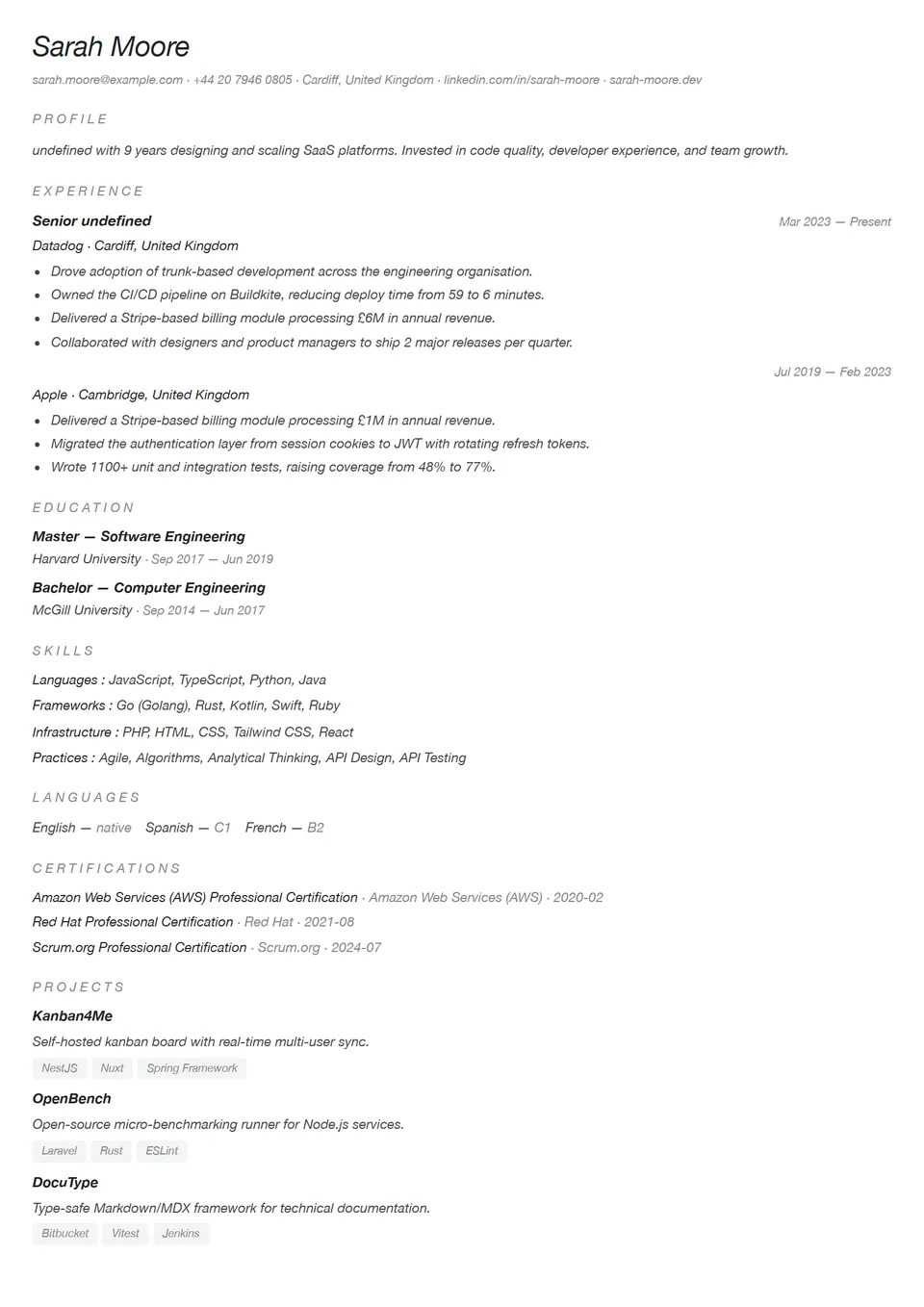
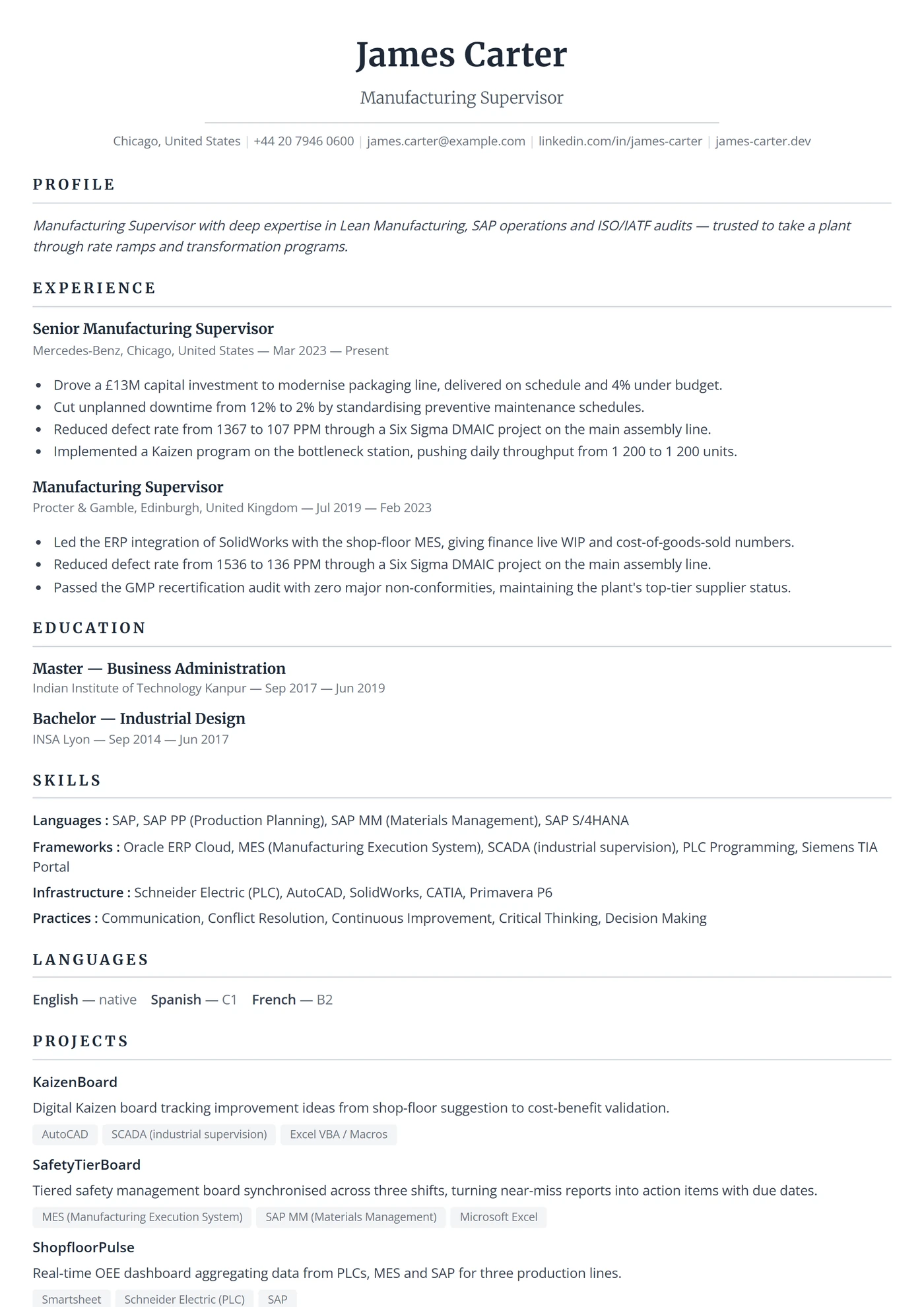
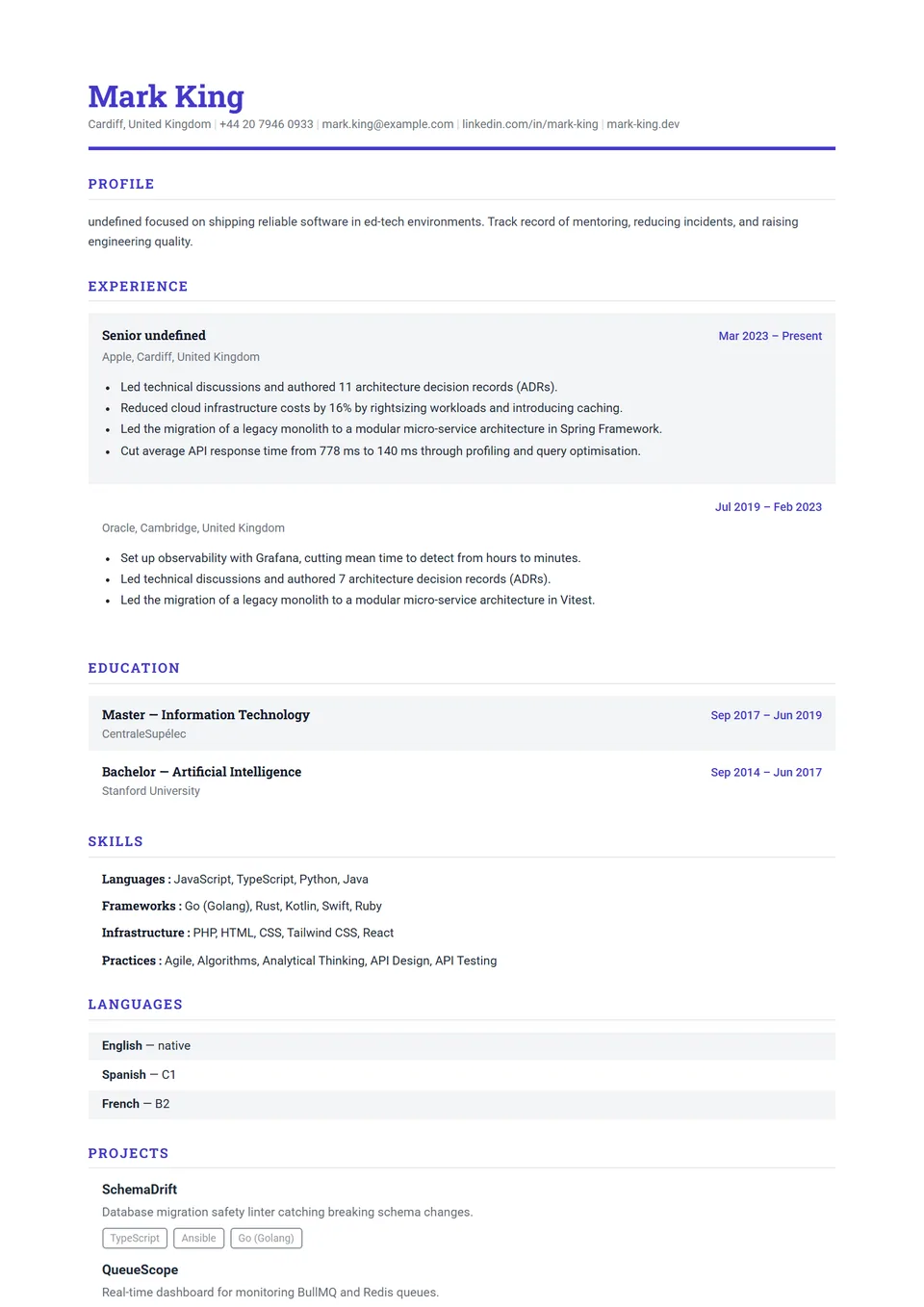
The International Relations template is an academic CV in Garamond with a navy accent. The diplomatic tone of the typography matches the expectations of search committees at the Fletcher School, SAIS Johns Hopkins, the Kennedy School, LSE IR, Sciences Po PSIA, the College of Europe, and the Geneva Graduate Institute. The layout handles diacritics in multilateral institution names, UN acronyms and CEFR codifications, and parses through Workday, Interfolio, Inspira (UN recruitment), ECARE (European Commission) and NATO Talent Acquisition.
Who is it for?
It fits researchers in foreign policy and strategic studies, candidates for State Department, Foreign Office or French MAE concours, diplomats transitioning to tenure-track positions, think-tank experts at CFR, RAND, IISS, Chatham House, ECFR or IFRI competing for endowed chairs, and UN, NATO or EU civil servants moving into academic careers. Also serves applications to area studies programs at SOAS, Princeton and Sciences Po (Africa, Middle East, East Asia, post-Soviet Eurasia).
How to use it
Five blocks structure the document — Research (with regional area: Maghreb-Mashreq, Southeast Asia, post-Soviet Eurasia, Sahel), Multilateral missions and institutional expertise, Policy publications (briefs, white papers, monographs), Language competence on the CEFR scale, Expert networks. For consular and diplomatic concours, separate dispatches from peer-reviewed publications. Useful long-tail queries: 'international relations professor CV', 'diplomat to academic transition resume', 'foreign policy researcher CV CFR', 'PSIA tenure-track candidate CV', 'UN civil servant academic CV'.
Frequently asked questions
How do I list multilateral missions without overloading the CV?
Use one line per mission with four elements: dates, mandating institution (State Department, UN, EU, OSCE), specific object ('EU electoral observation', 'boundary mediation'), and geographical zone. Reserve detailed descriptions for the application dossier or cover letter. The CV must let a Kennedy School or SAIS committee assess geographical breadth in under fifteen seconds — anything more belongs in supplementary materials.
Should I indicate CEFR levels for all languages?
Yes for professional working languages (B2 and above), optional for A1-A2 unless they are rare and pertinent to your area specialisation (for example Uyghur A2 for a Central Asia specialist). For Russian, Arabic and Mandarin, accompany the CEFR level with the test sat (TORFL, ALPT, HSK) and date — expected by IFRI, SOAS and Sciences Po. For UN-system applications, state the six official UN working languages explicitly.
Does the template work for a NATO or EU application?
Yes. The Garamond typography and navy accent are familiar to NATO recruiters (Talent Acquisition Branch) and to EPSO competitions at the European Commission. For these applications, expand the Skills section with security clearances (Confidential, Secret, NATO Restricted, EU Restricted) and their validity periods. State working languages actually used on post — not just academic fluency.