
When You Need a Cover Letter for Mason
A cover letter for a standard Mason job application lets you show pride in craftsmanship and highlight specific project types — brick, block, stone, or concrete work — that a resume list cannot fully convey. It is the place to mention safety record, reliability, and the kind of structures you have built, reassuring a contractor or site manager that you will fit their crew and standards from day one.
For a Mason internship or apprenticeship, the cover letter should focus on eagerness to learn the trade, any hands-on exposure through trade school, family work, or DIY projects, and basic tool familiarity rather than years of paid experience. Emphasize physical stamina, reliability, willingness to follow instructions on-site, and enthusiasm for working toward journeyman-level skills.
When moving into masonry from another field, the cover letter should connect transferable skills such as physical fitness, precision handwork, construction site exposure, or project coordination to the demands of laying brick, block, or stone. Mention any relevant certifications, trade courses, or informal experience, and clearly state your motivation for choosing masonry as a long-term trade.
For an internal promotion, such as moving from laborer to mason or mason to foreman, the tone should be confident and specific, referencing projects completed on-site, quality of finished work, and any informal mentoring of newer crew members. Address the letter to the hiring supervisor directly and highlight reliability, safety record, and readiness to take on more responsibility such as crew leadership or quality checks.
Recommended templates for Mason
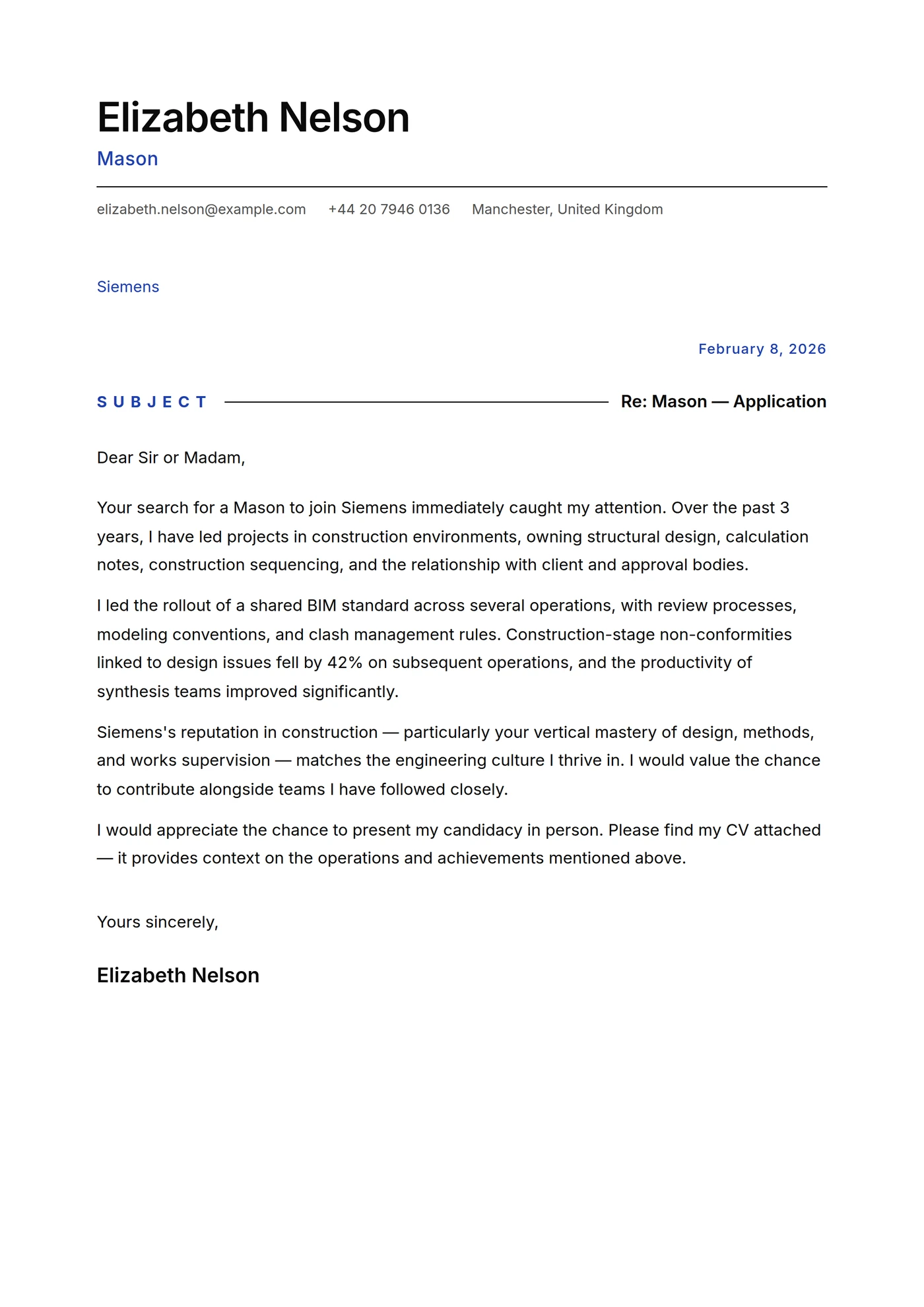
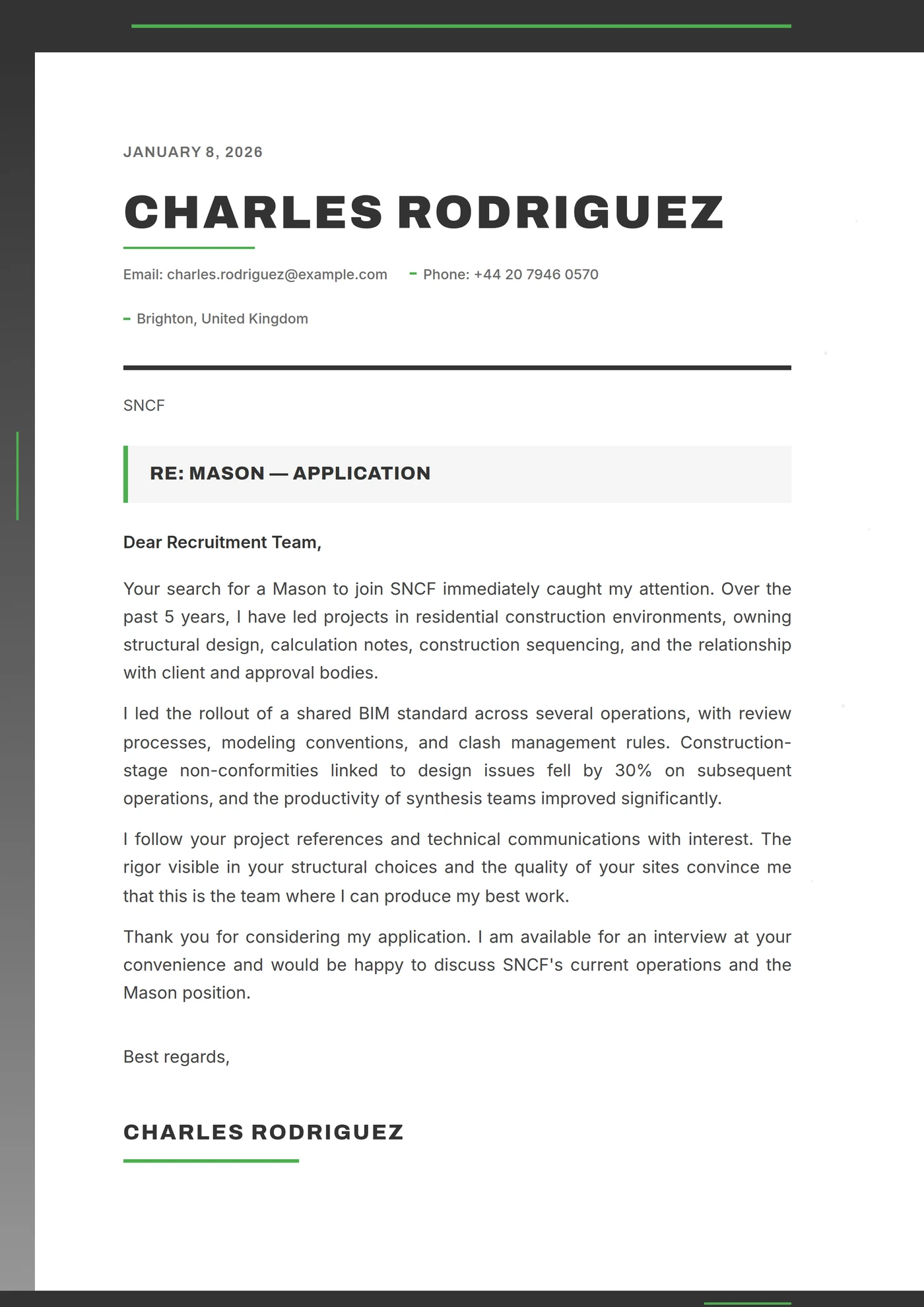
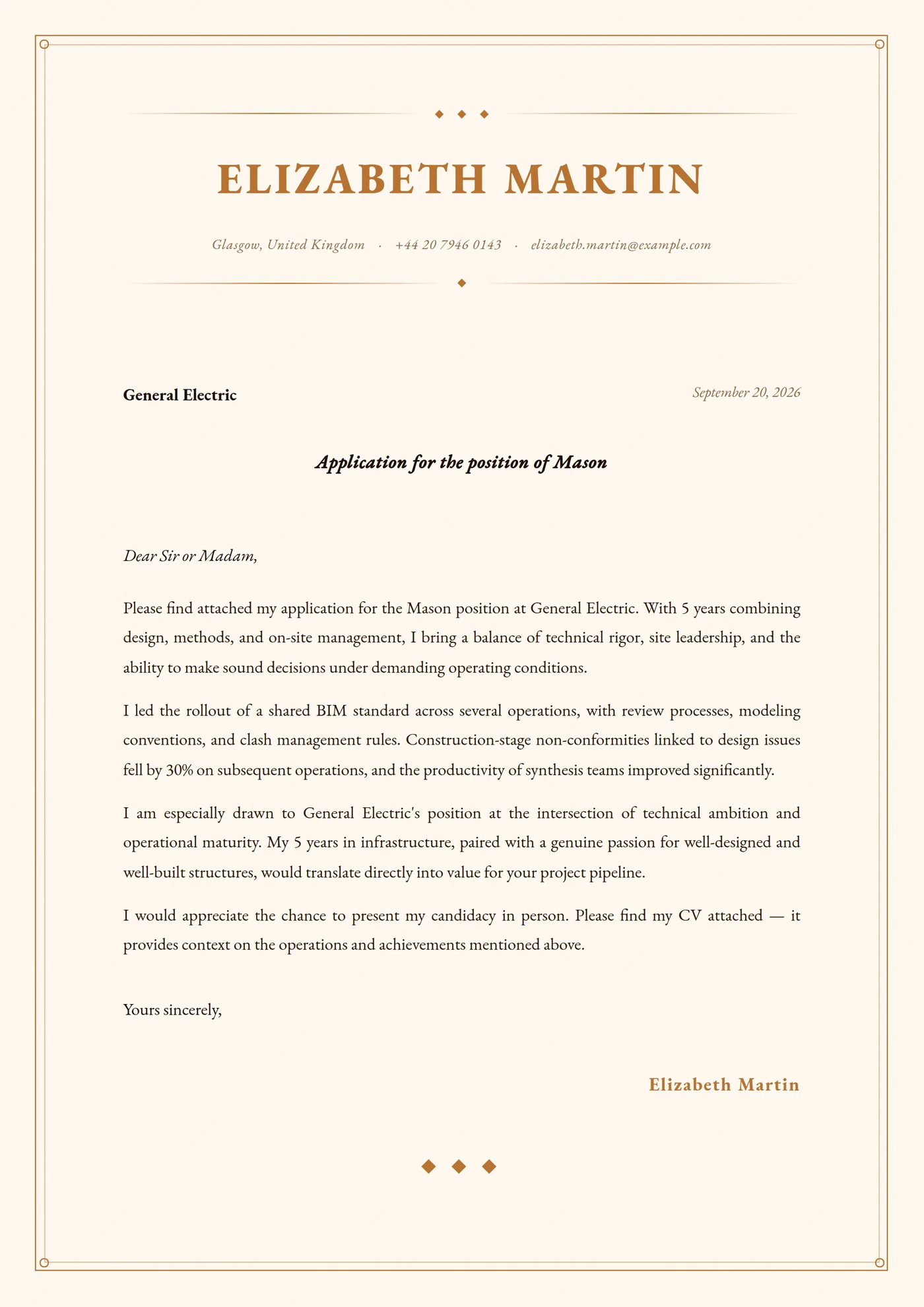
Three templates selected for this role, from junior to senior level. Tap a template to discover its full design and use it in your document.
How to Write a Mason Cover Letter
Open your Mason cover letter with a direct statement of who you are and what you bring, such as naming your trade specialty (brick, block, stone, concrete) and years of hands-on experience. Avoid generic openers like “I am writing to apply for the Mason position”; instead, lead with something concrete, such as a notable project type or a safety milestone. Whenever possible, personalize the greeting by using the hiring manager or site supervisor's name rather than “To Whom It May Concern.” If the job posting or company website does not list a name, a quick call to the office or a check of the company's crew page can often provide one, and this small effort signals genuine interest in the specific employer.
Keep the body to two or three focused paragraphs. The first should cover your core technical skills — reading blueprints, mixing mortar, laying courses plumb and level, and working with specific materials like brick, CMU block, or natural stone. The second paragraph should highlight a measurable achievement, such as completing a project ahead of schedule, maintaining a clean safety record, or contributing to a crew that passed inspection without rework. A third, shorter paragraph can address motivation and fit: why this contractor or company, and what kind of projects you want to keep building. Balance hard skills (tools, techniques, materials) with soft skills (reliability, teamwork, attention to detail) so the letter reads as a well-rounded tradesperson rather than a list of tasks.
Close with a clear, confident call to action, inviting the reader to contact you for an interview or site visit, and restate your enthusiasm for joining the crew. Avoid vague endings like “I hope to hear from you” without a next step; instead, state your availability and preferred contact method. Sign off with a professional but straightforward closing such as “Sincerely” or “Respectfully,” followed by your full name. Do not apologize for lack of experience or over-explain gaps; keep the ending positive and forward-looking.
The tone for a Mason cover letter should be professional but plain-spoken, reflecting the practical, hands-on nature of the trade rather than corporate jargon. Short, direct sentences that convey competence and reliability work better than flowery language. Use industry-accurate terms like mortar mix ratios, footings, tuckpointing, or scaffolding safety to signal real trade knowledge, but avoid overusing technical jargon that could feel forced. A confident, respectful tone that shows pride in craftsmanship and respect for site safety will resonate most with contractors and supervisors.
Skills to Mention in Your Mason Cover Letter
Common Mistakes
A generic cover letter that could apply to any laborer job, without mentioning specific masonry skills like brick, block, or stone work, fails to show real trade expertise. Fix this by naming specific project types, materials, and techniques relevant to the job posting.
A Mason cover letter should stay to half a page to one page, focused on skills and one or two strong examples rather than a full career history. Cut repeated resume content and keep sentences short and direct, mirroring the practical nature of the trade.
Simply listing duties like “laid brick” or “mixed mortar” without results misses the chance to stand out; instead, reframe with outcomes such as completing a project on schedule, passing inspection on the first attempt, or maintaining a zero-incident safety record. Quantify wherever possible, even with crew size or project scope.
Avoid unusual fonts, excessive colors, or multi-page formatting that looks unprofessional for a trade job; a clean, one-page PDF is standard. Also double-check that the file name and any email subject line clearly state your name and the position, avoiding generic labels like “document1.docx”.
Frequently Asked Questions
While not always mandatory, a cover letter helps you stand out by showing specific skills, safety awareness, and motivation that a resume alone may not fully capture. Many contractors appreciate the extra effort, especially for more skilled or supervisory masonry roles.
Keep it to half a page to one page, focusing on a few strong points rather than a full work history. Hiring managers in the trades typically prefer concise, direct communication.
Yes, tailoring each letter to mention the specific materials, project types, or company name shows genuine interest and attention to detail, a trait highly valued in masonry work. Even small changes referencing the job posting can make a noticeable difference.
In the US, a cover letter is often optional but appreciated, especially for roles with supervisory duties. In the UK and EU, trade applications may rely more on CVs and references, though a short, well-written cover letter can still strengthen an application across all regions.
AI tools can help structure your letter and suggest clear phrasing, but you should always personalize the content with your real project experience, specific skills, and the employer's name. Avoid submitting a letter that sounds generic or clearly templated without your personal input.
Submit your cover letter as a clean, single-page PDF to preserve formatting across devices, unless the employer specifically requests a .docx file. Use a simple, readable font and make sure your name and contact details are clearly visible at the top.
Related Job Titles
Explore more about