Mason Resume Example & Guide

Learn how to write a standout Mason resume with expert tips, sample bullet points, and ATS optimization advice.

We currently have 11 Mason job postings in our database. Apply now — it's free

A Mason builds and repairs structures using brick, block, stone, and concrete, requiring strong physical stamina, precision, and knowledge of building codes and blueprint reading. Employers look for resumes that clearly show hands-on project experience, measurable work output, safety compliance, and familiarity with specific masonry techniques. Strong candidates stand out by quantifying project scope, listing relevant certifications like OSHA 10 or OSHA 30, and demonstrating reliability through steady employment history. Typical experience ranges from 1-3 years for entry-level helpers to 10+ years for master masons or crew leads. While salary data varies by region, experienced masons with specialty skills such as restoration masonry or stone veneer often command higher pay.

What Makes a Great Mason Resume

A strong Mason resume leads with a clear, results-oriented summary that highlights years of experience, specialty skills (brick, block, stone, concrete), and safety record. Formatting should be clean and ATS-friendly, using a reverse-chronological structure that lists employers, project types, and measurable outcomes such as square footage completed or crew size managed. Avoid overly decorative designs since many masonry employers and staffing agencies use applicant tracking systems to filter candidates before a human review. Content priorities should include physical capability (ability to lift and work outdoors in all conditions), tool proficiency, blueprint reading, and adherence to building codes. Senior candidates should emphasize leadership, training of apprentices, and project management responsibilities, while junior candidates should highlight apprenticeship training, certifications, and willingness to learn. Keeping the resume to one page for entry to mid-level and up to two pages for senior supervisory roles is standard practice.

Key Skills Needed

Blueprint and schematic readingBrick and block layingStone masonryConcrete mixing and finishingMortar preparationMeasuring and levelingScaffolding setup and safetyTuckpointing and repair workBuilding code compliancePhysical stamina and manual dexterityTime management on job sitesTeam collaborationAttention to detailProblem-solving under physical constraints

Typical Experience Level

Entry-level masons typically start as apprentices or laborers, working under supervision for 1-2 years while learning foundational techniques like mixing mortar and basic bricklaying. Mid-level masons, with 3-7 years of experience, often work independently on residential and commercial projects, handling more complex layouts and finishes such as stone veneer or decorative masonry. Senior masons or crew leaders, usually with 8+ years of experience, are expected to manage teams, estimate project costs, train apprentices, and ensure compliance with safety and building codes. Recruiters at this level look for demonstrated leadership, large-scale project completion, and sometimes licensing or union certification.

ATS Keywords for This Role

MasonryBricklayingBlockworkStoneworkConcrete finishingMortar mixingTuckpointingBlueprint readingScaffoldingOSHA 10OSHA 30Building codesConstruction safetyCrew supervisionResidential constructionCommercial constructionRestoration masonryHand and power toolsSite preparationQuality control

Recommended templates for Mason

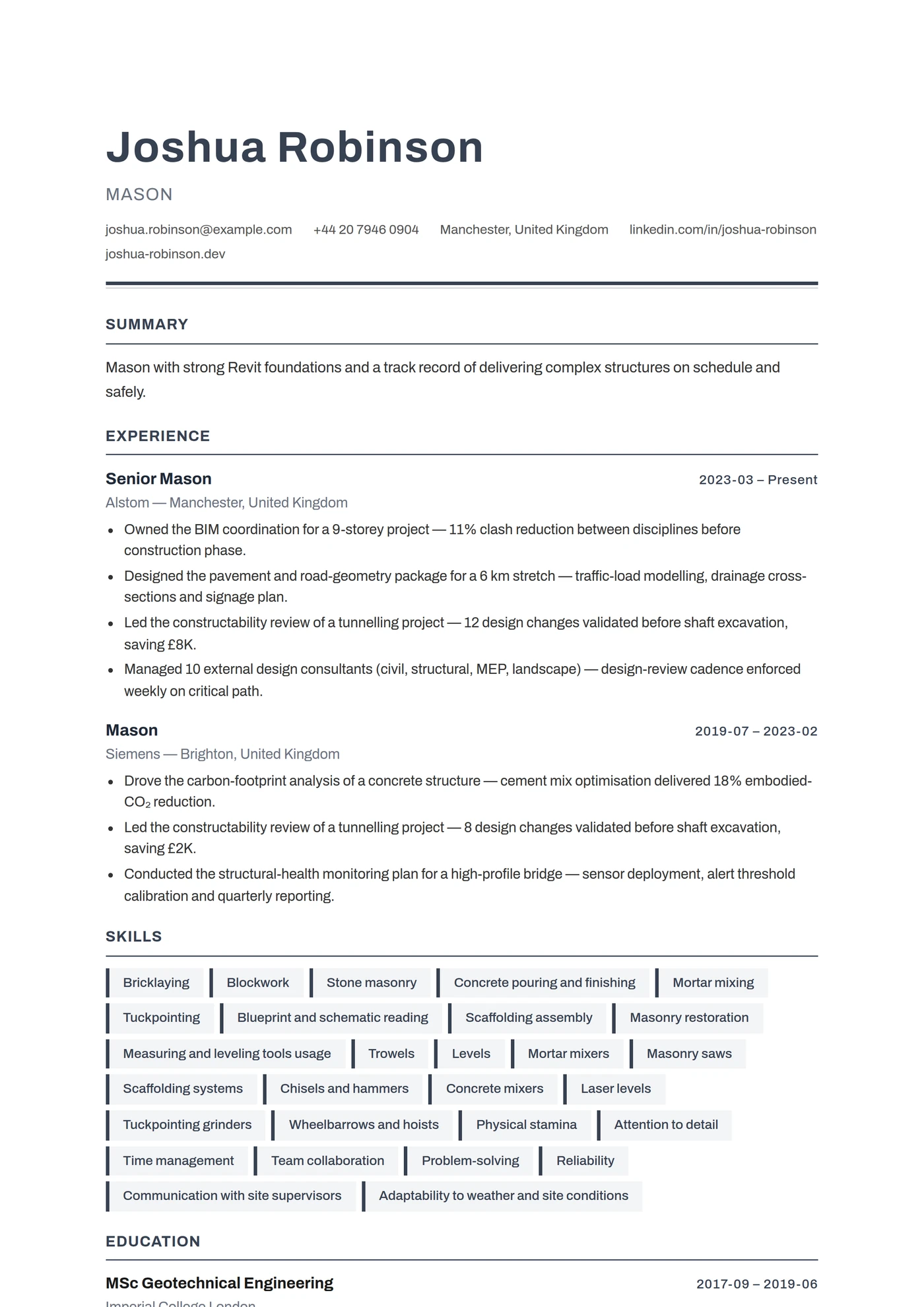
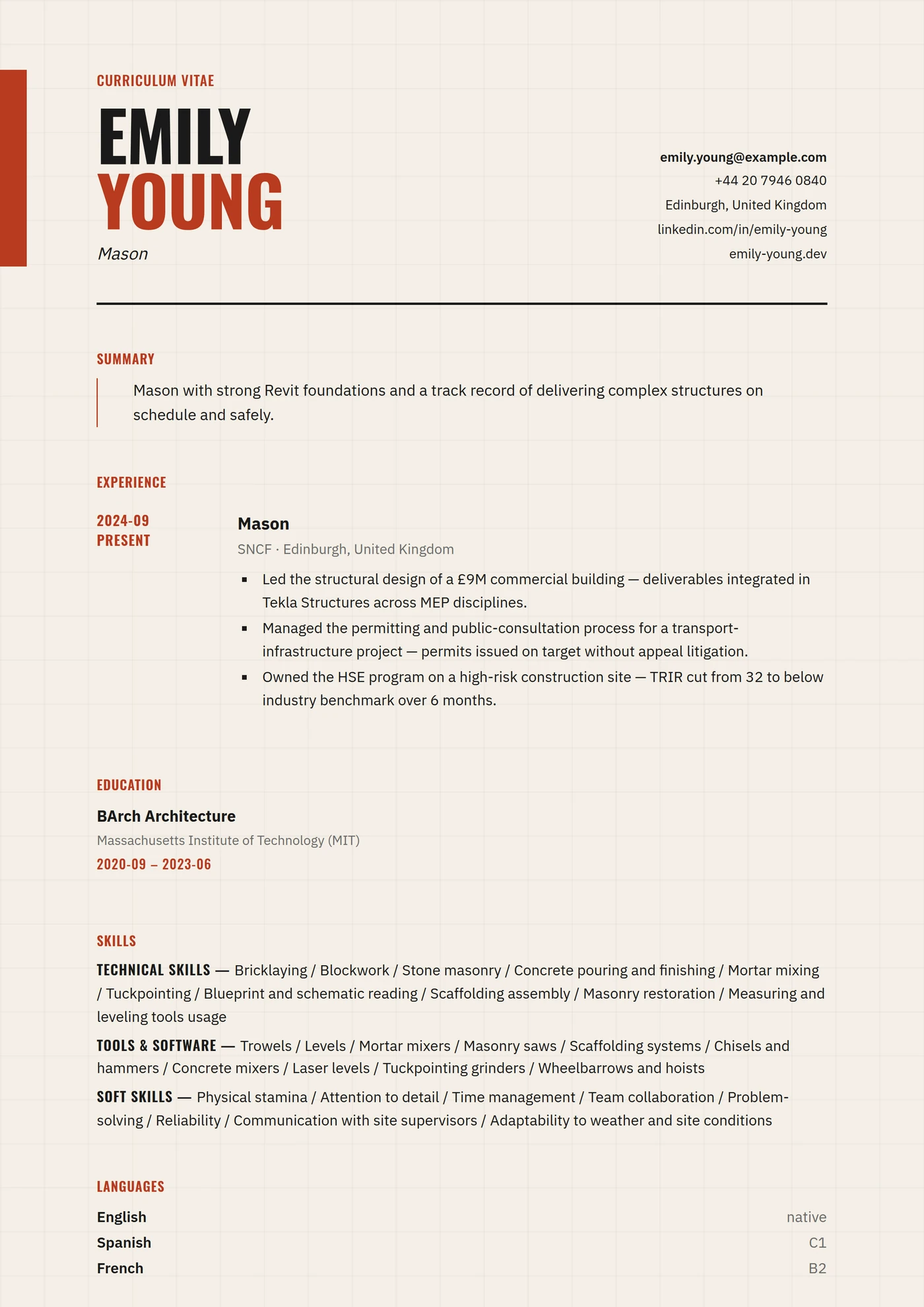
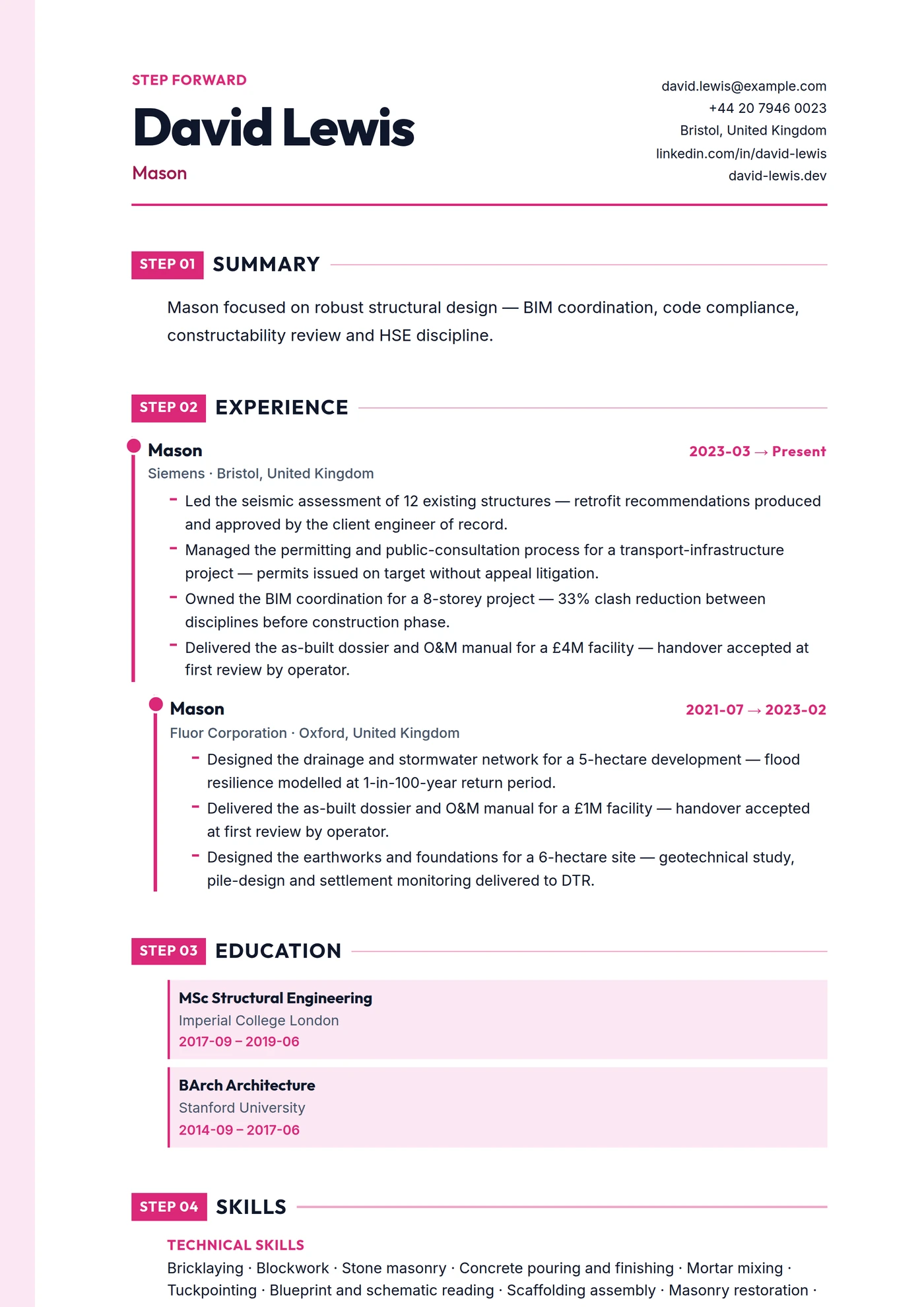
Three templates selected for this role, from junior to senior level. Tap a template to discover its full design and use it in your document.
Junior
ATS Stencil Grid — Junior

ATS Stencil Grid

ats

A clean, ATS-friendly layout that highlights apprenticeship training and basic skills without unnecessary design elements, ensuring readability for both recruiters and parsing software.

Learn more about this template
Mid-level
ATS Step Ladder — Mid-level

ATS Step Ladder

ats

This structured format balances clear section hierarchy with room to showcase progressively complex projects, ideal for masons transitioning into independent or specialized work.

Learn more about this template
Senior
ATS Architect — Senior

ATS Architect

professional

A polished, professional template suited for senior masons or crew leads who need to emphasize project management, team leadership, and large-scale construction achievements.

Learn more about this template

Skills for Mason

Hard Skills

BricklayingBlockworkStone masonryConcrete pouring and finishingMortar mixingTuckpointingBlueprint and schematic readingScaffolding assemblyMasonry restorationMeasuring and leveling tools usage

Soft Skills

Physical staminaAttention to detailTime managementTeam collaborationProblem-solvingReliabilityCommunication with site supervisorsAdaptability to weather and site conditions

Tools & Software

TrowelsLevelsMortar mixersMasonry sawsScaffolding systemsChisels and hammersConcrete mixersLaser levelsTuckpointing grindersWheelbarrows and hoists

ATS Keywords

Masonry constructionBricklaying techniquesStone veneer installationConcrete finishingMortar applicationBlueprint interpretationOSHA complianceScaffold safetyRestoration projectsCrew leadershipResidential masonryCommercial masonryQuality assuranceBuilding code adherenceSite safety protocols

Writing Tips for Mason

Best Format to Use

The reverse-chronological format works best for Mason resumes since employers want to see a clear progression of project experience, employers, and skill development over time. This format also performs well with ATS systems, as it presents work history in a predictable, easy-to-parse structure. A hybrid format can be useful for masons transitioning from apprenticeship to independent work, allowing a skills section to precede work history to immediately highlight technical capabilities before diving into project-specific experience.

Common Mistakes

Failing to quantify work — not specifying square footage, project value, or crew size makes achievements vague.
Omitting safety certifications like OSHA 10 or OSHA 30, which many employers require.
Using a functional format that hides work history, which can raise red flags with recruiters.
Listing duties instead of outcomes, such as writing 'laid bricks' instead of 'completed 500 sq ft of brick veneer per week'.
Including irrelevant personal information such as age or marital status.
Overloading the resume with graphics or tables that break ATS parsing.
Not tailoring the resume to highlight specialty skills like restoration masonry or decorative stonework relevant to the job posting.

How to Pass ATS

Mirror keywords from the job description, such as 'bricklaying', 'tuckpointing', or 'blueprint reading'.
Use standard section headers like 'Work Experience' and 'Skills' rather than creative titles.
Save and submit the resume as a .docx or PDF file, avoiding complex formatting that breaks parsing.
Avoid tables, columns, and images since many ATS platforms cannot read them correctly.
Quantify every achievement with numbers like square footage, project budgets, or team size.
Include certifications exactly as written, such as OSHA 30, to match keyword searches.
List tools and materials by name, such as 'mortar mixer' or 'masonry saw', to match technical search terms.

How to Stand Out

Highlight specialty skills such as stone restoration or historic masonry that differentiate you from general laborers.
Include a portfolio or photo link of completed projects if applying to residential or decorative masonry roles.
Quantify every achievement, such as completing a project 2 weeks ahead of schedule or managing a $150K renovation.
Mention leadership roles, such as training 3 apprentices or supervising a 10-person crew.
List relevant certifications prominently, including OSHA 30 or union trade certifications.
Showcase adaptability by noting experience across residential, commercial, and restoration projects.
Use strong action verbs like 'constructed', 'restored', and 'supervised' to convey hands-on impact.

Frequently Asked Questions

For most masons, one page is ideal, especially for entry to mid-level candidates. Senior masons or crew leaders with extensive project history may extend to two pages to fully showcase leadership and large-scale project experience.
Focus on technical skills like bricklaying, stone masonry, and concrete finishing, alongside soft skills such as attention to detail and physical stamina. Including safety certifications like OSHA 10 also strengthens the resume.
Use standard formatting with clear headers, avoid tables or graphics, and mirror keywords directly from the job posting. Save the file as a .docx or PDF to ensure compatibility with most ATS systems.
Entry-level positions typically require 1-2 years of apprenticeship experience, while independent or specialized roles often need 3-7 years. Senior or supervisory roles usually require 8+ years of hands-on experience.
Yes, a brief cover letter can help explain specialty skills, certifications, or career transitions not fully captured in the resume. It also demonstrates professionalism and genuine interest in the role.
Certifications such as OSHA 10, OSHA 30, and trade union apprenticeship completion certificates are highly valued. Specialty certifications in restoration masonry or concrete finishing can also set candidates apart.

Related Job Titles

Ready to build your resume?

Use our AI Resume Builder to create a tailored, ATS-optimized resume in minutes.

Build my resume

Start for free. No credit card required.