Mason Resignation Letter Templates

Professional resignation letter templates for Mason professionals — formal, short, email versions with expert tips.

We currently have 11 Mason job postings in our database. Write your letter — it's free

When to Use

New Job Opportunity
When leaving a mason role for a new opportunity, keep the tone positive and brief, emphasizing gratitude for the skills and training gained on the crew. Mention the new role only in general terms (better advancement or pay) without disparaging the current employer or specific projects. Avoid discussing wage comparisons or complaining about job site conditions in the letter itself.
Career Change
If you are transitioning away from masonry into a different trade or field, frame the decision as a personal growth choice rather than dissatisfaction with the current employer or crew. Thank your foreman or contractor for the hands-on experience and craftsmanship skills developed, and offer to help wrap up or hand off any active jobs. Keep details about the new career path minimal to avoid inviting debate.
Personal Reasons
For resignations tied to health, family obligations, or burnout from physically demanding work, share only what is comfortable and necessary — a simple statement like "personal reasons" is sufficient. There is no obligation to disclose medical details to a construction employer, and keeping the explanation brief protects your privacy while remaining professional.
Relocation
If relocating for family or cost-of-living reasons, state the move date clearly and confirm your last on-site day so the employer can plan crew staffing. Since masonry is typically on-site work, remote arrangements are rarely applicable, but you can offer to help train a replacement or finish a specific phase of a project before departing.

Recommended templates for Mason

Three templates selected for this role, from junior to senior level. Tap a template to discover its full design and use it in your document.
Junior
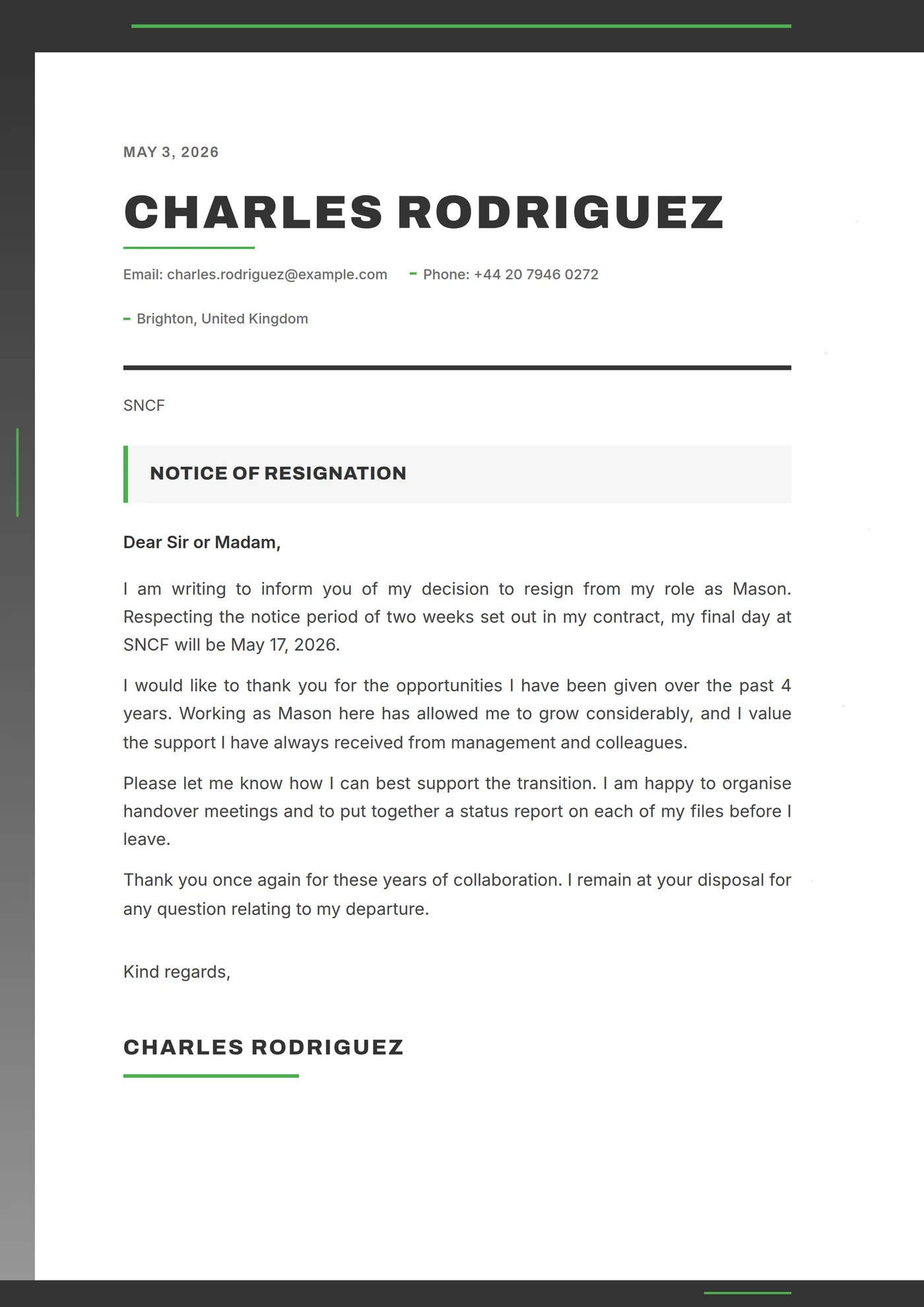
Mountain Granite — Junior

Mountain Granite

professional

A clean, respectful layout suits a junior mason writing a short, direct letter after their first formal apprenticeship or job.

Learn more about this template
Mid-level
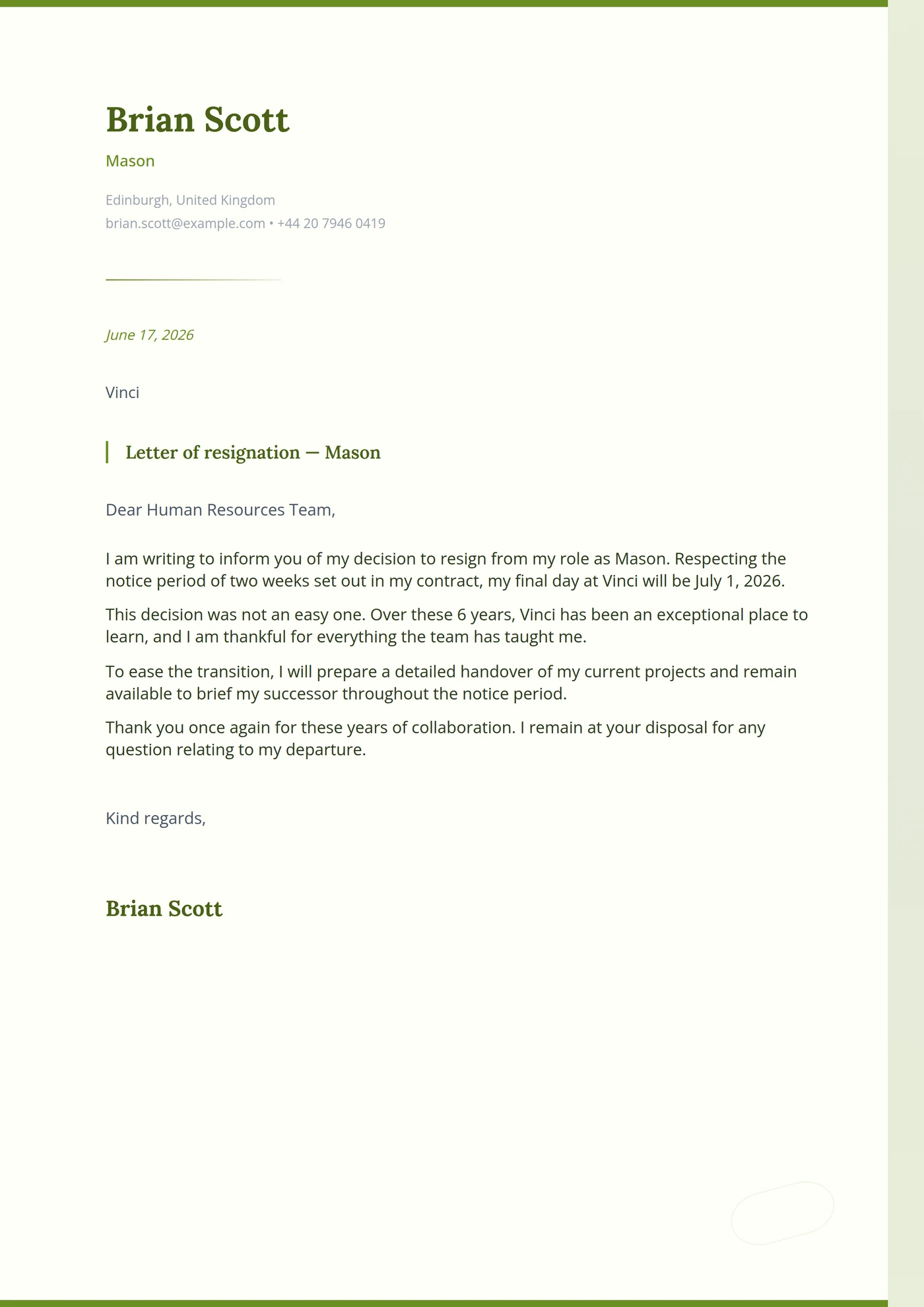
Olive Grove — Mid-level

Olive Grove

professional

This template balances professionalism and warmth, fitting a mid-level mason who wants to thank the crew and foreman while maintaining a formal tone.

Learn more about this template
Senior
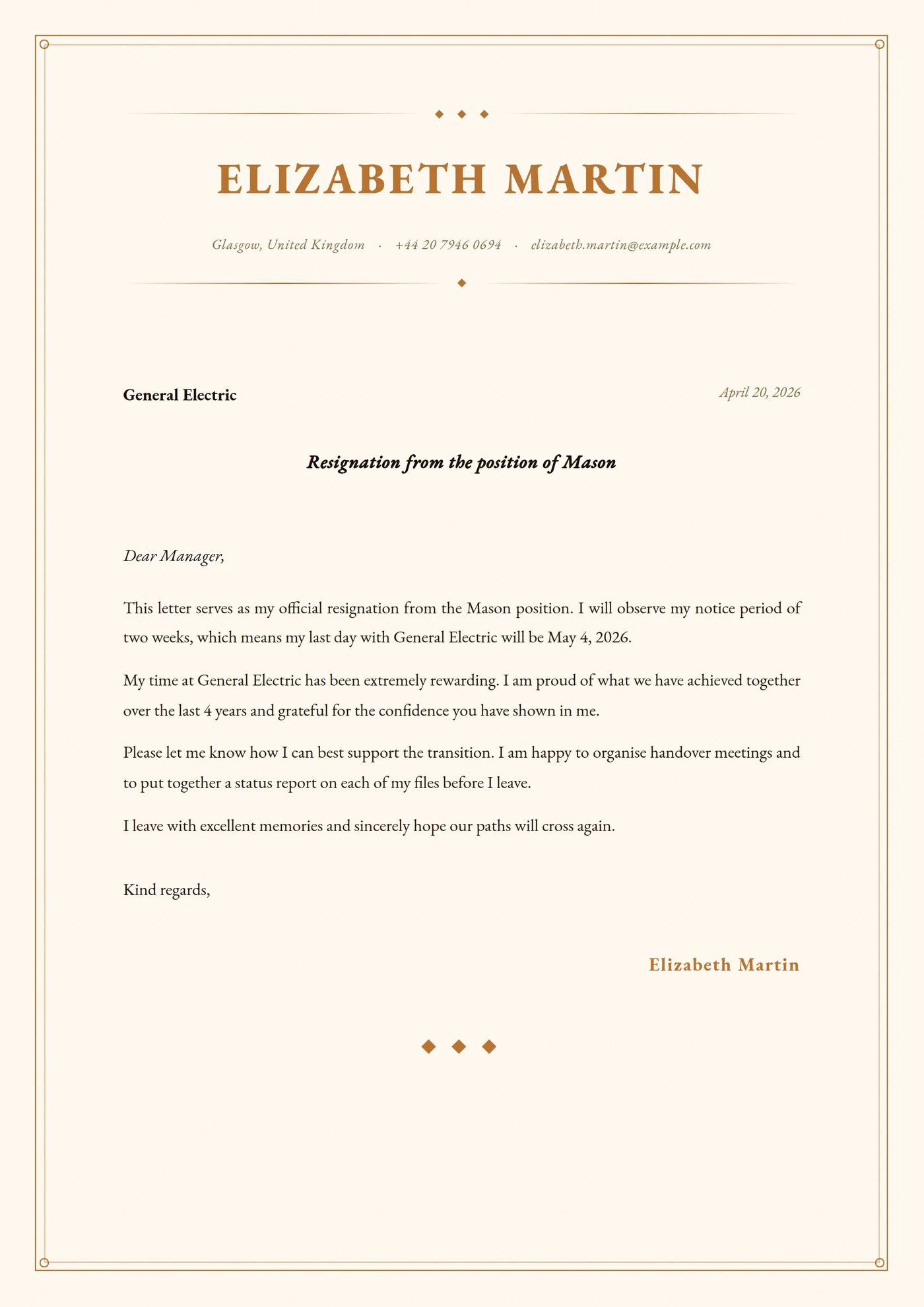
Copper Engraving — Senior

Copper Engraving

professional

A more distinguished, crafted style reflects the gravitas appropriate for a senior mason or crew lead offering a structured transition plan.

Learn more about this template

Tips for Resigning

Notice Period
Most masons are expected to give one to two weeks notice, consistent with standard construction trade practice, unless a union agreement or contract specifies otherwise. If you are mid-project on a critical phase like foundation or structural work, offering extra notice helps the contractor avoid scheduling disruptions.
Tone
Keep the letter courteous and factual, thanking the employer for the opportunity and experience gained on job sites. Avoid venting about safety concerns, pay disputes, or difficult crew dynamics in writing — raise those separately in person if needed.
Timing
Resign at the start or end of a workweek, ideally after completing a project milestone such as a pour or wall section, rather than mid-task. If a bonus, union benefit vesting, or seasonal pay adjustment is upcoming, confirm the date so you do not forfeit earned compensation.
Preserving Relationships
Masonry is a close-knit trade network, so maintaining goodwill with foremen and contractors matters for future referrals and union standing. Offer to help train a replacement or finish a specific wall or structural section, and always request a reference before your last day.

Notice Period Rules

United States
In the US, most mason jobs are at-will, meaning no legal notice is required, but giving one to two weeks is standard courtesy in the construction industry. Union masons should check their collective bargaining agreement, as some specify notice expectations tied to job assignments or dispatch rules.
United Kingdom
In the UK, statutory minimum notice is one week after one month of employment, though many construction contracts specify one to four weeks depending on seniority. Always check your written contract or site agreement, as some employers tie notice to project completion dates.
Canada
In Canada, notice requirements vary by province, with most requiring one to two weeks under employment standards legislation for hourly trades workers. Longer-tenured masons may be entitled to extended notice under the common law reasonable notice doctrine if no contract specifies otherwise.
Europe
In France and Germany, notice periods for manual trades like masonry are often governed by collective bargaining agreements (convention collective / Tarifvertrag), typically ranging from one to four weeks depending on tenure. Always check the applicable sector agreement, as construction trades often have specific rules distinct from general labor law.

Frequently Asked Questions

Yes, even in a hands-on trade like masonry, a written letter creates a clear record of your last working day and helps avoid disputes over final pay or benefits. It also shows professionalism that can support future references or union standing.

A standard of one to two weeks is typical for most mason positions, allowing the contractor time to adjust crew scheduling. If you are union-affiliated or under a specific project contract, check for any notice clauses that may extend this expectation.

No, an employer cannot legally force an employee to stay, since resignation is a unilateral decision by the worker. They can ask you to reconsider or negotiate your departure date, but they cannot compel you to continue working against your will.

While a verbal conversation followed by a written letter is the most professional approach, email is generally acceptable, especially if your foreman or contractor is off-site. Avoid resigning solely by text message, as it can appear unprofessional and may not provide the documentation needed for payroll or HR records.

Related Job Titles

Need a personalized resignation letter?

Use our AI to generate a professional, polished letter tailored to your role and situation in minutes.

Write your letter — it's free

Start for free. No credit card required.