Welder Resignation Letter Templates

Professional resignation letter templates for Welder professionals — formal, short, email versions with expert tips.

We currently have 58 Welder job postings in our database. Write your letter — it's free

When to Use

New Job Opportunity
When leaving for a new welding position, keep the tone positive and professional, thanking the employer for the training and shop experience gained. Mention the transition briefly without disclosing salary details or the new employer's name unless asked, and avoid comparing the two companies. Focus on offering a smooth handover of unfinished jobs, WPS documentation, and equipment checklists.
Career Change
If moving away from welding into a different trade or field, frame the decision as a personal career direction rather than dissatisfaction with the shop or supervisor. Express genuine appreciation for the skills and certifications gained, such as AWS D1.1 experience, and offer to help train a replacement or wrap up current fabrication projects. Keep the explanation brief and avoid criticizing the welding trade itself.
Personal Reasons
For resignations tied to health, family obligations, or burnout, you only need to state that you are leaving for personal reasons without giving medical or family details. Keep the letter short, respectful, and unemotional, and offer to complete a reasonable handover if your health or circumstances allow. Employers in fabrication and construction generally respect privacy on personal matters, so there is no obligation to elaborate further.
Relocation
When resigning due to relocation, state the moving date clearly since most welding roles require on-site, hands-on shop or field presence and remote arrangements are rarely possible. Mention whether you would be open to a transfer to another company location or facility if one exists, and offer to complete any in-progress welds or inspections before departure. Include your last working day and thank the employer for the opportunity.

Recommended templates for Welder

Three templates selected for this role, from junior to senior level. Tap a template to discover its full design and use it in your document.
Junior
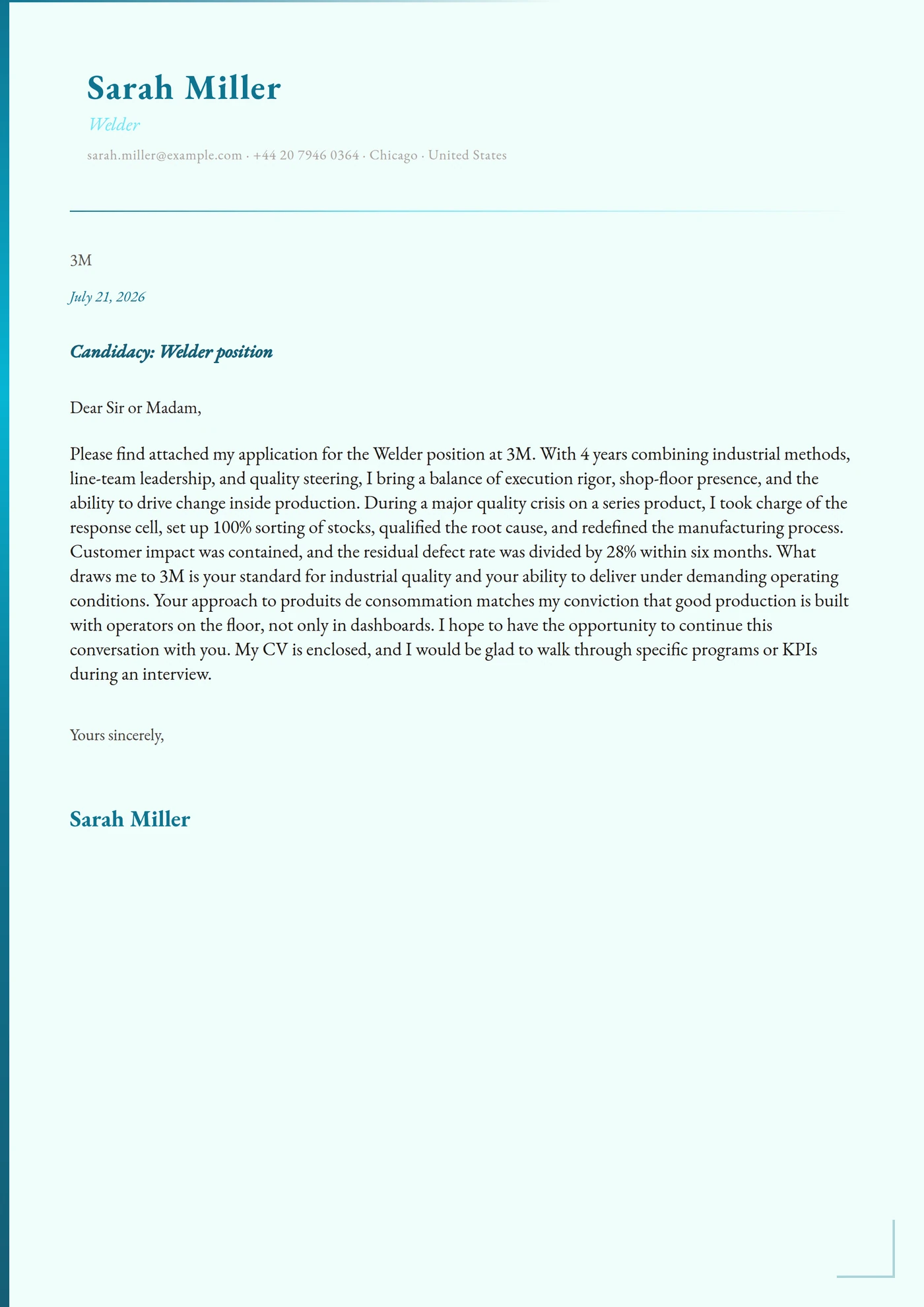
Steel Industrial — Junior

Steel Industrial

modern

The industrial styling and clean modern layout suit an entry-level welder's straightforward, concise resignation without unnecessary formality.

Learn more about this template
Mid-level
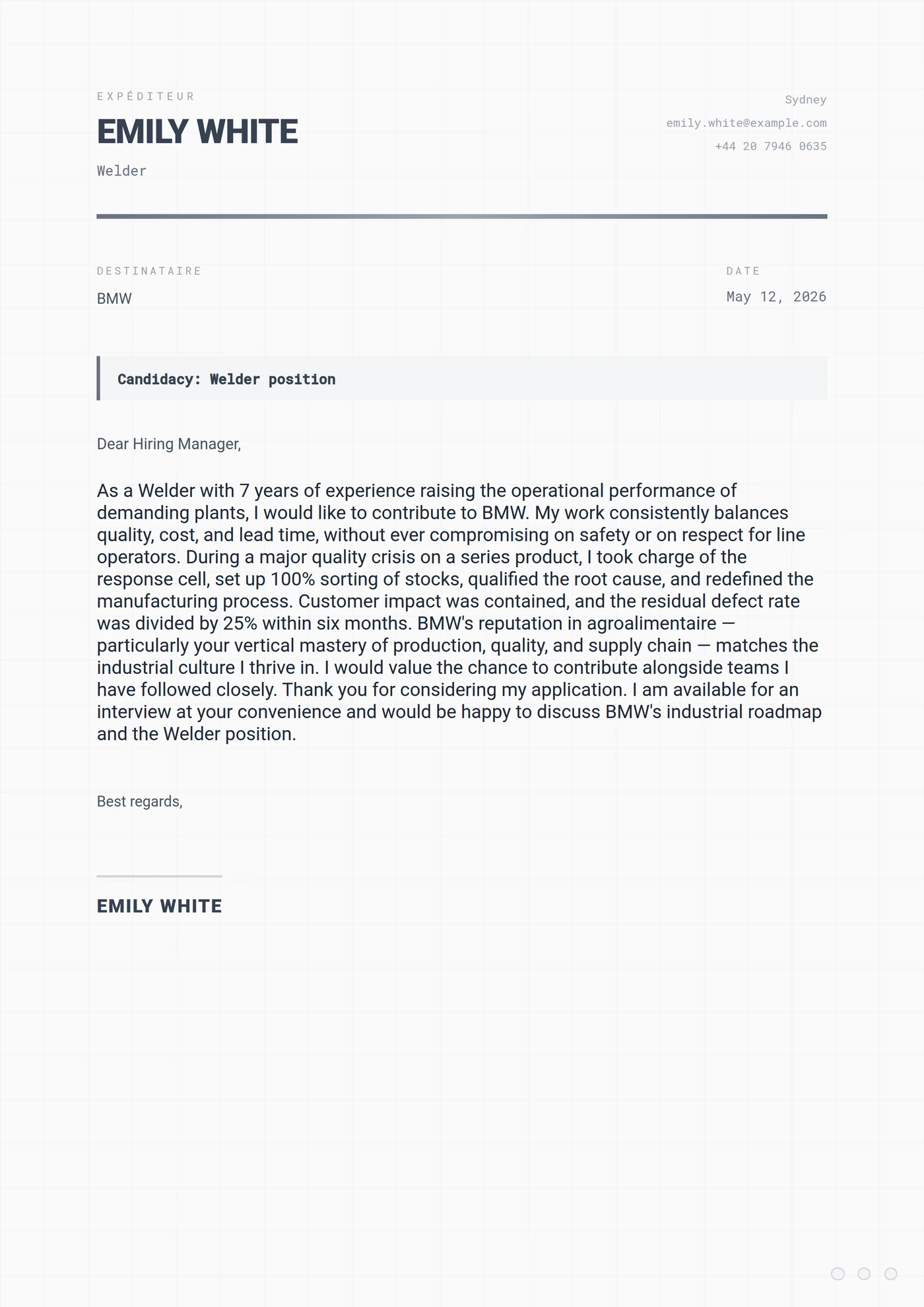
Rustic Wood — Mid-level

Rustic Wood

minimal

A minimal yet warm design balances professionalism and approachability, fitting a mid-level welder who wants a respectful but not overly corporate tone.

Learn more about this template
Senior
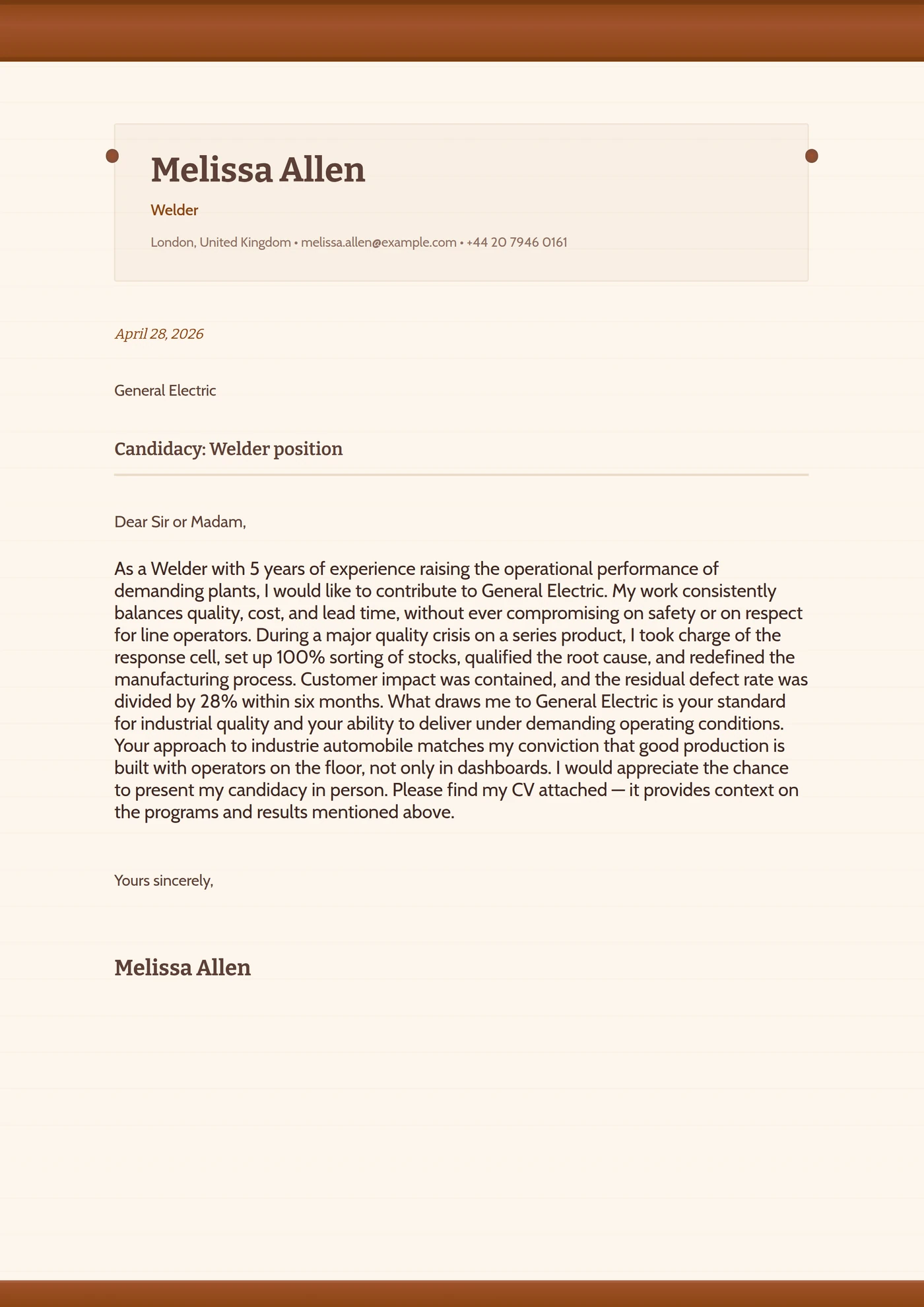
Copper Patina — Senior

Copper Patina

professional

The refined, professional aesthetic conveys the gravitas expected from a senior welder or lead fabricator offering a structured transition plan.

Learn more about this template

Tips for Resigning

Notice Period
A standard two weeks notice is the professional norm for welders in most shops and construction sites, allowing time to finish current welds, inspections, and project handoffs. If you are mid-project on a critical structural or pressure-vessel job, consider offering extra days to avoid leaving safety-critical work unfinished. Always check your employment agreement or union contract, as some union shops specify different notice requirements.
Tone
Keep the tone calm, respectful, and factual, thanking your supervisor and crew for the experience and skills gained. Avoid venting about safety concerns, pay disputes, or personality conflicts in the letter itself — raise those separately if needed. Never use the resignation letter to criticize equipment, management, or working conditions.
Timing
Resign after completing a critical weld, inspection, or milestone rather than mid-pour or mid-fabrication, to avoid leaving structural integrity issues unresolved. Early week (Monday or Tuesday) resignations give the shop foreman more time to plan coverage before the weekend. If a bonus, per diem, or certification renewal is pending, confirm the payout timing before submitting your notice.
Preserving Relationships
The welding and fabrication industry is close-knit, and former supervisors often provide references or referrals for future union or shop positions. Offer to document weld logs, WPS/PQR records, and equipment status clearly before leaving, and stay reachable for brief questions during the transition. A professional exit keeps the door open for rehire or recommendation within the trade network.

Notice Period Rules

United States
Most welding jobs in the US are at-will, meaning no legal notice is required, but two weeks is the customary professional standard. Union welders should check their collective bargaining agreement, as some require specific notice periods or grievance procedures for resignation. Exceptions apply for safety-sensitive, mid-project structural or pipeline work, where extending notice is considered good practice.
United Kingdom
In the UK, statutory minimum notice is one week for employees with over one month of service, but most welding contracts specify one to four weeks depending on seniority. Check your written contract or union agreement, as apprenticeship or fixed-term welding contracts may have different notice clauses. Failing to honor contractual notice can affect references or final pay in some cases.
Canada
Canadian notice requirements vary by province; for example, Ontario mandates a minimum of one week notice after three months of employment, increasing with tenure. Welders under union agreements should consult their collective agreement, as it often overrides the provincial minimum with specific notice terms. The common law reasonable notice doctrine rarely applies to hourly tradespeople but may matter for salaried supervisory welding roles.
Europe
In France, notice periods for welders are typically set by the applicable collective bargaining agreement (convention collective) and commonly range from one to two months depending on seniority. In Germany, the statutory minimum notice is four weeks, extending with years of service under the Kündigungsfrist rules, unless a shorter probation period applies. Always verify the specific metalworking or construction sector agreement, as these frequently set stricter terms than general labor law.

Frequently Asked Questions

Yes, even in trades roles a written resignation letter is strongly recommended to create a clear record of your last working day and avoid disputes. It also helps HR process final pay, benefits, and equipment return smoothly. A verbal notice to your foreman should always be followed up in writing.

Two weeks is the standard professional courtesy for most welding positions, giving the shop time to arrange coverage or reassign projects. If you are on a union contract or handling a critical structural job, check your agreement as it may specify longer notice. Offering to finish a specific weld or inspection phase before leaving is also good practice.

No, an employer cannot legally force an employee to stay, since resignation is a unilateral right in virtually all jurisdictions. They can ask you to reconsider or negotiate your notice period, but they cannot compel continued employment. If you fail to serve contractual notice, however, this could affect references or, rarely, lead to a breach of contract claim.

Email is acceptable, especially for field or remote-site welders who may not see their supervisor daily, but a face-to-face or phone conversation beforehand is more professional. Always follow up any verbal notice with a written email or letter for documentation purposes. Include your last working day and offer to assist with the handover of tools, certifications, or unfinished welds.

Need a personalized resignation letter?

Use our AI to generate a professional, polished letter tailored to your role and situation in minutes.

Write your letter — it's free

Start for free. No credit card required.