
When You Need a Cover Letter for Welder
A cover letter for a standard Welder application lets you highlight specific certifications, welding processes, and safety records that a resume can only list in bullet form. It gives you room to explain why you are drawn to a particular shop, fabrication team, or industry sector, which helps hiring managers gauge fit beyond technical skill alone. Skipping it can make an otherwise strong resume feel generic in a competitive shop-floor hiring pool.
For a Welder internship or apprenticeship, the cover letter should emphasize training completed, hands-on coursework, and eagerness to learn under experienced fabricators rather than years on the job. Mention any school-based welding lab hours, safety certifications like OSHA 10, and personal projects that show initiative and coordination. Employers hiring interns want to see reliability, willingness to follow instructions, and genuine interest in the trade.
When moving into welding from another field, focus the letter on transferable skills such as mechanical aptitude, attention to detail, blueprint reading, or experience in manufacturing, construction, or the military. Explain concretely how you have already built relevant competencies, such as completing a welding certificate program or practicing on personal projects, to reassure the employer of your commitment. Keep the tone confident and forward-looking rather than apologetic about the career shift.
For an internal promotion, such as moving from welder to lead welder or shop supervisor, the tone should be direct and grounded in specific accomplishments within the current company. Highlight mentoring of junior welders, quality or safety improvements you drove, and your understanding of company processes and equipment. Keep it concise since the hiring manager already knows your work, and focus on readiness for added responsibility.
Recommended templates for Welder
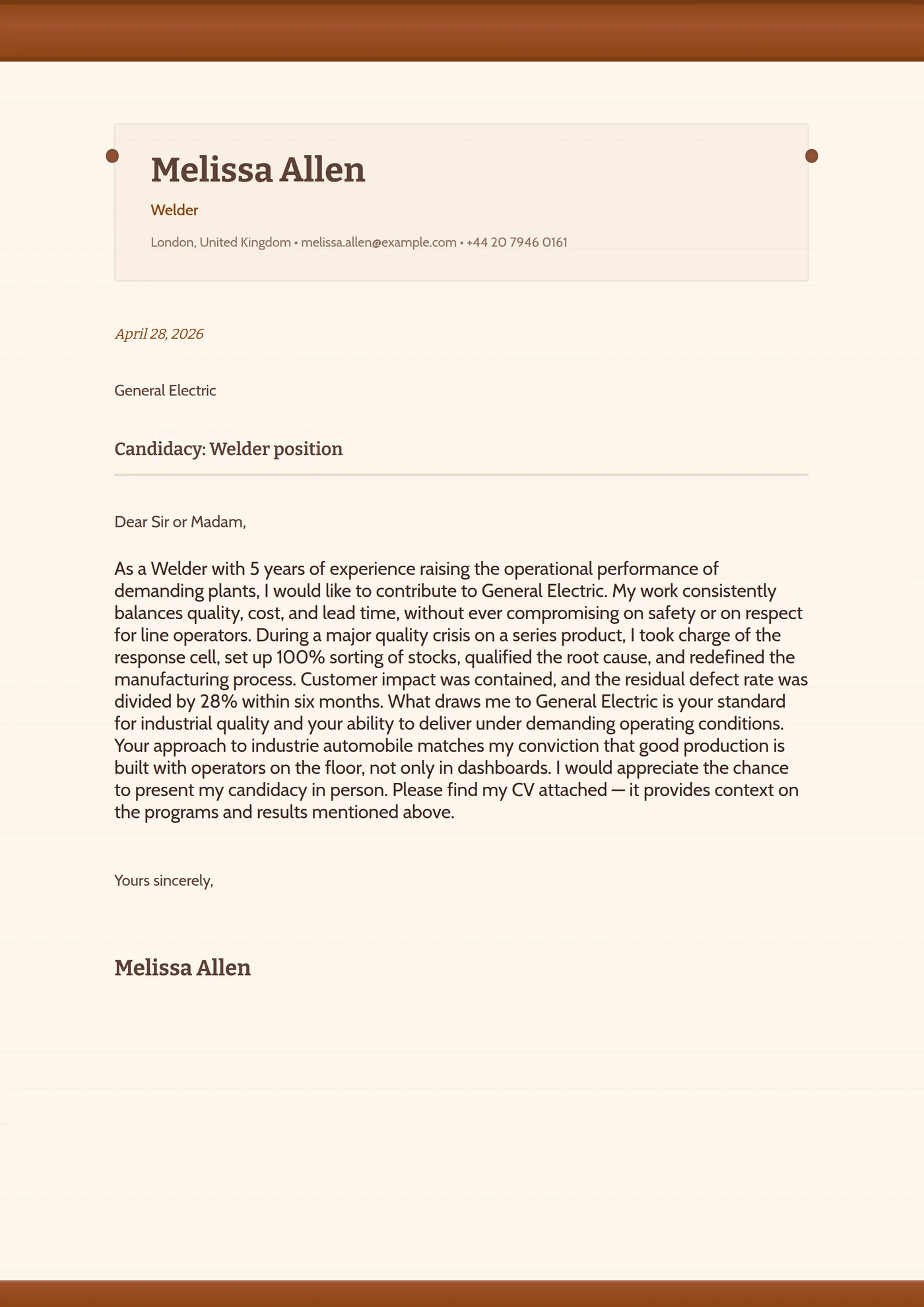
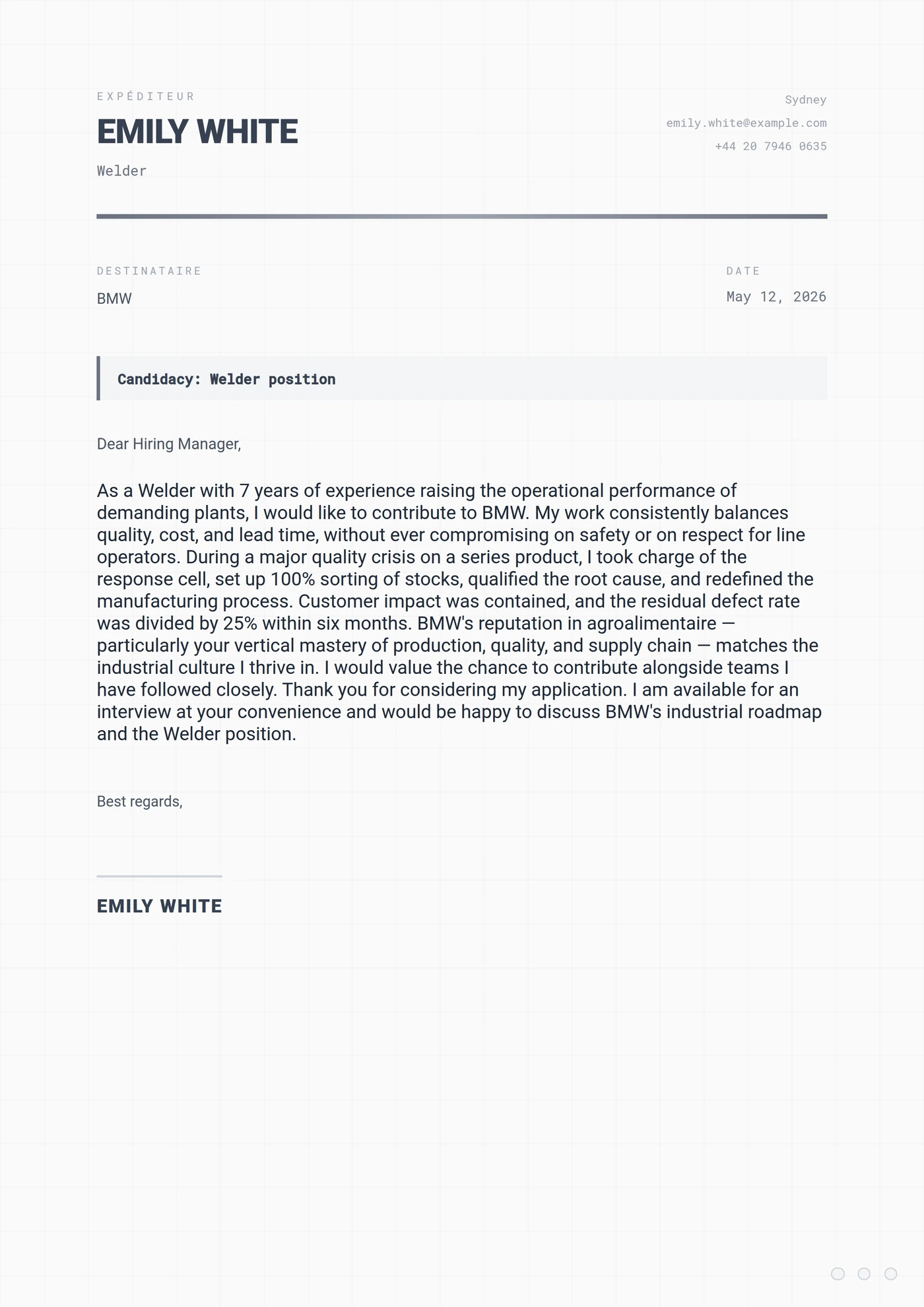
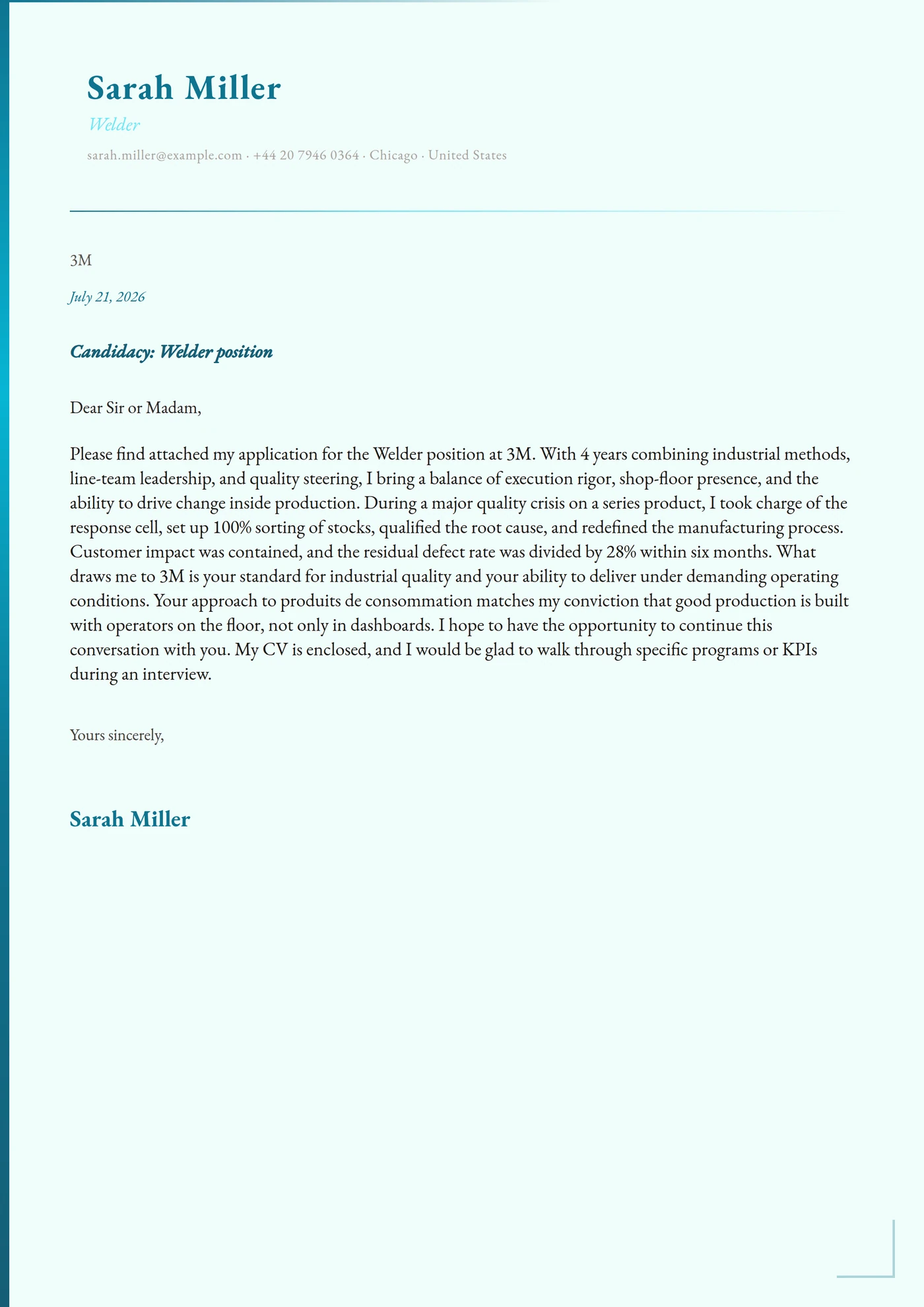
Three templates selected for this role, from junior to senior level. Tap a template to discover its full design and use it in your document.
How to Write a Welder Cover Letter
Open with a direct statement of the role you are applying for and one strong credential or result that signals competence, such as a certification or years of hands-on experience. Avoid generic openers like To whom it may concern without any personalization; instead, address the hiring manager by name whenever possible, found via the job post or company website. Skip vague phrases like I am writing to apply and instead lead with something concrete, like your AWS certification or specific welding process expertise.
Structure the body in two to three paragraphs. The first should cover your core technical qualifications: welding processes (MIG, TIG, stick), materials worked with, and relevant certifications or blueprint-reading ability. The second paragraph should shift to a specific achievement, such as reducing scrap rate by 15% or completing a structural fabrication project ahead of schedule, to prove impact rather than just listing duties.
Close with a clear call to action, such as requesting an interview or expressing availability to discuss your qualifications further, and thank the employer for their time. Avoid overly casual sign-offs; use professional closings like Sincerely or Best regards followed by your full name and contact information.
The tone should be professional but straightforward, avoiding overly flowery language that feels out of place in a hands-on trade. Use precise industry terminology correctly, such as naming specific welding processes or standards, to signal genuine expertise and professionalism.
Skills to Mention in Your Welder Cover Letter
Common Mistakes
A generic cover letter that could apply to any manual labor job fails to mention specific welding processes, certifications, or the employer's industry, which signals a lack of genuine interest. Fix this by referencing the specific job posting, the type of welding required, and how your background aligns with that exact role.
Cover letters longer than one page risk losing the hiring manager's attention, especially in fast-paced hiring environments common to shop-floor roles. Keep it to three to four concise paragraphs and cut repeated resume content or unnecessary background detail.
Simply restating job duties like operated welding equipment without showing results makes the letter forgettable. Reframe duties into achievements, such as maintained a 98% weld pass rate on inspections or trained three junior welders on proper technique, to demonstrate tangible value.
Avoid submitting the cover letter as an unusual file type; stick to PDF unless the employer specifically requests .docx. Use a standard, readable font, keep formatting simple without tables or graphics, and always include a clear subject line referencing the job title when emailing.
Frequently Asked Questions
While some shop-floor roles rely mainly on the resume and certifications, a cover letter still helps you stand out by explaining your specific experience and interest in the company. It is especially valuable when applying to higher-skill or supervisory welding positions where communication matters.
Aim for half a page to one page, using three to four short paragraphs. Hiring managers in manufacturing and construction typically prefer concise, direct communication over lengthy narratives.
Yes, even small changes such as naming the specific welding processes or materials mentioned in the job post can make a big difference. Tailoring shows genuine interest and helps you pass through applicant tracking systems that scan for relevant keywords.
In the US, a cover letter is generally optional but appreciated, especially for higher-skill roles. In the UK and much of the EU, cover letters are more consistently expected as part of a complete application, particularly for positions involving certifications or supervisory responsibility.
AI tools can be a helpful starting point for structuring your letter, but you should always personalize it with your actual certifications, projects, and specific employer details. Relying entirely on AI-generated generic text can make your letter feel impersonal and reduce your chances of standing out.
Submit your cover letter as a PDF to preserve formatting unless the employer specifically requests another format like .docx. Use a clean, single-column layout with a professional font to ensure readability both on screen and if printed for review.
Related Job Titles
Explore more about