
When You Need a Cover Letter for Machine Operator
Use a cover letter when applying for a Machine Operator role to connect your production experience, safety record, and equipment knowledge to the employer’s specific operation. It adds context beyond a resume by showing how you can support quality control, uptime, and reliable shift performance.
For a Machine Operator internship, focus on your willingness to learn, mechanical aptitude, and exposure to shop, warehouse, laboratory, or technical coursework. Emphasize transferable strengths such as following procedures, attention to detail, and a commitment to workplace safety rather than claiming extensive production experience.
When moving into machine operation from another field, explain the connection between your past responsibilities and manufacturing requirements. Frame transferable skills such as equipment handling, troubleshooting, inventory work, documentation, and standard operating procedures as evidence that you can learn production equipment quickly.
An internal promotion letter should be confident, respectful, and grounded in your record with the company. Highlight measurable contributions to safety, output, quality, training, and cross-team support, while showing readiness to take on broader machine ownership or leadership duties.
Recommended templates for Machine Operator
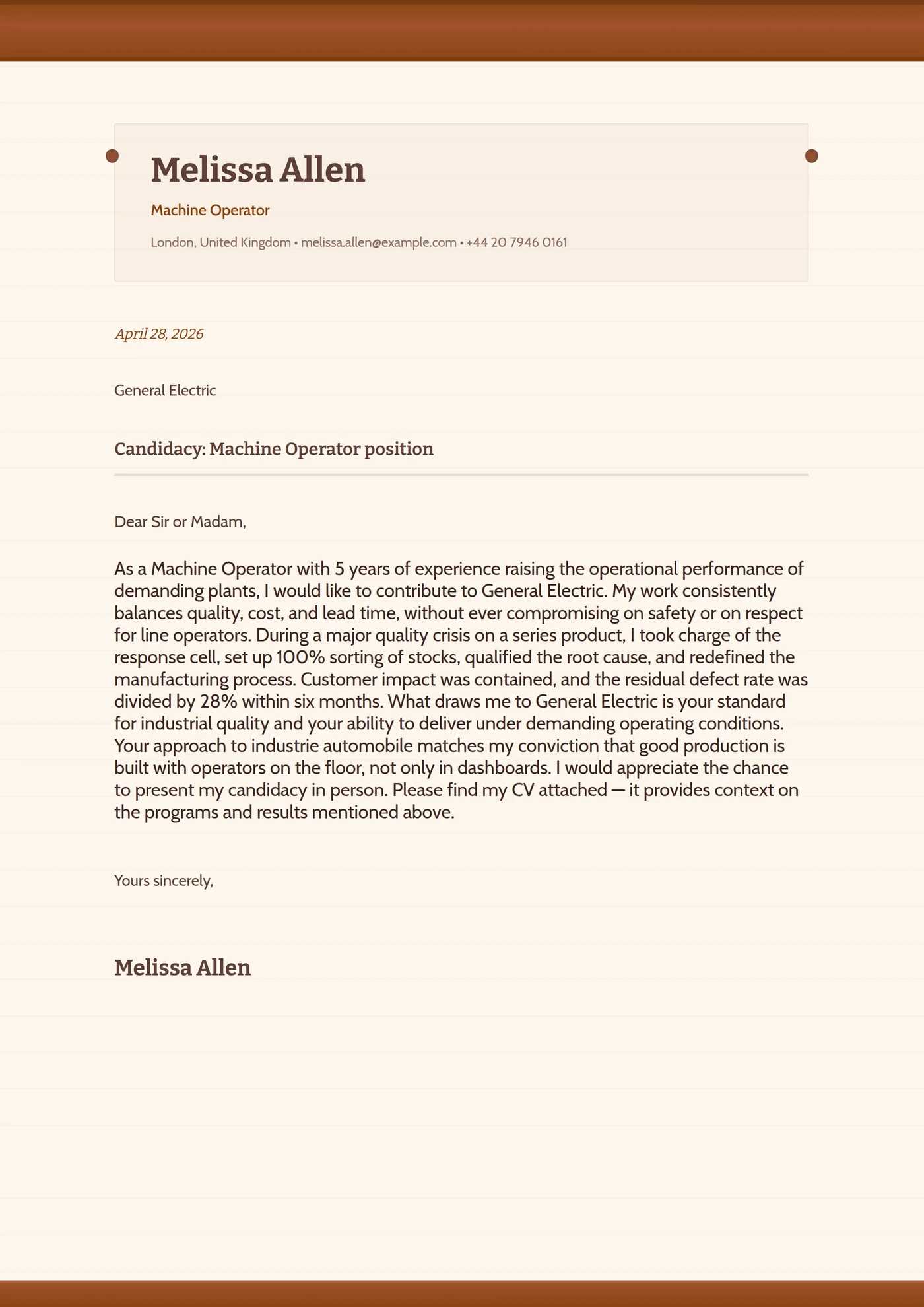
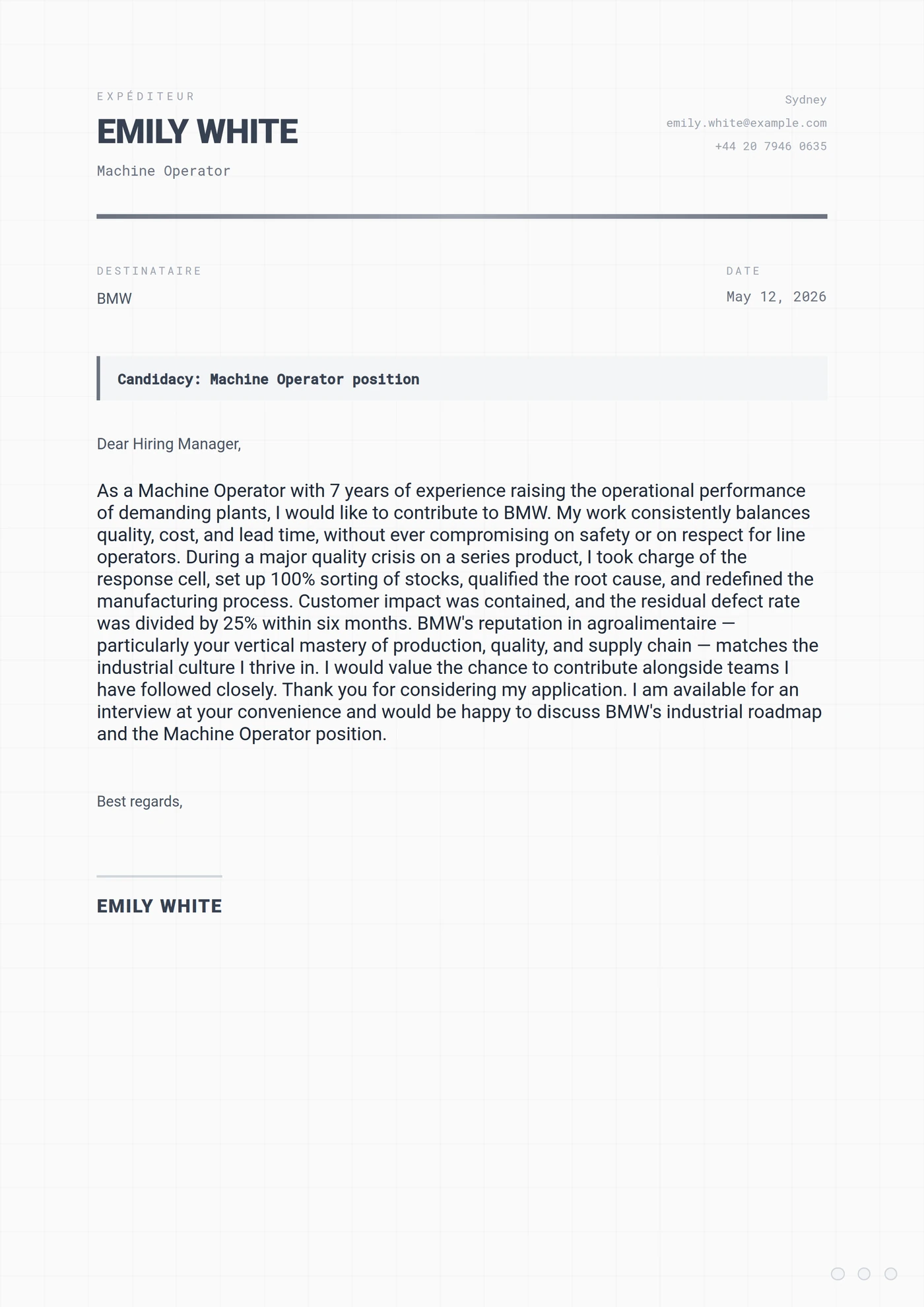
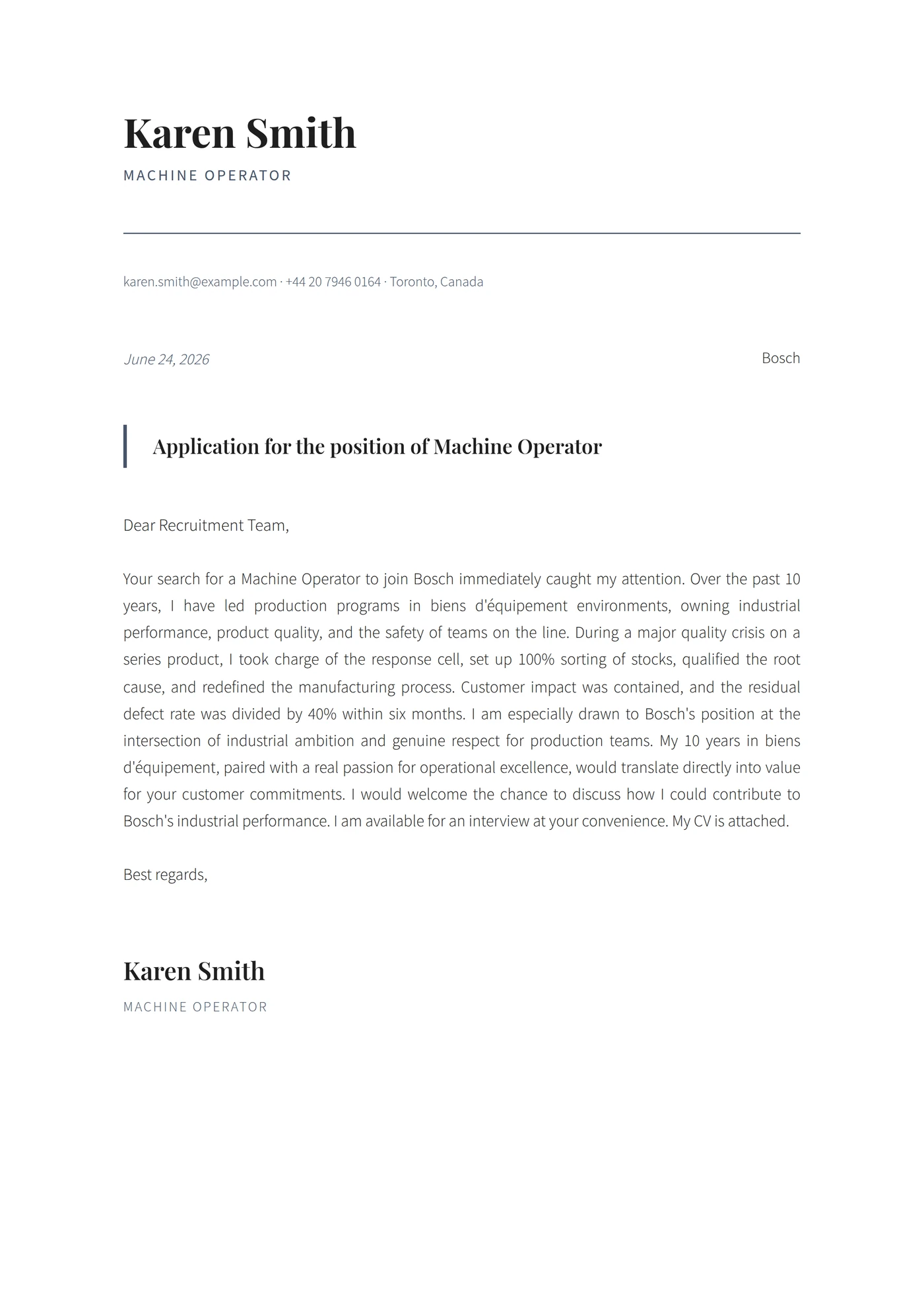
Three templates selected for this role, from junior to senior level. Tap a template to discover its full design and use it in your document.
How to Write a Machine Operator Cover Letter
Open with the exact job title, the employer’s name, and a concise statement of fit. For example, identify your experience operating comparable equipment, working in regulated production, or maintaining consistent quality standards; this immediately tells the reader why your application is relevant. Address the hiring manager by name when it is available, such as the production manager or plant supervisor. Avoid vague openings that say only you are interested in the position; instead, name the equipment or environment and connect it to the company’s production needs.
Use two or three paragraphs for the body. First, describe your most relevant machine operation experience, including equipment types, setup tasks, production environments, and familiarity with safety procedures or work instructions. Next, give one or two results-based examples, such as meeting output targets, reducing rework, identifying a mechanical issue early, or supporting changeovers. Quantify every achievement where accurate, using figures for production volume, downtime, scrap, on-time completion, or years of experience. Close the body by explaining why the facility, product, shift, or industry interests you. Balance technical ability with dependable general skills such as attendance, communication, teamwork, and careful documentation, since employers need operators who can perform consistently across a production team.
End with a direct, professional request to discuss how your experience can support safe and efficient production. Reaffirm your interest, thank the reader for their time, and use a sign-off such as Sincerely or Kind regards. Do not make demands, repeat your entire resume, or use an uncertain closing. Invite an interview and state that you are prepared to discuss your relevant equipment experience, availability, and commitment to quality.
Use a clear, practical, and respectful tone that reflects a safety-conscious production environment. Write in plain language, use active verbs such as operate, inspect, troubleshoot, and document, and avoid overly casual phrasing or inflated claims. Manufacturing employers value accuracy and dependability, so support confidence with specific evidence. Professional references to OSHA practices, quality checks, work orders, and standard procedures signal that you understand operational expectations.
Skills to Mention in Your Machine Operator Cover Letter
Common Mistakes
A generic letter says the applicant is hardworking and interested in manufacturing without naming the employer, equipment, or production setting. Customize the opening with details from the job posting and connect your experience to priorities such as quality, safety, setup, or throughput.
Keep the letter to one page and typically around 250-400 words. Cut repeated job duties, lengthy personal history, and unrelated experience so the hiring manager can quickly find your machinery, safety, and results-based qualifications.
Listing duties alone, such as operating machines or inspecting parts, does not show the value you delivered. Quantify every achievement by explaining how you met production goals, reduced defects, limited downtime, completed changeovers, or maintained safety compliance.
Use a readable professional font, consistent spacing, and a simple business-letter layout with no graphics that distract from the content. Submit a PDF unless the application requests .docx, and use a clear email subject line that includes the Machine Operator role and your name.
Frequently Asked Questions
A cover letter is not always required, but it can strengthen your application when the role involves specific machinery, safety requirements, or production standards. Use it to connect your experience to the employer’s operation and explain qualifications that may not be obvious from your resume.
Aim for one page and approximately 250-400 words. Include only the experience, technical skills, safety practices, and accomplishments most relevant to the job posting.
Yes, you should tailor each letter to the equipment, industry, shift requirements, and priorities listed in the posting. Mirror keywords naturally from the description, especially terms related to machinery, quality systems, and safety procedures.
Requirements vary by employer rather than region, although cover letters are commonly optional in the US and may receive more attention in parts of the UK and EU. Submit one whenever it is requested or when you need to explain a career change, relevant certification, or specialized equipment experience.
AI can help you organize a draft and identify relevant keywords, but you must verify every statement for accuracy. Personalize the final version with your actual machines, achievements, safety training, and reasons for applying.
Use a standard business format with your contact information, date, employer details, a personalized greeting, three concise sections, and a professional closing. Save the final file as a PDF when permitted to preserve layout and ensure it is easy for an ATS to read.
Related Job Titles
Explore more about