
Machine Operators set up, run, monitor, and maintain production equipment to manufacture parts or packaged goods safely and efficiently. Employers look for resumes that show machine setup, quality control, safety awareness, and measurable production results such as reduced downtime or higher output. Strong candidates stand out by documenting experience with specific equipment, preventive maintenance tasks, inspection tools, and certifications such as OSHA 10. Entry-level roles may provide on-the-job training, while experienced operators are often expected to troubleshoot equipment, train peers, and support continuous improvement.
What Makes a Great Machine Operator Resume
A strong Machine Operator resume uses a clear, reverse-chronological format with a concise professional summary, targeted skills section, work history, certifications, and education. Keep the design straightforward and easy to scan so hiring managers can quickly identify equipment experience, shift availability, safety training, and production capabilities. Use standard headings and avoid graphics that may interfere with ATS parsing. Prioritize achievements rather than listing routine duties alone. Show the machines operated, materials handled, production environment, inspection methods, and results achieved, such as improving first-pass yield by 12% or reducing changeover time. Include relevant credentials such as OSHA 10, forklift certification, or manufacturer-specific training, and tailor keywords to the employer’s machinery and industry.
Key Skills Needed
Typical Experience Level
Entry-level Machine Operators commonly begin with 0-2 years of manufacturing, warehouse, assembly, or production experience. Recruiters expect reliable attendance, comfort working shifts, the ability to follow work instructions, basic measurement skills, and a demonstrated commitment to safety. Training may cover machine controls, material handling, inspection procedures, and lockout/tagout requirements. Mid-level operators usually have 2-5 years of hands-on equipment experience and can complete setups, changeovers, routine adjustments, and first-level troubleshooting independently. Senior operators and lead operators often bring 5+ years of experience, work across multiple machine types, mentor new employees, identify root causes of downtime, and contribute to Lean manufacturing or continuous-improvement initiatives.
ATS Keywords for This Role
Recommended templates for Machine Operator
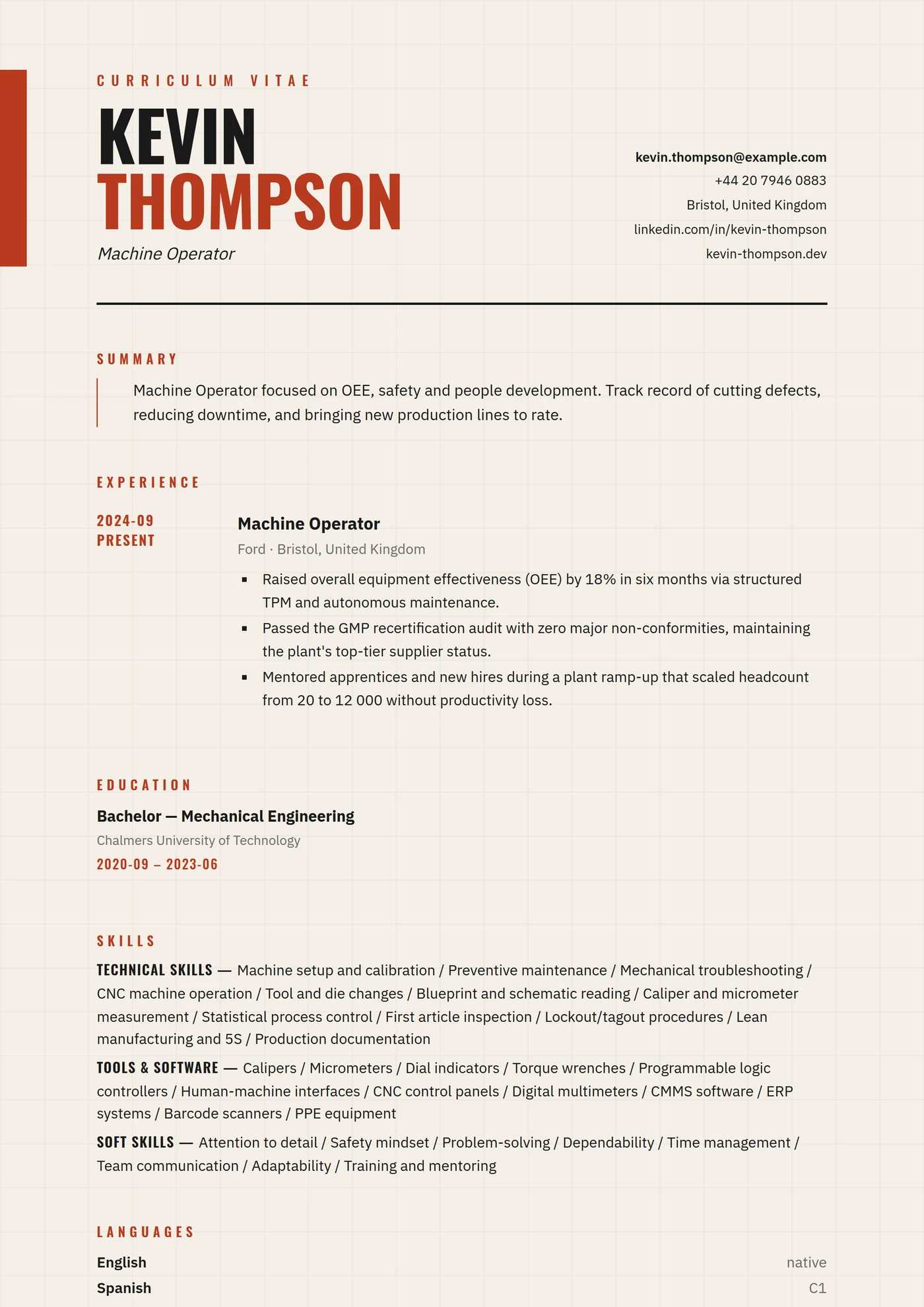
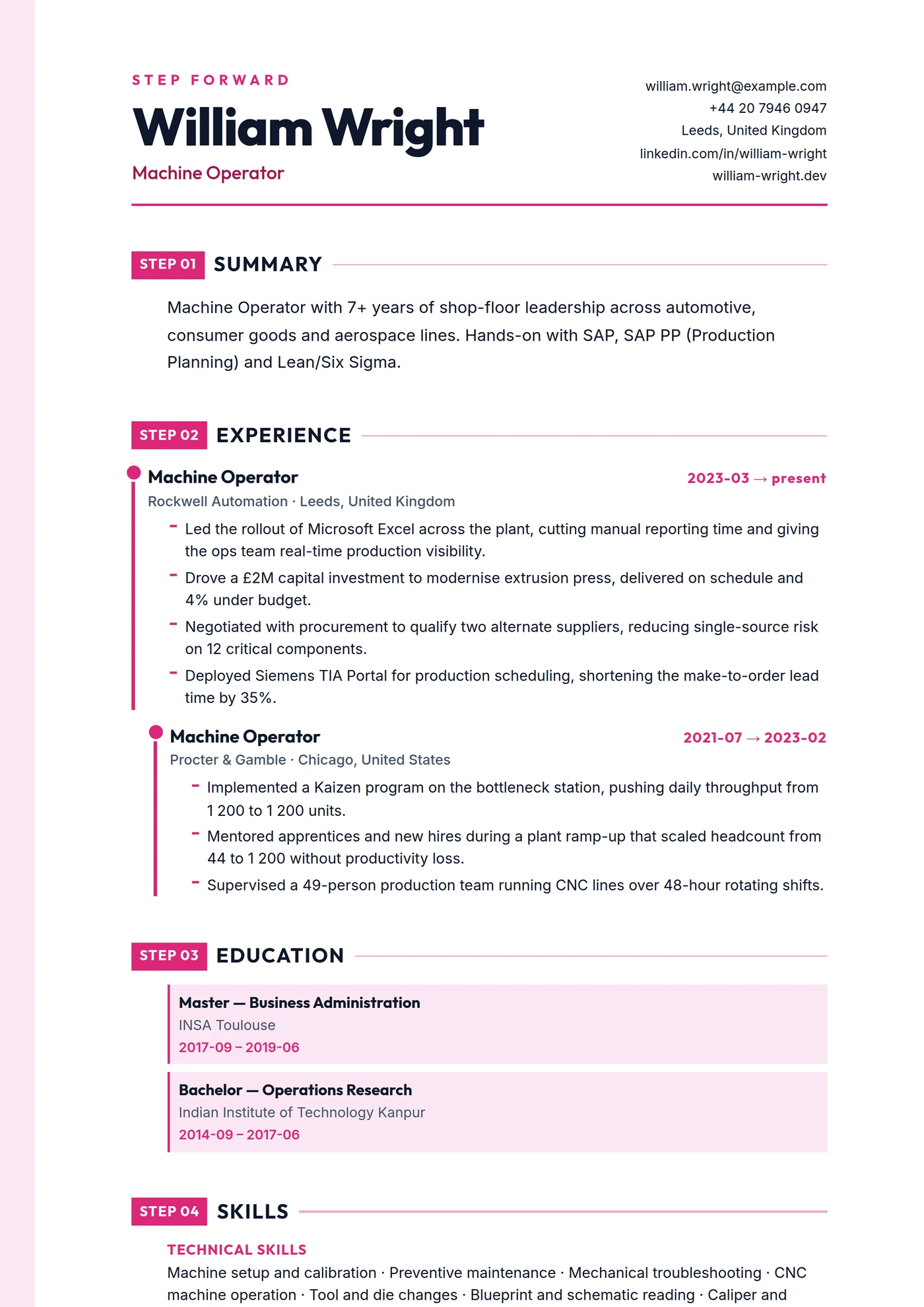
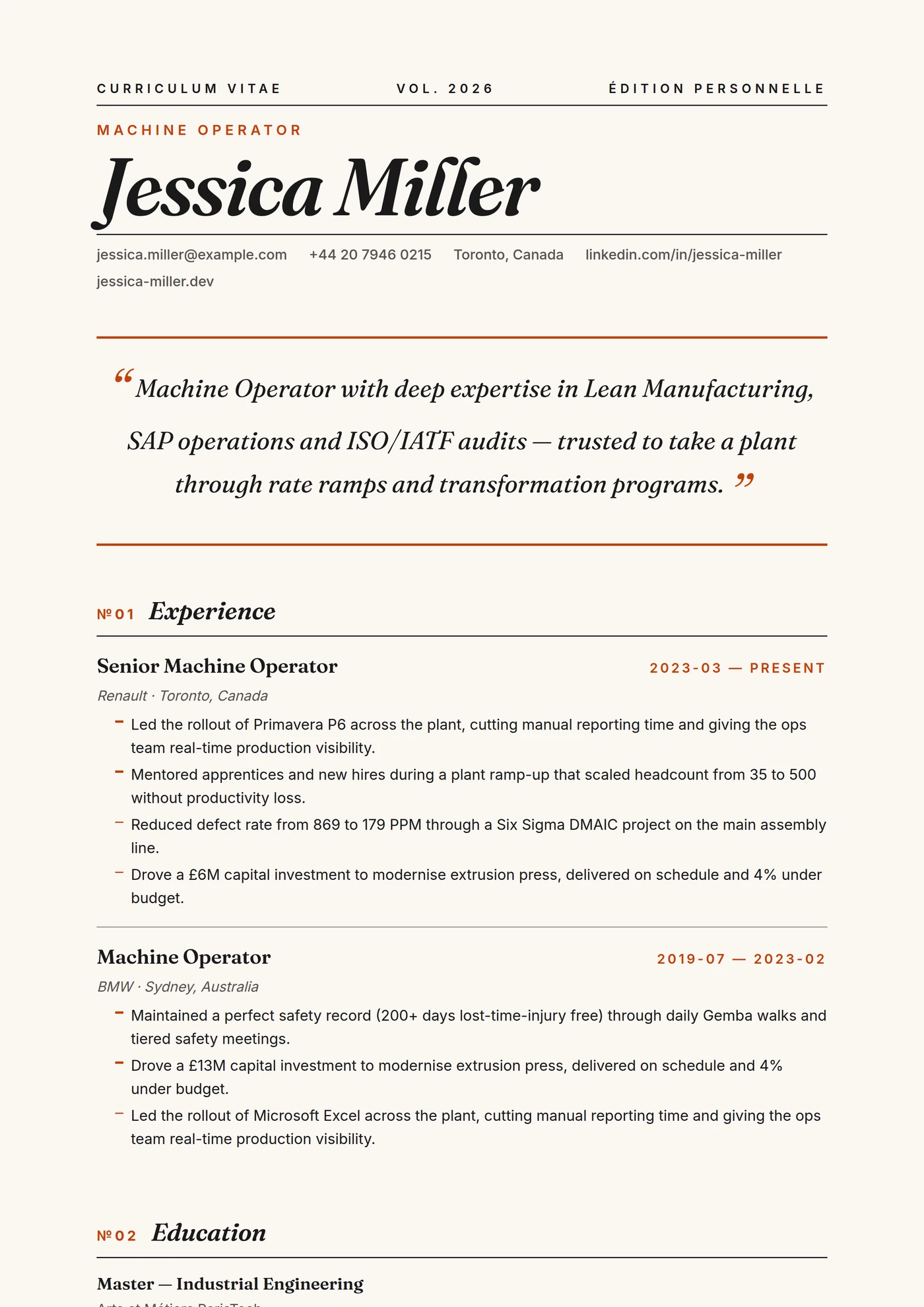
Three templates selected for this role, from junior to senior level. Tap a template to discover its full design and use it in your document.
Skills for Machine Operator
Hard Skills
Soft Skills
Tools & Software
ATS Keywords
Writing Tips for Machine Operator
Best Format to Use
A reverse-chronological resume is usually the best choice because it shows a dependable work record and makes it easy to trace increasing responsibility with machinery, setups, inspection, and safety. List each employer with job title, dates, equipment used, and accomplishment-focused bullets. Use a hybrid format if you are changing careers or have limited direct operating experience. Place a technical skills section near the top, then connect transferable warehouse, assembly, maintenance, or production work to the employer’s machine requirements.
Common Mistakes
How to Pass ATS
How to Stand Out
Frequently Asked Questions
Related Job Titles
Explore more about