
An Assembler builds, fits, and finishes components or finished products on a production line, following blueprints, work orders, and quality specifications. Employers look for candidates who can demonstrate precision, speed, and consistent adherence to safety standards, along with hands-on experience using hand and power tools. A strong resume highlights measurable output, defect rates, and certifications such as OSHA 10 or OSHA 30. Most Assemblers enter the field with a high school diploma and on-the-job training, with 1-3 years of experience typical for mid-level roles. Salaries vary widely by industry and region, but demonstrating reliability, speed, and quality control results helps candidates stand out.
What Makes a Great Assembler Resume
A strong Assembler resume is clean, concise, and structured around measurable production results rather than vague duty descriptions. Employers scan quickly for keywords related to tools, machinery, and safety compliance, so the format should be simple, use clear section headers, and avoid dense paragraphs. A reverse-chronological format works best because it shows career progression and recent relevant experience first. Content should prioritize quantifiable achievements: units assembled per shift, defect reduction percentages, safety record, and certifications. Including specific tools, machines, and quality standards (such as ISO 9001) signals technical competency to both hiring managers and ATS software. Tone should be direct and factual, avoiding overly casual language while still conveying reliability and teamwork. Finally, a good resume for this role balances technical skill listings with soft skills like attention to detail and ability to work in fast-paced environments. Keeping the resume to one page for junior to mid-level candidates, and at most two pages for senior supervisory-level assemblers, ensures readability and respects recruiter time.
Key Skills Needed
Typical Experience Level
Entry-level Assemblers typically have little to no prior experience beyond a high school diploma, relying on short on-the-job training programs to learn line procedures and safety protocols. Recruiters at this level expect resumes to highlight willingness to learn, basic tool familiarity, and reliability. Mid-level Assemblers, with 1-3 years of experience, are expected to show measurable productivity, quality consistency, and possibly cross-training across multiple stations. Senior Assemblers, often with 5+ years of experience, may take on lead or trainer roles, overseeing quality audits, mentoring new hires, and contributing to process improvement initiatives. At this level, resumes should emphasize leadership, efficiency gains, and familiarity with lean manufacturing or Six Sigma principles.
ATS Keywords for This Role
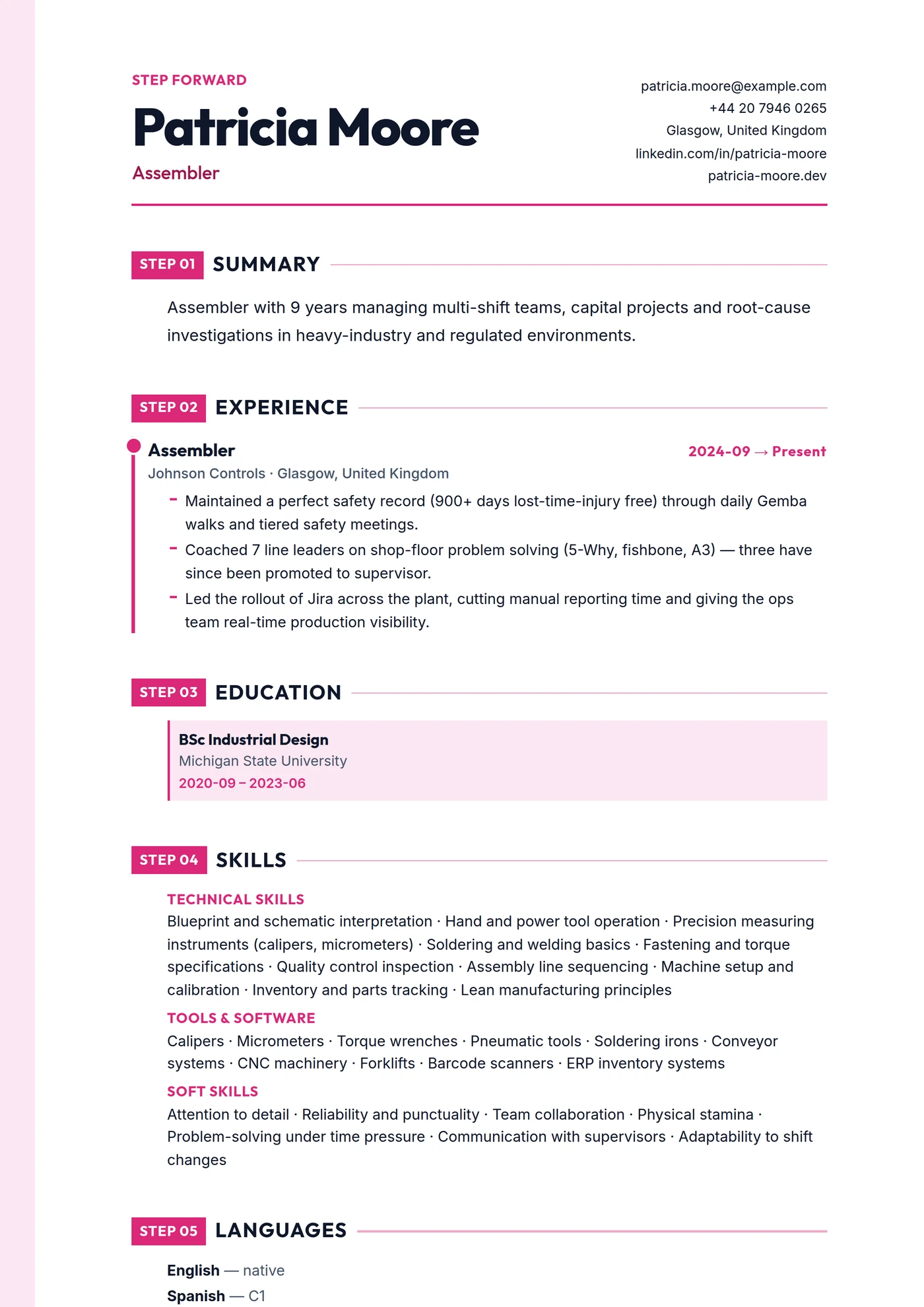
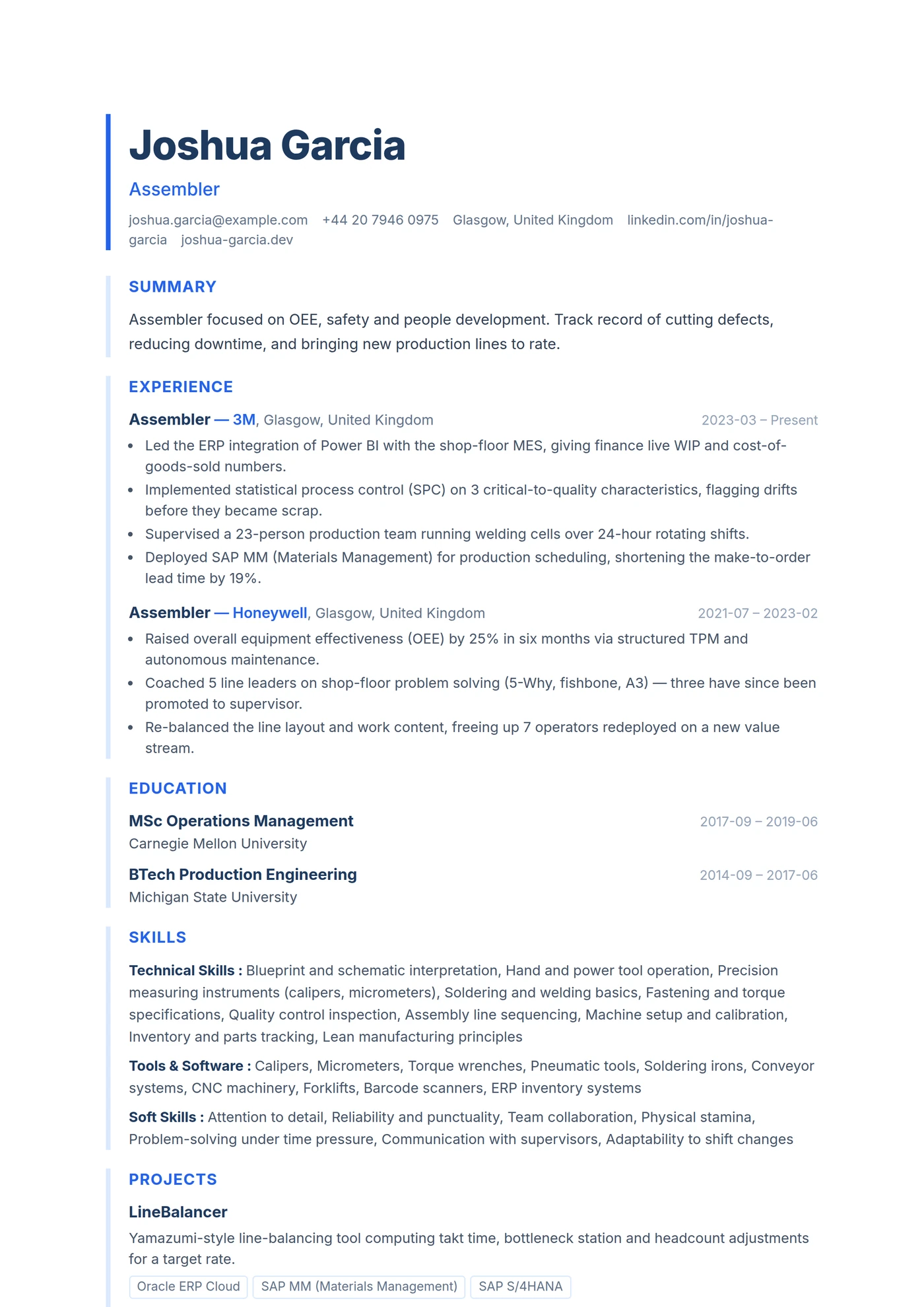
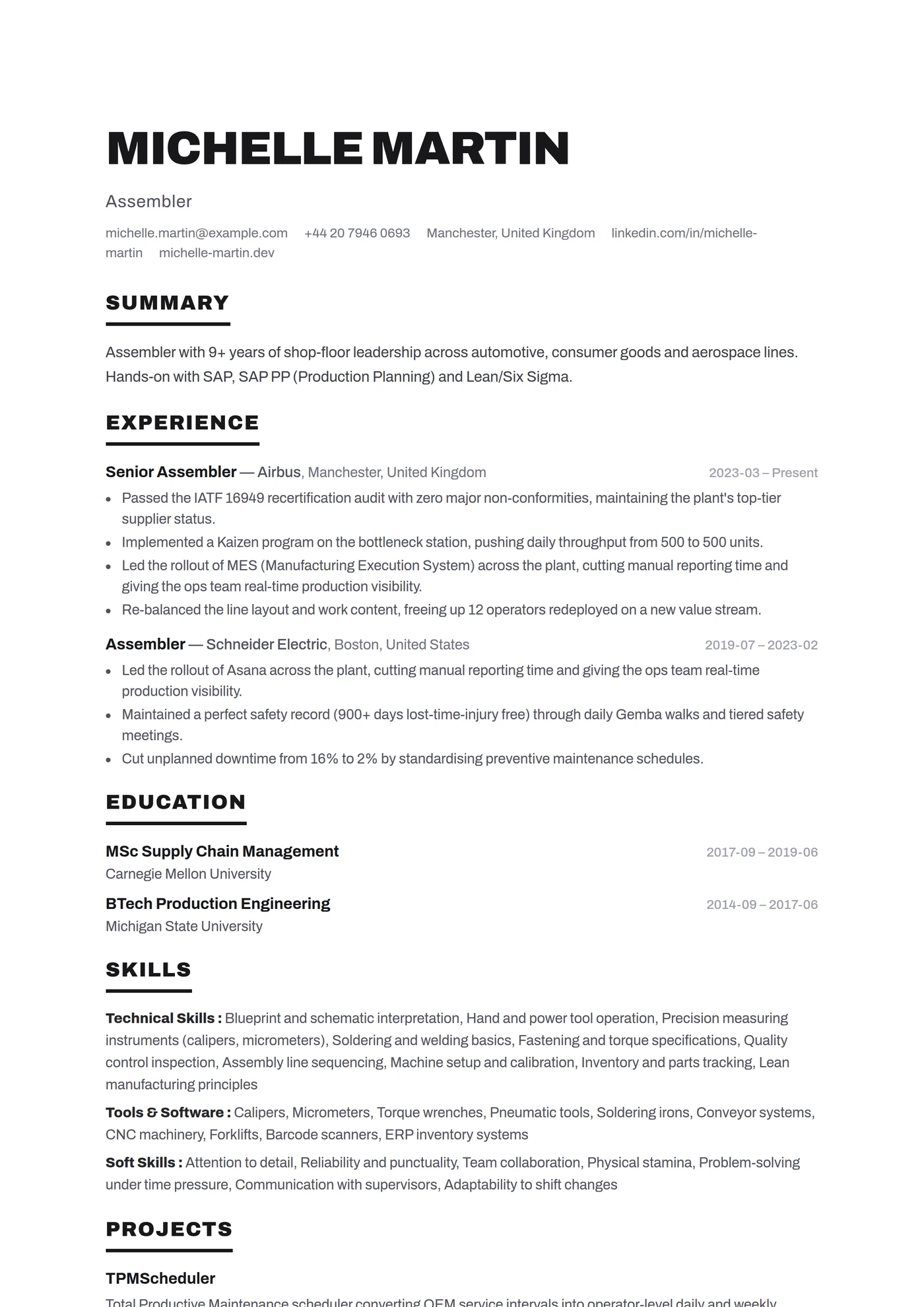
Recommended templates for Assembler
Three templates selected for this role, from junior to senior level. Tap a template to discover its full design and use it in your document.
Skills for Assembler
Hard Skills
Soft Skills
Tools & Software
ATS Keywords
Writing Tips for Assembler
Best Format to Use
A reverse-chronological format is best for most Assembler resumes because it clearly shows recent, relevant production experience and career growth. This format is preferred by ATS systems and recruiters who scan for recent job titles, tools used, and measurable results. For entry-level candidates with little formal work history, a hybrid format that places a skills summary at the top—followed by chronological work history—can help emphasize transferable skills like tool proficiency and safety training completed during school or apprenticeships.
Common Mistakes
How to Pass ATS
How to Stand Out
Frequently Asked Questions
Related Job Titles
Explore more about