
A Machinist operates precision machine tools to produce metal parts and components, working from blueprints and technical drawings to create everything from prototype pieces to high-volume production runs. Employers seek candidates with strong technical skills in CNC programming, manual machining, blueprint reading, and precision measurement, along with proven safety records and attention to detail. Standout resumes showcase quantifiable achievements in reducing scrap rates, improving cycle times, or maintaining tight tolerances, while highlighting proficiency with industry-standard equipment and CAM software. Entry-level machinists typically earn $35,000-$45,000 annually, while experienced professionals can command $50,000-$75,000 or more depending on specialization and location.
What Makes a Great Machinist Resume
A strong Machinist resume emphasizes technical precision, safety consciousness, and measurable production achievements. The format should be clean and ATS-friendly, using a reverse-chronological structure that highlights progressive skill development and increasingly complex machining projects. Successful resumes open with a concise summary statement that immediately communicates years of experience, key machine competencies (CNC, manual mill, lathe), and specialized industries served (aerospace, automotive, medical devices). The experience section should quantify achievements wherever possible—scrap rate reductions, tolerance achievements, setup time improvements, or production volume increases—rather than simply listing job duties. The skills section must balance hard technical capabilities (G-code programming, GD&T interpretation, CMM operation) with essential soft skills (problem-solving, quality focus, teamwork). Certifications such as NIMS credentials, OSHA 10/30, or manufacturer-specific training should be prominently displayed. For machinists working in regulated industries like aerospace or medical manufacturing, emphasizing experience with ISO 9001, AS9100, or FDA compliance can significantly strengthen candidacy. The resume should be formatted to pass applicant tracking systems while remaining visually accessible to human recruiters, avoiding graphics or complex tables that might confuse parsing software.
Key Skills Needed
Typical Experience Level
Entry-level machinists typically begin with 1-3 years of experience, often gained through vocational training, apprenticeships, or community college programs combined with on-the-job learning. At this stage, employers expect proficiency in basic machine operation, blueprint reading, and the use of standard measuring tools, along with a strong safety record and willingness to learn. Junior machinists usually work under supervision, handling simpler setups and production runs while building skills in more complex operations. Mid-level machinists with 4-8 years of experience are expected to work independently, program and set up CNC machines, troubleshoot machining problems, and mentor junior staff. Senior machinists and lead machinists typically have 10+ years of experience and demonstrate mastery across multiple machine types, advanced programming capabilities, and the ability to work from minimal documentation or develop processes for new parts. At the senior level, employers look for candidates who can optimize production workflows, reduce costs, ensure quality standards, and potentially supervise teams or train apprentices. Leadership experience, specialized certifications, and expertise in high-precision or regulated industries become increasingly important at advanced career stages.
ATS Keywords for This Role
Recommended templates for Machinist
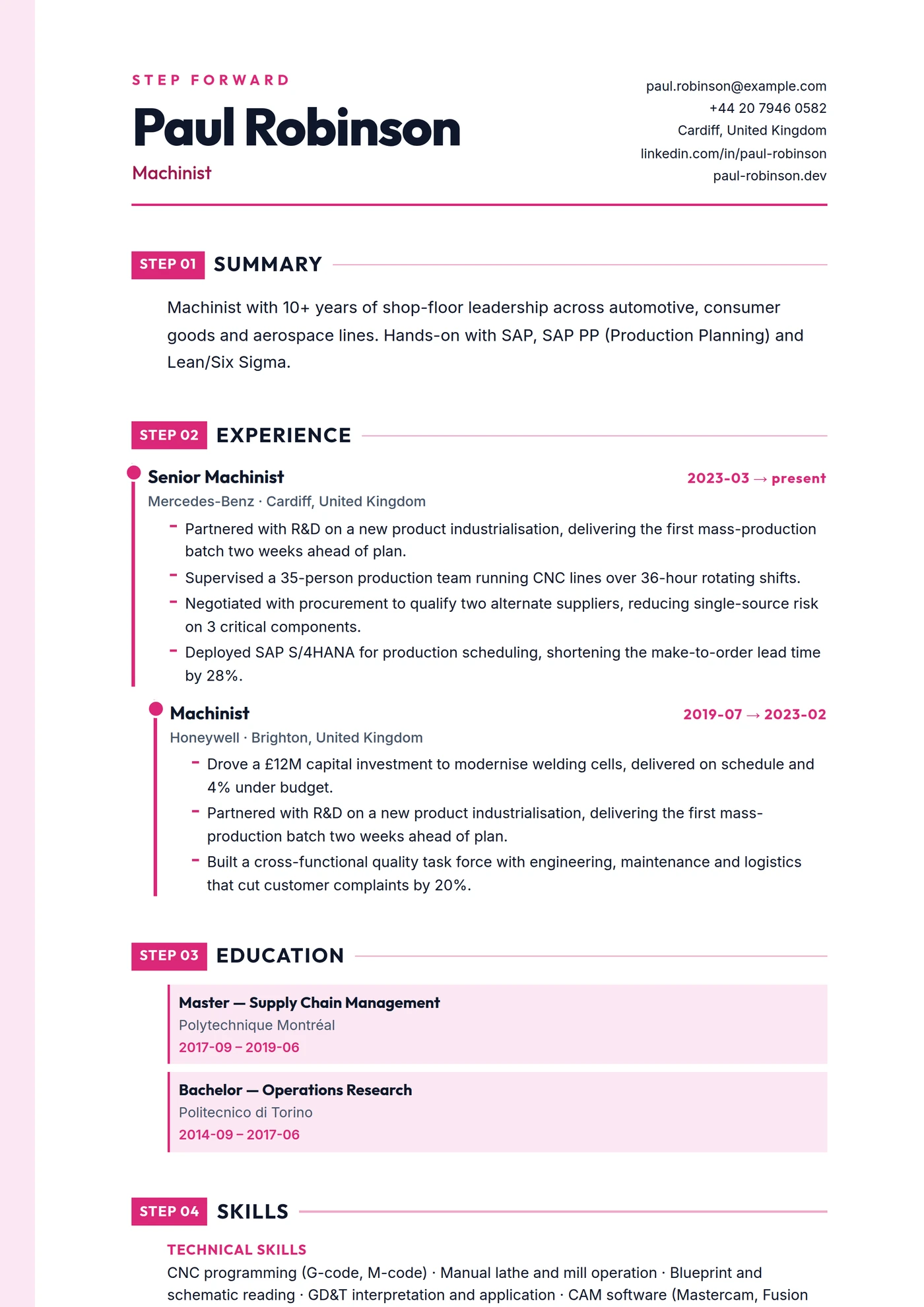
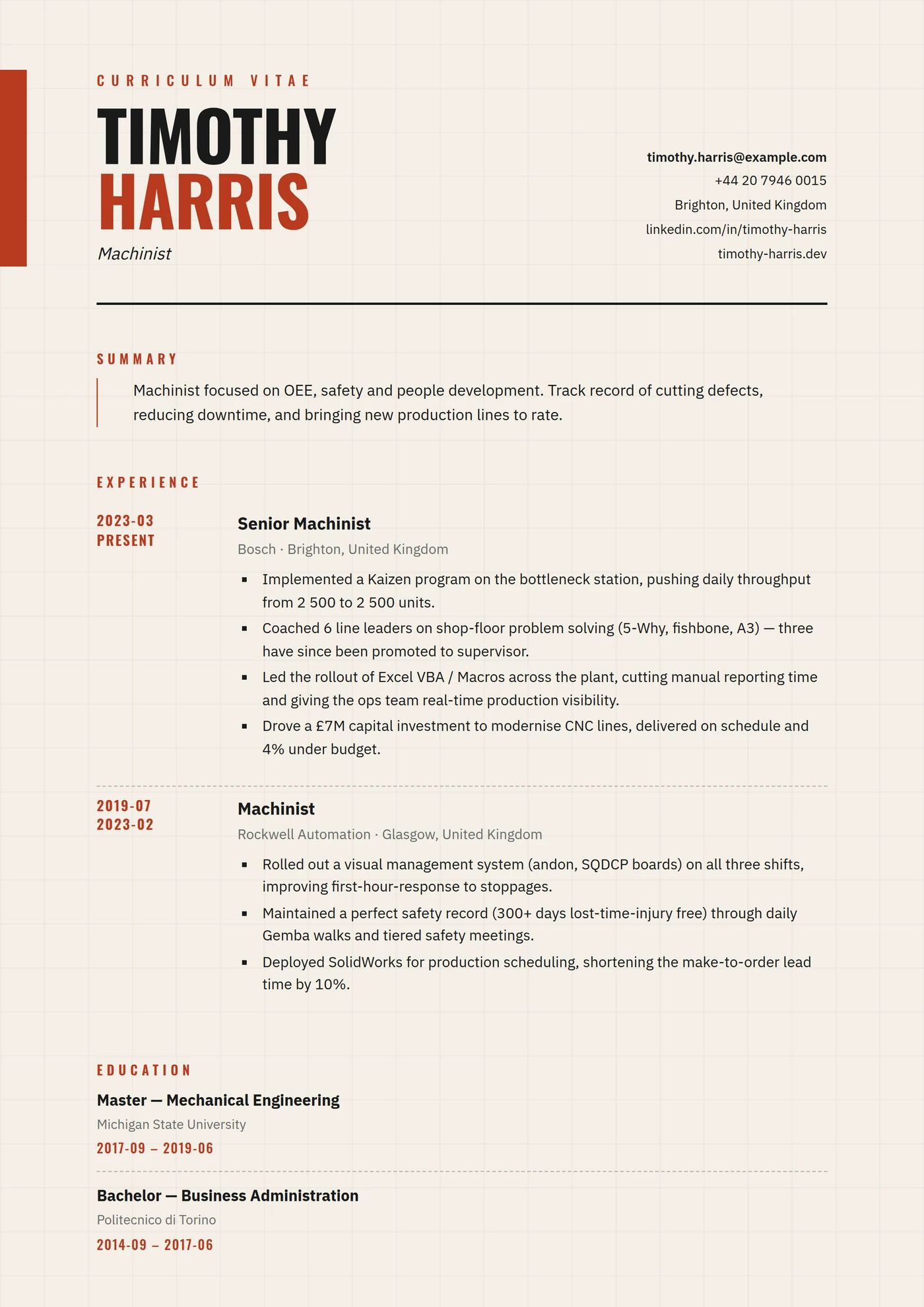
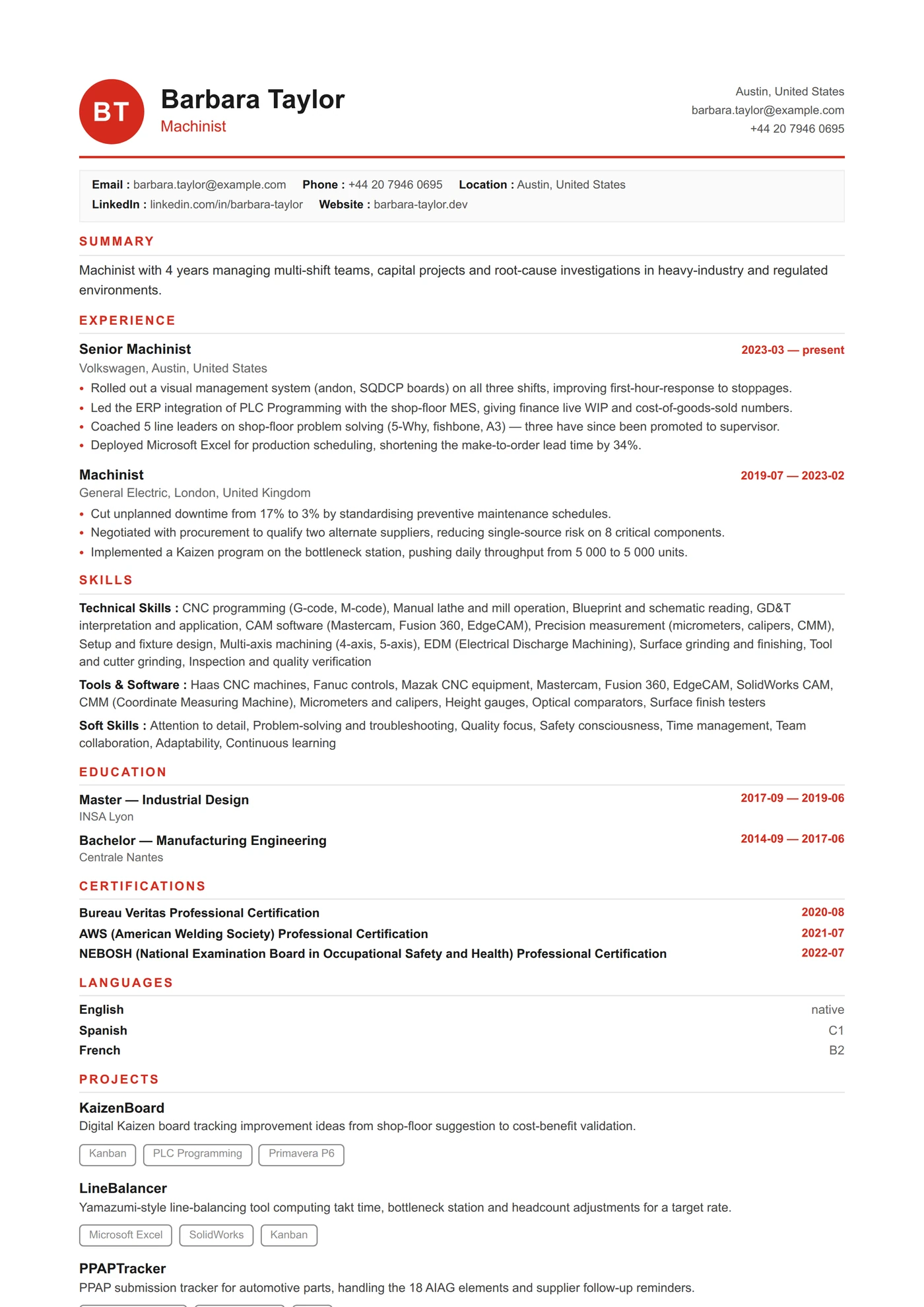
Three templates selected for this role, from junior to senior level. Tap a template to discover its full design and use it in your document.
Skills for Machinist
Hard Skills
Soft Skills
Tools & Software
ATS Keywords
Writing Tips for Machinist
Best Format to Use
The reverse-chronological format is overwhelmingly preferred for machinist resumes because it clearly demonstrates progressive skill development, increasing responsibility, and continuous employment in the trade. This format lists your most recent position first and works backward, allowing employers to quickly assess your current capabilities and career trajectory. Each job entry should include the company name, location, your title, dates of employment, and 3-6 bullet points describing key responsibilities and quantifiable achievements. For machinists transitioning between industries (automotive to aerospace, for example) or those with employment gaps, a hybrid format that leads with a strong skills summary before the chronological work history can help refocus attention on technical competencies rather than timeline irregularities. Avoid purely functional resumes that group experience by skill category rather than employer, as these raise red flags for recruiters and perform poorly in ATS systems. Keep the resume to 1-2 pages: one page for machinists with less than 5 years of experience, two pages for those with extensive backgrounds, specialized certifications, or supervisory roles. Use clear section headers (Summary, Skills, Experience, Education, Certifications), standard fonts, and avoid graphics, tables, or text boxes that can confuse applicant tracking software.
Common Mistakes
How to Pass ATS
How to Stand Out
Frequently Asked Questions
Explore more about