Machinist Resignation Letter Templates

Professional resignation letter templates for Machinist professionals — formal, short, email versions with expert tips.

We currently have 391 Machinist job postings in our database. Write your letter — it's free

When to Use

New Job Opportunity
When leaving for a new machining opportunity, emphasize your gratitude for the skills and experience gained while operating equipment and working with the team. Keep the tone respectful and professional, highlighting the career growth opportunity without disparaging current pay, shift schedules, or equipment conditions. Avoid discussing specific salary figures or criticizing management decisions about tooling, maintenance, or production quotas.
Career Change
If transitioning out of machining into another field, acknowledge the valuable technical foundation and problem-solving skills the role provided while expressing enthusiasm for your new direction. Frame the change as a personal growth decision rather than dissatisfaction with the trade, and offer to document processes or train your replacement to leave on excellent terms. This preserves references from supervisors and maintains your reputation in the manufacturing community.
Personal Reasons
For health, family, or burnout-related resignations, you may simply state you're leaving for personal reasons without elaborate detail—most shop managers understand the physical demands of machining work. If comfortable, briefly mention the general category (family care needs, health considerations) to provide context, but maintain professional boundaries and avoid oversharing medical details or family conflicts. Focus your letter on transition logistics and your appreciation for the opportunity.
Relocation
When relocating, clearly state your move is due to geographic necessity (spouse's job, family obligations, cost of living) and confirm whether you've explored remote work—though most machining roles require physical presence at equipment. Provide adequate notice to allow time for knowledge transfer on specialized setups, tooling, or custom fixtures you've developed. Express willingness to assist with the transition and maintain the relationship for potential future opportunities or references in your new location.

Recommended templates for Machinist

Three templates selected for this role, from junior to senior level. Tap a template to discover its full design and use it in your document.
Junior
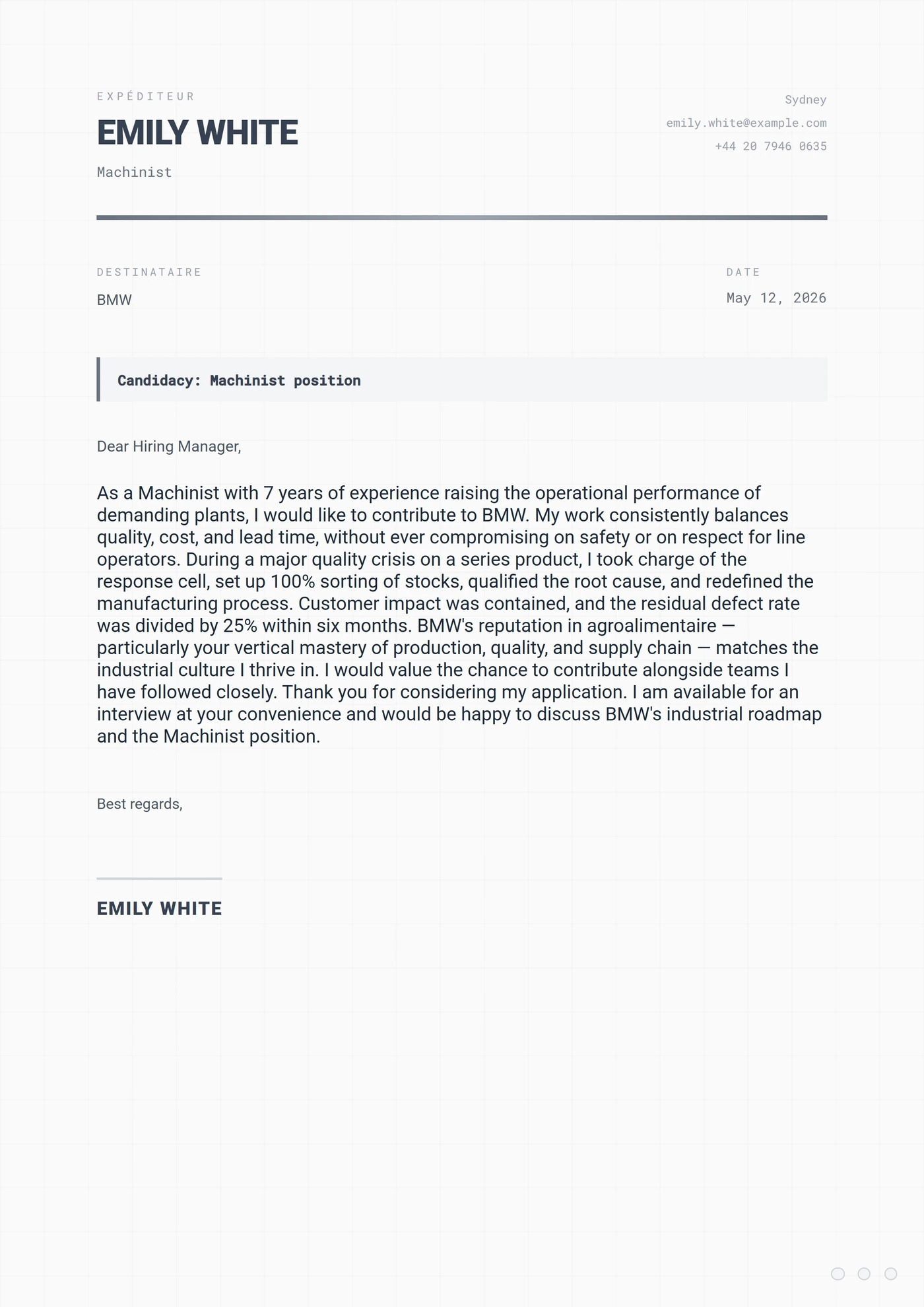
Steel Industrial — Junior

Steel Industrial

modern

The modern, industrial aesthetic aligns perfectly with a junior machinist's first role in a manufacturing environment, offering a clean, straightforward format that conveys professionalism without over-formality. The template's simplicity helps less experienced workers focus on essential resignation elements—notice period, last day, and gratitude—without navigating complex formatting.

Learn more about this template
Mid-level
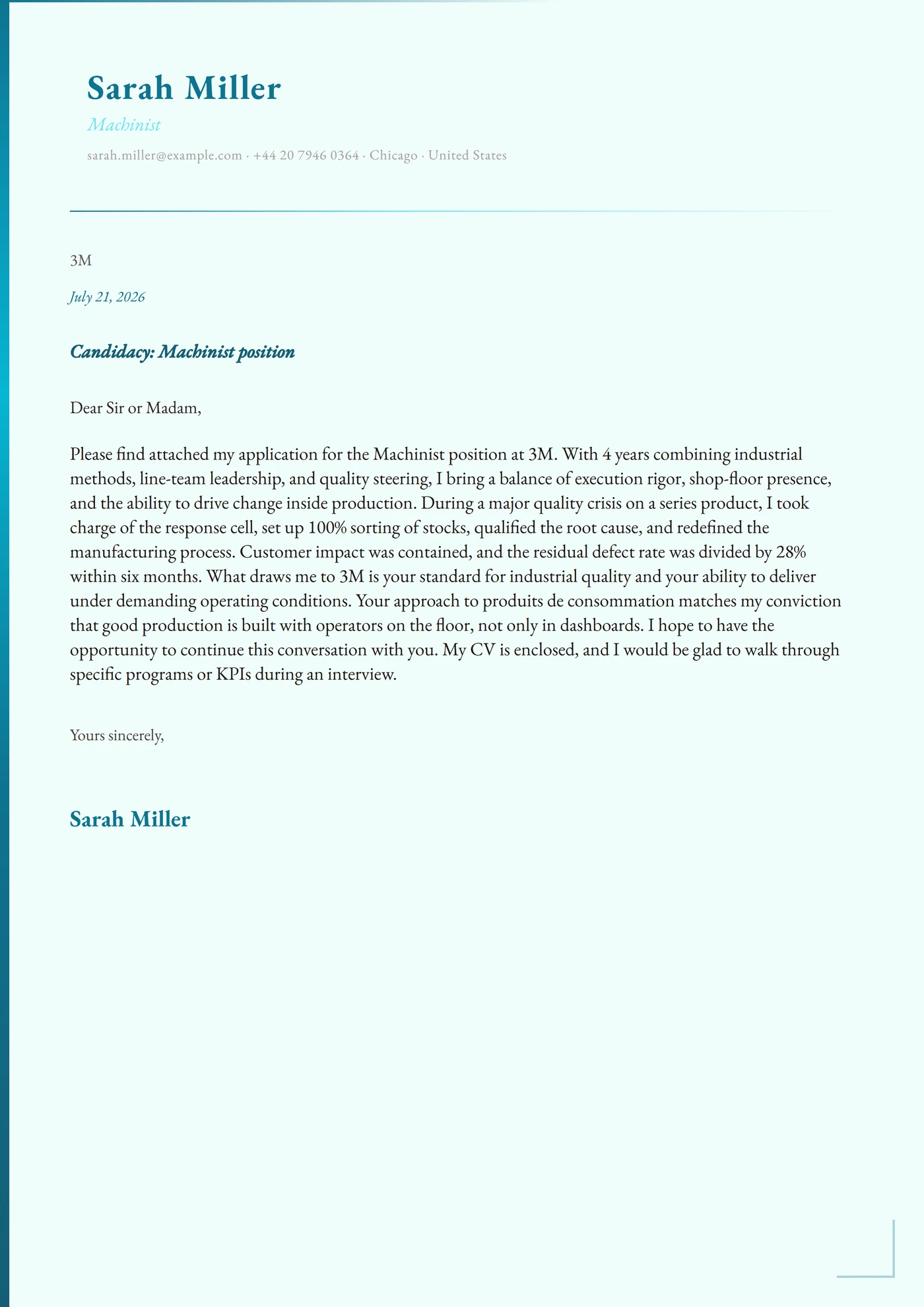
Copper Patina — Mid-level

Copper Patina

professional

This professional template suits a mid-level machinist who has developed specialized skills and built meaningful relationships with supervisors and colleagues. The balanced, polished design reflects 5-10 years of experience while maintaining the respectful, grounded tone appropriate for skilled trades, and provides space to offer transition assistance on complex jobs or CNC programs.

Learn more about this template
Senior
Exec Modern Finance — Senior

Exec Modern Finance

professional

A senior machinist with 10+ years of experience, possibly in lead or supervisory roles, benefits from this template's authoritative, refined presentation that conveys gravitas and professionalism. The format accommodates detailed transition planning, documentation of specialized processes, and mentorship offers that reflect the substantial institutional knowledge a veteran machinist brings to the shop floor.

Learn more about this template

Tips for Resigning

Notice Period
Standard notice for machinists is typically two weeks, though senior machinists or those with specialized knowledge of custom setups, proprietary processes, or complex CNC programs should consider offering three to four weeks. Review your employment contract for any specific notice requirements, especially in union shops where collective bargaining agreements may stipulate notice periods. If you're mid-project on critical production runs or custom jobs, discuss timing with your supervisor to minimize disruption to delivery schedules.
Tone
Maintain a respectful, straightforward tone that reflects the professional culture of manufacturing environments—sincere but not overly emotional. Express genuine appreciation for skill development opportunities, mentorship from senior machinists, and experience with specific equipment or processes, but never criticize shop conditions, safety practices, pay rates, or management decisions in your resignation letter. Keep the focus on your future opportunity and your commitment to a smooth transition, avoiding complaints about overtime demands, shift assignments, or production pressure.
Timing
Resign early in the week (Monday or Tuesday) and ideally at the end of a shift or during a scheduled one-on-one with your supervisor, not during active production or in front of the full crew. Avoid resigning immediately before major production deadlines, during equipment installations, or right after receiving retention bonuses or completing paid training programs. If possible, time your resignation after completing critical jobs or reaching natural project breakpoints, and be mindful of quarterly production cycles when your departure might create the most staffing stress.
Preserving Relationships
Preserve relationships by offering to thoroughly document your setups, tooling configurations, and any custom fixtures or programs you've developed, and volunteer to train your replacement on specialized equipment or processes. Stay professional during your notice period—maintain quality standards, complete assigned work, and avoid negative comments about the company even if colleagues press for details. Manufacturing is often a tight-knit community where reputations follow you, so leaving on excellent terms protects future references, opens doors for boomerang opportunities, and maintains your standing in local machining networks.

Notice Period Rules

United States
Most US machinists work under at-will employment, meaning either party can terminate the relationship without cause, though two weeks' notice is the professional standard and expected in manufacturing. Union machinists should consult their collective bargaining agreement, which may specify different notice requirements or procedures for resignation. Some specialized roles or those with access to proprietary processes may have contractual notice obligations of three to four weeks, particularly in aerospace, medical device, or defense manufacturing sectors.
United Kingdom
UK machinists must provide statutory minimum notice of one week after one month of employment, increasing to two weeks after two years of continuous service. Most employment contracts in manufacturing specify longer notice periods—typically four weeks for experienced machinists and up to eight to twelve weeks for senior or specialized roles. Your contract takes precedence over statutory minimums, and failure to provide contractual notice may result in pay deductions or loss of accrued benefits, so review your terms carefully before submitting resignation.
Canada
Canadian notice requirements vary by province, with most requiring two weeks' notice as a baseline, though employment contracts often specify longer periods for skilled trades. In provinces like Ontario, common law reasonable notice may apply if contracts are silent, potentially requiring three to four weeks for machinists with several years of service. Quebec's *Civil Code* and provincial employment standards create different frameworks, so consult your provincial labour standards or your collective agreement if unionized to understand your specific obligations.
Europe
European notice periods for machinists are typically governed by national labor codes and collective bargaining agreements, with France requiring one to three months depending on seniority and classification, and Germany often requiring four weeks to three months based on years of service. Many manufacturing sectors have industry-specific collective agreements (*conventions collectives* in France, *Tarifverträge* in Germany) that set notice periods longer than statutory minimums. Always review your employment contract and applicable collective agreement, as notice periods of two to six months are common for experienced machinists in many EU countries, and probationary periods may have shorter requirements.

Frequently Asked Questions

While verbal notification to your supervisor is important and often happens first, a written resignation letter is strongly recommended to create an official record of your notice period and last working day. Many HR departments and payroll systems require written documentation to process final paychecks, accrued vacation payout, and benefits termination. A formal letter also protects you if disputes arise about your notice period or departure terms, and demonstrates professionalism that supports future reference requests.

If you have specialized knowledge of custom CNC programs, proprietary fixtures, or unique production processes, consider offering three to four weeks' notice rather than the standard two weeks to allow adequate time for knowledge transfer. Discuss with your supervisor whether additional transition time would help document critical setups, train a replacement, or complete in-progress jobs. This professional courtesy protects your reputation, ensures you leave on excellent terms, and may be contractually required if you signed agreements regarding specialized training or proprietary processes.

In most employment situations, your employer cannot refuse your resignation or force you to work beyond your stated last day, as employment relationships are generally voluntary. However, if your contract specifies a longer notice period than you're providing, the employer may pursue remedies such as withholding final pay equivalent to the missing notice period or, in rare cases, seeking damages for breach of contract. Union machinists should review their collective bargaining agreement, and those with specialized contracts should consult the terms before submitting resignation to understand any financial implications of insufficient notice.

While in-person resignation followed by a printed letter is the gold standard and shows maximum respect, email resignation is acceptable in many modern manufacturing environments, especially if your supervisor works different shifts or is frequently off-site. If resigning by email, use a professional subject line ("Resignation – [Your Name]"), attach a formal letter as a PDF, and request a read receipt to confirm delivery. Follow up with a face-to-face conversation as soon as possible to discuss transition details, and consider providing a printed copy for your personnel file during your final days.

Need a personalized resignation letter?

Use our AI to generate a professional, polished letter tailored to your role and situation in minutes.

Write your letter — it's free

Start for free. No credit card required.