
A Welder joins, cuts, and fabricates metal components using techniques like MIG, TIG, stick, and flux-core welding across construction, manufacturing, shipbuilding, and pipeline industries. Employers look for proof of hands-on technical skill, safety awareness, and relevant certifications like AWS credentials rather than lengthy prose. A strong resume quantifies output (welds per shift, defect rates, project scale) and highlights blueprint reading, material knowledge, and adherence to codes such as AWS D1.1. Most welders start with 1-2 years of vocational training or apprenticeship experience, and senior candidates often show 8-10+ years combined with supervisory or inspection duties. Salaries vary widely by industry and certification level, with pipeline and structural welders typically earning more than general shop welders.
What Makes a Great Welder Resume
A great Welder resume leads with a concise summary stating years of experience, welding processes mastered, and key certifications. Employers scan quickly, so use a clean reverse-chronological format with bullet points that quantify results — weld pass rates, footage completed, project budgets, or safety records. Avoid dense paragraphs; instead, list specific processes (MIG, TIG, stick, flux-core), materials (carbon steel, stainless, aluminum), and positions welded (flat, vertical, overhead) since these are directly searched by hiring managers and ATS systems. Tone should be direct, technical, and results-oriented rather than conversational. Include a certifications section prominently near the top, since credentials like AWS D1.1 or 6G pipe certification often determine whether a resume passes initial screening. Structure the resume to show a clear progression from apprentice or helper roles to increasingly complex or independent welding assignments, demonstrating growing responsibility and skill mastery over time.
Key Skills Needed
Typical Experience Level
Entry-level welders typically complete a vocational program or apprenticeship (6 months to 2 years) and start as helpers or trainees under supervision, focusing on basic joints and shop work. Mid-level welders with 3-7 years of experience take on independent project work, structural or pipe welding, and may hold multiple AWS or ASME certifications. Senior welders with 8+ years often move into lead, inspector, or supervisory roles, overseeing crews, ensuring code compliance, and training junior staff. Recruiters expect entry-level resumes to emphasize training, certifications, and willingness to learn, while senior resumes should demonstrate leadership, quality control ownership, and measurable production or safety improvements across multiple job sites or projects.
ATS Keywords for This Role
Recommended templates for Welder
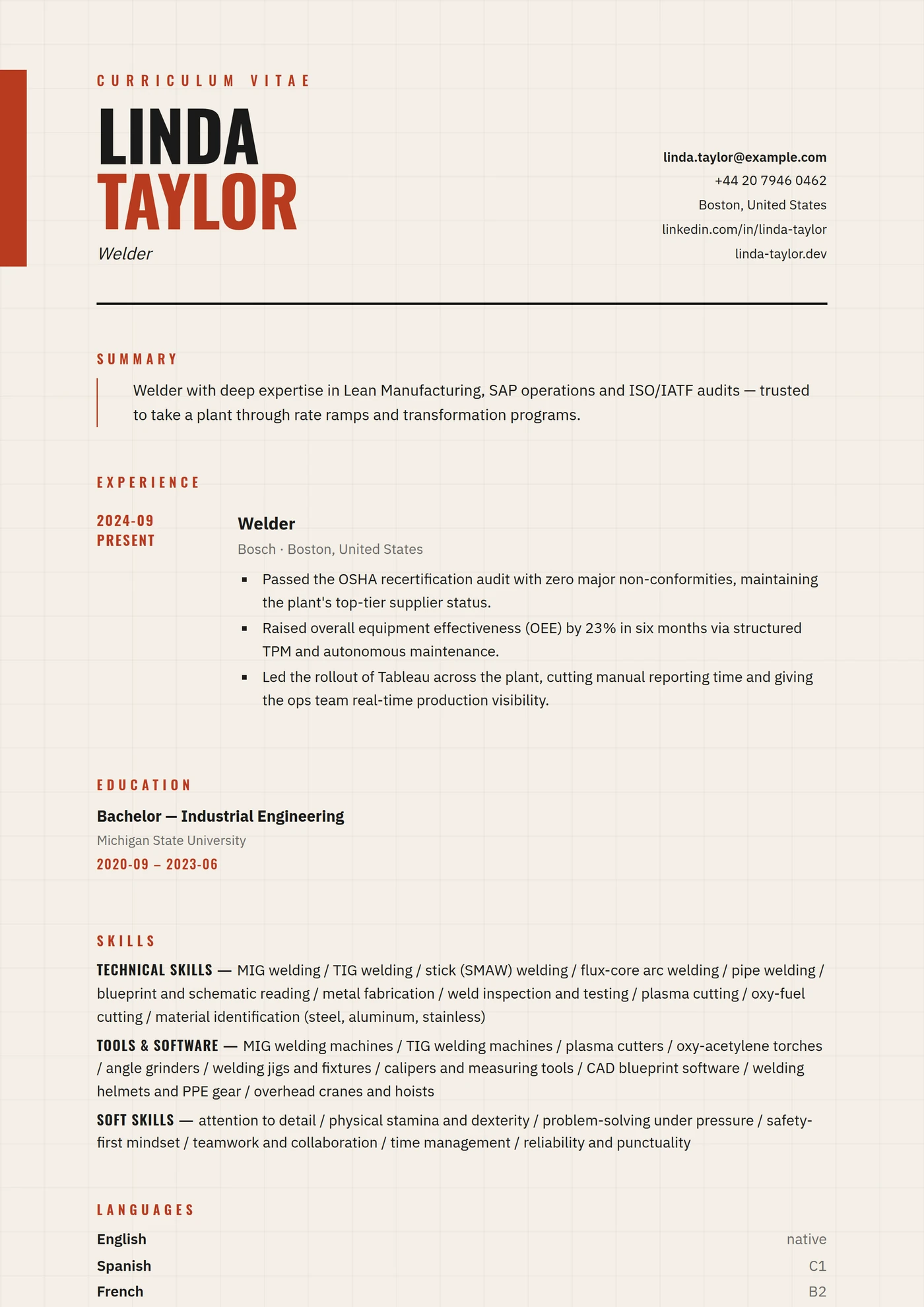
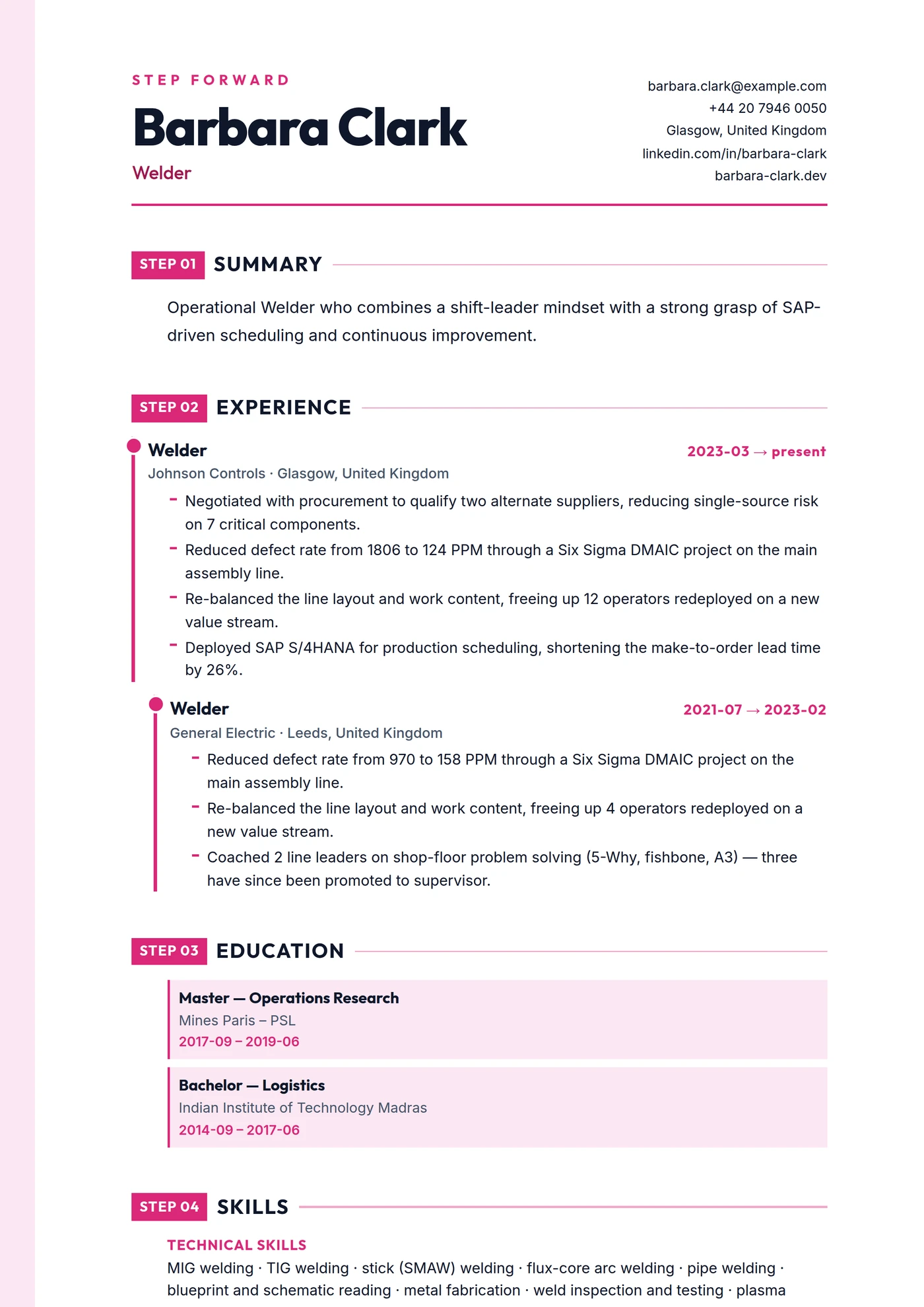
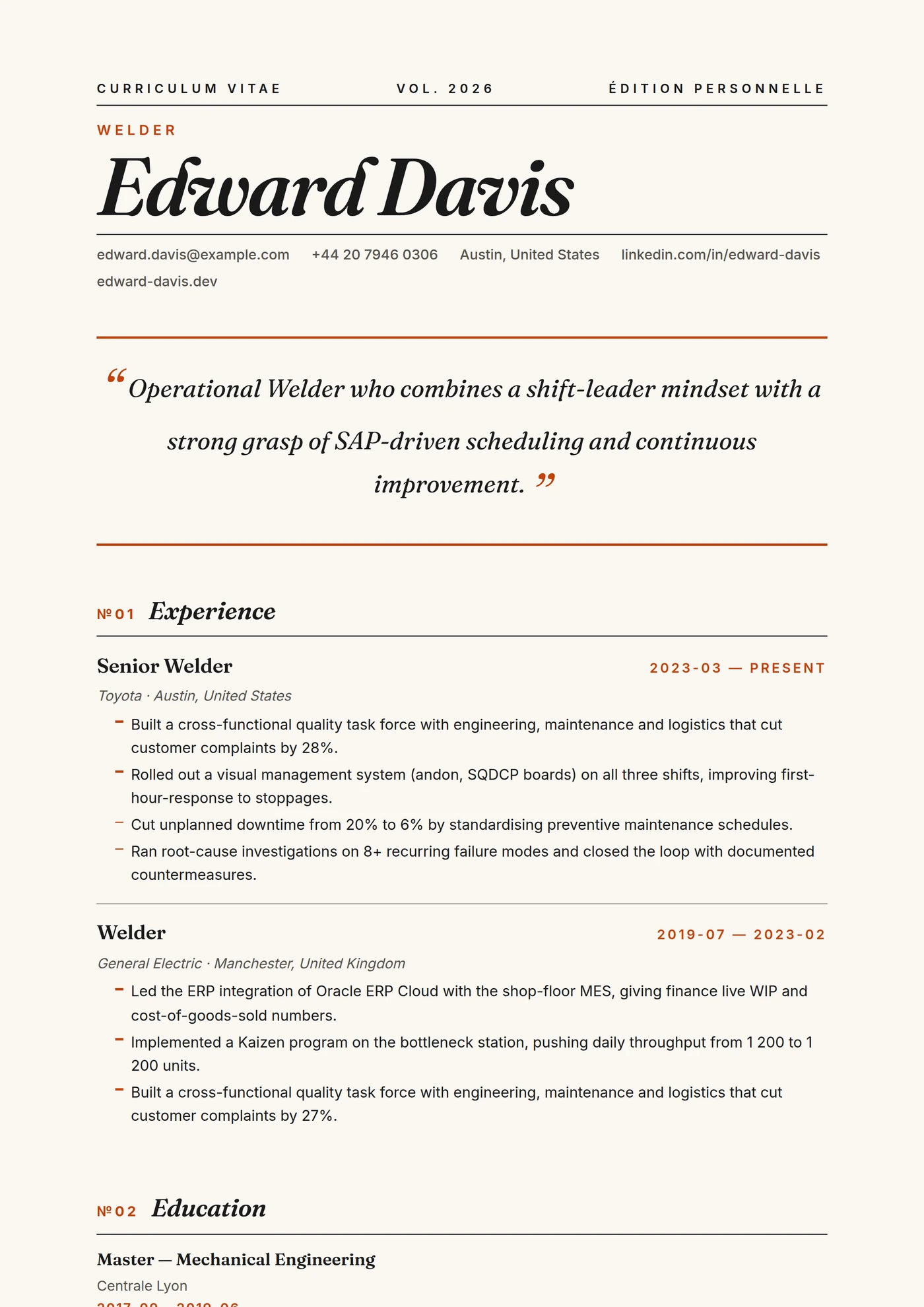
Three templates selected for this role, from junior to senior level. Tap a template to discover its full design and use it in your document.
Skills for Welder
Hard Skills
Soft Skills
Tools & Software
ATS Keywords
Writing Tips for Welder
Best Format to Use
The reverse-chronological format works best for most Welders, since it clearly shows career progression, certifications earned over time, and increasing project complexity. This format is also easiest for ATS systems to parse and for hiring managers to quickly verify recent, relevant experience. A hybrid format (skills summary plus chronological history) can work well for entry-level candidates or career changers with limited direct welding experience, allowing them to lead with certifications and training before listing shorter work history. Avoid purely functional formats, as they can raise red flags about gaps or lack of hands-on experience.
Common Mistakes
How to Pass ATS
How to Stand Out
Frequently Asked Questions
Related Job Titles
Explore more about