
A Production Operator runs, monitors, and maintains machinery or equipment on a manufacturing or processing line to ensure output meets quality, safety, and efficiency standards. Employers look for a resume that demonstrates hands-on experience with equipment operation, adherence to safety protocols like OSHA guidelines, and measurable results such as reduced downtime or improved throughput. Strong candidates stand out by quantifying production metrics, showing cross-training on multiple machines, and highlighting a reliable, safety-first track record. Most roles require 0-3 years of experience for entry level up to 8+ years for lead or senior positions, with salaries typically influenced by shift, industry, and certifications. A clean, achievement-focused resume that mirrors job posting language performs best in applicant tracking systems.
What Makes a Great Production Operator Resume
A great Production Operator resume leads with a concise summary that signals reliability, safety awareness, and equipment expertise. It should use a reverse-chronological format that clearly lists job titles, employers, dates, and bullet points focused on measurable outcomes like units produced per shift, defect rate reduction, or downtime minutes saved. Avoid dense paragraphs; use short, action-driven bullets starting with strong verbs such as operated, monitored, calibrated, or inspected. Formatting should be simple and ATS-friendly: standard fonts, no tables or graphics, and clear section headers (Experience, Skills, Certifications). Tone should be direct and factual, reflecting the practical, safety-conscious nature of the job. Prioritize content that proves the candidate can run equipment safely, hit production targets, and work well within a team or shift rotation. For candidates with supervisory experience, the resume should also highlight leadership of shift teams, training of new operators, and contributions to process improvement initiatives like Lean Manufacturing or Six Sigma projects.
Key Skills Needed
Typical Experience Level
Entry-level Production Operators typically have 0-2 years of experience, often gained through on-the-job training, vocational programs, or temp-to-hire placements, and are expected to show basic machine operation and safety awareness. Mid-level operators with 3-5 years of experience are expected to demonstrate cross-training across multiple machines, consistent quality metrics, and contributions to process improvements. Senior-level or lead operators, usually with 6-10+ years of experience, are expected to show supervisory responsibility, mentoring of junior staff, troubleshooting complex equipment issues, and involvement in continuous improvement initiatives. Recruiters at this level look for leadership examples, training delivery, and measurable plant-wide impact.
ATS Keywords for This Role
Recommended templates for Production Operator
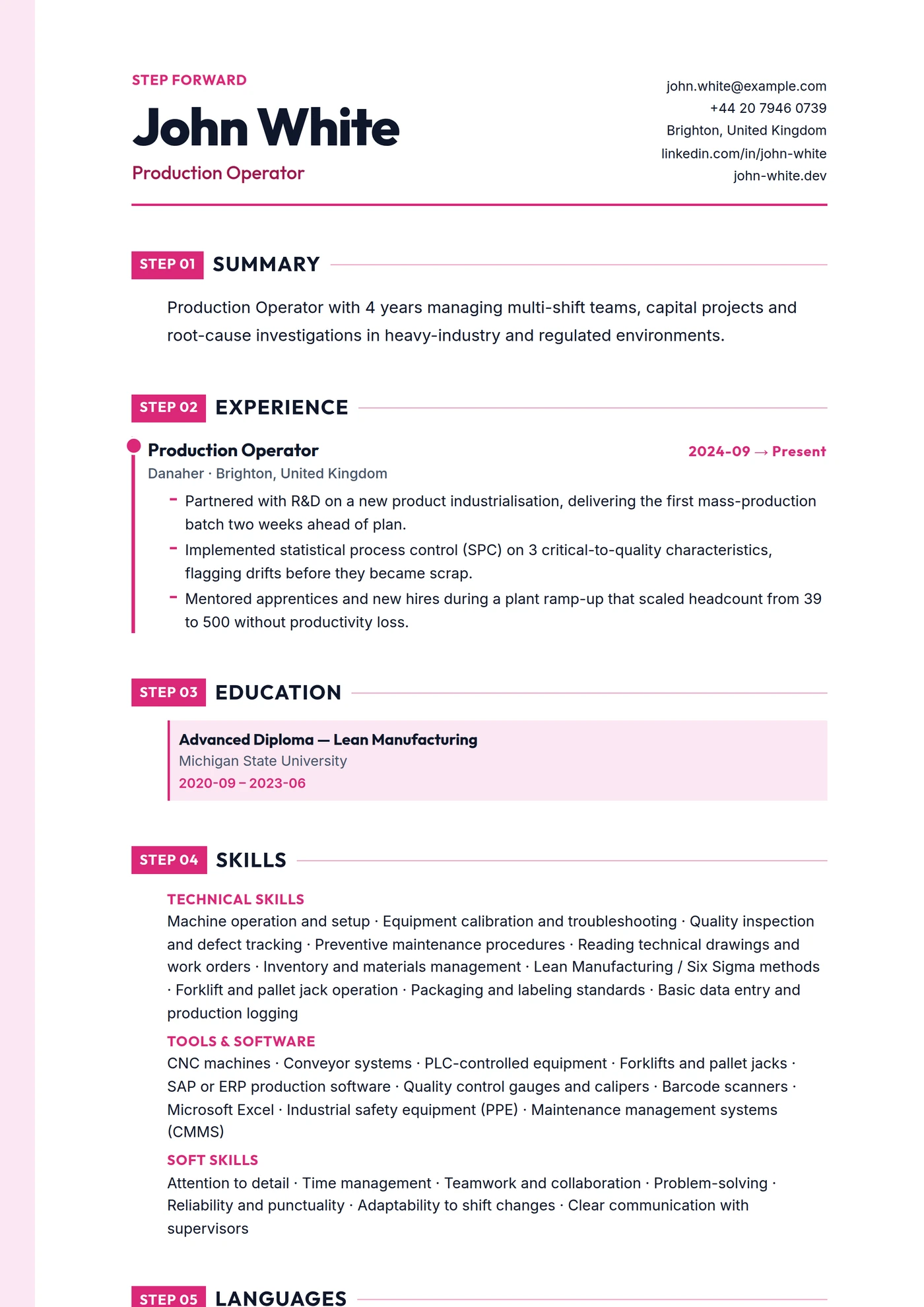
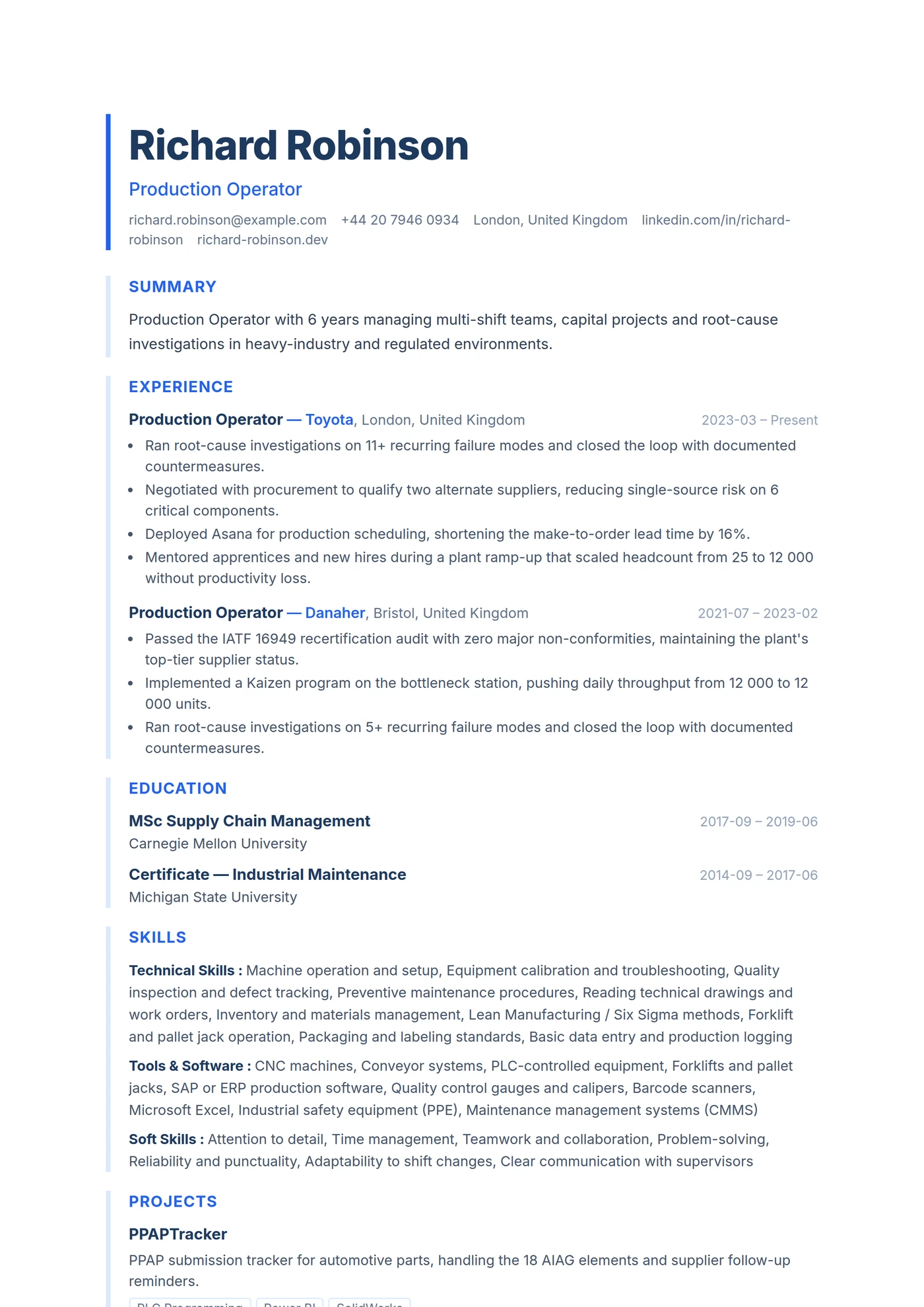
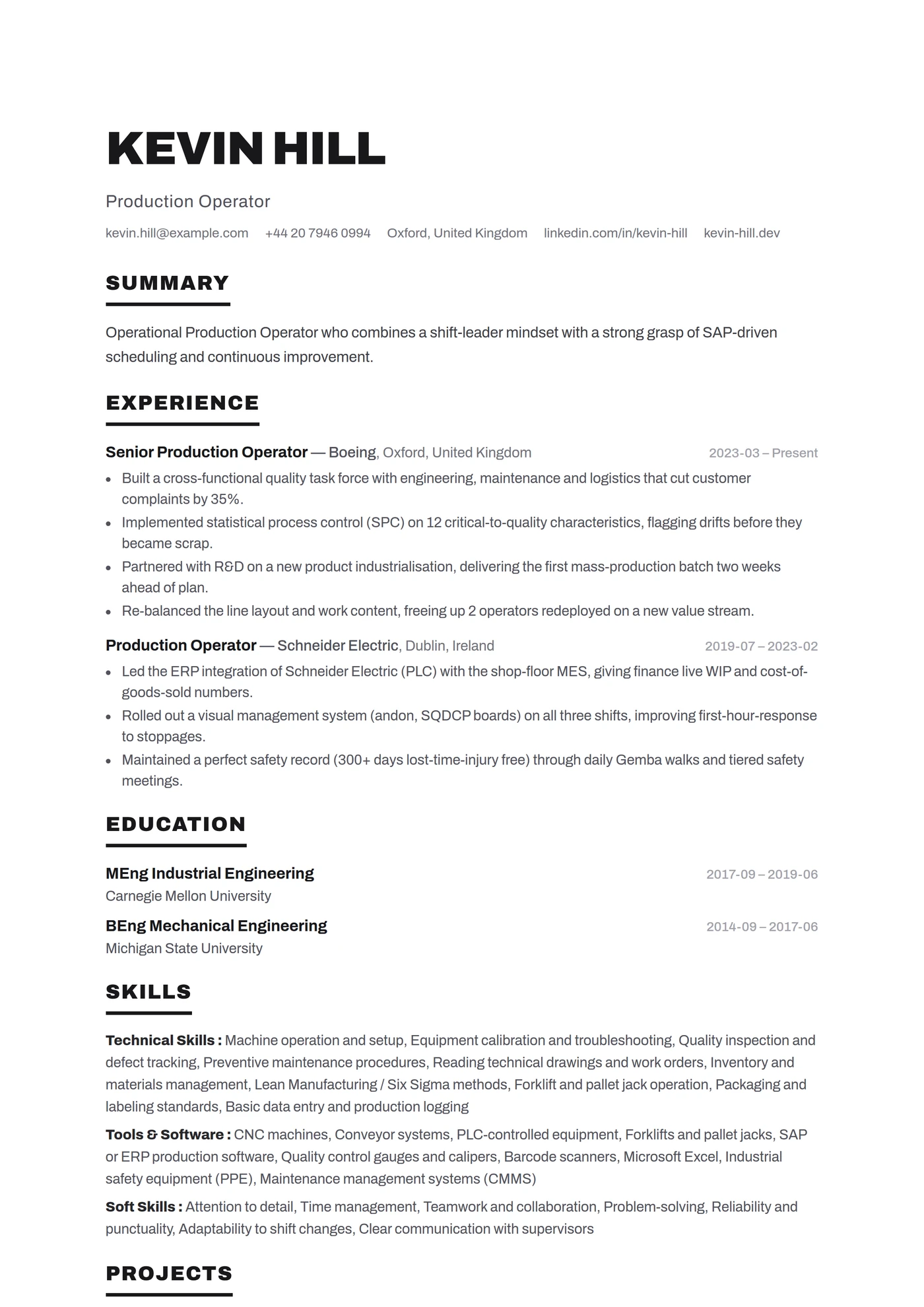
Three templates selected for this role, from junior to senior level. Tap a template to discover its full design and use it in your document.
Skills for Production Operator
Hard Skills
Soft Skills
Tools & Software
ATS Keywords
Writing Tips for Production Operator
Best Format to Use
The reverse-chronological format works best for most Production Operator resumes because it clearly shows career progression, shift reliability, and consistent employment — key factors employers verify. This format also aligns well with ATS parsing software, which favors clear job titles and dates. A hybrid format can be useful for candidates changing industries or returning to the workforce, allowing a skills summary at the top to highlight transferable abilities like equipment operation or safety training before diving into work history. Functional formats are rarely recommended since employers want to see a clear, verifiable timeline of production experience.
Common Mistakes
How to Pass ATS
How to Stand Out
Frequently Asked Questions
Related Job Titles
Explore more about