
When You Need a Cover Letter for Assembler
A cover letter for an Assembler role lets you show employers that you understand the specific production environment, equipment, and quality standards behind the job posting, something a resume alone cannot convey. It also gives you space to mention reliability, attendance, and safety record, which matter heavily to manufacturing supervisors sorting through many similar resumes. Use it to connect your specific line experience to the company's product type, whether that's automotive, electronics, or general fabrication.
For an internship or entry-level assembly position, the cover letter should emphasize willingness to learn, attention to detail, and any hands-on experience from shop class, trade school, or part-time work rather than years on the job. Highlight physical stamina, ability to follow written instructions, and comfort working with tools or small components, since employers know technical depth will come with training. Keep it concise and enthusiastic, showing genuine interest in production work and a strong attendance mindset.
When moving into assembly from another field, such as retail, military, warehousing, or food service, frame your cover letter around transferable skills like manual dexterity, following standard operating procedures, meeting quotas, and working safely with machinery or tools. Mention any experience with repetitive precision tasks, quality checks, or teamwork under time pressure, and explain briefly why you're drawn to hands-on production work. Avoid dwelling too long on the unrelated past role; instead pivot quickly to what you bring to the assembly line.
For an internal promotion, such as moving from general assembler to lead assembler or quality technician, the tone should be confident and achievement-focused, referencing specific internal projects, defect-reduction efforts, or training you've provided to newer staff. Highlight your knowledge of the company's specific processes, equipment, and standards, since you already have insider credibility. Keep it brief and direct, addressed to the hiring manager or supervisor, focusing on readiness for added responsibility rather than basic qualifications.
Recommended templates for Assembler
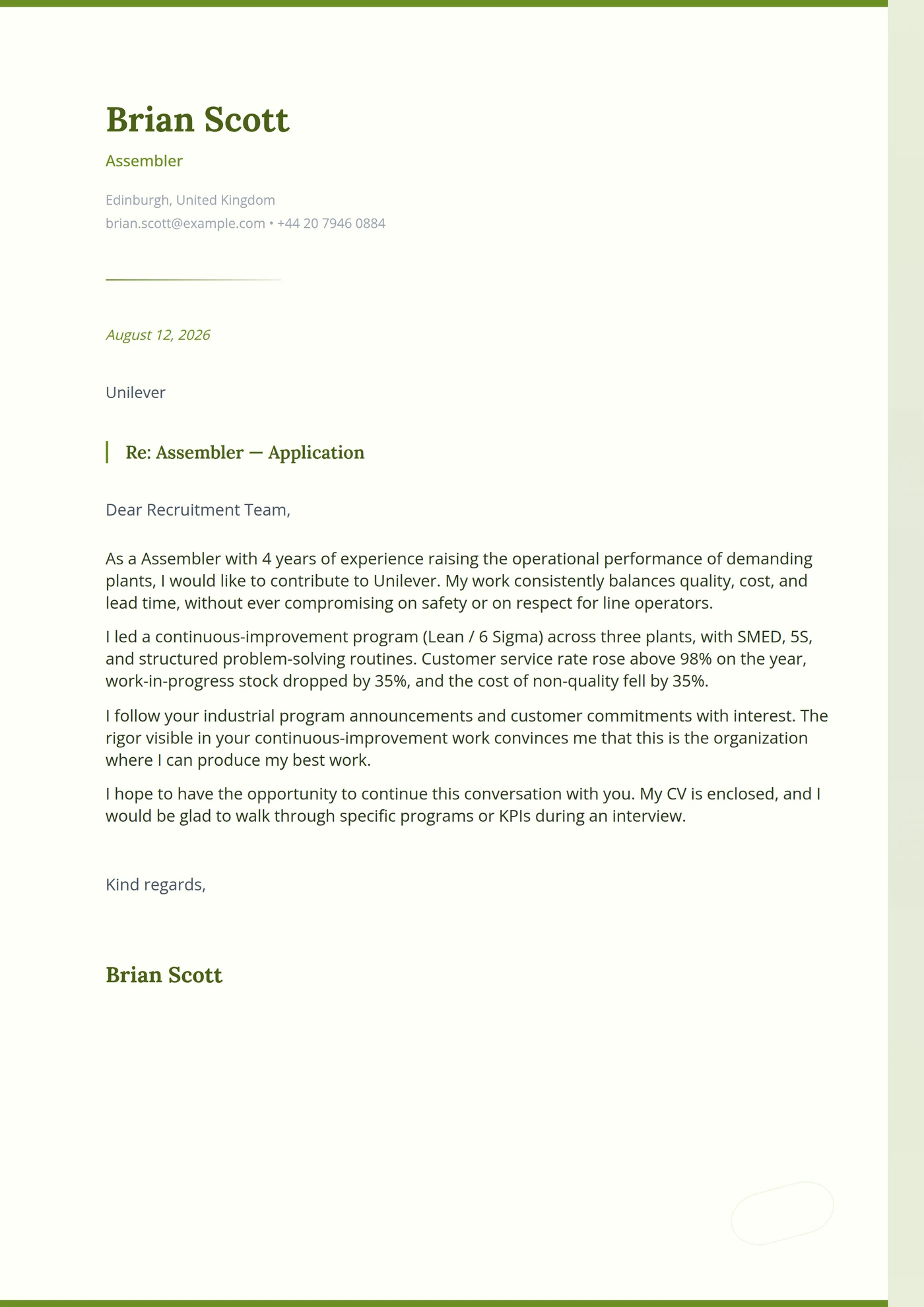
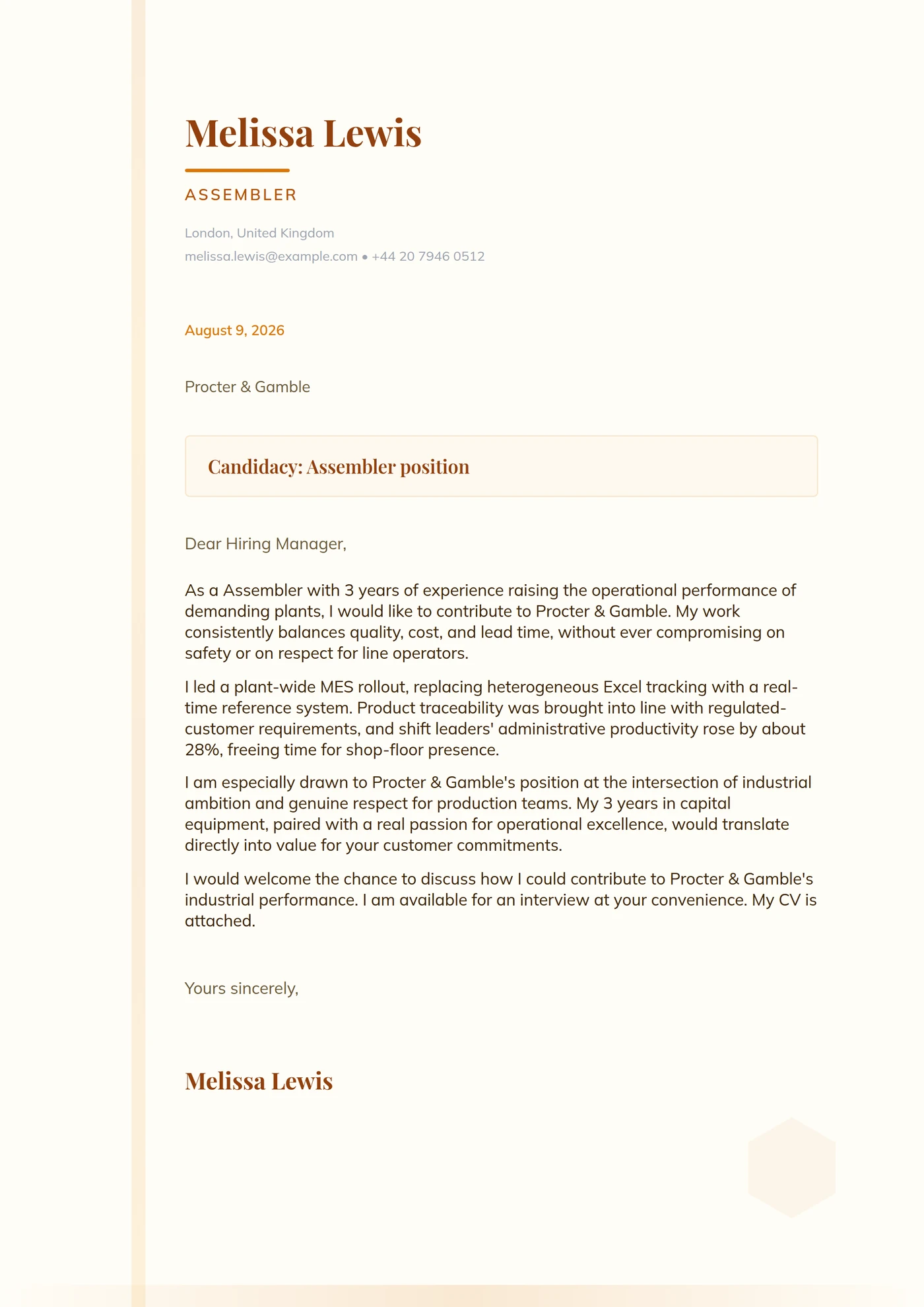
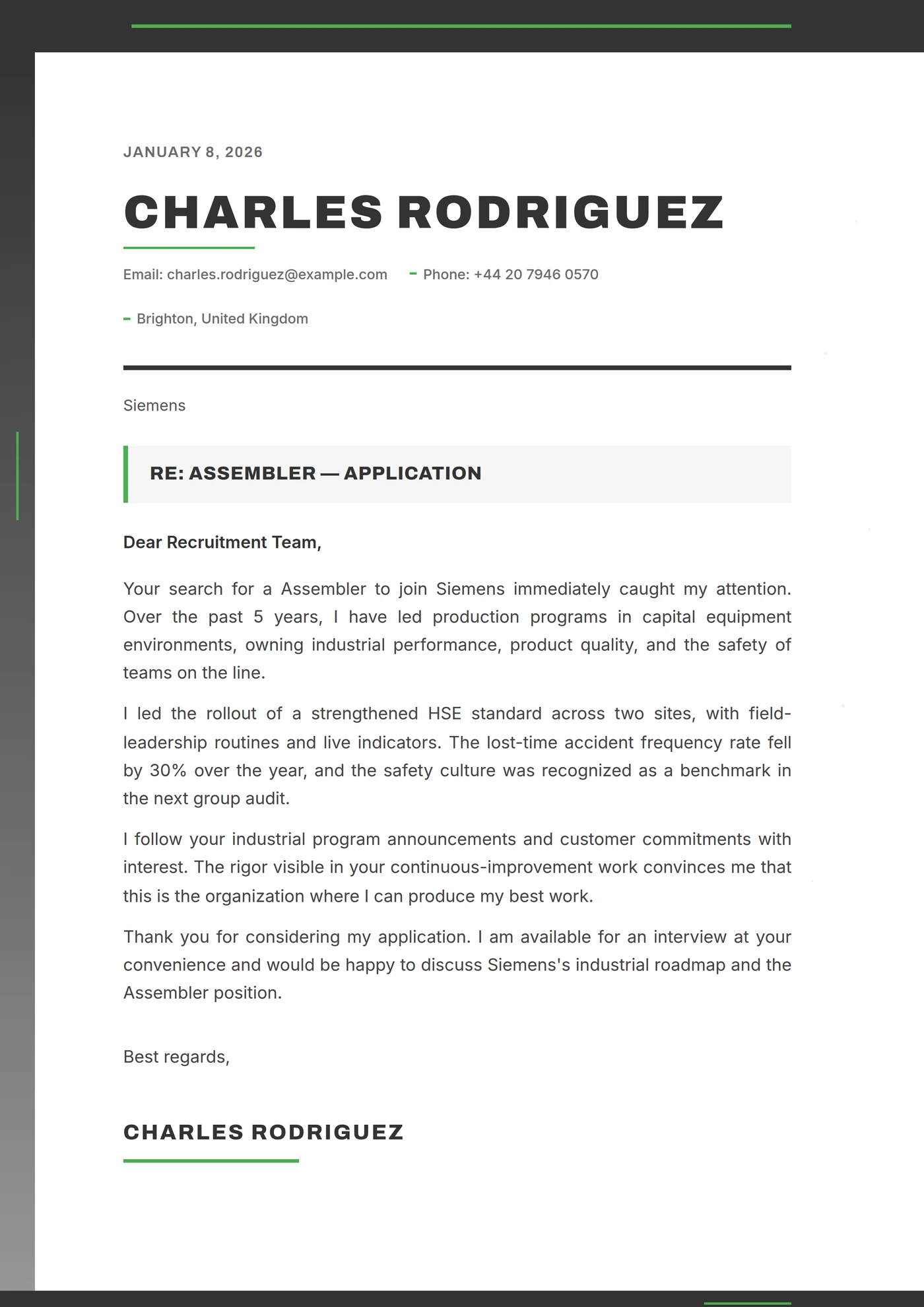
Three templates selected for this role, from junior to senior level. Tap a template to discover its full design and use it in your document.
How to Write a Assembler Cover Letter
Open your Assembler cover letter with a direct statement of the position you're applying for and one strong credential, such as years of hands-on assembly experience, a relevant certification, or familiarity with the company's specific product line. Avoid generic openers like 'I am writing to apply for the position'; instead lead with something concrete, for example referencing experience with a specific tool, line type, or production volume. If possible, personalize the greeting with the hiring manager's name rather than 'To Whom It May Concern.' A strong first sentence might mention your track record of meeting production quotas or maintaining low defect rates, immediately signaling value to a busy plant manager. Keep the opening to two or three sentences so the reader quickly understands who you are and why you're a fit for this specific facility or shift.
The body should run 2-3 paragraphs: the first establishes your relevant technical background, such as familiarity with hand tools, power tools, jigs, fixtures, or specific assembly methods used in the industry. The second paragraph should focus on concrete achievements, for example reducing errors by a measurable percentage, consistently exceeding daily quotas, or contributing to a successful product launch, rather than simply listing job duties. The third, if used, should connect your work style, such as teamwork, attention to safety, and adaptability to shift changes, with what the specific employer values based on the job posting. Balance is key: avoid purely restating your resume's task list, and instead translate duties into results wherever possible, such as 'maintained a 99% quality pass rate' instead of 'performed quality checks.' Mention specific equipment, materials, or production systems named in the job posting to show direct relevance and help pass initial screening.
Close with a clear call to action, stating your interest in discussing the role further and your availability for an interview or a plant tour. Reiterate briefly your enthusiasm for contributing to the team's production goals, and thank the reader for their time and consideration. Avoid vague or overly casual sign-offs like 'Hope to hear from you soon'; instead use a professional closing such as 'Sincerely' or 'Best regards' followed by your full name.
The tone for an Assembler cover letter should be professional but plainspoken, avoiding corporate jargon or overly formal language that feels disconnected from hands-on shop floor work. Clear, confident, and respectful language signals professionalism, while concrete details about tools, processes, and measurable results build credibility far more than vague enthusiasm.
Skills to Mention in Your Assembler Cover Letter
Common Mistakes
A generic cover letter for an Assembler role looks like a form letter that could apply to any factory job, with no mention of the company's product, equipment, or specific requirements from the posting. To fix this, reference the actual industry, product type, or machinery mentioned in the job ad, showing you researched the employer and understand what you'd actually be assembling.
Cover letters for assembly positions should stay to one page, ideally 3-4 short paragraphs, since hiring managers in manufacturing often review large volumes of applications quickly. Cut anything that doesn't directly support your fit for the role, such as unrelated personal history or repetition of resume bullet points word for word.
Simply listing duties like 'operated machinery' or 'assembled parts' tells the employer nothing about your performance level or value added. Reframe these into achievements by adding numbers or outcomes, such as 'assembled an average of 200 units per shift with a 98% quality pass rate,' which demonstrates both speed and precision.
Common formatting mistakes include using decorative fonts, submitting in an unexpected file format instead of PDF, or exceeding one page in length. Always use a simple, readable font, save the file with a professional name including your own name, and avoid including a subject line that is vague, such as 'Job Application,' instead naming the specific position and reference number if provided.
Frequently Asked Questions
While some factory applications only require a resume, including a short cover letter can set you apart by showing attention to detail and communication skills, both valued in production roles. It's especially worth including when applying online through a company portal or when the posting explicitly requests one.
An Assembler cover letter should be about one page, roughly 3-4 short paragraphs, enough to highlight relevant experience and a few key achievements without overwhelming the reader. Hiring managers in manufacturing typically prefer brevity and clarity over lengthy narratives.
Yes, even small customizations like mentioning the specific product line, equipment, or shift pattern referenced in the job posting make your application feel targeted rather than mass-sent. This small effort can significantly improve your chances of passing initial screening.
In the US, a cover letter is often optional but appreciated, especially for roles with multiple applicants or when internal advancement is possible. In the UK and EU, expectations vary by country and employer size, but including a concise cover letter is generally seen as a sign of professionalism and rarely hurts an application.
AI tools can be helpful for structuring your letter or overcoming writer's block, but you should always personalize the content with your real experience, specific achievements, and details about the employer. Avoid submitting an unedited AI draft, as hiring managers can often spot generic, impersonal language.
Submit your cover letter as a PDF file to preserve formatting across devices, unless the application system specifically requests a different format like .docx. Use a simple, professional font, standard margins, and name the file clearly with your name and the word 'cover letter.'
Related Job Titles
Explore more about