About this template
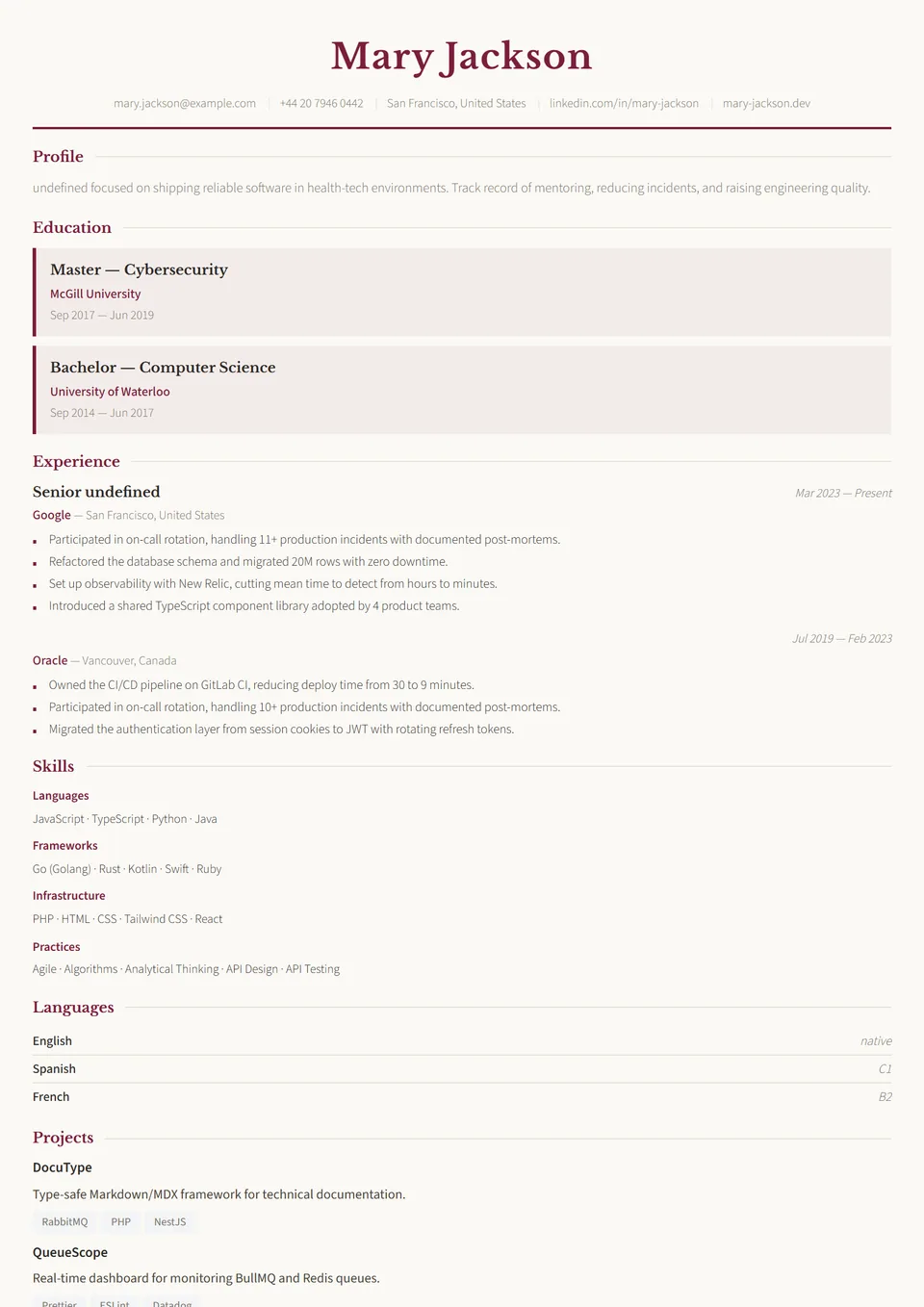
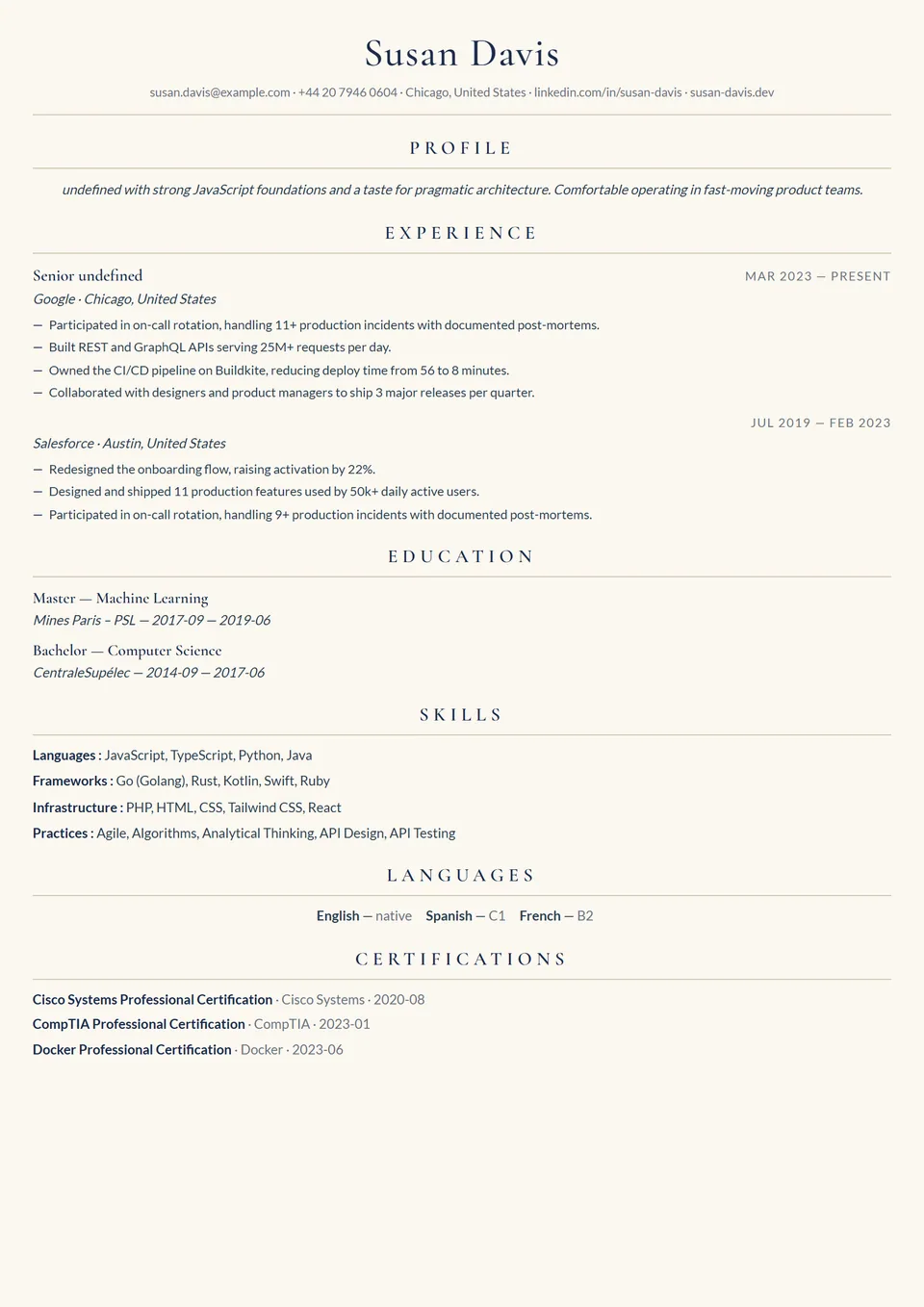
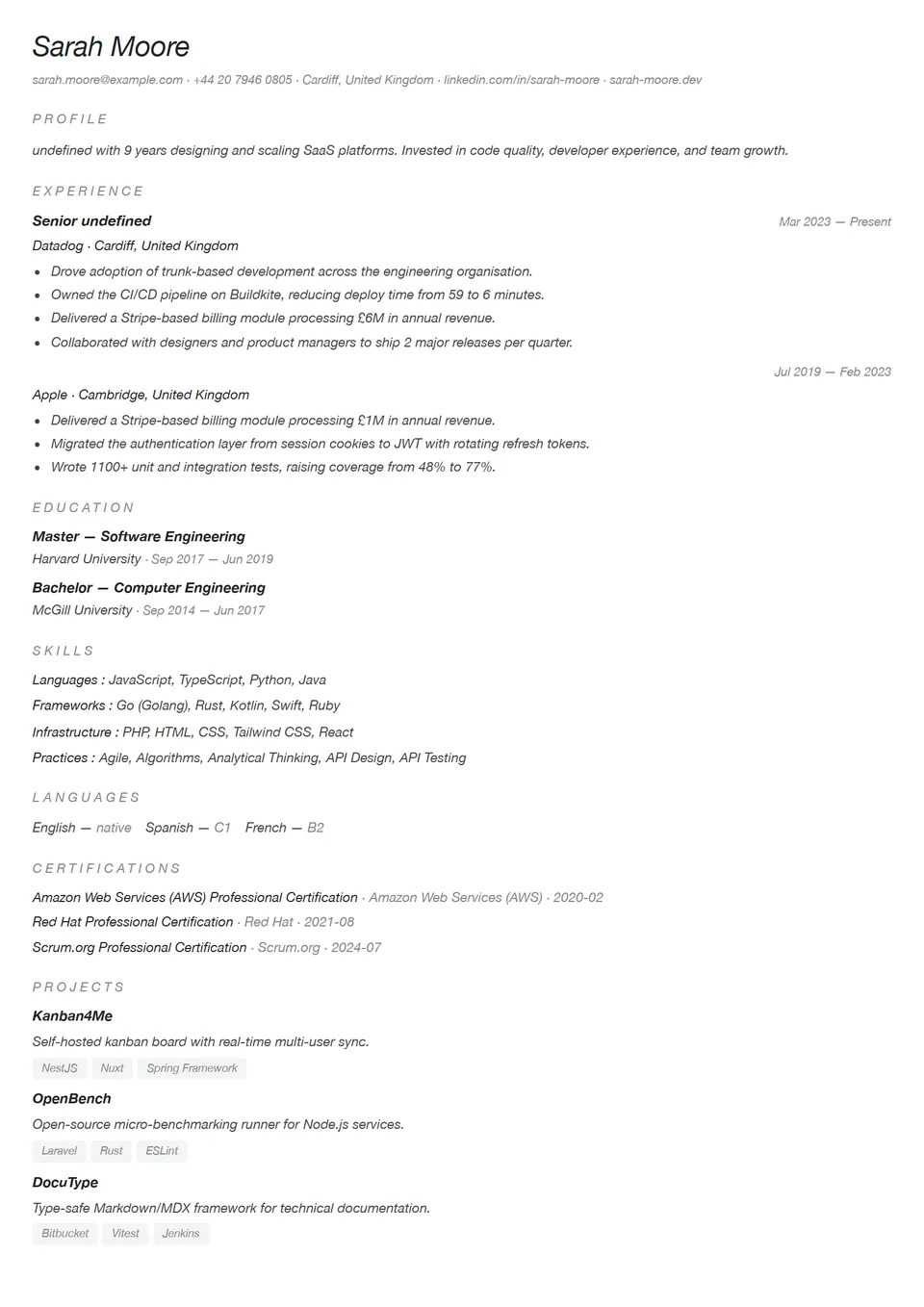
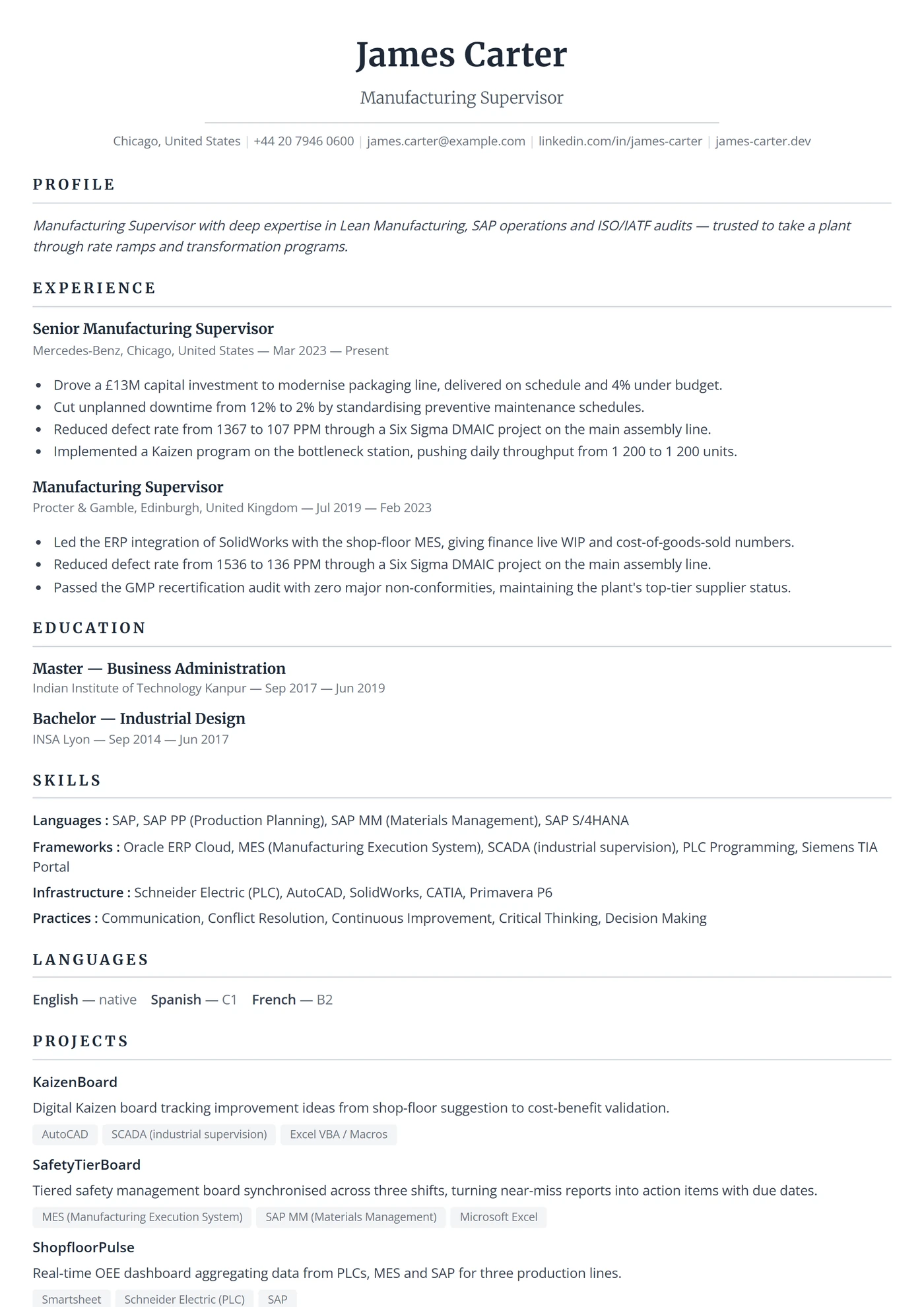
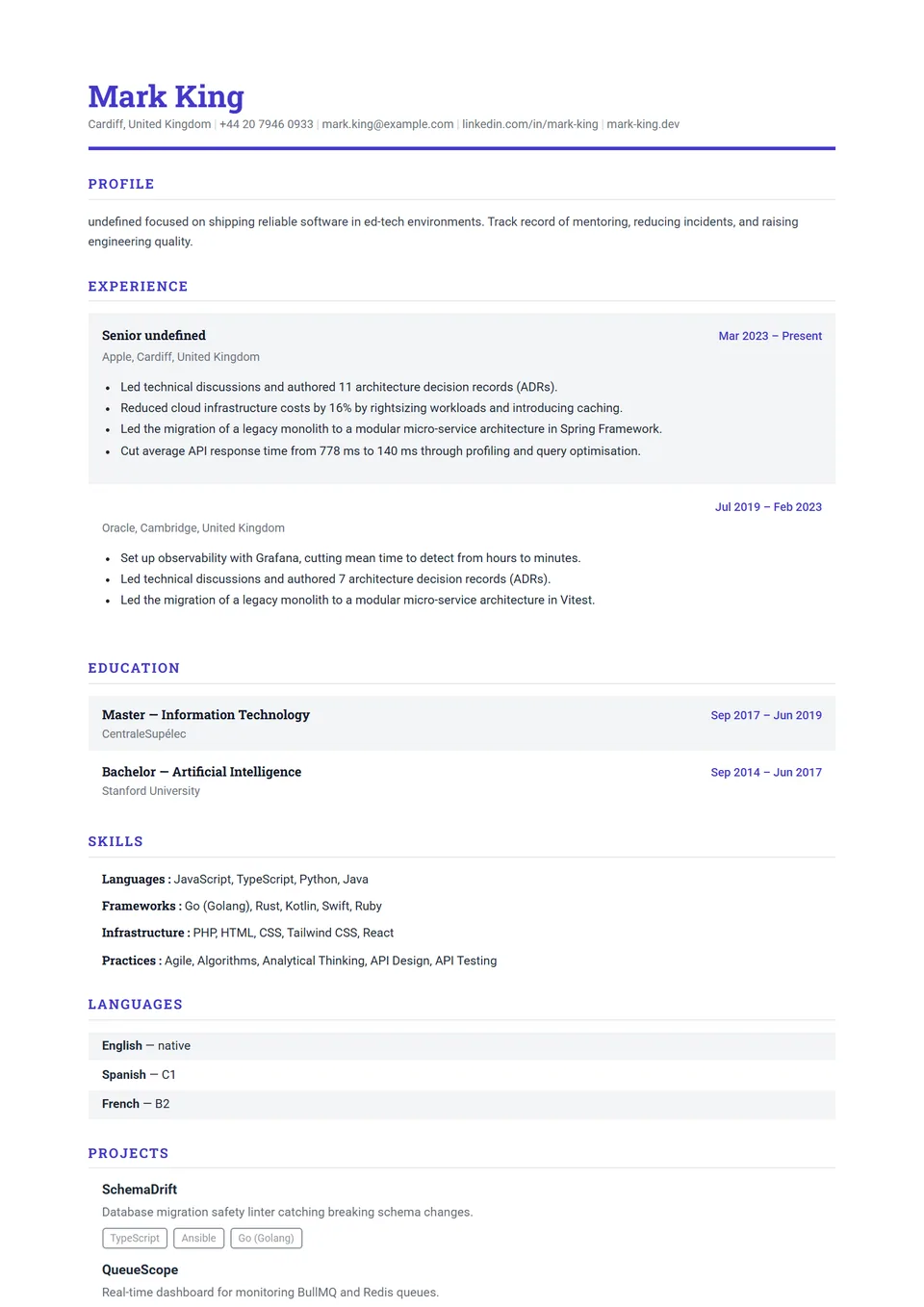
The History template is an academic CV in EB Garamond on a parchment background, framed by a double rule and a burgundy accent. The typography itself is a salute to the discipline: a humanist alphabet inherited from the Renaissance, set on a grid that evokes manuscript pages. The layout nonetheless remains modern in its single-column ATS-compatible structure (Workday, Greenhouse, Interfolio for R1 tenure-track applications, the AcademicJobsOnline platform for Russell Group institutions).
Who is it for?
It suits medievalists, early modernists and modern historians on the AHA, RHS or APHC job market, archaeologists and palaeographers competing for CR/DR CNRS section 32 or Marie Skłodowska-Curie postdoc mobility, archivists and curators applying to the British Library, Library of Congress, BnF, Vatican Apostolic Library, and postdocs in the humanities targeting fellowships at the Institute for Advanced Study, All Souls College Oxford, the École française de Rome or the École française d'Athènes.
How to use it
Four blocks structure the document — Research (with chronological and geographical scope), Publications (monographs, peer-reviewed articles, contributions to edited volumes), Archival work and critical editions, Teaching and doctoral supervision. State diplomatic periods using historiographical convention rather than raw dates (for example 'long nineteenth century' vs '1789-1914'), and list the archival fonds explored (National Archives Kew, Vatican Apostolic Archives, Archivo General de Indias) — expected by medievalist and early-modern hiring committees alike. Useful long-tail queries: 'history professor CV template', 'history PhD tenure-track resume', 'archaeologist academic CV', 'medieval studies postdoc CV', 'archivist British Library CV'.
Frequently asked questions
Should archival fonds be listed in the CV?
Yes for all early-modern, modern and contemporary history, art history and archaeology applications. List the principal institutions (The National Archives Kew, Vatican Apostolic Archives, Archivo General de Indias, Library of Congress Manuscript Division) with the fonds explored and the period covered. For medievalists, also mention manuscript work with the shelfmark and repository — a signal of palaeographic competence that hiring committees read instantly.
How do I present a monograph in progress with an academic press?
Distinguish four editorial statuses: under contract (with the publisher named, e.g. Cambridge UP, Oxford UP, Princeton UP, Harvard UP, Manchester UP), accepted post-peer-review, in revision (second round), under evaluation. For Anglophone presses, this status carries the same weight as journal ranking for R1 search committees and REF panels. State the provisional title and expected publication year.
Is the template suitable for a CNRS section 32 competition or a JRF application?
Yes. The EB Garamond typography and parchment restraint meet jury expectations without lapsing into pastiche. For these competitions, expand the Research block with your project (3-5 lines per axis, with fieldwork, source, method) and append the exhaustive publication list as a separate annex — the CV itself stays at 2-3 pages. For Junior Research Fellowships (All Souls, Magdalen, Trinity), the same discipline applies.