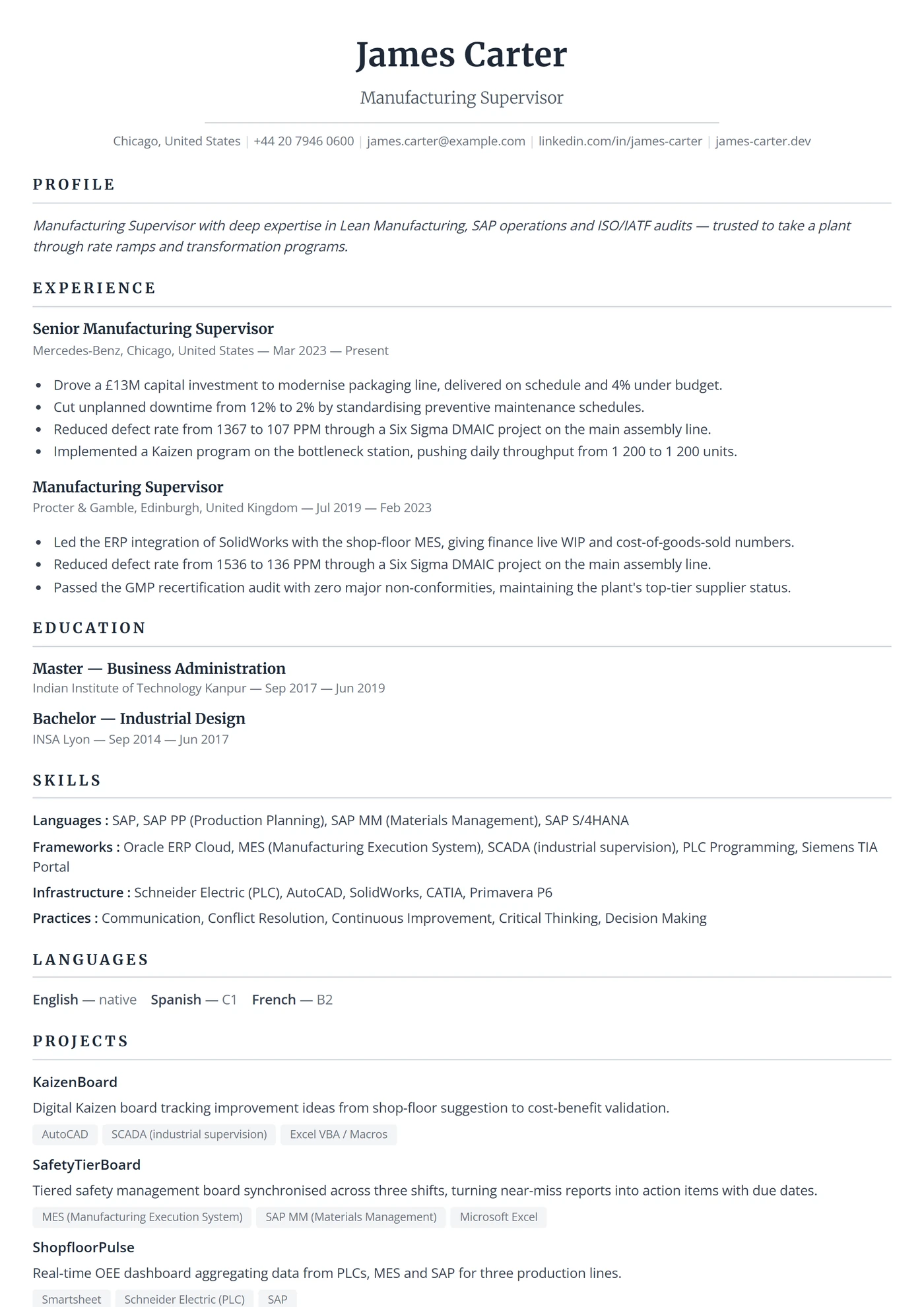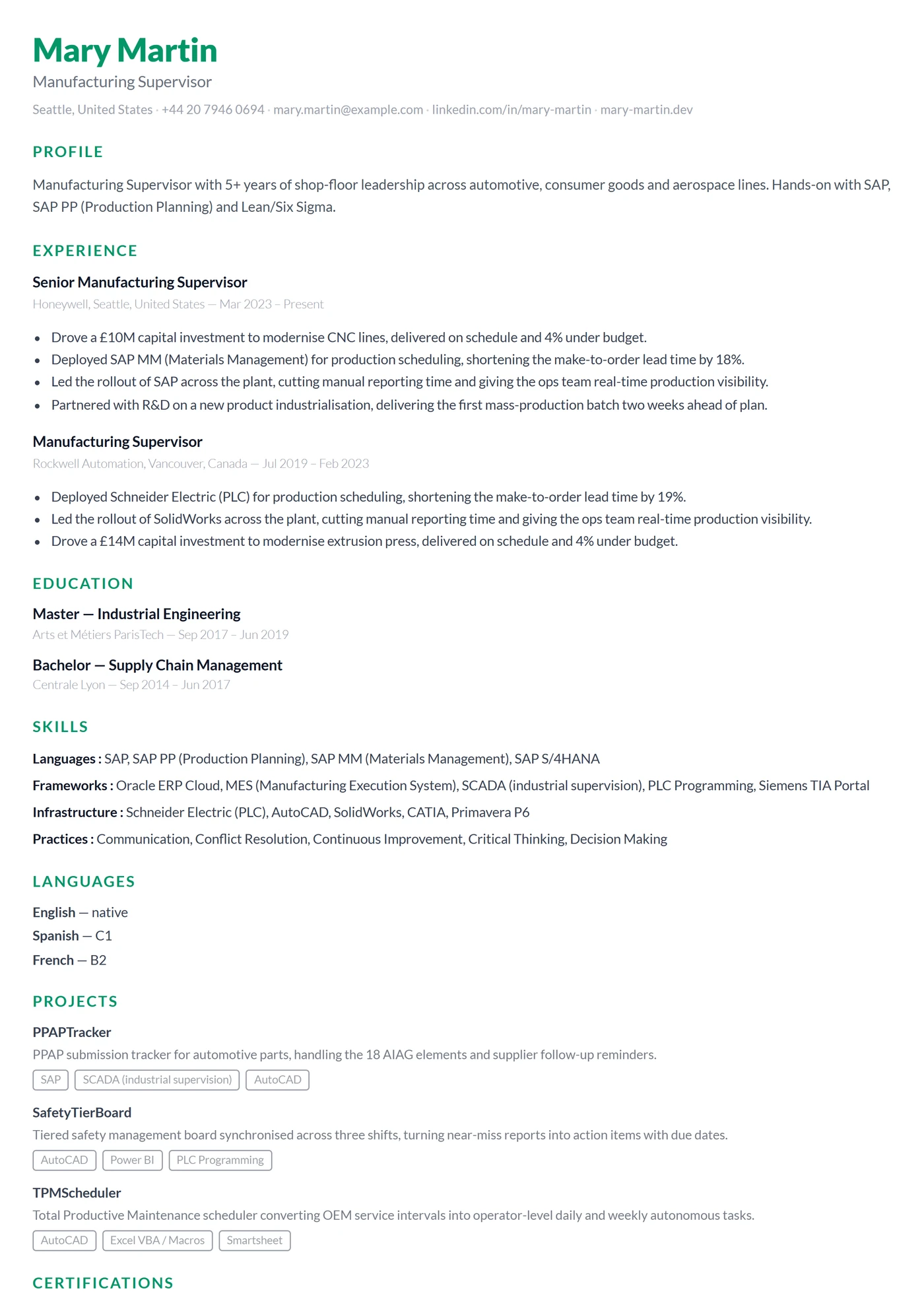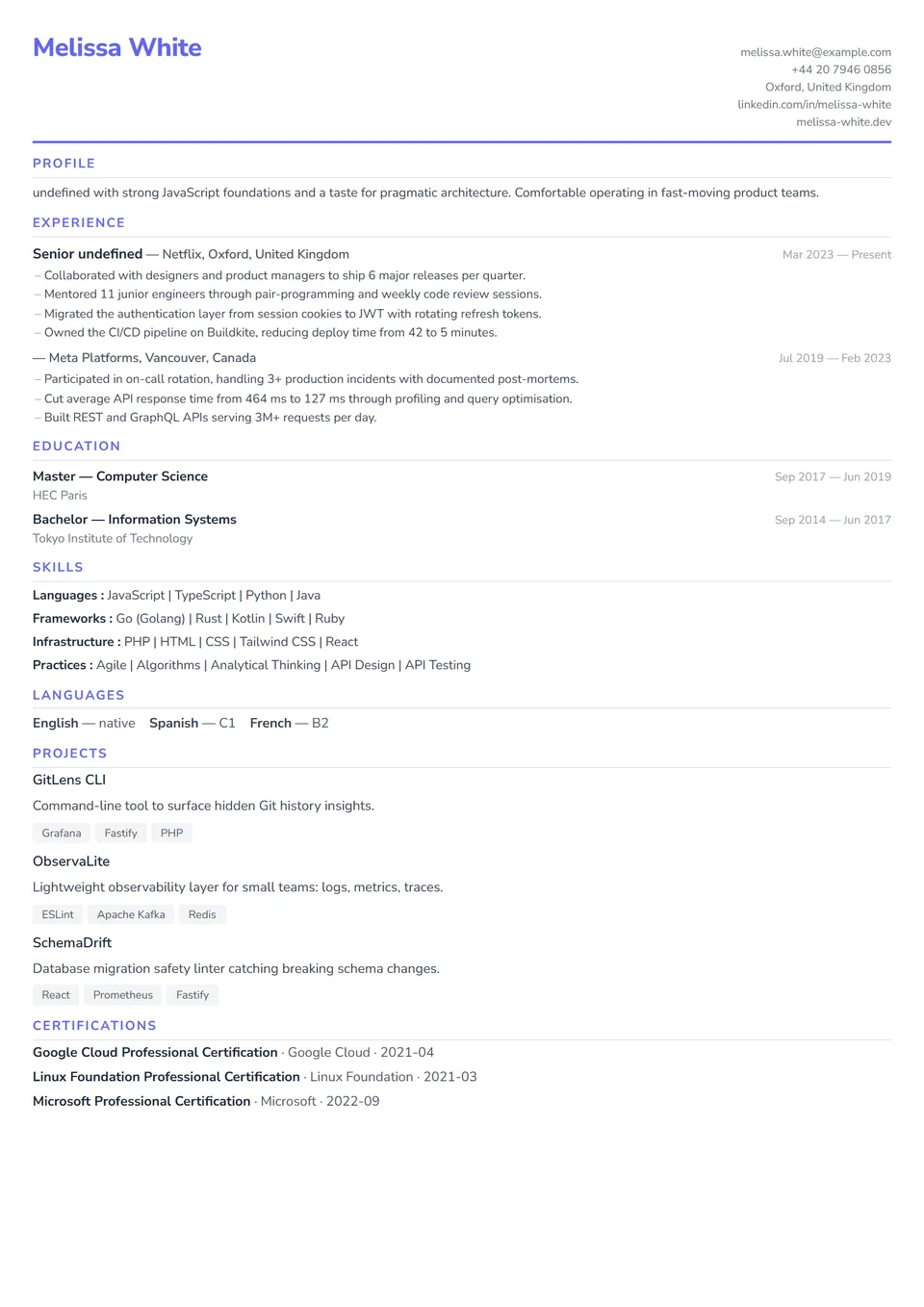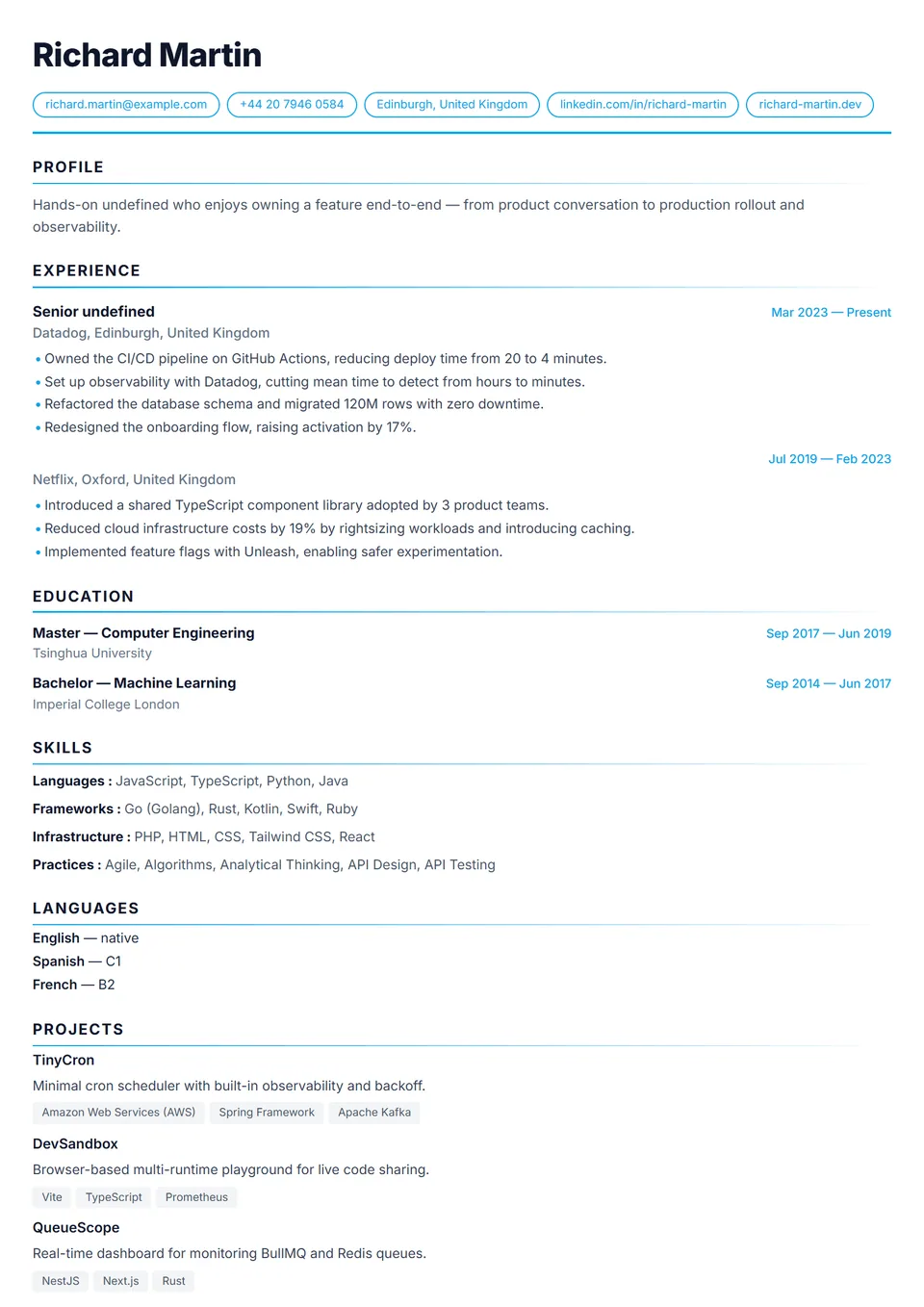
About this template
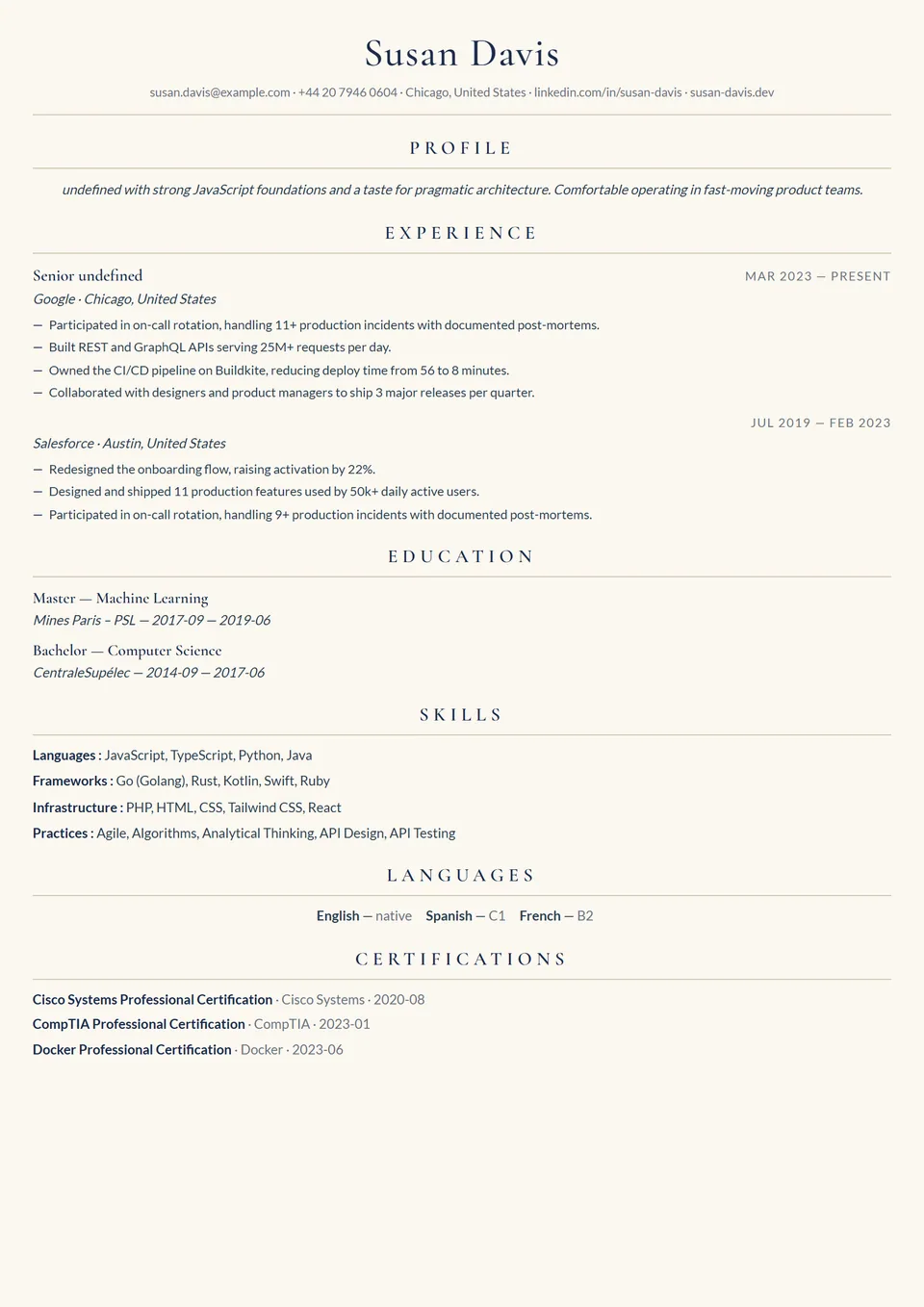
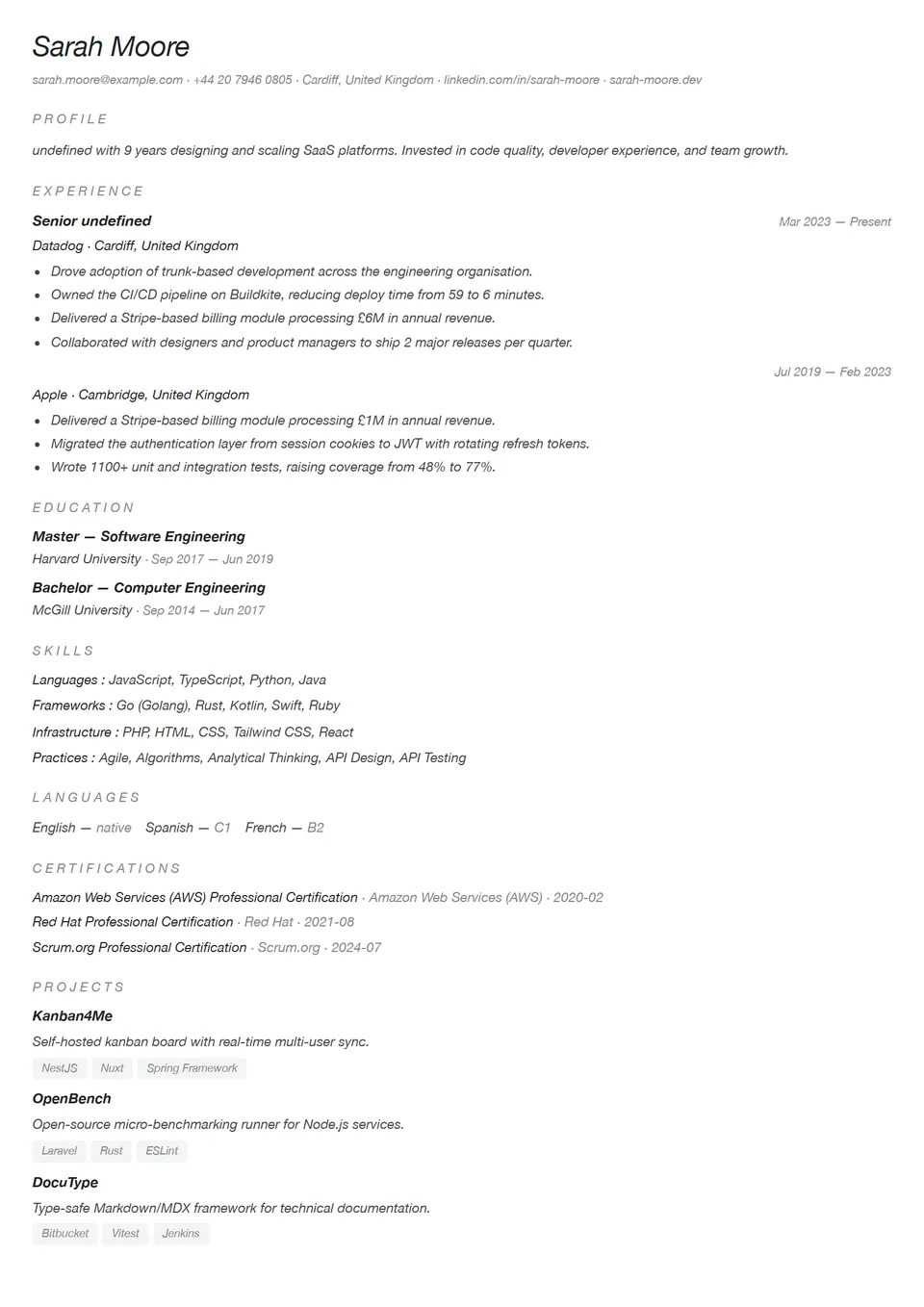
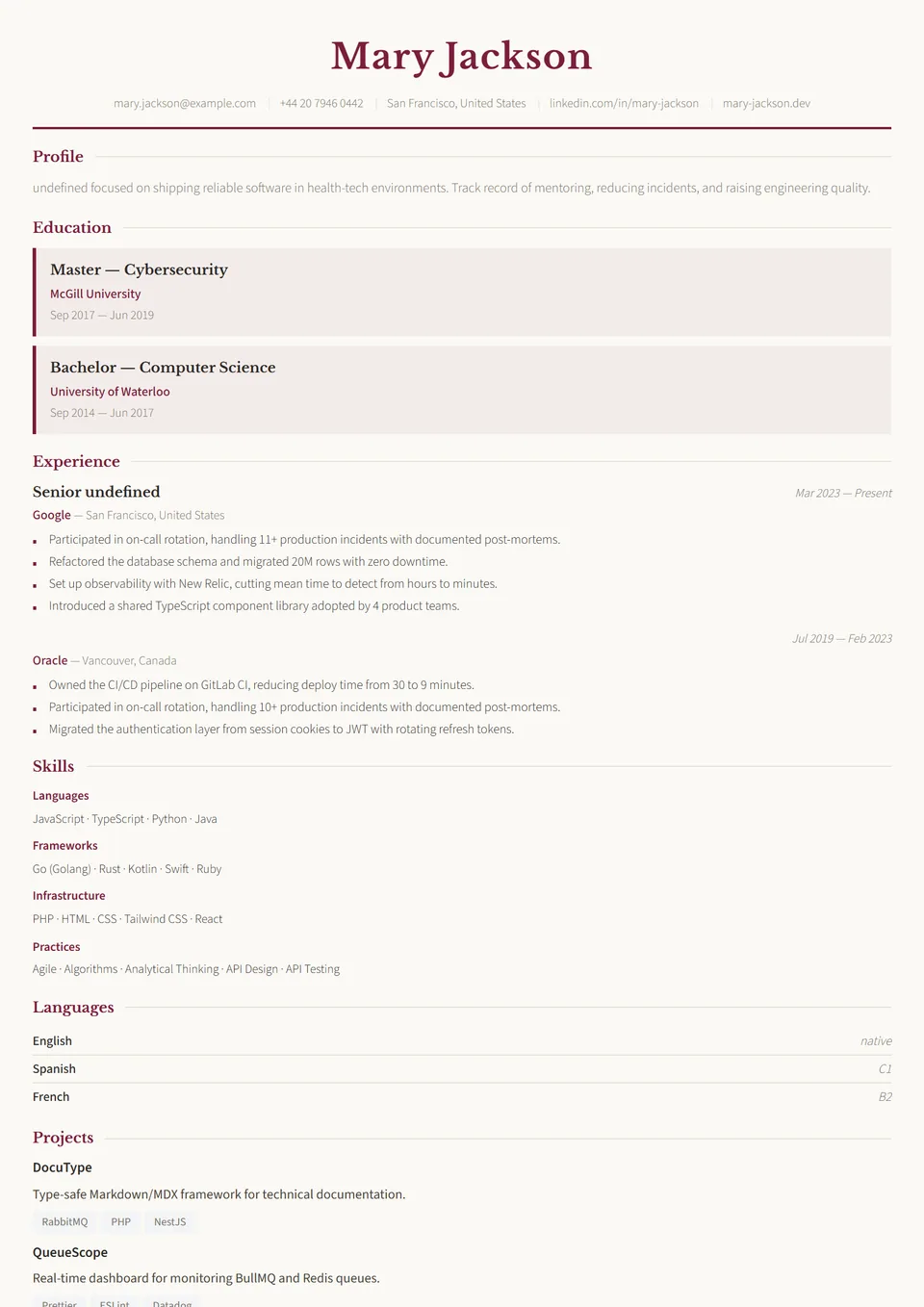
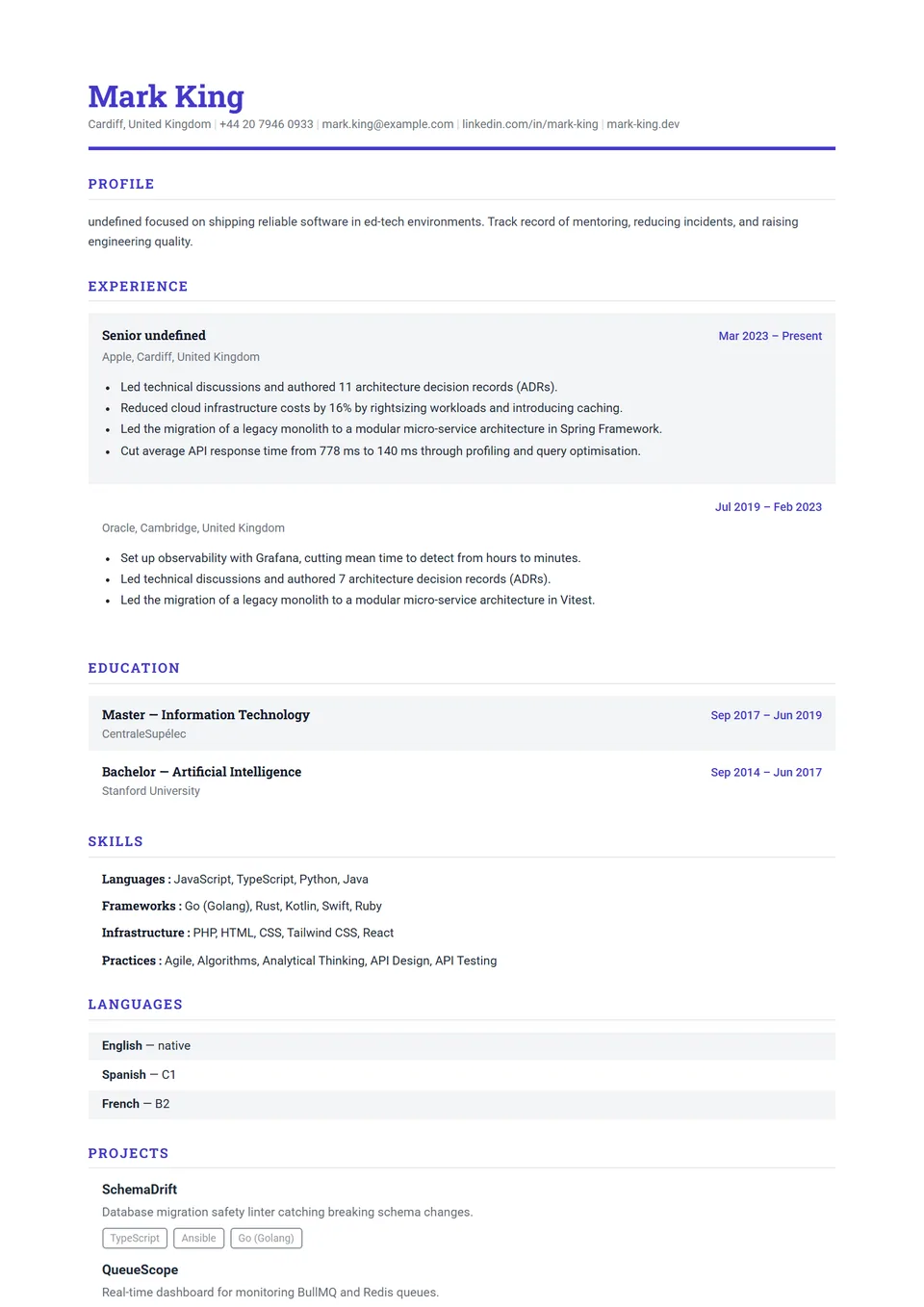
The ATS Bookmark Tabs template offers an editorial layout in serif on a cream background, with burnt-orange side tabs that protrude on the right edge like ribbon bookmarks in a bound book. The decorative tabs are CSS divs positioned absolutely, never images — they remain invisible to ATS parsing. Compatible with Workday, Greenhouse and the editorial ATS systems used by publishing houses and cultural institutions.
Who is it for?
It suits editorial and cultural profiles: editors at Penguin Random House, HarperCollins, Hachette Book Group, Simon & Schuster, museum curators, cultural mediators, festival production managers (Sundance, Tribeca, Cannes, Venice), programming directors at major theatres, as well as communications and brand culture profiles at premium brands (Hermès, Chanel, Tiffany & Co., Ralph Lauren).
How to use it
Use the side tabs as visual markers for the major sections (Experience, Publications, Awards, Education) without letting the tab text replace the heading — the heading stays in plain text in the main flow. For editors, list published books with ISBN. For curators, mention curated exhibitions with institution, dates and footfall. The cream background softens the document without compromising parser readability.
Frequently asked questions
Do the bookmark tabs break ATS parsing?
No. The tabs are CSS divs with border-radius and absolute positioning — they exist only in the visual rendering. The document's text remains structured as a linear flow that Workday, Greenhouse and editorial ATS (Naviga, MediaOS) extract without encountering any image. The cream background is a CSS background-color, also invisible to the parser.
Compatible with publishing house ATS pipelines?
Yes. The major houses (Penguin Random House, HarperCollins, Hachette Book Group, Simon & Schuster, Macmillan) primarily use Workday, Cornerstone or ADP Recruiting Management. The template passes these filters by staying in plain text. Names of journals, literary prizes (Pulitzer, National Book Award, Booker, PEN/Faulkner) and grants (NEA, Guggenheim, MacDowell, Yaddo) are indexed as sector keywords.
Suitable for cultural and museum roles?
Yes, perfectly. The serif typography and cream register match the codes of applications to cultural institutions (MoMA, Whitney, Met, Tate, Guggenheim, Getty Center). List curated exhibitions with venue, dates and visitor numbers. Mention training at the Courtauld Institute, NYU IFA, Williams CMA — these are critical markers for cultural sector recruiters.